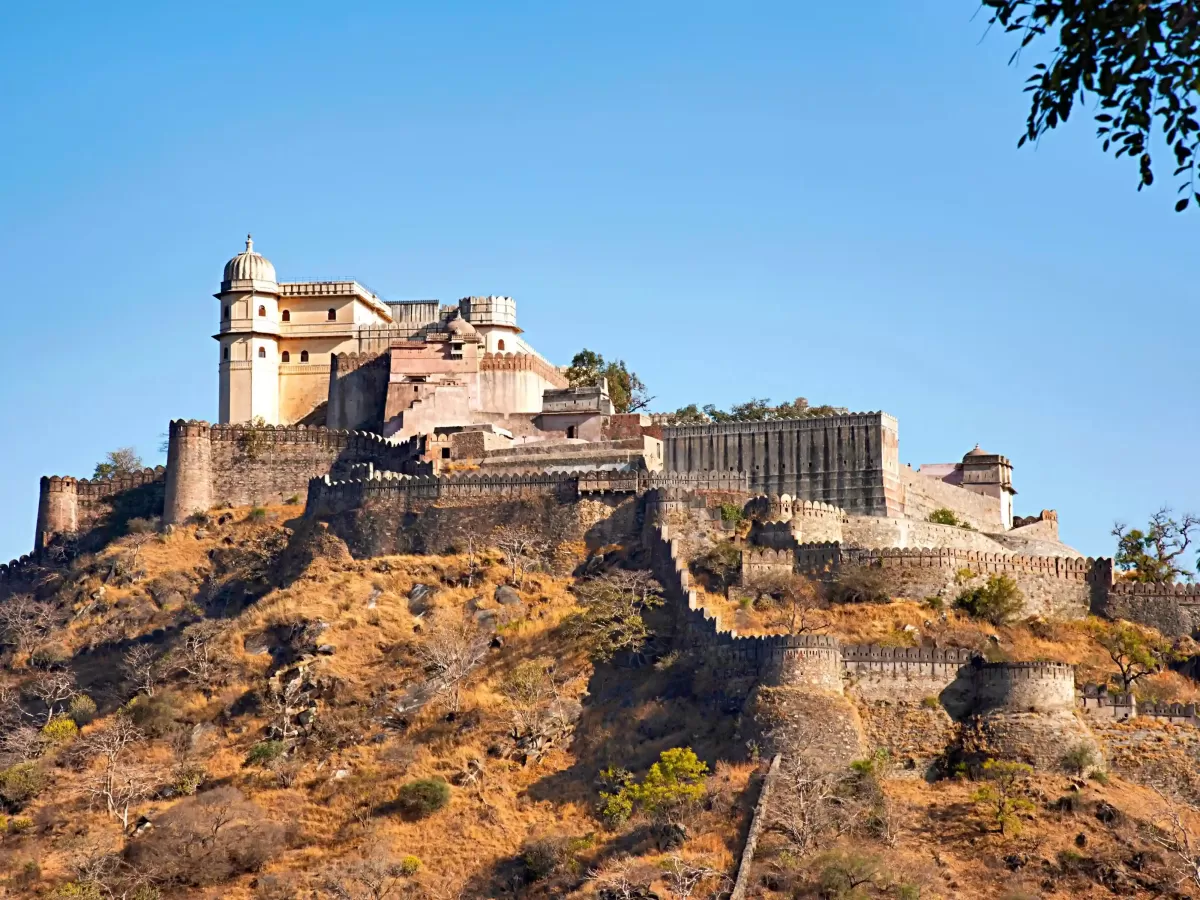
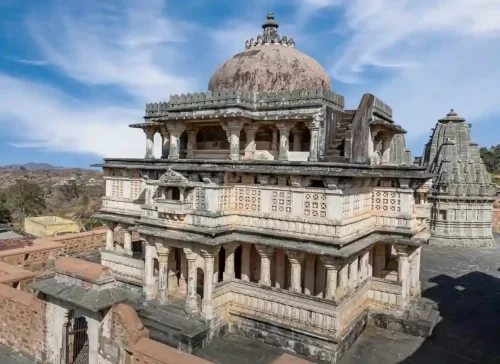
Visiting Badal Mahal in Kumbhalgarh Fort, Rajasthan, India

Badal Mahal , Kumbhalgarh
Tourists visit the palace to see its two distinct sections—the Zenana Mahal for royal women and the Mardana Mahal for men which feature pastel-colored murals and intricate stone jali work. Located at the pinnacle of the fortress, the site provides 360-degree views of the Aravalli Range and the fort\'s 36-kilometer-long perimeter wall.

Quick Facts About Badal Mahal

Quick Facts for Badal Mahal, Kumbhalgarh

Entry Fee ?40 for Indians; ?600 for Foreigners (Included in the Kumbhalgarh Fort composite ticket)
Timings 09:00 AM – 06:00 PM
Altitude (m) Approx. 1,100 m (Highest point of Kumbhalgarh Fort)
Ideal Visit Duration 45 to 60 minutes
Best Time of Day 04:30 PM – 06:00 PM (For sunset views over the Aravalli Range)
Crowd Level Moderate to High (Located at the peak, attracting most fort visitors)
Distance from City Centre (km) 100 km from Udaipur; located at the topmost section of Kumbhalgarh Fort
Walking Difficulty High (Requires a steep uphill climb on paved stone ramps from the fort entrance)
Parking Available Yes (Centralized parking available outside the main Hanuman Pol entrance)
Last Mile Access Vehicle access to the fort gate, then a strenuous walk/climb to the palace
Suitable for Kids Yes (Supervision required at the balconies and narrow staircases)
Suitable for Seniors No (The steep incline and numerous steps are physically demanding)
Wheelchair Friendly No (Steep slopes and narrow historical staircases prevent wheelchair access)

Why Visit Badal Mahal Kumbhalgarh: The Palace of Clouds

Visitors ascend to the highest point of Kumbhalgarh Fort to reach Badal Mahal, a two-story palace celebrated for its strategic elevation and panoramic views of the Aravalli Range. Travelers come to explore this "Palace of Clouds" to see the birth site of the legendary warrior Maharana Pratap and to witness the refined residential architecture that served as the final sanctuary for Mewar royalty during times of siege.

The on-ground atmosphere is noticeably cooler and more ventilated than the fort’s lower levels, with constant mountain breezes flowing through the palace's high arched windows. The interior is characterized by vibrant 19th-century wall paintings depicting floral motifs and hunting scenes, creating a colorful contrast against the rugged, sun-bleached stone of the fortress walls outside and providing a serene, airy environment at the fort's summit.

Badal Mahal is distinct for its vertical separation into two interconnected sections—the Mardana Mahal for men and the Zanana Mahal for women—featuring unique stone lattice screens (jalis) designed for privacy without sacrificing the view. It stands out to travelers as a masterclass in hilltop ventilation and aesthetic grace, offering a vantage point from which one can see the desert dunes of Marwar in the distance on a clear day, effectively marking the boundary between two major regions of Rajasthan.

History and Cultural Heritage of Badal Mahal Kumbhalgarh

Badal Mahal, or the "Palace of Clouds," is the highest structure within the Kumbhalgarh Fort complex, built by Maharana Fateh Singh in the late 19th century. Situated at the pinnacle of the fortress, this two-story palace is divided into two distinct sections: the Zenana Mahal for royal women and the Mardana Mahal for men. Historically, it served as a monsoon retreat and a strategic observation point, offering panoramic views of the Aravalli Range and the Thar Desert, which were vital for the fort's defensive history.

The architectural heritage of the palace is defined by its understated elegance and functional design, featuring turquoise-colored friezes and intricate stone jali work that allowed for natural ventilation and privacy. The interior walls are decorated with 19th-century style murals and floral motifs, reflecting the artistic transition of the Mewar school under British influence. As the highest point of the UNESCO World Heritage site, the palace remains a central symbol of the royal family's elevated status and the enduring architectural legacy of the Sisodia Rajputs.

Best Time to Visit Badal Mahal in Kumbhalgarh Fort

Sthit Badal Mahal, jo Kumbhalgarh Fort ka sabse uncha hissa hai, wahan tak pahunchne ke liye kadi chadayi karni padti hai, isliye yahan ki yatra ke liye mausam ka sahi hona behad zaroori hai. "Badalon ka Mahal" kahe jaane wale is sthan se Aravalli ki pahadiyon ka nazaara tabhi sabse behtareen dikhta hai jab aasmaan saaf ho aur tapman niyatrit ho.

  • Ideal Months: October se March tak ka samay sabse shresth hai. December mein hone wale Kumbhalgarh Festival ke dauran yahan ka mahol aur bhi yaadgaar ho jata hai.
  • Weather Conditions: Sardiyon mein tapman 12°C se 25°C ke beech rehta hai, jo mahal ki unchayi tak chadhne ke liye thakan-mukt anubhav pradan karta hai. Monsoon (July-September) mein yahan se badalon ka nazara aditiye hota hai, lekin chadhayi thodi kathin ho sakti hai.
  • Periods to Avoid: April se June ki bhishan garmi (40°C+) se bilkul bachein. Mahal tak ki khadi chadhayi aur dhoop aapko jaldi thaka sakti hai, aur garmi mein mahal ke andar ka vatavaran bhi gumas bhara ho sakta hai.

How to Reach Badal Mahal Kumbhalgarh: Essential Access Guide

http://googleusercontent.com/map_location_reference/1

The [Badal Mahal kumbhalgarh](http://googleusercontent.com/map_location_reference/0), also known as the "Palace of Clouds," is the highest point of the Kumbhalgarh Fort. Reaching this architectural landmark requires a significant uphill climb once you have entered the main fort complex.

  • Nearest Airport: Maharana Pratap Airport (UDR) in Udaipur is the closest airport, approximately 85 km away. Travelers can hire a private taxi for a 2.5-hour drive via the NH27 and the Kelwara road to reach the fort base.
  • Nearest Railway Station: Falna Junction (FA) is the most convenient railhead, located roughly 50 km from the site. It is well-connected to Delhi, Mumbai, and Ahmedabad. From Falna, private taxis are the most reliable way to navigate the 1.5-hour journey through the Aravalli Hills.
  • Road Access and Fort Entry: Kumbhalgarh is accessible via well-paved but winding mountain roads. After purchasing your entry ticket at the main gate (Hanuman Pol), you must drive or take an auto-rickshaw to the designated parking area near the temple cluster before starting the final ascent on foot.
  • Last-Mile Connectivity (The Climb): To reach the palace, visitors must walk uphill for approximately 1 km from the lower fort area. The path is paved with stone but is quite steep, passing through several monumental gates including the Pagda Pol and Nimbu Pol. There are no motorized transport options for this final stretch.
  • Travel Conditions and Limitations: The palace is open from 8:00 AM to 6:00 PM. The final climb can be physically demanding, especially during the summer months; it is not recommended for those with severe respiratory or mobility issues. Sturdy walking shoes are essential as the stone ramps can be slippery during the monsoon.

Traveler's Tip: Plan your ascent for the early morning to avoid the heat. The summit offers 360-degree panoramic views of the Aravalli Range and the Thar Desert, making the physical effort highly rewarding.
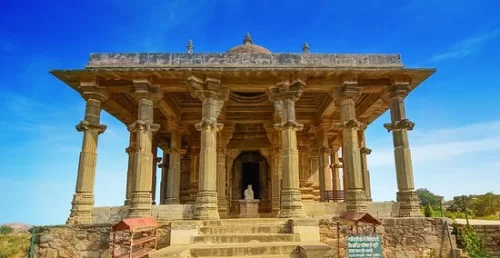
What to Expect When You Visit Badal Mahal, Kumbhalgarh

  • Vertical Ascent: As the "Palace of Clouds" located at the highest point of the fortress, expect a strenuous uphill climb. The final approach involves steep stone ramps and narrow staircases that require a good level of physical fitness and comfortable, high-traction footwear.
  • Distinct Architectural Zones: The palace is divided into two interconnected sections: the Zanana Mahal (women's quarters) and the Mardana Mahal (men's quarters). Expect to see beautiful 19th-century wall paintings depicting hunting scenes and floral motifs, alongside stone lattice work (jaalis) designed to allow ventilation while maintaining privacy.
  • Atmospheric Conditions: True to its name, the palace is designed to capture mountain breezes. Expect a significant drop in temperature compared to the fort base. During the monsoon or winter, low-hanging clouds and mist frequently drift through the open courtyards and balconies, significantly reducing visibility but enhancing the atmosphere.
  • Panoramic Vantage Points: The rooftops provide 360-degree views of the Aravalli Range and the fort’s 36-kilometer-long walls. On clear days, you can see as far as the Thar Desert dunes; however, safety railings are low in some sections, so caution is advised when standing near the edges.
  • Facility Limitations: There are no restrooms, water stations, or food vendors at the summit. Visitors must carry their own supplies from the lower fort levels. Due to the narrowness of the corridors and the single-path entry, the palace can feel exceptionally cramped when two-way tourist traffic peaks between 12:00 PM and 3:00 PM.
  • Acoustics and Wildlife: The high vaulted ceilings and empty chambers create strong echoes. You will also encounter large numbers of bats in the darker, upper-corner rooms and swifts nesting in the eaves. While the palace is a prime spot for photography, tripod use may be restricted in the narrow interior galleries.

Safety and Essential Visitor Information for Badal Mahal Kumbhalgarh

  • Peak vs. Quiet Hours: To enjoy the panoramic views from the "Palace of Clouds" without the intense glare or heavy crowds, arrive before 10:00 AM. The palace is the highest point of the fort and becomes significantly congested after 1:00 PM as tour groups converge on the narrow observation balconies.
  • Staircase and Altitude Safety: Reaching the palace requires a long, steep climb on foot. The final interior staircases are narrow, steep, and have low ceilings; visitors with respiratory issues or limited mobility should take frequent breaks. Be cautious of the high stone steps which can be a significant trip hazard in the dimly lit passageways.
  • Structural Cautions: The upper balconies and window openings have low parapets. Maintain a safe distance from the edges, especially during high winds which are common at this elevation. Ensure children are closely supervised, as the historical architecture does not include modern safety railings.
  • Weather and Exposure: Because it is situated at the highest point of the fort, the palace is extremely exposed to both the sun and wind. The stone walls can radiate intense heat during the summer months; wear a hat and use high-SPF sunscreen to prevent sunstroke while navigating the open terraces.
  • Wildlife and En Route Safety: The path leading up to the palace is frequently inhabited by monkeys looking for food. Keep all bags zipped and avoid carrying food or plastic bottles openly. Additionally, the stone pathway can be extremely slick during the monsoon season, making high-traction footwear essential for the ascent.

The Palace of Clouds: Photography at Badal Mahal, Kumbhalgarh

  • Panoramic Vistas from the Highest Point: Perched at the very peak of the fortress, the palace rooftop offers a 360-degree view of the Aravalli Range and the 36km long perimeter wall. Use a wide-angle lens here to capture the "Great Wall of India" snaking across the hills, particularly during the early morning when valley mist often surrounds the structure.
  • Zanana Mahal Frescoes and Pastel Hues: The women's quarters feature vibrant 19th-century wall paintings in turquoise, green, and white. To capture these without glare, shoot during the mid-morning when light reflects off the courtyard floors into the rooms, providing soft illumination for the delicate murals.
  • Natural Framing through Stone Jalis: The palace is famous for its intricate stone lattice windows. Use these as foreground elements to frame the rugged landscape outside; this creates a high-contrast "silhouette" effect that emphasizes the artistic craftsmanship of the Rajput era.
  • Lighting for the "Cloud" Effect: During the monsoon months, low-hanging clouds literally drift through the open corridors of this palace. This is the best time for atmospheric photography, as the diffused light minimizes harsh shadows and saturates the pastel colors of the interior walls.
  • Photography Fees and Restrictions: Access is included in the standard fort entry. While handheld photography is permitted, the use of professional tripods and drones is strictly prohibited by the Archaeological Survey of India (ASI) without a pre-approved permit. Avoid using flash inside the painted chambers to prevent damage to the historic pigments.
  • Crowd Management and Timing: Reaching Badal Mahal requires a steep uphill climb. To capture the narrow, colorful corridors without tourist interference, begin your ascent at the 9:00 AM opening. By noon, the palace becomes congested with day-trippers, making clean architectural shots of the Mardana and Zanana sections difficult.

Near By Attraction

Vedi Temple Kumbhalgarh Three-story 15th-century sacrificial shrine featuring thirty-six intricately carved pillars and a massive dome, built by Rana Kumbha inside Kumbhalgarh Fort Rajasthan. Temple

Vedi Temple

Vedi Temple is a three-story sacrificial ritual structure built by Rana Kumbha in 1458 to commemorate the completion of the Kumbhalgarh Fort.
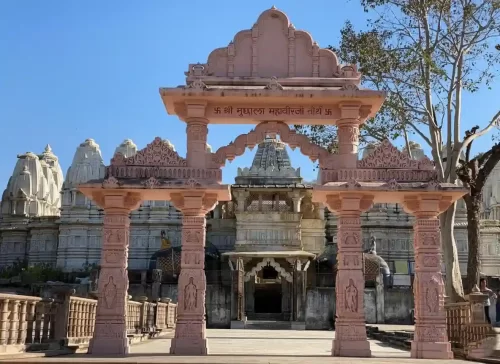
Muchhala Mahavir Jain Temple Pali Unique Jain shrine featuring a statue of Lord Mahavira with a mustache Rajasthan. Temple

Muchhala Mahavir Jain Temple

Muchhala Mahavir Jain Temple is a 10th-century religious site located in the Ghanerao forest area of the Aravalli Hills, dedicated to the 24th Tirthankara, Lord Mahavira.

Shree Parshuram Mahadev Cave Temple Pali Ancient hilltop cave shrine dedicated to Lord Shiva featuring a natural self-manifested lingam and 500 steep stone steps Rajasthan. Temple

Shree Parshuram Mahadev Cave Main Temple

Shree Parshuram Mahadev Cave is an ancient cave temple dedicated to Lord Shiva, located at an elevation of 3,995 feet in the Aravalli Mountain Range.

Frequently Asked Questions About Badal Mahal

Badal Mahal is located within a historic fort complex Kumbhalgarh and is accessible by road followed by entry through the main fort gate.
Badal Mahal is generally open during the fort visiting hours, and visitors should confirm updated timings before planning their visit.
There is usually a combined entry fee to access Badal Mahal as part of the larger fort complex.
The best time to visit Badal Mahal is between October and March when the weather is pleasant for exploring elevated viewpoints.
Travelers can reach Badal Mahal by taxi, auto rickshaw, or private vehicle to the fort entrance followed by a walk inside the premises.
Most visitors spend around 30 to 60 minutes exploring Badal Mahal depending on their interest in architecture and views.
Photography is allowed at Badal Mahal in most public areas, though restrictions may apply in certain sections.
Visitors can see painted chambers, elevated balconies, and scenic views of the surrounding landscape at Badal Mahal.
Badal Mahal is suitable for family visits, though visitors should be prepared for steps and uneven pathways.
Badal Mahal can easily be included in a one day sightseeing itinerary along with other attractions within the fort complex.

Loved this place ? Let’s Plan Your Rajasthan Trip

Get customized Rajasthan tour planning designed around desert climate comfort, long-distance road travel flow, heritage exploration time, and realistic pacing between regions. Whether you are visiting for fort architecture, palace heritage, cultural exper

⚡ Quick Response | 💰 Free consultation | 🕒 24×7 expert support

×

Plan Your Trip