+91 9910402252
admin@chalbanjare.com


| Entry Fee | ?40 for Indians; ?600 for Foreigners (Included in Kumbhalgarh Fort composite ticket) |
| Timings | 09:00 AM – 06:00 PM |
| Altitude (m) | Approx. 1,100 m |
| Ideal Visit Duration | 15 to 20 minutes |
| Best Time of Day | 09:00 AM – 11:00 AM (Located near the fort entrance; best visited early) |
| Crowd Level | Moderate |
| Distance from City Centre (km) | Located just inside the Hanuman Pol (Main Gate) of Kumbhalgarh Fort |
| Walking Difficulty | Easy (Situated on a raised platform but close to the main walking path) |
| Parking Available | Yes (Centralized parking available outside the main fort gates) |
| Last Mile Access | Private vehicle or taxi to the fort gate, then a short walk inside |
| Suitable for Kids | Yes |
| Suitable for Seniors | Yes (Very close to the entrance; involves climbing only a few steps) |
| Wheelchair Friendly | No (Access to the temple platform requires climbing stone steps) |
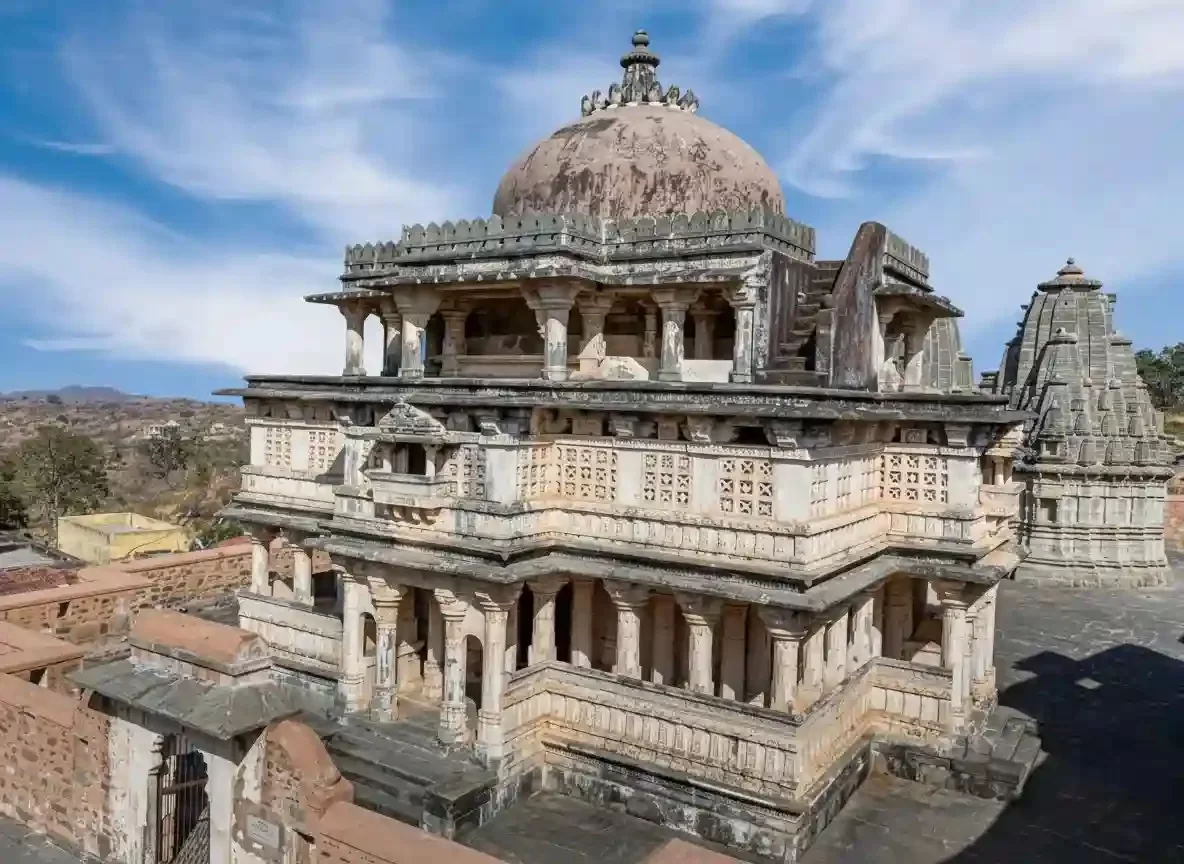
Visitors come to the Vedi Temple to witness the only surviving sacrificial structure of its kind in India, built by Maharana Kumbha in 1457. This three-story octagonal building was specifically designed to perform "Yajna" (sacred rituals) to consecrate the fort, attracting architecture enthusiasts and historians interested in the unique structural requirements of ancient Vedic ceremonies preserved in stone.
The on-ground atmosphere is one of airy grandeur, as the temple is elevated on a high platform with 36 intricately carved pillars supporting its domed ceiling. Walking through the open-sided pavilions, travelers experience a cooling breeze and a sense of transparency that differs from the enclosed sanctums of traditional temples, offering a clear view of the surrounding Aravalli hills and the nearby Hanuman Pol gateway.
What makes Vedi Temple distinct is its specialized octagonal design and its rare functional history as a ritualistic pavilion rather than a standard house of worship. For travelers, it stands out for its elegant proportions and the sheer preservation of its double-story decorative balconies, providing a tangible link to the spiritual and administrative origins that secured the foundation of the Kumbhalgarh fortress.
The Vedi Temple is a unique sacrificial structure built by Maharana Kumbha in 1457 CE to commemorate the successful completion of the Kumbhalgarh Fort. This three-story octagonal building was specifically designed to perform Vedic rituals and "yagnas," making it the only surviving ritualistic structure of its kind in India. Historically, it served as a central site for royal religious ceremonies, where the Maharana sought divine protection for the kingdom’s newly established capital.
Architecturally, the temple sits on a high platform and is supported by 36 intricately carved pillars, reflecting the transition of medieval Hindu architecture under the Mewar dynasty. The open-pavilion design allowed for the large-scale performance of fire sacrifices while offering a strategic view of the Hanuman Pol entrance. While Maharana Fateh Singh later renovated the structure, the temple remains a critical historical record of the religious practices and architectural innovation that defined the 15th-century Rajput era.
http://googleusercontent.com/map_location_reference/1 Kumbhalgarh Fort ke Hanuman Pol ke paas sthit [Vedi Temple](http://googleusercontent.com/map_location_reference/0) ki yatra ka sabse suhavna anubhav sardiyon ke mausam mein hota hai. Is teen-manjila Jain mandir ki aditiye vastukala aur iske 36 stambhon (pillars) ko dekhne ke liye thanda aur saaf mausam sabse behtareen hai, taki aap bina thakan ke is aitihasik dharohar ka anand le saken.
The [Vedi Temple](http://googleusercontent.com/map_location_reference/0) is an ancient sacrificial site located just outside the Hanuman Pol, the main entrance of the Kumbhalgarh Fort. It is uniquely positioned as the only surviving sacrificial structure of its kind in India.
Traveler's Tip: Since the Vedi Temple is located right at the fort's entrance, it is best visited immediately before or after your tour of the main Kumbhalgarh Fort complex.
 Fort
Fort
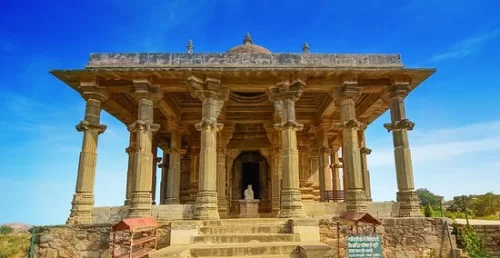
Gole Rao Temple is a Jain temple located near Kumbhalgarh Fort in Rajsamand district, Rajasthan, India.
 Palace
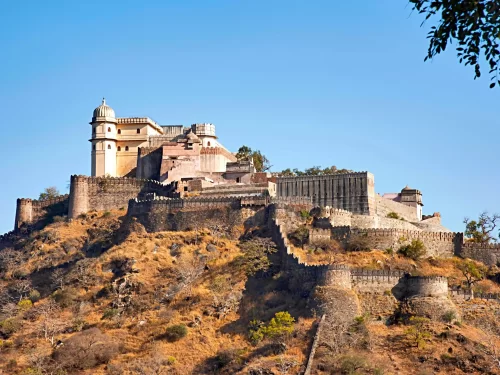
Badal Mahal, or the Palace of Clouds, is the highest point of the Kumbhalgarh Fort complex and was built by Maharana Fateh Singh in the 19th century.
 Temple
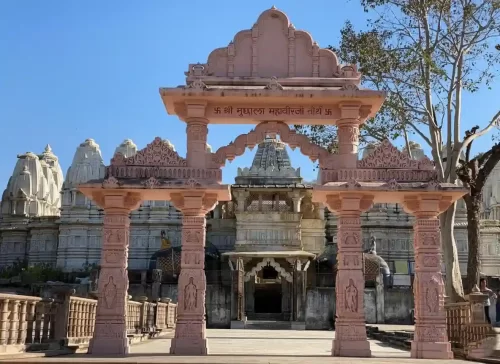
Muchhala Mahavir Jain Temple is a 10th-century religious site located in the Ghanerao forest area of the Aravalli Hills, dedicated to the 24th Tirthankara, Lord Mahavira.
Get customized Rajasthan tour planning designed around desert climate comfort, long-distance road travel flow, heritage exploration time, and realistic pacing between regions. Whether you are visiting for fort architecture, palace heritage, cultural exper
⚡ Quick Response | 💰 Free consultation | 🕒 24×7 expert support

