Puri Beach, Puri, Odisha, India | History & Visitor Guide

Puri Beach , Puri
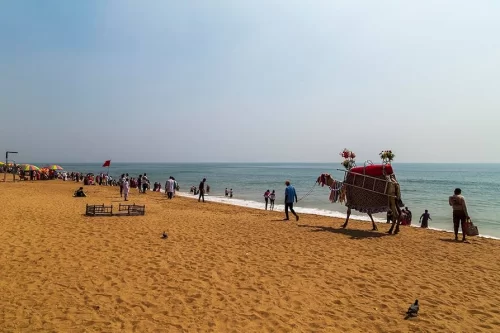
Visitors frequent the beach to witness the sunrise and sunset, participate in holy dips during festivals, and view the elaborate sand sculptures created by local artists. It is a primary hub for tourism in Odisha, offering a wide promenade, local seafood markets, and proximity to the Shri Jagannath Temple.

Quick Facts About Puri Beach

Quick Facts: Puri Beach

Entry Fee Free
Timings 24 Hours (Best visited between 05:00 and 22:00)
Altitude (m) 0 m
Ideal Visit Duration 1 – 2 hours
Best Time of Day Sunrise or Evening (Post 17:00)
Crowd Level High (Particularly near Swargadwar and the Light House area)
Distance from City Centre (km) 2 km from Puri Jagannath Temple
Walking Difficulty Easy (Paved promenade along the road; soft sand near the water)
Parking Available Yes (Designated paid parking zones along Marine Drive and near Swargadwar)
Last Mile Access Directly accessible via auto-rickshaw, cycle rickshaw, and private vehicles
Suitable for Kids Yes (Sand art displays and camel/horse rides available)
Suitable for Seniors Yes (Promenade features benches and level walking paths)
Wheelchair Friendly Partial (Promenade is accessible; beach sand access is difficult)

Why Visit Puri Beach

Visitors travel to Puri Beach to experience one of India’s most iconic coastal destinations, where the Bay of Bengal meets a site of profound religious significance. As a primary "Golden Beach" and a focal point for pilgrims visiting the nearby Jagannath Temple, it serves as a unique dual-purpose space for both traditional spiritual rituals, such as the holy dip, and modern seaside recreation along its expansive sandy shoreline.

The atmosphere on the ground is high-energy and culturally vibrant, characterized by the persistent sound of heavy surf and the bustling activity of the beachfront market. Walking along the main stretch near Swargadwar, travelers encounter a sensory-rich environment where the scent of fried seafood from local stalls mingles with the salt air, while the sight of sand artists crafting temporary sculptures provides a distinct artistic backdrop to the crowded, lively promenade.

Puri Beach is distinct for its Blue Flag certification, which guarantees high standards of cleanliness, safety, and environmental management on specifically designated stretches, a rarity for high-traffic Indian beaches. It stands out for its unique orientation that allows for spectacular views of both sunrise and sunset over the water, and its role as a natural amphitheater for the world-renowned sand art of local masters, offering a human-scaled connection to Odisha's contemporary folk creativity.

History and Cultural Significance of Puri Beach

Puri Beach, situated on the Bay of Bengal, is historically recognized as "Mahodadhi," one of the five sacred water bodies of the holy city of Puri. Its history is deeply intertwined with the 12th-century Shri Jagannath Temple, as the sea is considered the father-in-law of Lord Jagannath (a manifestation of Lord Vishnu). For centuries, it has served as a site for ritualistic purification, where pilgrims take a "Samudra Snana" (holy dip) before entering the temple, a practice recorded in ancient Puranic texts as a means to achieve spiritual liberation.

The cultural identity of the beach is defined by the centuries-old "Samudra Arati," a daily evening ritual performed by priests to honor the sea deity. It is also the birthplace of the globally renowned Puri sand art tradition; local artists, most notably Sudarshan Pattnaik, have transformed the shoreline into a canvas for intricate sculptures that reflect both religious epics and contemporary social issues. This tradition evolved from ancient "Balu-Ghara" (sand house) rituals performed by devotees during the Ratha Yatra and the holy month of Kartika.

In modern times, Puri Beach has gained international acclaim as Asia's first beach to receive the Blue Flag certification for its stringent environmental and safety standards. It remains the venue for the annual Puri Beach Festival, which showcases Odisha's classical Odissi dance, folk music, and maritime heritage. The beach is also home to the "Nolia" community, traditional fisherfolk whose unique seafaring techniques and life-saving skills have been an integral part of the coastal ecosystem for generations, maintaining a living link to Odisha's ancient maritime history.

Best Time to Visit Puri Beach

Puri Beach is best visited during the window when the intense Bay of Bengal humidity drops and the sea remains calm enough for shoreline activities. Because the beach is the central hub for both pilgrims and vacationers, timing your visit to avoid the peak tropical sun is essential for enjoying the golden sands and the famous beach market without physical exhaustion.
  • Ideal Months: October to February, providing the most stable weather for the International Sand Art Festival (December) and the Puri Beach Festival.
  • Weather Conditions: Clear skies with refreshing coastal breezes and temperatures between 16°C and 28°C, which are perfect for morning swims and evening strolls along the lighthouse stretch.
  • Periods to Avoid: April to June, when temperatures hit 38°C and extreme humidity makes outdoor exposure grueling; additionally, the monsoon months (July to September) bring high tides and dangerous undercurrents, often making the water unsafe for bathing.

Navigating Your Visit: How to Reach Puri Beach

  • By Air: Biju Patnaik International Airport (BBI) in Bhubaneswar is the nearest airport, located approximately 65 km away. Pre-paid taxis and app-based cabs (Ola/Uber) are available at the terminal for the 1.5 to 2-hour drive via the NH-316 highway.
  • By Rail: Puri Railway Station (PURI) is the closest railhead, situated just 2–3 km from the main beach area. The station is well-connected to major Indian cities; from here, battery-operated "Totos" and auto-rickshaws provide a quick 10-minute transit to the shoreline.
  • Road Access: Puri is easily accessible via the four-lane Bhubaneswar-Puri Highway (NH-316). Regular OSRTC state buses and private coaches operate frequently from Bhubaneswar’s Baramunda ISBT and Master Canteen, dropping passengers at the Puri bus stand.
  • Last-Mile Connectivity: The "Mo Bus" city service runs frequently along the Marine Drive road, connecting the beach to other parts of the town. Most of the beachfront is highly walkable, though cycle-rickshaws are a popular and traditional way to navigate the promenade.
  • Travel Conditions: Traffic on the Marine Drive road becomes extremely congested during evening hours and weekends. During the annual Rath Yatra festival, vehicular access to the beach road is heavily restricted, and travelers should expect to walk significant distances.

What to Expect When You Visit Puri Beach

  • Environment and Surroundings: This is a high-energy urban beach characterized by a wide, sandy shoreline and a lively promenade. The atmosphere is bustling and commercial, with a constant sea breeze that can become quite strong in the evenings. While the main beach area is kept relatively clean near the Blue Flag section, other parts of the shoreline experience significant human activity and litter. Natural shade is non-existent on the sand, and the tropical sun can be intense during the day.
  • Facilities and Amenities: The beach is well-equipped with amenities, especially near the designated Golden Beach stretch, which features clean restrooms, changing rooms, and seating. Along the main beach, hundreds of small kiosks and mobile vendors sell local snacks, tea, fried seafood, and handicrafts. Camel and horse rides are widely available. Lifeguard towers are stationed at regular intervals, though their presence is most concentrated in the primary tourist zones.
  • Accessibility and Movement: A paved road and a wide pedestrian promenade run parallel to the beach, offering easy access for wheelchairs and strollers. However, moving from the promenade to the water involves navigating deep, soft sand which is not accessible for wheeled devices. The area is highly pedestrianized but becomes extremely congested in the evenings, making movement through the crowd slow and requiring constant awareness of traffic near the road access points.
  • Typical Visitor Behavior and Conditions: The beach is a major social hub, particularly at sunrise and sunset. Expect heavy crowds, loud music from local events, and persistent solicitations from photographers and vendors. While many visitors enter the water, the surf is notoriously rough with strong undercurrents and sudden drops in the seabed; swimming is hazardous and should only be attempted in strictly designated safe zones under the watchful eye of lifeguards.

Important Visitor Information for Puri BeachClick to open side panel for more information

  • Crowds and Weather: The beach is a major tourist hub, with massive crowds during the Rath Yatra (June/July) and the Puri Beach Festival in November. The tropical climate is most pleasant from October to February. Avoid the shoreline during the monsoon (June to September) when the sea is rough and tidal surges are common.
  • Visiting Hours: The beach is accessible 24 hours a day. Sunrise and sunset are peak periods for visitors and photographers. Early mornings (before 7:00 AM) are the quietest hours for those looking to avoid the heavy influx of tour groups and vendors.
  • Dress Code: No formal dress code is enforced, but modest casual wear is recommended to respect local cultural sensibilities. If visiting the nearby Swargadwar area, ensure attire is conservative as it is a site of religious importance.
  • Safety and Cautions: Swimming is hazardous due to unpredictable undercurrents and strong riptides; stay within the designated Blue Flag beach zones where professional lifeguards are stationed. Be vigilant about personal belongings in crowded areas and avoid secluded stretches of the coastline after dark due to limited lighting.

Photography and Viewpoints at Puri Beach

  • Sunrise at the Shoreline: As an east-facing coastline, the beach offers a direct view of the sun rising over the Bay of Bengal. Arrive at the "Golden Beach" stretch near the Blue Flag area by 5:15 AM to capture the high-contrast silhouettes of traditional fishing boats against the orange horizon.
  • Sand Art Installations: The area near the Mayfair stretch often features large-scale sand sculptures created by world-renowned local artists. Use a shallow depth of field (f/2.8 - f/4) to isolate the intricate textures of the sand carvings from the busy background of the promenade.
  • The Fishing Village (Pentha): For documentary-style photography, walk toward the eastern end of the beach where local fishermen launch their wooden boats. The mid-morning light (8:00 AM - 10:00 AM) is ideal for capturing the vibrant colors of the nets and the active labor of the coastal community.
  • Lighthouse Panoramic View: The Puri Lighthouse provides an elevated 360-degree vantage point. From the gallery, a wide-angle lens can capture the long, curving arc of the Marine Drive and the density of the beachfront crowds, providing a sense of scale unavailable from the ground.
  • Night Market and Blue Hour: The beach road transforms after sunset into a vibrant market. Use a tripod or a lens with image stabilization during the "blue hour" to capture the glow of the food stalls and the movement of the crowds using a slightly slower shutter speed.
  • Photography Restrictions: While general photography is permitted on the beach, avoid pointing cameras directly at religious rituals or bathers at the Swargadwar section out of respect for local customs. Drone photography is restricted in certain zones due to the proximity of sensitive administrative buildings and the temple airspace.
  • Crowd and Salt Factors: The beach is exceptionally crowded near the Swargadwar area during the evening. For minimalist landscapes, head toward the Blue Flag beach or the northern outskirts. Always clean your camera lenses immediately after the shoot, as the salt-laden sea mist can quickly corrode equipment and blur optical elements.

Near By Attraction

Shree Jagannath Temple towers at Puri during partly cloudy day, featuring Neelachakra flag, white-red domes, ancient spires, perfect spiritual experience with Odisha Puri tour package. Temple

Shree Jagannatha Temple

The Shri Jagannath Temple is a 12th-century Hindu shrine dedicated to Lord Jagannath, a form of Vishnu, and is one of the four holiest Char Dham pilgrimage sites.

Puri Konark Marine Drive Odisha aerial drone ocean waves golden beach highway palms, scenic coastal road Chilika Lake views, perfect beach drive sunset paradise package.  Beach

Marine Drive Beach, Puri

Marine Drive Beach is a long stretch of coastline along the Bay of Bengal, connecting the pilgrimage city of Puri to the Sun Temple at Konark.

Chandrabhaga Beach Odisha aerial drone view featuring blue water tanks sandy beach road palm groves fishing village ocean waves cloudy sky near Konark Sun Temple, perfect beach experience for Konark Chandrabhaga tour package. Beach

Chandrabhaga Beach

Chandrabhaga Beach is a prominent coastline on the Bay of Bengal, situated approximately three kilometers from the UNESCO World Heritage Sun Temple at Konark.

Frequently Asked Questions About Puri Beach

Puri Beach is located in Puri city in Odisha, India, along the Bay of Bengal coast.
Puri Beach is known for its golden shoreline, sunrise views, and proximity to the famous Jagannath Temple.
The best time to visit Puri Beach is from October to March when the weather in Odisha is pleasant for seaside activities.
Visitors can reach Puri Beach by road or rail from Bhubaneswar, which has the nearest major airport in Odisha.
There is no entry fee to visit Puri Beach as it is a public beach area.
Swimming at Puri Beach should be done cautiously as sea currents can be strong, and visitors should follow local safety advisories.
Two to three hours are generally sufficient to relax, walk along the shore, and enjoy the views at Puri Beach.
Limited water sports and camel or horse rides may be available at Puri Beach depending on season and local operators.
Puri Beach is suitable for families due to its wide shoreline and regular police patrolling for visitor safety.
Tourists can find a wide range of hotels, resorts, and guesthouses near Puri Beach in Puri, Odisha.
Basic facilities including parking areas, restrooms, and numerous eateries are available near Puri Beach.

Loved this place ? Let’s Plan Your Odisha Trip

Get customized Odisha tour planning designed around temple visit timing, coastal weather patterns, wildlife seasonality, and realistic travel pacing across regions. Whether you are visiting for spiritual journeys, heritage architecture, beach relaxation,

⚡ Quick Response | 💰 Free consultation | 🕒 24×7 expert support

×

Plan Your Trip