Chandrabhaga Beach, Konark, Odisha, India | History & Visitor Guide

Chandrabhaga Beach , Puri
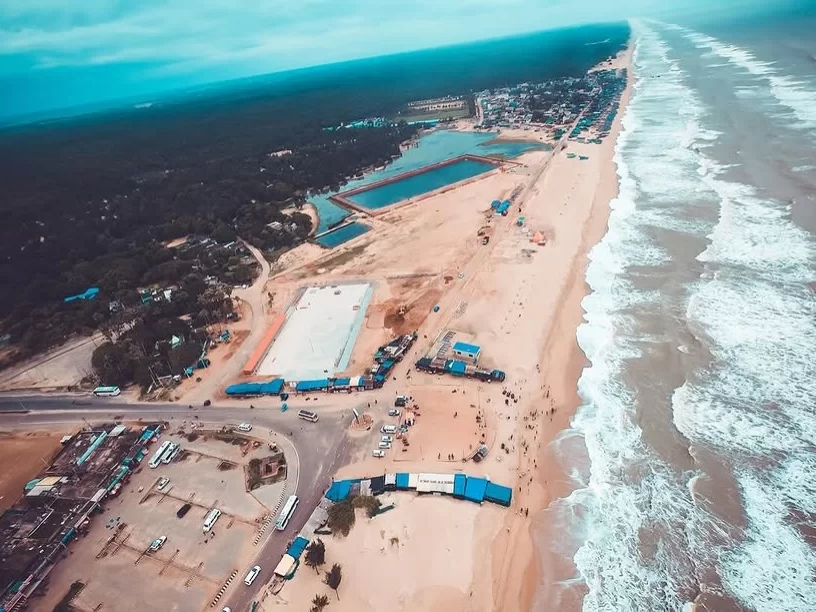
Visitors frequent this beach for its Blue Flag certification, which ensures high standards of cleanliness, safety, and environmental management. It is a major site for the annual Magha Saptami festival and offers a natural environment largely free from heavy commercial development compared to other regional beaches.

Quick Facts About Chandrabhaga Beach

Entry Fee Free
Timings 24 Hours
Altitude (m) 1
Ideal Visit Duration (hrs) 2
Best Time of Day Sunrise
Crowd Level Moderate
Distance from City Centre (km) 3
Walking Difficulty Easy
Parking Available Yes
Last Mile Access Road
Suitable for Kids Yes
Suitable for Seniors Yes
Wheelchair Friendly No

Quick Facts for Visiting Chandrabhaga Beach

Entry Fee Free
Timings 24 Hours (Recommended between 5:00 AM - 7:00 PM)
Altitude (m) 1 m
Ideal Visit Duration 1 to 2 hours
Best Time of Day Sunrise (Highly recommended for the view and religious significance)
Crowd Level Moderate (High during Magha Saptami festival and weekends)
Distance from City Centre (km) 3 km from Konark Sun Temple; 30 km from Puri
Walking Difficulty Easy (Sandy terrain near the water; paved walkway along the road)
Parking Available Yes (Designated parking area available near the beach entrance)
Last Mile Access Taxis, auto-rickshaws, and private vehicles via the Puri-Konark Marine Drive
Suitable for Kids Yes (Strong currents; swimming is generally not advised)
Suitable for Seniors Yes (Beach is accessible from the main road with minimal walking)
Wheelchair Friendly Partially (Paved promenade is accessible; sandy beach area is not)

Historical and Cultural Context of Chandrabhaga Beach

Chandrabhaga Beach holds significant religious importance as it was historically the site of the Chandrabhaga River, which once flowed into the Bay of Bengal near the Konark Sun Temple. According to ancient scriptures, Shamba, the son of Lord Krishna, was cured of leprosy after performing penance at this river mouth, establishing the beach as a sacred site for healing and solar worship.

The beach is the focal point of the Magha Saptami festival, also known as the Chandrabhaga Mela. During this annual event, thousands of pilgrims congregate before dawn to take a ritualistic dip in the waters to coincide with the rising sun. This tradition is a living link to the Sun Temple's legacy, as the temple itself was positioned to capture the first rays of the sun across these shores.

In contemporary times, the beach has transitioned from a purely religious site to a significant cultural and environmental landmark. It is the first beach in Asia to receive the Blue Flag certification for its rigorous environmental and safety standards. Additionally, the shoreline serves as a venue for the International Sand Art Festival, where artists utilize the specific texture of the local sand to create temporary sculptures during the winter months.

Best Time to Visit Chandrabhaga Beach

Chandrabhaga Beach, India's first Blue Flag certified shoreline, is best experienced when the coastal humidity subsides and the morning horizon is clear for its famous sunrises. While the beach is pristine, the open coastline offers no shade, making seasonal timing critical for anyone planning to stay beyond the early dawn hours.
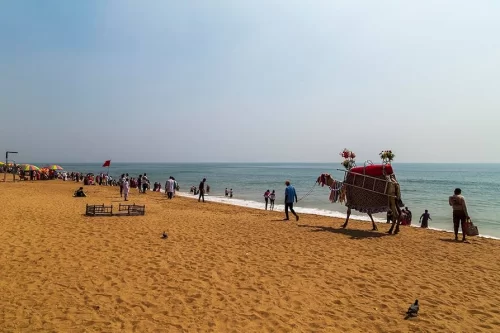
  • Ideal Months: October to March, particularly during the Chandrabhaga Mela (Magha Saptami) in February and the International Sand Art Festival in December.
  • Weather Conditions: Mild and dry with temperatures between 15°C and 28°C; these months provide the "golden hour" light sought by photographers and the necessary thermal comfort for long walks.
  • Periods to Avoid: April to June, when the mercury hits 40°C and the lack of tree cover leads to intense solar exposure; also, the monsoon peak (July to September) should be approached with caution as the Bay of Bengal becomes extremely rough with dangerous undercurrents.

Destination Access: How to Reach Chandrabhaga Beach

  • By Air: Biju Patnaik International Airport (BBI) in Bhubaneswar is the nearest airport, located approximately 70–80 km away. From the airport, travelers can hire pre-paid taxis or private cabs for a 2-hour journey via the Pipili-Konark road.
  • By Rail: Puri Railway Station (PURI) is the most convenient railhead, situated about 30 km from the beach. Regular trains connect Puri to major Indian cities; from the station, you can take an auto-rickshaw, taxi, or local bus to reach Chandrabhaga in roughly 45–60 minutes.
  • Road Access: The beach is exceptionally well-connected via the Puri-Konark Marine Drive, a highly scenic coastal road. It is located just 3 km east of the Konark Sun Temple, making it a standard stop for all tourist vehicles visiting the UNESCO site.
  • Last-Mile Connectivity: Local auto-rickshaws and cycle-rickshaws operate frequently between Konark town and the beach. For those staying in Puri, air-conditioned and non-AC public buses run regularly along the Marine Drive route, dropping passengers at the Chandrabhaga junction.
  • Travel Conditions: Swimming is strictly discouraged due to strong undercurrents and high waves characteristic of this stretch of the Bay of Bengal. Additionally, be cautious of wildlife (such as deer) crossing the road when driving along the Balukhand-Konark Wildlife Sanctuary stretch of the Marine Drive at night.

What to Expect When You Visit Chandrabhaga Beach

  • Environment and Surroundings: As India’s first Blue Flag certified beach, the environment is exceptionally clean and well-maintained. Located near the Konark Sun Temple, it offers a serene, less commercialized atmosphere than Puri. Expect wide stretches of golden sand fringed by Casuarina trees. The area is highly exposed to the sun with minimal natural shade on the shoreline, and the sea breeze is constant, often picking up significantly in the afternoons.
  • Facilities and Amenities: Being a Blue Flag site, it features modern, eco-friendly amenities including clean bio-toilets, changing rooms, and shower stations. There are paved wooden walkways to protect the sand dunes, solar-powered lighting, and clearly marked waste segregation bins. While there are local kiosks for snacks and coconut water near the entrance, high-end dining is limited to nearby resorts like Lotus Eco Beach Resort.
  • Accessibility and Movement: The beach is highly accessible compared to more rugged coastal spots. It features dedicated wooden walkways that allow for easier movement across the sand, accommodating strollers and individuals with limited mobility to an extent. However, moving closer to the water's edge still requires walking on soft, deep sand. The beach is located just 3 km from Konark and is easily reachable via the scenic Puri-Konark Marine Drive.
  • Typical Visitor Behavior and Conditions: The beach is a premier spot for witnessing the sunrise, so expect peak activity very early in the morning. Swimming is generally discouraged and often prohibited due to extremely strong undercurrents and rogue waves; lifeguards strictly monitor designated safe zones. During the Magha Saptami festival (January/February), the beach transforms into a major pilgrimage site with thousands of devotees taking ritual baths at dawn.

Important Visitor Information for Chandrabhaga Beach

  • Crowds and Weather: The beach is subject to strong maritime winds and high humidity, with the most pleasant weather occurring from October to February. Unlike the nearby Puri beach, it is significantly less crowded, though it draws thousands of devotees during the Magha Saptami festival in February. During the monsoon (June to September), the shoreline experiences heavy swells and unpredictable tidal surges.
  • Visiting Hours: The beach is accessible 24 hours a day, but the most critical time for visitors is sunrise. It is widely considered one of the premier sunrise points on India’s east coast, offering a direct view as the sun rises over the Bay of Bengal. Afternoon visits are recommended only for the Konark Dance Festival period in December, as there is zero natural shade on the sand.
  • Dress Code: There is no formal dress code, but modest swimwear or casual summer clothing is culturally appropriate. Visitors should be prepared to remove footwear if approaching the small religious shrines located near the shoreline. For the sunrise, a light windbreaker or shawl is recommended during the winter months due to the chilly sea breeze.
  • Safety and Cautions: Swimming is strictly discouraged and often prohibited due to extremely strong undercurrents and a sharp drop-off in the seabed near the shore. There are limited lifeguard patrols compared to Puri, so visitors should stay well away from the waterline during high tide. Be cautious of stray dogs and avoid walking in secluded stretches of the beach after dark as lighting is minimal.

Photography and Viewpoints at Chandrabhaga Beach

  • Sunrise Horizon Shots: As one of India's premier east-facing beaches, the primary photographic draw is the unobstructed sunrise. For the best composition, position yourself near the shoreline at least 20 minutes before dawn to capture the deep orange gradients reflecting off the wet sand during low tide.
  • The Casuarina Tree Line: The backdrop of the beach is lined with dense Casuarina groves. These provide excellent silhouette opportunities and filtered light during the mid-morning, offering a vertical structural element to contrast against the flat horizon of the Bay of Bengal.
  • Long Exposure Seascapes: The shoreline at Chandrabhaga often features moderate surf and a wide intertidal zone. Using a neutral density (ND) filter and a tripod on the firmer sand further back from the water line allows for smooth, misty water effects around the occasional scattered rocks.
  • Aerial Perspective from the Lighthouse: For a panoramic view of the coastline and the Marine Drive road, visit the nearby Chandrabhaga Lighthouse. The elevated gallery provides a bird's-eye view of the curving shoreline, which is particularly effective for wide-angle landscape shots.
  • Sand Art and Cultural Subjects: Local artists frequently create intricate sand sculptures near the main entrance. When photographing these, use a shallow depth of field to blur the often-crowded background and emphasize the temporary textures of the sand carvings.
  • Drone Regulations: The beach is located in a relatively open area, but drone operators should be cautious. While there are no permanent "no-fly" signs, proximity to sensitive installations or large festival gatherings (like Magha Saptami) may trigger temporary restrictions by local police.
  • Crowd and Access Factors: Unlike the beaches in Puri, Chandrabhaga is significantly less crowded. However, it is a popular stop for tour buses. To ensure people-free frames of the dunes and shoreline, walk approximately 500 meters north or south of the main parking area where the tourist density drops sharply.

Near By Attraction

Puri Beach Odisha golden sands sunset with traditional Patachitra painted Jagannath Balabhadra Subhadra idols - iconic large eyes red-black faces, colorful Odia folk art figurines against Bay of Bengal waves, perfect Rath Yatra spiritual India tour packag Beach

Puri Beach

Puri Beach is a prominent golden sand coastline on the Bay of Bengal, recognized as a sacred site for Hindu pilgrims and a major recreational destination.

Shree Jagannath Temple towers at Puri during partly cloudy day, featuring Neelachakra flag, white-red domes, ancient spires, perfect spiritual experience with Odisha Puri tour package. Temple

Shree Jagannatha Temple

The Shri Jagannath Temple is a 12th-century Hindu shrine dedicated to Lord Jagannath, a form of Vishnu, and is one of the four holiest Char Dham pilgrimage sites.

Puri Konark Marine Drive Odisha aerial drone ocean waves golden beach highway palms, scenic coastal road Chilika Lake views, perfect beach drive sunset paradise package.  Beach

Marine Drive Beach, Puri

Marine Drive Beach is a long stretch of coastline along the Bay of Bengal, connecting the pilgrimage city of Puri to the Sun Temple at Konark.

Frequently Asked Questions About Chandrabhaga Beach

Chandrabhaga Beach is located near Konark in Puri district of Odisha, India, along the Bay of Bengal coast.
Chandrabhaga Beach is known for its scenic sunrise views and its proximity to the Konark Sun Temple.
The best time to visit Chandrabhaga Beach is from October to March when the weather in Odisha is pleasant for beach visits.
Visitors can reach Chandrabhaga Beach by road from Konark and Puri, with Bhubaneswar serving as the nearest major airport and railway station in Odisha.
There is no entry fee to visit Chandrabhaga Beach as it is a public beach area.
Swimming at Chandrabhaga Beach should be done cautiously as sea currents can be strong and lifeguard presence may vary.
One to two hours are generally sufficient to relax and enjoy the coastal views at Chandrabhaga Beach.
Chandrabhaga Beach is usually less crowded than central Puri Beach, especially on weekdays.
Water sports are limited at Chandrabhaga Beach, and activities depend on local operators and seasonal conditions.
Chandrabhaga Beach is suitable for families seeking a quieter beach environment, though children should be supervised near the water.
Tourists can find hotels and resorts in Konark and Puri, Odisha, within a short driving distance of Chandrabhaga Beach.

Loved this place ? Let’s Plan Your Odisha Trip

Get customized Odisha tour planning designed around temple visit timing, coastal weather patterns, wildlife seasonality, and realistic travel pacing across regions. Whether you are visiting for spiritual journeys, heritage architecture, beach relaxation,

⚡ Quick Response | 💰 Free consultation | 🕒 24×7 expert support

×

Plan Your Trip