Khandagiri Caves, Bhubaneswar, Odisha, India | History & Visitor Guide

Khandagiri Caves , Bhubaneswar
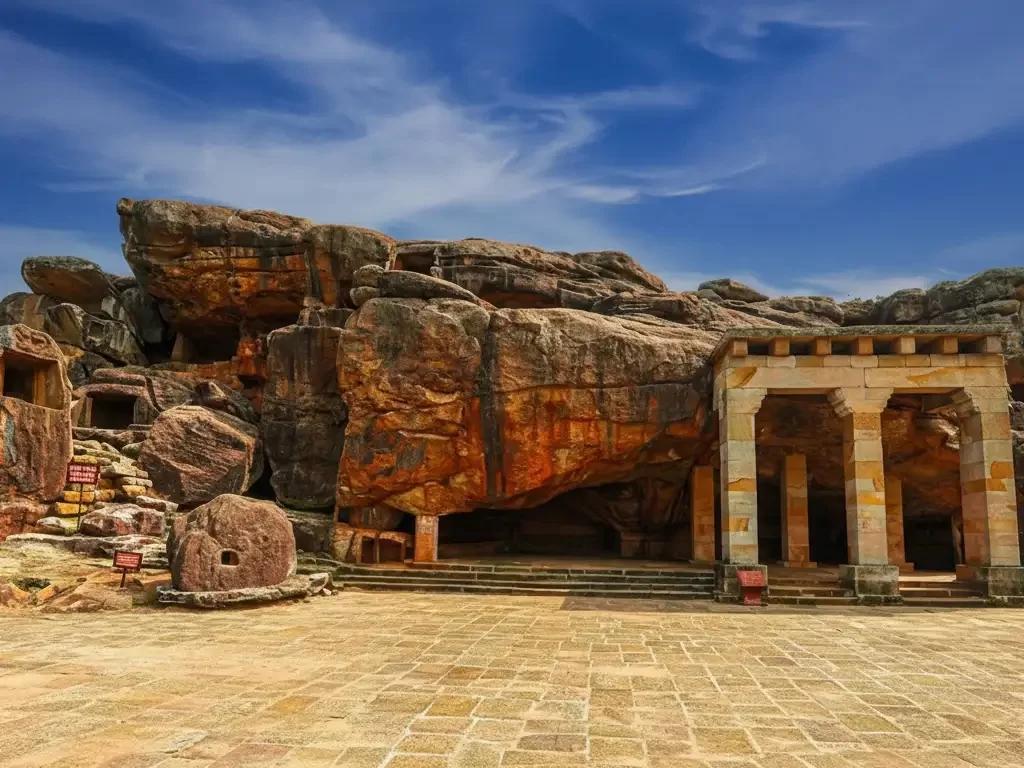
Visitors explore these caves to see religious iconography, including carvings of Tirthankaras and Hindu deities, and to reach the hilltop Jain temple. The site is a primary destination for those studying ancient Indian rock-cut architecture and provides a panoramic view of the Bhubaneswar skyline.

Quick Facts About Khandagiri Caves

Entry Fee Free
Timings 08:00 - 17:00
Altitude (m) 37
Ideal Visit Duration (hrs) 1
Best Time of Day Morning / Evening
Crowd Level High
Distance from City Centre (km) 7
Walking Difficulty Moderate
Parking Available Yes
Last Mile Access Road
Suitable for Kids Yes
Suitable for Seniors Moderate
Wheelchair Friendly No

Why Visit Khandagiri Caves

Visitors ascend Khandagiri primarily to explore its 15 rock-cut shelters which, alongside the neighboring Udayagiri, represent the pinnacle of Jain monastic architecture in East India. Pilgrims and history enthusiasts come to observe the intricate carvings of Tirthankaras and the continuous religious use of the site, which remains an active center for Jain worship centuries after its excavation.

The atmosphere at Khandagiri is more communal and vibrant than its twin hill, often bustling with local devotees and resident macaques near the hilltop temple. The climb offers a physical transition from the urban noise of Bhubaneswar to a breezy, elevated plateau where the scent of ritual incense lingers among the ancient, weather-beaten sandstone facades.

Khandagiri is distinct for its living religious continuity, exemplified by the 18th-century Jain temple standing atop a hill carved in the 2nd century BCE. While Udayagiri is largely an archaeological park, Khandagiri provides a tangible link between ancient asceticism and modern practice, offering panoramic views that stretch across the temple city’s horizon from its highest ceremonial points.

Historical and Architectural Context of Khandagiri Caves

Khandagiri Caves, situated directly opposite Udayagiri, consist of 15 rock-cut shelters dating back to the 2nd century BCE. Originally excavated during the reign of King Kharavela to house Jain monastics, these caves transitioned over centuries into a prominent site of Jain pilgrimage, with significant structural modifications and iconographic additions made during the 11th-century Somavamshi dynasty.

The caves are characterized by their religious iconography, specifically the Ananta Gumpha (Cave 3), which features high-relief carvings of Jain Tirthankaras, various deities, and motifs such as elephants and Lakshmi. Unlike the purely residential nature of the neighboring hill, Khandagiri maintains a more pronounced devotional atmosphere, capped by a modern Jain temple at the summit.

Artistically, the site showcases the evolution of Kalingan rock-cut art, blending early ascetic simplicity with later, more ornate medieval sculptures. Notable caves like Navamuni Gumpha and Barabhuji Gumpha contain detailed carvings of the 24 Tirthankaras and their respective Sasanadevis, providing an archaeological timeline of Jainism’s enduring presence in Odisha.

Best Time to Visit Khandagiri Caves

Visiting the Khandagiri Caves is most enjoyable during the cooler winter months when the steep ascent to the summit is manageable and the panoramic views of Bhubaneswar are not obscured by summer haze or monsoon clouds. As the site involves significant outdoor movement on exposed rock surfaces, avoiding the peak solar hours of the dry season is vital for a safe and comfortable experience.
  • Ideal Months: October to March, which provides the best balance of cool mornings and comfortable afternoons for exploring the religious iconography and panoramic viewpoints.
  • Weather Conditions: Expect temperate conditions with low humidity and average daytime highs around 24°C, ideal for the physical exertion required to navigate the narrow cave entrances and uneven steps.
  • Periods to Avoid: April to early June due to extreme radiant heat from the sandstone hills, which can make the surfaces hot to the touch; additionally, the monsoon months (July to September) can make the rock-cut steps slippery and hazardous.

Direct Transit Guide: How to Reach Khandagiri Caves

  • By Air: Biju Patnaik International Airport (BBI) is the gateway to the site, located just 7 km away. A taxi or app-based cab ride takes approximately 15–20 minutes via the well-connected Airport Road and Khandagiri Marg.
  • By Rail: Bhubaneswar Railway Station (BBS) is the nearest major junction, roughly 8 km from the caves. Travelers can opt for city buses, auto-rickshaws, or private taxis from the station's main exit for a direct 25-minute commute.
  • Road Connectivity: The caves are positioned conveniently near the NH-16 (Kolkata-Chennai Highway). For those traveling by inter-state or local buses, the Baramunda ISBT is the primary drop-off point, situated only 2 km from the cave entrance.
  • Last-Mile Connectivity: The "Mo Bus" public transit system offers frequent stops at the Khandagiri Square. From the square, the cave entrance is within short walking distance, though local auto-rickshaws are available for those preferring not to walk the slight incline.
  • Travel Conditions: While the caves are easily accessible, the terrain involves steep, weathered stone steps. Visitors should be mindful of the local monkey population, which is particularly active near the Khandagiri hill entrance; avoid carrying visible food items.

What to Expect When You Visit Khandagiri Caves

  • Environment and Surroundings: Situated on a hill directly opposite Udayagiri, these 15 caves are characterized by a more vertical and rugged landscape. The environment is largely unshaded, with the sandstone topography reflecting high levels of heat and light. Expect a semi-natural setting where the caves are integrated into the hillside, offering panoramic views of Bhubaneswar that are often accompanied by strong wind gusts at higher elevations.
  • Facilities and Amenities: Facilities are minimal and restricted to the base of the hill near the main road. There are small local stalls providing water and snacks, but no formal dining or rest areas within the cave complex. Public restrooms are located near the entrance. Maintenance is less structured than at the neighboring site, and visitors should be prepared for a lack of modern infrastructure once the ascent begins.
  • Accessibility and Movement: Movement requires significant physical exertion, as the path involves climbing steep, irregular stone steps that can be slippery, especially during the monsoon or early morning. Handrails are not present in most sections. The site is not wheelchair accessible and is unsuitable for visitors with serious mobility issues. Navigating between tiers requires steady footwork and careful balance on weathered rock surfaces.
  • Typical Visitor Behavior and Conditions: The site is heavily populated by Macaque monkeys that are habituated to humans; they can be aggressive if food or plastic bags are visible. Unlike the more academic atmosphere of Udayagiri, Khandagiri attracts a high volume of local pilgrims visiting the Jain temple at the summit. Expect crowded pathways and a lively, sometimes noisy environment, particularly on weekends and religious holidays.

Important Visitor Information for Khandagiri Caves

  • Crowds and Weather: The site is a major religious destination for Jain pilgrims, especially during the Magha Saptami festival in January or February, when the area becomes extremely congested. Unlike the adjacent Udayagiri, Khandagiri features active temples, leading to higher foot traffic from devotees. Due to the lack of canopy, mid-day heat is intense; visiting between November and February provides the most comfortable conditions.
  • Visiting Hours: The caves are open from sunrise to sunset (approximately 6:00 AM to 6:00 PM). The quietest time for exploration is before 8:30 AM. Sunset offers the best photographic opportunities of the Bhubaneswar skyline from the summit, but the area becomes increasingly crowded during this window.
  • Dress Code: As many of the caves—such as Cave 7 (Navamuni Gumpha) and Cave 9 (Trishula Gumpha)—house active religious idols, modest attire that covers knees and shoulders is expected. You must remove footwear before entering the Jain temple at the summit and several of the sanctified cave chambers.
  • Safety and Cautions: This site has a very high population of aggressive rhesus macaques; do not carry visible food, plastic bags, or loose water bottles, as the monkeys will frequently attempt to snatch them. The steps leading to the top of the hill are steep, rock-cut, and lack handrails in several sections; exercise extreme caution during the monsoon as the sandstone becomes slippery. It is advised to avoid the secluded higher caves after dusk for personal safety.

Photography and Viewpoints at Khandagiri Caves

  • Cave 1 and 2 (Ananta Gumpha) Carvings: These caves feature the most intricate relief sculptures, including depictions of Lakshmi and Surya. The morning light is essential here to illuminate the decorative archways and the distinct floral patterns carved into the sandstone.
  • Summit Viewpoint: The top of Khandagiri hill provides the best vantage point for a panoramic shot of the twin hill, Udayagiri. From this elevation, you can capture the sprawling rock-cut landscape against the horizon, especially during the sunset golden hour.
  • Cave 3 (Navamuni Gumpha) Tirthankara Reliefs: This cave contains well-preserved carvings of the Jain Tirthankaras. For detailed shots of these figures, use a lens with a wide aperture to handle the lower light levels within the inner chambers.
  • Steep Staircase Perspectives: The steep, rock-cut steps leading to the upper caves offer a dramatic leading-line composition. Shooting from the base looking upward captures the verticality of the monastic cells carved directly into the cliff face.
  • Lighting and Exposure: Because the caves are carved into porous orange-brown sandstone, midday sun can cause significant glare. Overcast conditions or early morning light (7:00 AM – 9:00 AM) help preserve the natural textures and warm tones of the rock without blowing out the highlights.
  • Monkey Population Factor: The presence of a large Rhesus macaque population is a specific factor for photographers. Keep camera straps secure and avoid changing lenses in the open, as the monkeys are highly active and may attempt to grab loose equipment.
  • Rules and Restrictions: Flash photography is discouraged inside the smaller cells to protect the ancient surfaces. Similar to the neighboring site, tripods and drones are strictly prohibited by the Archaeological Survey of India (ASI) without prior official authorization.

Near By Attraction

Chausath Yogini Temple Morena Madhya Pradesh Tour Package, Mitaoli hilltop 64 yogini shrines circular open-air Kachchhapaghata 11th century Ekattarso Mahadeva Shiva lingams, ideal Madhya Pradesh heritage tour package. Temple

Chausathi Yogini Temple

Chausathi Yogini Temple is a circular 9th-century stone temple located in Hirapur near Bhubaneswar, Odisha, dedicated to the 64 Yogini deities.

Nandankanan Zoological Park iconic entrance with white tiger and Royal Bengal tiger sculptures amid lush greenery, perfect Odisha wildlife safari tour package.  Zoo

Nandankanan Zoological Park

Nandankanan Zoological Park is a major zoological park and wildlife conservation centre located near Bhubaneswar, known for its large animal enclosures and safari zones.

Lingaraj Temple at Bhubaneswar on clear day, featuring main Kalinga spire with Odisha flag, perfect heritage Bhubaneswar tour package. Temple

Lingaraj Temple

Lingaraj Temple is a major 11th-century Hindu temple in Bhubaneswar dedicated to Lord Shiva, known for its towering Kalinga-style architecture.

Frequently Asked Questions About Khandagiri Caves

Khandagiri Caves is located in Bhubaneswar in Odisha, India, near the Udayagiri hills.
Khandagiri Caves is known for its ancient rock cut caves, Jain heritage, and panoramic hilltop views.
The best time to visit Khandagiri Caves is from October to March when the weather in Odisha is pleasant for climbing and sightseeing.
Visitors can reach Khandagiri Caves by road from different parts of Bhubaneswar, which has the nearest major airport and railway station in Odisha.
Yes, Khandagiri Caves charges a nominal entry fee as it is maintained by the Archaeological Survey of India.
Khandagiri Caves is generally open from morning until evening and remains accessible throughout the day.
Around one to two hours are sufficient to explore the caves and enjoy the views at Khandagiri Caves.
Khandagiri Caves is suitable for photography due to its rock carvings and elevated viewpoints.
Licensed guides may be available at Khandagiri Caves for visitors who want detailed historical explanations.
Khandagiri Caves is suitable for families, though visitors should be prepared for steps and uneven surfaces.
Tourists can find hotels and guesthouses in Bhubaneswar, Odisha, within a short driving distance of Khandagiri Caves.

Loved this place ? Let’s Plan Your Odisha Trip

Get customized Odisha tour planning designed around temple visit timing, coastal weather patterns, wildlife seasonality, and realistic travel pacing across regions. Whether you are visiting for spiritual journeys, heritage architecture, beach relaxation,

⚡ Quick Response | 💰 Free consultation | 🕒 24×7 expert support

×

Plan Your Trip