Quick Facts About Marine Drive
Quick Facts About Marine Drive Mumbai
| Entry Fee | No entry fee |
|---|---|
| Timings | Open 24 hours |
| Altitude (m) | 10 m |
| Ideal Visit Duration | 30–90 minutes |
| Best Time of Day | Evening for sunset views and Queen’s Necklace illumination |
| Crowd Level | High (very popular in evenings and weekends) |
| Distance from City Centre (km) | 2 km (from South Mumbai city centre) |
| Walking Difficulty | Easy (flat seaside promenade) |
| Parking Available | Limited (paid roadside parking nearby) |
| Last Mile Access | Taxi/auto/local train to Churchgate or Marine Lines; short walk |
| Suitable for Kids | Yes (open promenade; supervision required near sea wall) |
| Suitable for Seniors | Yes (seating along promenade available) |
| Wheelchair Friendly | Yes (paved and accessible walkway) |
Why Visit Marine Drive Mumbai
Why Visit
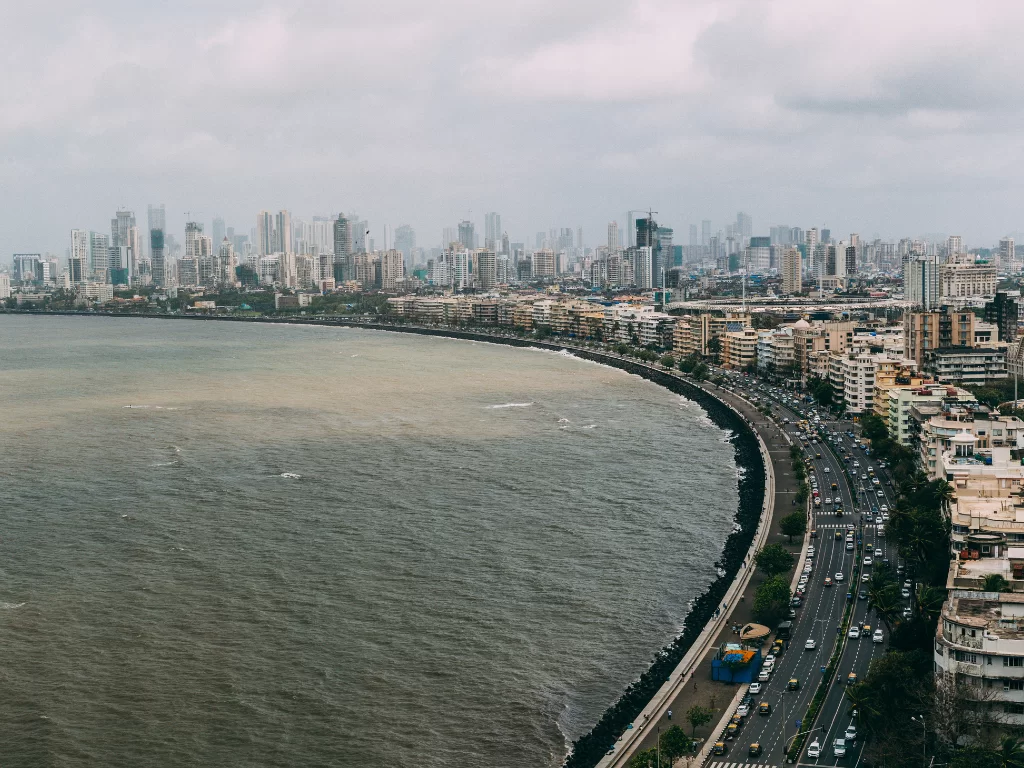
Marine Drive is one of Mumbai’s most iconic waterfront promenades, stretching along the Arabian Sea from Nariman Point to Girgaum Chowpatty. Built in the early 20th century as part of the city’s reclamation projects, it forms a key part of South Mumbai’s urban landscape. Visitors come to enjoy panoramic sea views, experience the city’s coastal charm, and walk along a promenade that symbolises Mumbai’s dynamic spirit.
Atmosphere
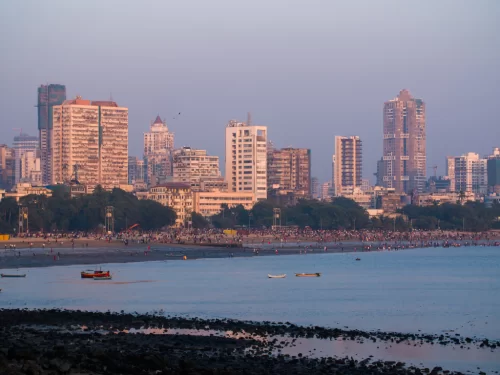
The atmosphere is breezy, lively, and scenic, especially during evenings when locals gather to relax and watch the sunset. The curve of streetlights along the boulevard creates the famous “Queen’s Necklace” effect after dark. Early mornings offer a calmer environment ideal for walking and photography, while nights showcase a vibrant cityscape.
What Makes it Special
What makes Marine Drive special is its sweeping arc of Art Deco buildings—part of Mumbai’s UNESCO-listed Victorian Gothic and Art Deco Ensemble—and its uninterrupted sea-facing promenade. The blend of heritage architecture, coastal views, and urban energy gives it enduring cultural and visual appeal. It remains one of Mumbai’s most recognisable and beloved public spaces.
History of Marine Drive Mumbai
Marine Drive is a 3.6-kilometer-long boulevard located along the Arabian Sea in South Mumbai, Maharashtra. The road was constructed in the 1920s and 1930s as part of a major land reclamation project undertaken during British colonial rule to expand the city’s coastal infrastructure and urban layout.
Designed in a sweeping C-shaped curve, the promenade links Nariman Point to Girgaum Chowpatty and became a defining feature of Mumbai’s Art Deco architectural district. The residential and commercial buildings lining Marine Drive, constructed primarily in the 1930s and 1940s, represent one of the largest collections of Art Deco structures in the world, now recognized as part of a UNESCO World Heritage ensemble.
Over time, Marine Drive evolved from a colonial-era urban development project into one of Mumbai’s most iconic public spaces. Popularly known as the “Queen’s Necklace” due to its illuminated nighttime appearance, it stands today as a landmark symbolizing Mumbai’s architectural heritage, coastal identity, and urban evolution.
Best Time to Visit – Marine Drive Mumbai
The best time to visit Marine Drive in Mumbai, Maharashtra, is from November to February, when the weather is pleasant and ideal for enjoying the iconic seafront promenade along the Arabian Sea. During these months, temperatures are moderate and humidity is lower, making it comfortable for evening walks and relaxed seaside views.
- November–December: Cool and comfortable weather—ideal for sunset strolls and photography.
- January–February: Most pleasant season—best for extended evening visits and sea breeze enjoyment.
- March: Warmer conditions begin—late afternoon visits are recommended.
- April–May (Summer): Hot and humid; evening visits are more manageable.
- June–September (Monsoon): Heavy rainfall and strong sea waves; dramatic views but seating areas may be wet or restricted.
Best time of day: 5:30 PM to 8:30 PM is ideal for visiting Marine Drive, allowing visitors to enjoy sunset views and the illuminated “Queen’s Necklace” skyline after dusk.
- Experience tip: Sit along the promenade to enjoy cool sea breezes and city views.
- Photography tip: Sunset and post-sunset hours create stunning reflections along the curved coastline.
- Visitor note: Weekends attract heavy crowds—arrive early for a quieter experience.
How to Reach Marine Drive Mumbai
Marine Drive, officially known as Netaji Subhash Chandra Bose Road, is located in South Mumbai, Maharashtra, stretching along the Arabian Sea from Nariman Point to Girgaum Chowpatty. Popularly called the “Queen’s Necklace,” it is easily accessible by road and suburban rail.
- By Air (Nearest airport): The nearest airport is Chhatrapati Shivaji Maharaj International Airport, Mumbai, approximately 22–25 km away. From the airport, hire a taxi or app-based cab to Marine Drive. Travel time is about 1 to 1.5 hours depending on traffic.
- By Train (Nearest railway stations): The closest suburban railway stations are Churchgate (Western Line) and Chhatrapati Shivaji Maharaj Terminus (CSMT) (Central Line), both within 1–2 km of Marine Drive. From the station, walk or take a taxi to reach the promenade.
- By Metro: Metro connectivity in South Mumbai is limited; visitors typically use suburban rail up to Churchgate or CSMT and continue by foot or road.
- By Road: Marine Drive is well connected via Nariman Point, Churchgate, and Girgaum areas. BEST buses frequently operate toward Churchgate and Nariman Point.
- Taxi: Taxis are widely available across Mumbai and can drop you directly at Marine Drive or Nariman Point. (Auto-rickshaws are not permitted in South Mumbai.)
- Self-drive: Self-driving is possible, but parking along Marine Drive is limited. Use designated public parking zones near Nariman Point or Girgaum Chowpatty.
- Walking access: Visitors staying in South Mumbai can comfortably walk to Marine Drive from nearby areas such as Churchgate, Nariman Point, and Colaba.
- Travel tips (EEAT): Visit during evening hours to experience the illuminated “Queen’s Necklace” view. The promenade can be crowded on weekends and holidays. Avoid sitting on the parapet during high tide conditions.
What to Expect When You Visit Marine Drive
Marine Drive, officially known as Netaji Subhash Chandra Bose Road, is a 3.6-kilometer-long boulevard in South Mumbai, Maharashtra, stretching along the Arabian Sea from Nariman Point to Girgaum Chowpatty. Famous for its sweeping curve and evening illumination known as the “Queen’s Necklace,” it is a scenic urban promenade rather than a structured tourist monument.
- Iconic sea-facing promenade: expect uninterrupted views of the Arabian Sea along a wide, paved walkway.
- “Queen’s Necklace” effect: after sunset, the curved streetlights create a sparkling necklace-like appearance.
- Popular sunset viewpoint: the location is one of Mumbai’s most visited spots for watching the sun set over the sea.
- Art Deco architecture backdrop: several heritage Art Deco buildings line the boulevard, adding architectural interest.
- Casual leisure atmosphere: locals gather for jogging, walking, socializing, and relaxation.
- Open public access: there is no entry fee, and visitors can walk freely along the promenade.
- Crowds during evenings and weekends: peak hours see heavy footfall, especially near sunset.
- Photography-friendly setting: sea views, skyline silhouettes, and night lighting offer excellent photo opportunities.
- Proximity to Chowpatty Beach: the northern end connects to Girgaum Chowpatty, a popular beach area.
- Short to flexible visit duration: visitors may spend anywhere from 30 minutes to a few hours depending on preference.
Tip for a smoother visit: arrive before sunset to secure a comfortable seating spot along the promenade, avoid peak monsoon waves during rough sea conditions, and combine your walk with nearby South Mumbai attractions.
Important Visitor Information – Marine Drive, Mumbai
- Crowd & Weather Notes: Marine Drive experiences heavy crowds during evenings, weekends, public holidays, and peak tourist season (November to February). Mumbai has a tropical coastal climate; summers (March to May) are hot and humid, monsoon months (June to September) bring heavy rainfall and strong sea waves, while winters are relatively pleasant.
- Peak / Quiet Hours: Peak hours are late afternoon to night, especially around sunset when visitors gather along the promenade. Early morning is quieter and ideal for walks, jogging, and photography.
- Dress Code: No formal dress code applies. Wear light, breathable clothing suitable for humid weather and comfortable footwear for walking along the promenade.
- Safety Notes: Avoid sitting on the edge during high tide or rough sea conditions, especially in monsoon. Be cautious on wet surfaces. Keep personal belongings secure in crowded areas and avoid venturing into isolated stretches late at night.
Photography and Viewpoint – Marine Drive Mumbai
Marine Drive, officially known as Netaji Subhash Chandra Bose Road, is a 3.6-kilometre boulevard along the Arabian Sea in South Mumbai, Maharashtra. Often referred to as the “Queen’s Necklace” due to its curved streetlights glowing at night, the promenade stretches from Nariman Point to Girgaum Chowpatty. Photography here blends sweeping coastal curves, skyline silhouettes, sunset reflections, and long-exposure cityscapes.
- Best light for photography: Sunset offers warm sky tones over the Arabian Sea, while blue-hour evenings highlight the illuminated “Queen’s Necklace” curve.
- Curved boulevard compositions: Use elevated viewpoints from nearby buildings or hills to capture the iconic sweeping arc of lights.
- Sea-wall foreground framing: Position along the promenade’s stone parapet to include leading lines toward the skyline.
- Wide vs. telephoto strategy: Wide lenses capture expansive coastal panoramas, while telephoto lenses isolate skyline buildings and sunset details.
- Long-exposure night shots: Use slower shutter speeds to smooth sea textures and create light trails from moving vehicles.
- Reflection-focused photography: Calm evenings allow subtle reflections of skyline lights across the water surface.
- Mobile photography tips: Use gridlines to maintain straight horizons, stabilize your device for low-light shots, and reduce exposure slightly during sunset.
- Monsoon mood frames: Dramatic clouds and crashing waves during monsoon season create powerful coastal imagery.
- Crowd & timing awareness: Evenings attract large crowds—arrive early for clearer foreground compositions.
- Responsible public-space photography: Respect visitor privacy, avoid blocking the promenade, and remain cautious near waves during high tide.