Quick Facts About Juhu Beach
Quick Facts About Juhu Beach Mumbai
| Entry Fee | No entry fee |
|---|---|
| Timings | Open 24 hours |
| Altitude (m) | Sea level (0 m) |
| Ideal Visit Duration | 1–2 hours |
| Best Time of Day | Early morning or evening for cooler weather and sunset views |
| Crowd Level | High (very busy during evenings, weekends, and holidays) |
| Distance from City Centre (km) | 20 km (from South Mumbai city centre) |
| Walking Difficulty | Easy (wide sandy shoreline) |
| Parking Available | Limited (paid parking nearby) |
| Last Mile Access | Taxi/auto/local train to Vile Parle or Andheri; short ride to beach |
| Suitable for Kids | Yes (supervision required near water) |
| Suitable for Seniors | Yes (seating areas and promenade access available) |
| Wheelchair Friendly | Limited (promenade accessible; sand area not accessible) |
Why Visit Juhu Beach Mumbai
Why Visit
Juhu Beach is one of Mumbai’s most popular and expansive beaches, located along the Arabian Sea in the western suburbs of Maharashtra. It attracts visitors seeking a lively seaside experience, local street food culture, and open coastal views within city limits. The beach is closely associated with Mumbai’s film industry due to its proximity to several celebrity residences.
Atmosphere
The atmosphere is vibrant, energetic, and distinctly urban, especially during evenings and weekends when locals gather for recreation and sunset views. The wide sandy stretch fills with food stalls offering Mumbai specialties such as pav bhaji and bhel puri. Early mornings feel calmer, with walkers and joggers enjoying the sea breeze.
What Makes it Special
What makes Juhu Beach special is its strong cultural identity as a social gathering space and its role in Mumbai’s public life. The long shoreline, accessibility, and lively street-food scene create a uniquely local beach experience. Its blend of coastal scenery and metropolitan character makes it one of Mumbai’s most recognisable recreational landmarks.
History of Juhu Beach Mumbai
Juhu Beach is located along the Arabian Sea in the western suburbs of Mumbai, Maharashtra, and historically formed part of a narrow coastal island separated from the mainland. During the 19th century, land reclamation and infrastructural development gradually integrated Juhu into the expanding city of Bombay under British administration.
Originally characterized by fishing villages and agrarian settlements, the area evolved in the early 20th century into a seaside retreat with the establishment of residential bungalows and hospitality facilities. The beach became associated with Mumbai’s growing suburban development and later gained prominence as the city’s film industry expanded nearby.
Over time, Juhu Beach transformed into one of Mumbai’s most visited public shorelines, symbolizing the city’s coastal identity and urban leisure culture. Today, it stands as a historic coastal stretch reflecting the transformation of Bombay’s reclaimed islands into a unified metropolitan landscape.
Best Time to Visit – Juhu Beach Mumbai
The best time to visit Juhu Beach in Mumbai, Maharashtra, is from November to February, when the weather is pleasant and ideal for enjoying seaside walks and sunset views along the Arabian Sea. During these months, temperatures are moderate and humidity is lower, making it comfortable for relaxed evening outings.
- November–December: Cool and comfortable weather—ideal for beach strolls and photography.
- January–February: Most pleasant season—best for extended evening visits and enjoying street food.
- March: Warmer conditions begin—late afternoon and evening visits are recommended.
- April–May (Summer): Hot and humid; evening visits are more manageable.
- June–September (Monsoon): Heavy rainfall and strong sea waves; swimming is not advised during rough weather.
Best time of day: 5:00 PM to 8:00 PM is ideal for visiting Juhu Beach, allowing visitors to enjoy sunset views and the lively evening atmosphere.
- Experience tip: Visit during sunset to enjoy cooler sea breezes and vibrant beach activity.
- Photography tip: Sunset creates colorful skies and scenic silhouettes along the shoreline.
- Visitor note: Weekends and public holidays attract heavy crowds—plan accordingly.
How to Reach Juhu Beach Mumbai
Juhu Beach is located in the Juhu suburb of Mumbai, Maharashtra, along the Arabian Sea. One of the city’s most popular beaches, it is easily accessible by road and suburban rail from various parts of Mumbai.
- By Air (Nearest airport): The nearest airport is Chhatrapati Shivaji Maharaj International Airport, Mumbai, approximately 5–7 km away. From the airport, hire a taxi or app-based cab to Juhu Beach. Travel time is about 20–30 minutes depending on traffic.
- By Train (Nearest railway stations): The closest suburban railway stations are Vile Parle and Andheri (Western Line), located about 3–4 km from the beach. From the station, take a taxi, auto-rickshaw, or BEST bus to reach Juhu.
- By Metro: The nearest Mumbai Metro station is Andheri (Line 1). From there, hire a taxi or auto-rickshaw to Juhu Beach.
- By Road: Juhu Beach is well connected via Juhu Tara Road and SV Road. BEST buses frequently operate toward Juhu and Vile Parle.
- Taxi / Auto-rickshaw: Taxis and auto-rickshaws are widely available in the western suburbs and can drop you directly at Juhu Beach.
- Self-drive: Self-driving is convenient via western suburban roads. Parking facilities are available near the beach, though they may be limited and crowded during evenings and weekends.
- Walking access: Visitors staying in Juhu area hotels can comfortably walk to the beach.
- Travel tips (EEAT): Visit during evening hours to enjoy sunset views and street food stalls. Avoid entering deep waters due to strong currents. The beach can be crowded on weekends and public holidays.
What to Expect When You Visit Juhu Beach Mumbai
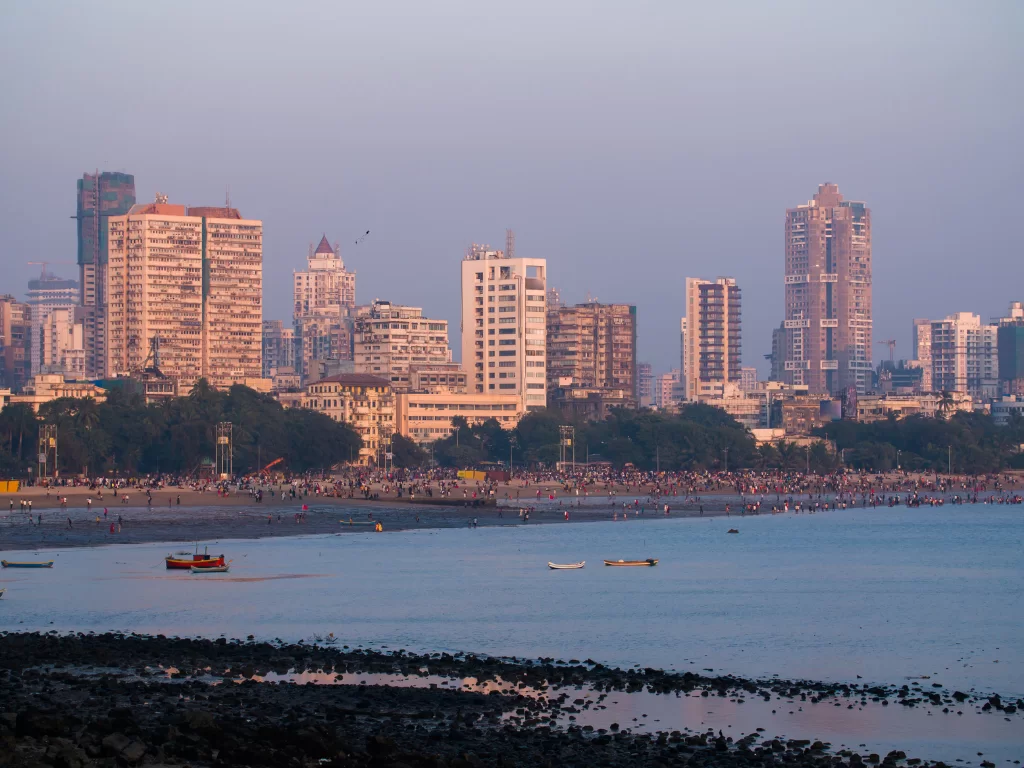
Juhu Beach, located along the Arabian Sea in the western suburbs of Mumbai, Maharashtra, is one of the city’s most popular public beaches. Known for its wide sandy shoreline, vibrant street food stalls, and lively sunset views, the experience is energetic and urban rather than secluded or resort-like.
- Wide sandy shoreline: expect a long stretch of open beach suitable for walking and casual relaxation.
- Iconic Mumbai sunset views: the beach is especially popular during late afternoon and sunset hours.
- Street food culture: stalls serving local favorites like pav bhaji, bhel puri, and other snacks are a major attraction.
- Bustling public atmosphere: weekends and evenings attract large crowds of locals and tourists.
- Open public access: no entry fee, with free movement along the beachfront.
- Basic recreational activities: visitors often enjoy beach walks, informal games, and horse or camel rides when available.
- Limited swimming safety: strong currents and lack of structured lifeguard zones make deep swimming inadvisable.
- Photography-friendly setting: sea views, skyline silhouettes, and sunset colors provide good photo opportunities.
- Nearby celebrity residences: the surrounding Juhu area is known for housing prominent film personalities.
- Short to flexible visit duration: visitors may spend an hour or several hours depending on preference.
Tip for a smoother visit: arrive before sunset for better seating and views, avoid peak weekend evenings if you prefer fewer crowds, safeguard personal belongings, and avoid entering deep waters during high tide conditions.
Important Visitor Information – Juhu Beach, Mumbai
- Crowd & Weather Notes: Juhu Beach experiences heavy crowds throughout the year, especially during evenings, weekends, public holidays, and peak tourist season (November to February). Mumbai has a tropical coastal climate; summers (March to May) are hot and humid, monsoon months (June to September) bring heavy rainfall and rough sea conditions, while winters are relatively pleasant.
- Peak / Quiet Hours: Peak hours are late afternoon to evening, particularly around sunset. Early morning is comparatively quieter and ideal for walks, jogging, and photography.
- Dress Code: Casual beachwear is acceptable on the beach, but modest clothing is recommended when moving through nearby public areas. Light, breathable clothing and comfortable footwear are suitable for walking on the sand.
- Safety Notes: Swimming is generally discouraged due to strong currents and varying sea conditions—follow local advisories strictly. Avoid venturing close to the water during high tide or monsoon. Keep valuables secure in crowded areas and avoid isolated stretches after dark.
Photography and Viewpoint – Juhu Beach Mumbai
Juhu Beach, located along the Arabian Sea in the western suburbs of Mumbai, Maharashtra, is one of the city’s most popular coastal stretches. Known for its wide sandy shoreline, vibrant street food stalls, and sunset views, the beach offers strong opportunities for sunset silhouettes, long-exposure seascapes, and lively urban-coastal storytelling photography.
- Best light for photography: Sunset provides warm sky gradients and strong silhouette opportunities, while early morning offers softer tones and fewer crowds.
- Silhouette compositions: Capture people, horses, or vendors against the glowing evening sky for dramatic coastal frames.
- Wide vs. telephoto strategy: Wide lenses capture expansive shoreline and sky, while telephoto lenses isolate sun reflections and distant boats.
- Long-exposure techniques: Use slower shutter speeds to smooth wave motion and create artistic sea textures.
- Reflection-focused shots: Wet sand during low tide reflects sky colors, enhancing symmetrical compositions.
- Street-life storytelling: Frame food stalls and casual gatherings to reflect the beach’s vibrant atmosphere.
- Mobile photography tips: Use gridlines to keep horizons straight, slightly underexpose during sunset, and stabilize for low-light shots.
- Monsoon mood frames: Dramatic clouds and crashing waves during monsoon season create powerful coastal imagery.
- Crowd & timing awareness: Evenings and weekends are busiest—arrive early for cleaner foreground compositions.
- Responsible public-space photography: Respect visitor privacy, remain cautious near high tides, and follow local safety advisories.