+91 9910402252
admin@chalbanjare.com


| Entry Fee | 20 (Indian citizens); 250(foreign nationals); subject to revision by ASI |
| Timings | 8:00 AM – 6:00 PM (standard ASI monument hours; may vary seasonally) |
| Altitude (m) | Approximately 560 meters above sea level (Mandu plateau ridge) |
| Ideal Visit Duration | 30–45 minutes |
| Best Time of Day | Early morning or sunset (clear views of Narmada valley) |
| Crowd Level | Moderate; higher during peak tourist season (Oct–Feb) and weekends |
| Distance from City Centre (km) | Approximately 1.2 km from Mandu main heritage zone |
| Walking Difficulty | Moderate (uneven stone paths and steps near the pavilion) |
| Parking Available | Yes, small parking area near access point |
| Last Mile Access | Local taxis and private vehicles up to the approach road; short walk to pavilion |
| Suitable for Kids | Yes, with supervision near edges and viewpoints |
| Suitable for Seniors | Partially suitable; steps and uneven surfaces may be difficult |
| Wheelchair Friendly | No; access involves steps, slopes, and uneven stone pathways |
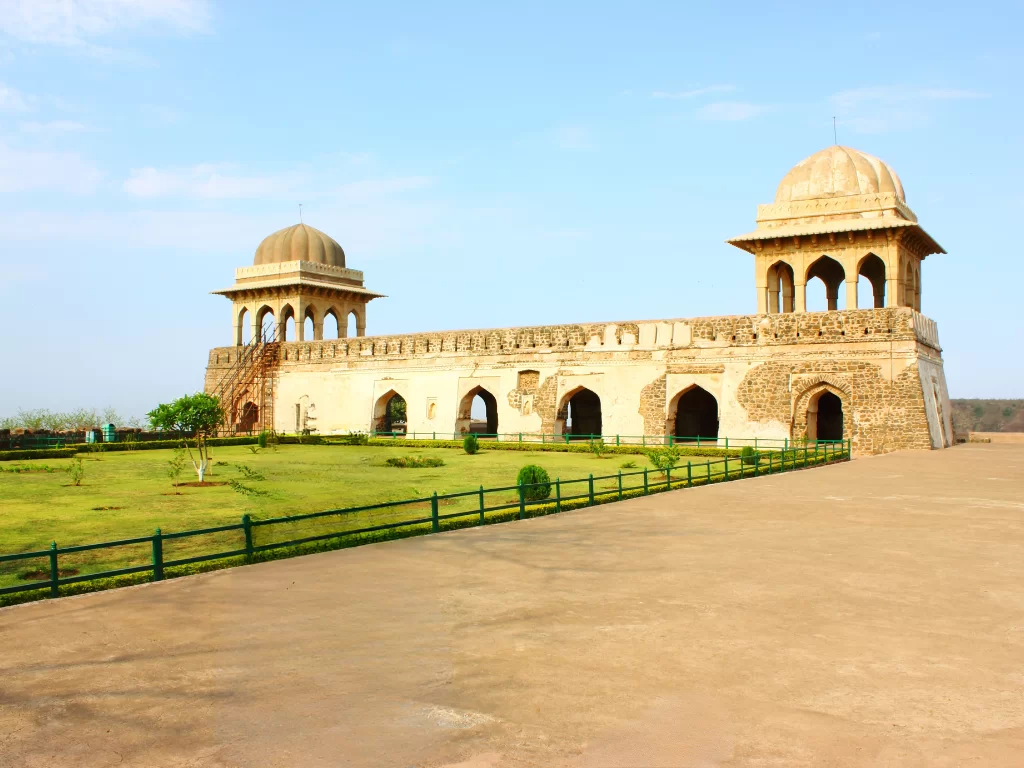
Visitors come to Roopmati Pavilion for its elevated viewpoint that offers clear, open views over the Narmada valley and the surrounding Mandu plateau, making it one of the best natural lookout points in the area.
The on-ground atmosphere is quiet and breezy, with open stone structures, wide terraces, and minimal crowd movement, creating a peaceful space where visitors spend time observing the landscape rather than moving quickly through the site.
What makes this place distinct for travelers is its simple architecture combined with its strategic hilltop setting, where the experience is driven more by natural scenery, wind, and silence than by structures or exhibits.
Roopmati Pavilion is a historic hilltop structure located within the Mandu fort complex in Madhya Pradesh. It was constructed during the 16th century under the rule of the Malwa Sultanate, primarily as a military and surveillance post due to its strategic position overlooking the Narmada valley.
The pavilion later became associated with the reign of Sultan Baz Bahadur and the legendary figure of Rani Roopmati, giving the structure its present name. Historical accounts connect the site with royal residence use rather than permanent palace habitation.
Architecturally, the structure reflects Afghan-influenced design elements of the Malwa period, with open terraces, arched corridors, and elevated viewing platforms adapted to the terrain and climate of the plateau.
Today, Roopmati Pavilion stands as a preserved historical structure within Mandu, valued for its documented political history, royal associations, and its role in the defensive and administrative layout of the medieval fortified city.
Roopmati Pavilion is best experienced in the cooler season when the hilltop setting, open viewpoints, and long walking paths can be explored comfortably, with clear views and stable weather.
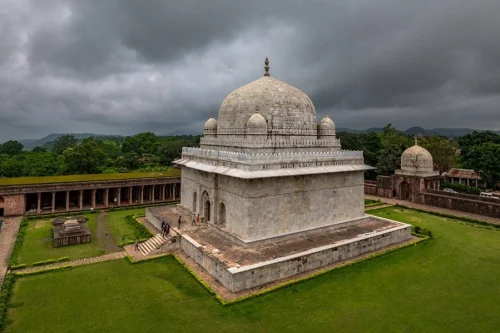 Monument
Hoshang Shah’s Tomb is a 15th-century mausoleum in Mandu, Madhya Pradesh, built for Sultan Hoshang Shah, the first ruler of the Malwa Sultanate.
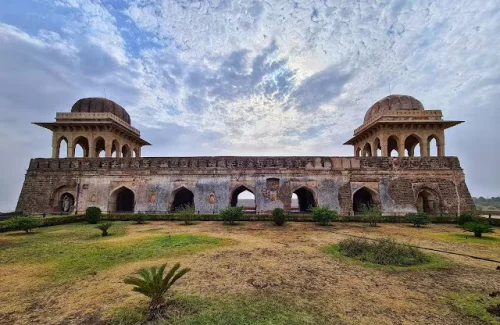 Tourist Attraction
Rani Roopmati Pavilion is a historic hilltop monument in Mandu, Madhya Pradesh, built as a watchtower and royal retreat associated with Rani Roopmati of the Malwa Sultanate period.
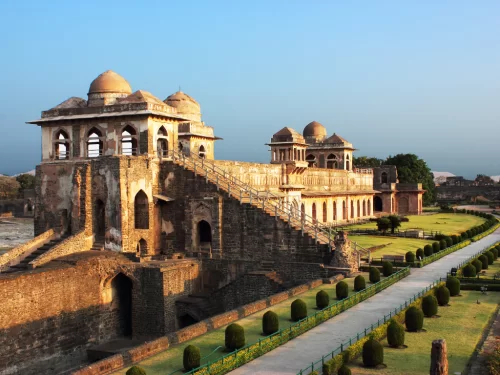 Monument
A 15th-century water palace built between two artificial lakes, resembling a floating ship.
Get customized Madhya Pradesh tour planning designed around safari seasons, road travel distances, heritage site exploration time, and comfortable pacing across regions. Whether you are visiting for wildlife safaris, temple architecture, historical monume
⚡ Quick Response | 💰 Free consultation | 🕒 24×7 expert support

