Quick Facts About Hindola Mahal
Quick Facts: Hindola Mahal, Mandu
| Entry Fee | Included in ASI Mandu monument ticket (25 for Indian citizens, 300 for foreign nationals); valid for Royal Enclave monuments |
|---|---|
| Timings | 6:00 AM – 6:00 PM daily |
| Altitude (m) | Approximately 633 meters above sea level |
| Ideal Visit Duration | 30–45 minutes |
| Best Time of Day | Morning (6:00 AM – 10:00 AM) or late afternoon for better light and cooler weather |
| Crowd Level | Moderate; part of the popular Royal Enclave complex |
| Distance from City Centre (km) | About 1.5 km from Mandu main bazaar |
| Walking Difficulty | Easy; short walk on flat ASI-maintained paths |
| Parking Available | Yes, common parking available at Royal Enclave entrance |
| Last Mile Access | Short walk (3–7 minutes) from main monument parking area |
| Suitable for Kids | Yes; open monument area with safe surroundings |
| Suitable for Seniors | Yes; minimal walking required, mostly flat terrain |
| Wheelchair Friendly | Partial; entrance area accessible, interior sections involve steps |
Why Visit Hindola Mahal, Mandu, Madhya Pradesh
Visitors come to Hindola Mahal to see its distinctive sloping walls and massive stone hall, which stand out from other structures within the Mandu palace complex.
The on-ground atmosphere is open and quiet, with wide interior spaces, high arches, and minimal barriers allowing visitors to walk freely and observe architectural details closely.
Hindola Mahal is distinct for its bold engineering design and intact audience hall layout, giving travelers a clear understanding of how royal gatherings were held within Mandu’s palace area.
History of Hindola Mahal, Mandu
Hindola Mahal, part of Mandu's Royal Enclave, was built in the 15th century during the Malwa Sultanate, likely under Sultan Hoshang Shah.
The structure functioned as a royal audience hall where the Sultan held court, conducted administrative matters, and hosted official gatherings.
Its distinctive sloping walls, giving the impression of a swinging motion, inspired the name "Hindola Mahal" or "Swing Palace."
The palace exemplifies Indo-Islamic architectural principles of the period, with high arches, spacious interiors, and minimal ornamentation focused on structural elegance.
Hindola Mahal is part of a larger complex including the Jahaz Mahal and other royal structures, showcasing Mandu’s strategic and cultural prominence during the Malwa Sultanate era.
Visitors today can observe the architectural ingenuity and historical significance of the Mahal, reflecting Mandu’s medieval court life and defensive planning.
Best Time to Visit Hindola Mahal, Mandu
Hindola Mahal is best visited during the cooler months when the Mandu complex and palace interiors are comfortable to explore on foot.
- Ideal months: October to March
- Weather conditions: Pleasant temperatures between 15–28°C, low humidity, clear skies ideal for sightseeing and photography
- Periods to avoid: April to June due to extreme heat above 40°C; July to September during monsoon may cause slippery surfaces and occasional access difficulties
How to Reach Hindola Mahal, Mandu
- Nearest Airport: Devi Ahilya Bai Holkar Airport (IDR) in Indore, 92 km away, is the closest airport. From Indore, taxis or private cabs take approximately 2.5–3 hours via SH18 and local Mandu roads.
- Nearest Railway Station: Indore Junction (INDB), 92 km from Mandu, connects to major cities. Visitors can hire taxis or take state-run buses to Mandu, followed by local transport to reach Hindola Mahal.
- Road Access: Hindola Mahal is accessible via SH18 from Dhar or Indore. Private vehicles, taxis, and buses operate regularly. Roads near the site are narrow and uneven; travel can be slower during monsoon, and parking is limited near the monument.
What to Expect When You Visit Hindola Mahal Mandu, Mandu, Madhya Pradesh, India
- Hindola Mahal is located within the Royal Enclave complex, surrounded by open lawns, stone pathways, and other historic administrative structures from the Malwa Sultanate period.
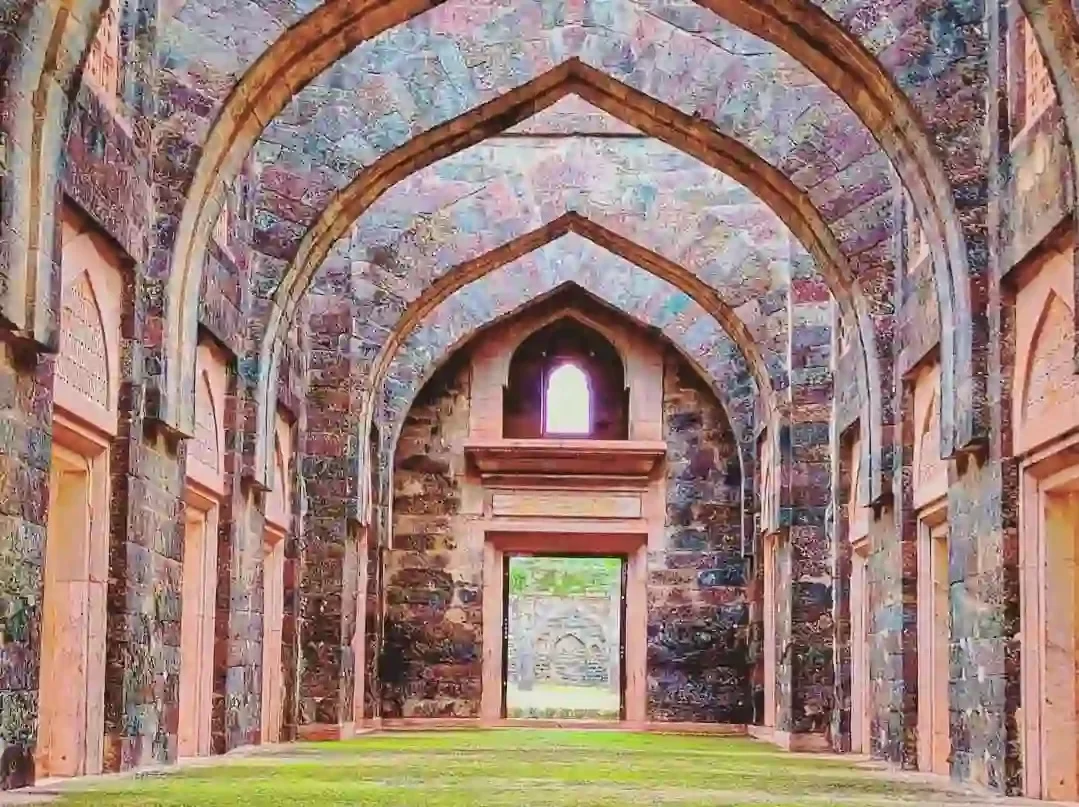
- The monument is a large audience hall with distinctive sloping buttressed walls, and visitors can freely walk inside to observe the tall arches, thick walls, and simple interior design.
- The ground surface consists of stone paving and grass areas, which are generally easy to walk on, though caution is needed during monsoon when surfaces may be wet.
- There are no interpretive displays or detailed signage explaining the monument’s history, so understanding its purpose may require prior reading or a guide.
- Basic amenities such as restrooms and food stalls are not located directly at Hindola Mahal but are available near main Mandu parking and entrance areas.
- The site is easily accessible from nearby parking within the Royal Enclave, requiring only a short walk on level terrain suitable for most visitors.
- Visitors typically spend 15–30 minutes exploring, observing architectural features, and taking photographs, as the structure is visually striking but limited in internal sections.
Important Visitor Information for Hindola Mahal Mandu, Madhya Pradesh, India
- Hindola Mahal is exposed to sun and wind; summers can be hot and dry, while winters are cool and breezy, making mornings ideal for visits.
- The monument is busiest between 11:00 AM and 3:00 PM due to tour groups; quieter hours are from 8:00 AM to 10:30 AM and after 4:00 PM.
- No strict dress code, but comfortable footwear is recommended as stone floors and inclined walls can be slippery or uneven.
- Exercise caution when exploring the inclined walls and elevated areas; avoid climbing over unsupported sections to prevent accidents.
- Carry water and sun protection, as shaded areas are limited around the monument, especially during summer months.
Photography and Viewpoints at Hindola Mahal, Mandu
- Main Hall – Capture the sloping walls and grand interior from the entrance; best in mid-morning light; photography allowed without flash.
- Exterior Facade – Ideal for full structure shots showing inclined walls; late afternoon provides warm tones; fewer visitors early morning for clear framing.
- Side Angle Views – Highlight architectural symmetry and buttresses; morning light reduces harsh shadows; accessible from courtyard pathways.
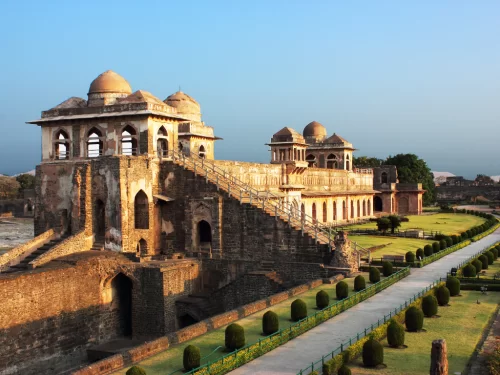
- Royal Enclave Overlook – Offers panoramic views including nearby Jahaz Mahal and surrounding landscape; clear days enhance visibility; avoid peak hours to minimize crowd interference.
- Courtyard Perspective – Captures interactions between inner and outer walls; golden hour enhances textures; photography allowed with no tripod restrictions outside main hall.