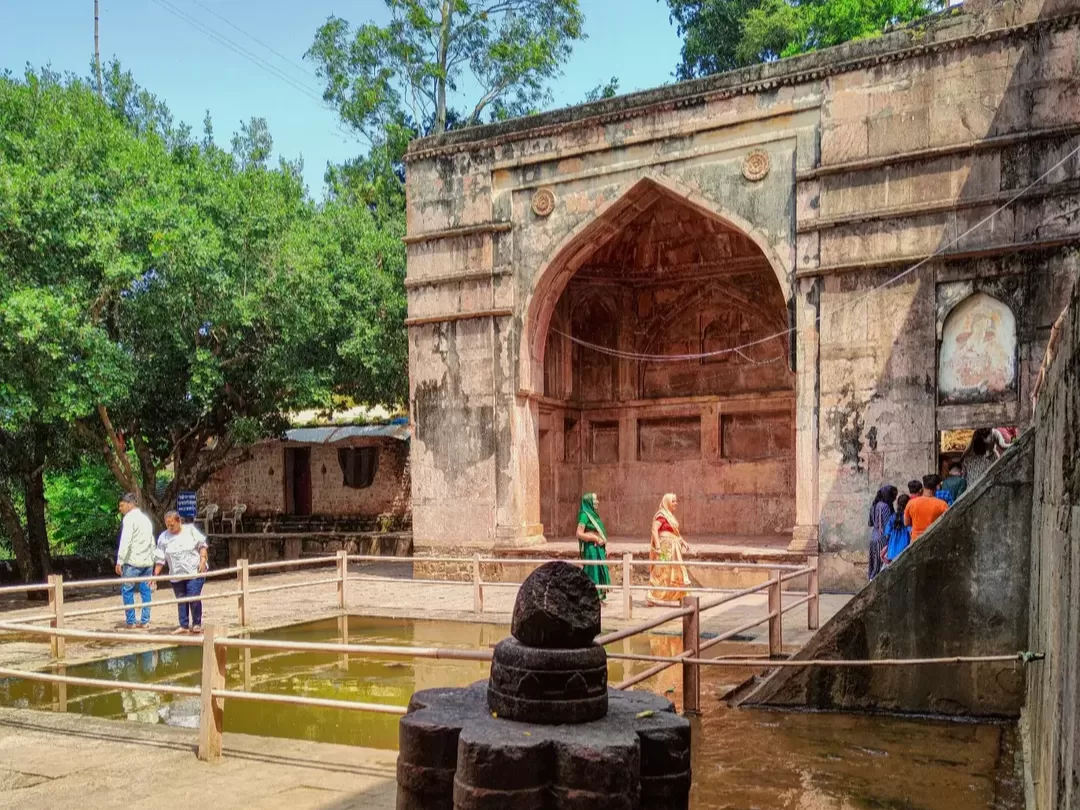
Nilkanth Mahal & Temple, Mandu, Madhya Pradesh, India

Nilkanth Mahal & Temple , Mandu
Tourists visit to see the blend of Islamic palace architecture with later Hindu religious use, its stone construction, and its historical placement within Mandu’s fort complex.

Quick Facts About Nilkanth Mahal & Temple

Quick Facts of Nilkanth Mahal & Temple

Entry Fee – No entry fee
Timings – Open access during daylight hours; temple worship timings vary based on local rituals
Altitude (m) – Approximately 555 meters above sea level (Mandu plateau)
Ideal Visit Duration – 30–45 minutes
Best Time of Day – Morning (for temple access and quieter surroundings)
Crowd Level – Low to moderate; higher during religious occasions and tourist season
Distance from City Centre (km) – Approximately 1 km from Mandu main heritage zone
Walking Difficulty – Moderate (stone steps, uneven flooring, and open ruins)
Parking Available – Limited roadside parking near approach area
Last Mile Access – Local taxis and private vehicles up to approach road; short walk to complex
Suitable for Kids – Yes, with supervision in temple and palace ruins
Suitable for Seniors – Partially suitable; steps and uneven stone surfaces may be difficult
Wheelchair Friendly – No; steps, uneven stone paths, and lack of ramps

Why Visit Nilkanth Mahal & Temple

Visitors come to Nilkanth Mahal & Temple to experience a unique site where palace ruins and an active temple coexist, offering both architectural exploration and a living place of worship in one location.

The on-ground atmosphere is peaceful and grounded, with temple activity, soft ritual sounds, open stone courtyards, and a steady flow of local devotees mixed with travelers exploring the surrounding ruins.

What makes this place distinct for travelers is the contrast between functional religious use and historical ruins, creating an experience that feels lived-in and active rather than preserved only for viewing.

History of Nilkanth Mahal & Temple

Nilkanth Mahal & Temple is a historic palace-temple complex located within the Mandu (Mandavgarh) fort area in Madhya Pradesh. The structure was originally constructed during the Malwa Sultanate period in the 16th century.

The building was initially developed as a royal pleasure palace, serving as a private retreat for the ruling elite of Mandu rather than as a public administrative structure.

During later periods, the complex was repurposed, and a Shiva temple dedicated to Nilkanth Mahadev was established within the structure, giving the site its present dual identity as both a palace and a religious space.

The architecture reflects a fusion of Malwa Sultanate design and later Hindu religious adaptation, visible in the stone construction, courtyards, and temple integration within the palace layout.

Today, Nilkanth Mahal & Temple stands as a layered historical site that documents Mandu’s political transitions and changing religious use across different historical periods.
Best Time to Visit Nilkanth Mahal & Temple

Nilkanth Mahal & Temple is best visited during the cooler months, when walking through the palace remains, temple ?????, and surrounding ruins is comfortable and not affected by heat or seasonal weather disruptions.

  • Ideal months: October to February
  • Best-season conditions: Cool to mild temperatures, low humidity, clear skies, and dry stone pathways, suitable for temple visits, architectural exploration, and photography
  • Periods to avoid: March to June due to extreme heat and direct sun exposure in open areas; July to September because of monsoon rains, slippery stone surfaces, waterlogging in low sections, and limited safe access

How to Reach Nilkanth Mahal & Temple, Mandu, Madhya Pradesh, India

  • Nearest Airport: Devi Ahilya Bai Holkar Airport, Indore (approx. 95 km). From the airport, private taxis and cabs are the most practical option to reach Mandu, as there is no direct public transport connectivity.
  • Nearest Railway Station: Indore Junction (approx. 100 km) is the most reliable railhead with strong connectivity to major Indian cities. Ratlam Junction (approx. 125 km) is an alternative station but involves a longer road journey to Mandu.
  • Road Access & Last-Mile Connectivity: Mandu is accessible by road from Indore and Dhar via state highways and ghat roads. Buses, taxis, and shared jeeps operate to Mandu town. Nilkanth Mahal & Temple is located in a forested zone of the Mandu plateau; approach roads are narrow and uneven in parts, parking is limited, and final access usually requires a short walk from the nearest vehicle drop-off point.

What to Expect When You Visit Nilkanth Mahal & Temple

  • Environment and surroundings: Nilkanth Mahal & Temple is located within the Mandu plateau, surrounded by forested terrain, stone ruins, and open heritage landscapes. The setting feels secluded and quiet, with a mix of historical palace architecture and an active temple space rather than a developed tourist zone.
  • Facilities and amenities: Facilities are extremely limited. There are no permanent restrooms, cafés, drinking water points, or shops at the site. Occasional local vendors may appear during peak seasons or festivals, but visitors should not rely on on-site services.
  • Accessibility and movement: Access is by road, followed by walking on uneven stone surfaces, steps, and natural ground. Some areas are partially broken or uneven due to age and weathering. Accessibility for elderly visitors and those with mobility challenges is limited.
  • Typical visitor behavior and conditions: The site is visited by both tourists and local devotees. Quiet exploration is common, with respectful behavior expected in temple areas. Crowd levels are usually low, increasing during religious occasions and tourist seasons.
  • Practical limitations: Safety infrastructure is minimal, with limited railings and signage. The site offers little shelter from sun or rain. During monsoon, pathways can become slippery, and vegetation growth may restrict movement in certain sections.

Important Visitor Information for Nilkanth Mahal & Temple

  • Crowd & Weather: Nilkanth Mahal & Temple remains lightly crowded on most days, with higher footfall during weekends and peak tourist season (October–February). Summers (April–June) are extremely hot due to the open stone complex and limited shade, while monsoon months bring humidity and damp, slippery surfaces.
  • Peak & Quiet Hours: Peak visiting hours are late morning to early afternoon (11:00 AM–2:00 PM), especially when tourists arrive as part of Mandu sightseeing circuits. Early mornings and late afternoons are usually quiet and peaceful.
  • Dress Code: Modest clothing is recommended, particularly for the temple area. Covered shoulders and knees are culturally appropriate, and footwear may need to be removed when entering the temple space.
  • Safety & Practical Cautions: The site has uneven stone floors, broken steps, and partially restored structures. Watch your footing, avoid climbing on fragile walls, and take extra care during the monsoon when pathways become slippery.

Photography and Viewpoints at Nilkanth Mahal & Temple

  • Temple courtyard viewpoints provide clear frontal compositions of the Nilkanth Temple structure, with stone pillars, carved entrances, and surrounding open space forming balanced frames.
  • Mahal façade angles allow wide architectural shots capturing the palace walls, arches, and elevated platform in relation to the surrounding landscape.
  • Side corridor perspectives create strong depth lines for photography through columns and passageways, especially when framed along the main approach axis.
  • Morning light offers the most even illumination on stone surfaces and carvings, making details visible without harsh contrast.
  • Midday lighting creates strong shadows and high contrast, emphasizing architectural textures but limiting interior clarity.
  • Photography restrictions may apply inside the active temple sanctum; photography is often not permitted in worship areas and should follow local signage and instructions.
  • Crowd and access factors include regular temple visitors and tourist groups, with early mornings providing quieter access and clearer compositions.

Near By Attraction

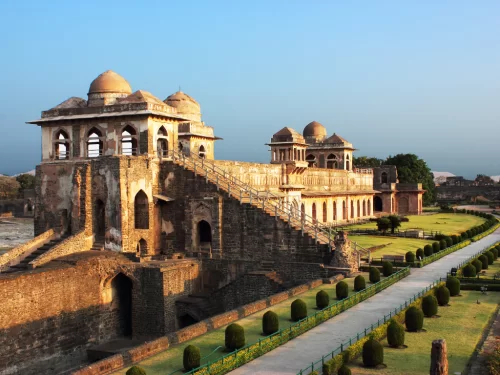
Jahaz Mahal at Mandu under golden hour glow, featuring tiered domes grand staircase and manicured gardens, perfect heritage experience with Madhya Pradesh tour packages. Monument

Jahaz Mahal Mandu

A 15th-century water palace built between two artificial lakes, resembling a floating ship.

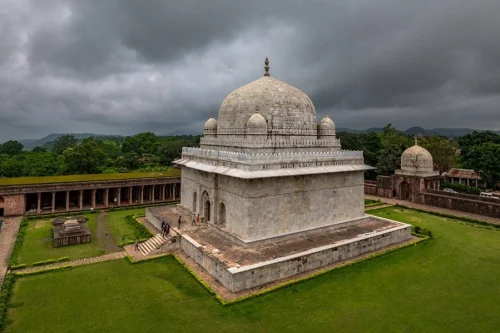
Hindola Mahal Mandu historic swing palace with sloping walls in Madhya Pradesh tour packages Monument

Hindola Mahal

A 15th-century audience hall known for its distinctive sloping walls and T-shaped architectural design.

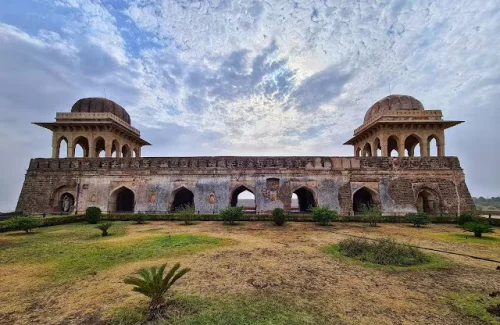
Jal Mahal in Mandu, Madhya Pradesh, featuring historic Afghan-style domed pavilions, stone stairways, and landscaped pathways, a key highlight of Madhya Pradesh tour packages. Historical Site

Jal Mahal Mandu

A historic water palace built during the Malwa Sultanate period within Mandu’s Royal Enclave complex.

Frequently Asked Questions About Nilkanth Mahal & Temple

Nilkanth Mahal & Temple is located in Mandu, Madhya Pradesh, within the Mandu Fort complex. It is situated near the southern edge of the plateau and is accessible by road from Dhar and Indore.
Nilkanth Mahal & Temple is generally open from morning around 8 AM until evening. Daytime visits are recommended for safe exploration of the monument and temple area.
There is an entry fee to access the Mandu heritage complex which includes Nilkanth Mahal & Temple. Ticket prices may vary for Indian and foreign visitors.
Visitors can reach Nilkanth Mahal & Temple by taxi or private vehicle from Indore in Madhya Pradesh. The nearest major railway station and airport are located in Indore.
Parking is available near Nilkanth Mahal & Temple in designated areas close to the entrance. Parking charges may apply depending on vehicle type.
The best time to visit Nilkanth Mahal & Temple is between October and March when the weather in Madhya Pradesh is pleasant. Morning hours offer comfortable conditions and clearer views.
Most travelers spend about 30 to 60 minutes exploring Nilkanth Mahal & Temple and its surrounding viewpoints. Additional time may be needed during religious occasions.
Nilkanth Mahal & Temple is suitable for family visits and offers open spaces for relaxed exploration. Visitors should supervise children near steps and elevated areas.
Photography is generally allowed at Nilkanth Mahal & Temple for personal use. Professional equipment may require additional permission from authorities.
Basic restroom facilities are available within the Mandu complex near Nilkanth Mahal & Temple. Food stalls and small eateries are available in Mandu town.

Loved this place ? Let’s Plan Your Madhya Pradesh Trip

Get customized Madhya Pradesh tour planning designed around safari seasons, road travel distances, heritage site exploration time, and comfortable pacing across regions. Whether you are visiting for wildlife safaris, temple architecture, historical monume

⚡ Quick Response | 💰 Free consultation | 🕒 24×7 expert support

×

Plan Your Trip