Quick Facts About Kanha Museum
Kanha Museum – Quick Facts
| Entry Fee | No separate fee; access included with Kanha National Park entry |
| Timings | Open during park visiting hours; access depends on gate timings and safari schedule |
| Altitude (m) | Approx. 450 m |
| Ideal Visit Duration | 30–45 minutes |
| Best Time of Day | Between safari slots (late morning or afternoon) |
| Crowd Level | Moderate during peak safari season, low in off-season |
| Distance from City Centre (km) | Approx. 0.5 km from Kanha Gate area |
| Walking Difficulty | Easy |
| Parking Available | Yes, near park gate area |
| Last Mile Access | Walkable from Kanha Gate/parking area |
| Suitable for Kids | Yes |
| Suitable for Seniors | Yes |
| Wheelchair Friendly | Limited; basic access, not fully adapted |
Why Visit Kanha Museum
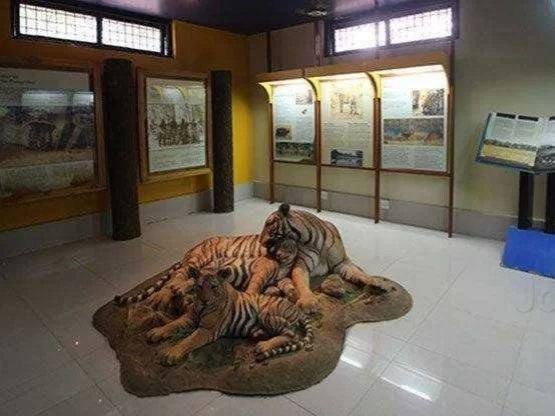
Visitors come to Kanha Museum to understand the wildlife, forest ecosystem, and conservation work of Kanha National Park through exhibits, displays, and educational panels.
The on-ground atmosphere is quiet and informative, with indoor exhibit spaces and a structured layout that allows visitors to explore at their own pace between safari schedules.
What makes this place distinct is its role as an interpretive centre that adds context to the jungle experience, helping travelers connect animal sightings with habitat, ecology, and conservation efforts inside the park.
History of Kanha Museum
Kanha Museum was developed by the forest authorities as an interpretation and education centre within Kanha National Park to support wildlife awareness, conservation education, and visitor understanding of the park’s ecosystem.
The museum was created as part of conservation outreach efforts to document biodiversity, forest management practices, and human–wildlife coexistence in the Kanha landscape through curated exhibits and educational displays.
Best Time to Visit Kanha Museum
Kanha Museum is best visited during the operational season of Kanha National Park, when access roads, safari routes, and visitor facilities are fully functional and tourist movement is regulated.
- Ideal months: October to June, aligned with Kanha National Park’s open season
- Weather during best season: Cool and dry from October to February, warm but manageable from March to early June, with clear visibility and comfortable indoor museum access
- Periods to avoid: July to September, when the national park remains closed due to monsoon, making the museum inaccessible to regular visitors
How to Reach Kanha Museum
- Nearest airport: Jabalpur Airport (~160 km) is the closest major airport with regular flights; Raipur Airport (~240 km) is an alternative with better connectivity from metro cities
- Nearest railway station: Gondia Junction (~145 km) is the most practical railhead; Jabalpur Railway Station (~165 km) is another major option with wider train connectivity
- Road access and last-mile connectivity: Kanha Museum is located inside the Kanha National Park zone and is accessible by road via Mandla–Kanha Road or Balaghat–Kanha Road; private taxis and forest-authority vehicles operate from Khatia and Mukki gate areas, with entry and movement restricted to permitted park routes and timings
What to Expect When You Visit Kanha Museum
- Environment and surroundings: The museum is set within the forested buffer zone of Kanha National Park, surrounded by sal and bamboo ????, with natural sounds and minimal urban disturbance
- Facilities and amenities: Indoor interpretation galleries, display panels on wildlife and ecosystems, basic seating areas, and limited restroom facilities within the museum complex
- Accessibility and movement: Access is controlled through park gates; movement is on designated forest roads only, with short walking distances inside the museum premises
- Typical visitor behavior and conditions: Visitors usually come in small groups with safari schedules, limited time slots, quiet indoor environment, and regulated entry timings linked to park access rules
Important Visitor Information for Kanha Museum
- Crowd and weather notes: Visitor numbers increase during peak safari season (October to June), with heavier footfall in winter months; summers can be hot and dry, affecting comfort inside and around the museum premises
- Peak and quiet visiting hours: Peak hours usually align with morning and afternoon safari movement times; quieter periods are mid-day when safari traffic is lower
- Dress code: No formal dress code, but practical clothing suitable for forest conditions and indoor-outdoor movement is appropriate
- Safety notes and practical cautions: Entry is subject to forest department regulations; visitors must follow park rules, stay within permitted areas, and respect wildlife safety protocols applicable to Kanha buffer zones
Photography and Viewpoints at Kanha Museum
- Best viewpoints or angles for photography: Exterior shots are best from the open forecourt area facing the museum building and surrounding forest landscape; interior photography focuses on display panels, preserved specimens, and educational exhibits
- Lighting conditions and time-of-day considerations: Natural daylight is best in late morning to early afternoon for exterior views; indoor lighting is artificial and consistent, with limited natural light inside exhibition spaces
- Rules or restrictions on photography: Photography inside the museum may be restricted in specific sections as per forest department guidelines; visitors must follow posted notices and staff instructions
- Crowd or access factors that affect photography: Crowding increases during peak safari hours and tourist season, which can limit clear interior shots and movement around exhibits