Dilawar Khan’s Mosque, Mandu, Madhya Pradesh, India

Dilawar Khan’s Mosque , Mandu
Tourists visit to observe early Malwa Sultanate architecture, its simple stone construction, and its historical importance as one of the earliest Islamic religious structures in Mandu.

Quick Facts About Dilawar Khan’s Mosque

Quick Facts of Dilawar Khan’s Mosque

Entry Fee – No entry fee
Timings – Open access during daylight hours; no officially fixed visiting timings
Altitude (m) – Approximately 555 meters above sea level (Mandu plateau)
Ideal Visit Duration – 20–30 minutes
Best Time of Day – Morning or late afternoon (comfortable light and fewer visitors)
Crowd Level – Low; rarely crowded except during peak tourist season
Distance from City Centre (km) – Approximately 0.6 km from Mandu main heritage zone
Walking Difficulty – Easy to moderate (uneven stone flooring and short walking distances)
Parking Available – No formal parking; limited roadside parking nearby
Last Mile Access – Walkable from nearby monuments and access roads
Suitable for Kids – Yes, with supervision around ruins and open structures
Suitable for Seniors – Partially suitable; uneven surfaces and lack of seating
Wheelchair Friendly – No; uneven stone ground, steps, and no accessibility infrastructure

Why Visit Dilawar Khan’s Mosque

Visitors come to Dilawar Khan’s Mosque to experience one of Mandu’s quieter heritage structures, where architectural scale and open space create a slow, reflective visit rather than a crowded sightseeing stop.

The on-ground atmosphere is calm and spacious, with large open courtyards, simple stone construction, and minimal visitor movement, allowing people to walk freely and pause without noise or congestion.

What makes this place distinct for travelers is its sense of isolation and scale, where the experience is shaped by silence, space, and structure rather than activity, displays, or guided routes.

History of Dilawar Khan’s Mosque

Dilawar Khan’s Mosque is a historic Islamic structure located within the Mandu (Mandavgarh) fort complex in Madhya Pradesh. It was constructed during the early phase of the Malwa Sultanate period in the 15th century.

The mosque is associated with Dilawar Khan Ghori, the founder of the Malwa Sultanate, marking it as one of the earliest Sultanate-era religious structures in Mandu.

It functioned as a congregational mosque for the early administrative and military population of the fortified city, reflecting the establishment of Islamic governance in the region.

Architecturally, the mosque represents early Sultanate design in Malwa, characterized by simple stone construction, arches, domes, and functional spatial planning rather than ornamental detailing.

Today, Dilawar Khan’s Mosque stands as a historically important religious monument that documents the foundation phase of Mandu’s Sultanate rule and the early Islamic architectural development of the city.
Best Time to Visit Dilawar Khan’s Mosque

Dilawar Khan’s Mosque is best visited during the cooler months, when exploring the historic structure, surrounding ruins, and open courtyards is comfortable and not affected by extreme heat or seasonal weather conditions.

  • Ideal months: October to February
  • Best-season conditions: Cool to mild temperatures, low humidity, clear skies, and dry stone floors, suitable for quiet exploration, architectural viewing, and photography
  • Periods to avoid: March to June due to intense heat and strong sun exposure in open areas; July to September because of monsoon rains, slippery stone surfaces, damp interiors, and reduced safe access around the mosque

How to Reach Dilawar Khan’s Mosque, Mandu, Madhya Pradesh, India

  • Nearest Airport: Devi Ahilya Bai Holkar Airport, Indore (approx. 95 km). From the airport, private taxis and cabs are the most practical option to reach Mandu, as there is no direct public transport connectivity.
  • Nearest Railway Station: Indore Junction (approx. 100 km) is the most reliable railhead with strong connectivity to major Indian cities. Ratlam Junction (approx. 125 km) is an alternative station but involves a longer road transfer.
  • Road Access & Last-Mile Connectivity: Mandu is accessible by road from Indore and Dhar via state highways and ghat roads. Buses, taxis, and shared jeeps operate to Mandu town. Dilawar Khan’s Mosque is located close to the main Mandu heritage zone near the fort entrance area; internal roads are narrow, parking is limited, and final access usually requires a short walk from nearby parking points.

What to Expect When You Visit Dilawar Khan’s Mosque

  • Environment and surroundings: Dilawar Khan’s Mosque is located within the Mandu plateau, surrounded by stone ruins, forested vegetation, and open heritage spaces. The setting is quiet and isolated, with a historical atmosphere rather than an active religious or urban environment.
  • Facilities and amenities: There are no visitor facilities at the site. No restrooms, drinking water points, seating areas, shops, or food services are available. All basic amenities must be accessed elsewhere in Mandu.
  • Accessibility and movement: Access involves road travel followed by walking on uneven stone paths and natural ground. Internal movement includes steps, raised platforms, and broken surfaces. Accessibility support for elderly visitors and people with mobility limitations is minimal.
  • Typical visitor behavior and conditions: The mosque is mainly visited by heritage tourists and history-focused visitors. The site is generally quiet with low footfall, except during peak tourist seasons. Visitors usually spend a short time exploring the structure and surroundings.
  • Practical limitations: Safety infrastructure is basic, with limited railings, signage, and no lighting for late visits. The site offers little protection from sun, wind, or rain. During monsoon, stone surfaces can become slippery, and vegetation may partially obstruct pathways.

Important Visitor Information for Dilawar Khan’s Mosque

  • Crowd & Weather: Dilawar Khan’s Mosque is usually quiet, with low visitor numbers even during peak tourist season (October–February). Summers (April–June) are very hot due to the exposed stone structure and open courtyard, while monsoon months bring humidity and damp conditions.
  • Peak & Quiet Hours: Slightly higher visitor movement is seen from late morning to early afternoon (11:00 AM–2:00 PM) when tourists follow Mandu heritage routes. Early mornings and late afternoons are typically very quiet.
  • Dress Code: Modest clothing is recommended out of respect for the religious setting. Covered shoulders and knees are appropriate, and footwear should be removed when entering prayer areas.
  • Safety & Practical Cautions: The mosque complex has uneven stone flooring, worn steps, and fragile structures. Watch your footing, avoid climbing on old walls or domes, and take extra care during the monsoon when stone surfaces become slippery.

Photography and Viewpoints at Dilawar Khan’s Mosque

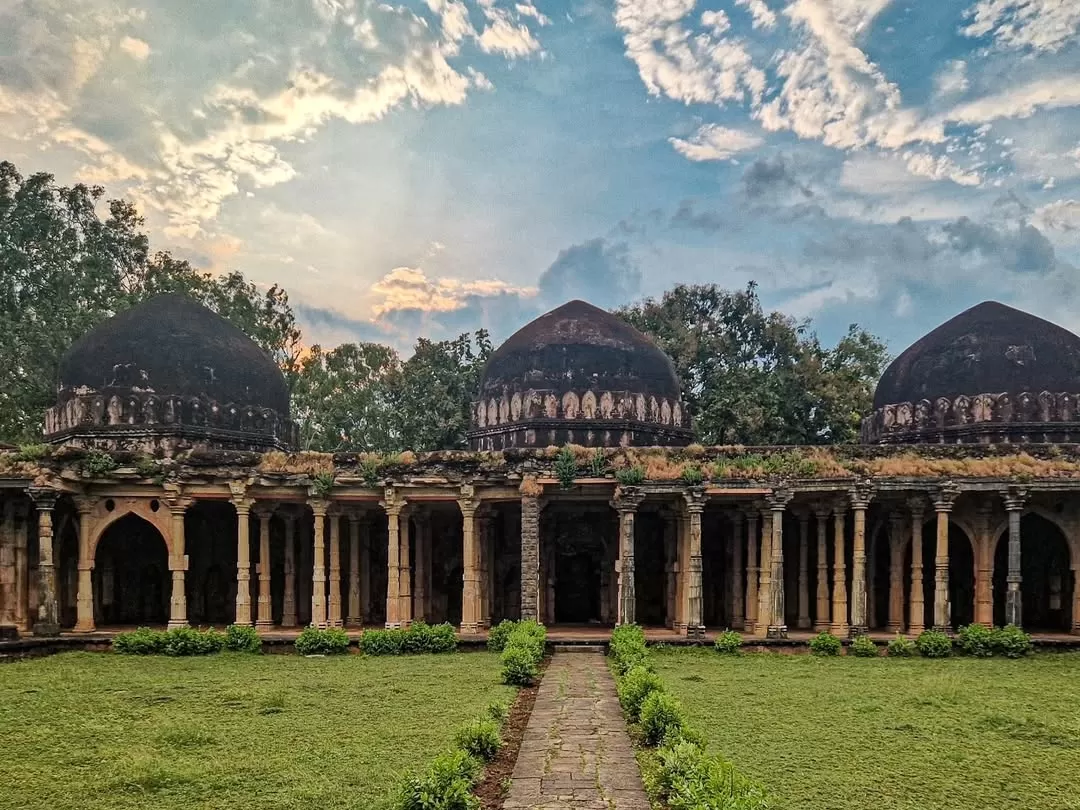
  • Main courtyard viewpoints offer clear, symmetrical compositions of the mosque’s façade, domes, and arched prayer hall, with open space allowing full-structure framing.
  • Central axis angles from the primary entrance create strong leading-line shots through the courtyard toward the mosque’s main arches and domed roofline.
  • Side-wall perspectives highlight stone textures, proportions, and architectural depth along the mosque’s long exterior walls.
  • Morning light provides the best conditions, with soft illumination on the stone surfaces and balanced exposure across the courtyard and prayer hall façade.
  • Midday lighting produces harsh shadows and high contrast, which can obscure details inside covered sections.
  • Photography restrictions may apply inside prayer areas; visitors should avoid photography during active worship times and follow local guidelines.
  • Crowd and access factors are generally low compared to central Mandu monuments, but limited interior space and narrow entry points affect movement and framing during group visits.

Near By Attraction

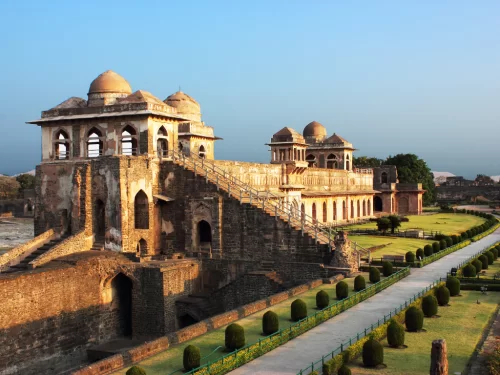
Jahaz Mahal at Mandu under golden hour glow, featuring tiered domes grand staircase and manicured gardens, perfect heritage experience with Madhya Pradesh tour packages. Monument

Jahaz Mahal Mandu

A 15th-century water palace built between two artificial lakes, resembling a floating ship.

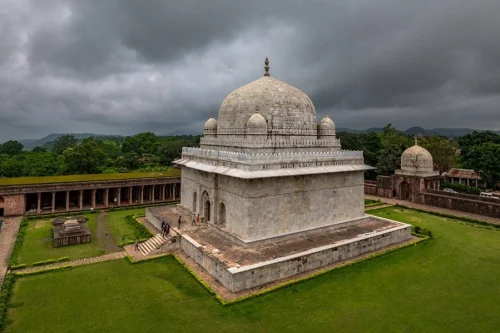
Hindola Mahal Mandu historic swing palace with sloping walls in Madhya Pradesh tour packages Monument

Hindola Mahal

A 15th-century audience hall known for its distinctive sloping walls and T-shaped architectural design.

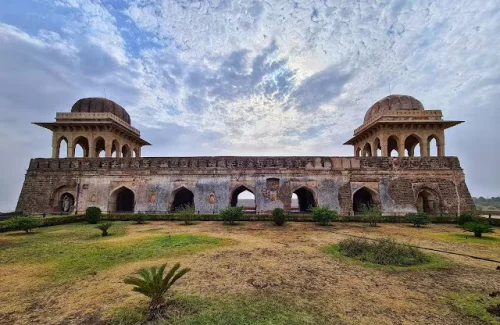
Jal Mahal in Mandu, Madhya Pradesh, featuring historic Afghan-style domed pavilions, stone stairways, and landscaped pathways, a key highlight of Madhya Pradesh tour packages. Historical Site

Jal Mahal Mandu

A historic water palace built during the Malwa Sultanate period within Mandu’s Royal Enclave complex.

Frequently Asked Questions About Dilawar Khan’s Mosque

Dilawar Khan?s Mosque is located in Mandu, Madhya Pradesh, within the Mandu Fort complex. It is easily accessible by road from Dhar and Indore.
Dilawar Khan?s Mosque is generally open from morning around 8 AM until evening. Daytime visits are recommended for safe exploration and clear architectural views.
There is an entry fee to access the Mandu heritage complex which includes Dilawar Khan?s Mosque. Ticket prices may vary for Indian and foreign visitors.
Visitors can reach Dilawar Khan?s Mosque by taxi or private vehicle from Indore in Madhya Pradesh. The nearest major railway station and airport are located in Indore.
Parking is available near the Mandu complex close to Dilawar Khan?s Mosque in designated areas. Parking charges may apply depending on vehicle type.
The best time to visit Dilawar Khan?s Mosque is between October and March when the weather in Madhya Pradesh is pleasant. Morning hours offer comfortable conditions for exploration.
Most travelers spend about 20 to 30 minutes exploring Dilawar Khan?s Mosque while visiting nearby monuments. Additional time may be needed for photography.
Dilawar Khan?s Mosque is suitable for family visits and provides open spaces for relaxed exploration. Visitors should supervise children near elevated structures.
Photography is generally allowed at Dilawar Khan?s Mosque for personal use. Professional equipment may require additional permission from authorities.
Basic restroom facilities are available within the Mandu complex near Dilawar Khan?s Mosque. Food stalls and small eateries are available in Mandu town.

Loved this place ? Let’s Plan Your Madhya Pradesh Trip

Get customized Madhya Pradesh tour planning designed around safari seasons, road travel distances, heritage site exploration time, and comfortable pacing across regions. Whether you are visiting for wildlife safaris, temple architecture, historical monume

⚡ Quick Response | 💰 Free consultation | 🕒 24×7 expert support

×

Plan Your Trip