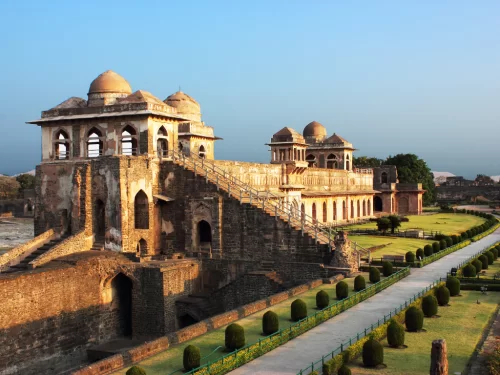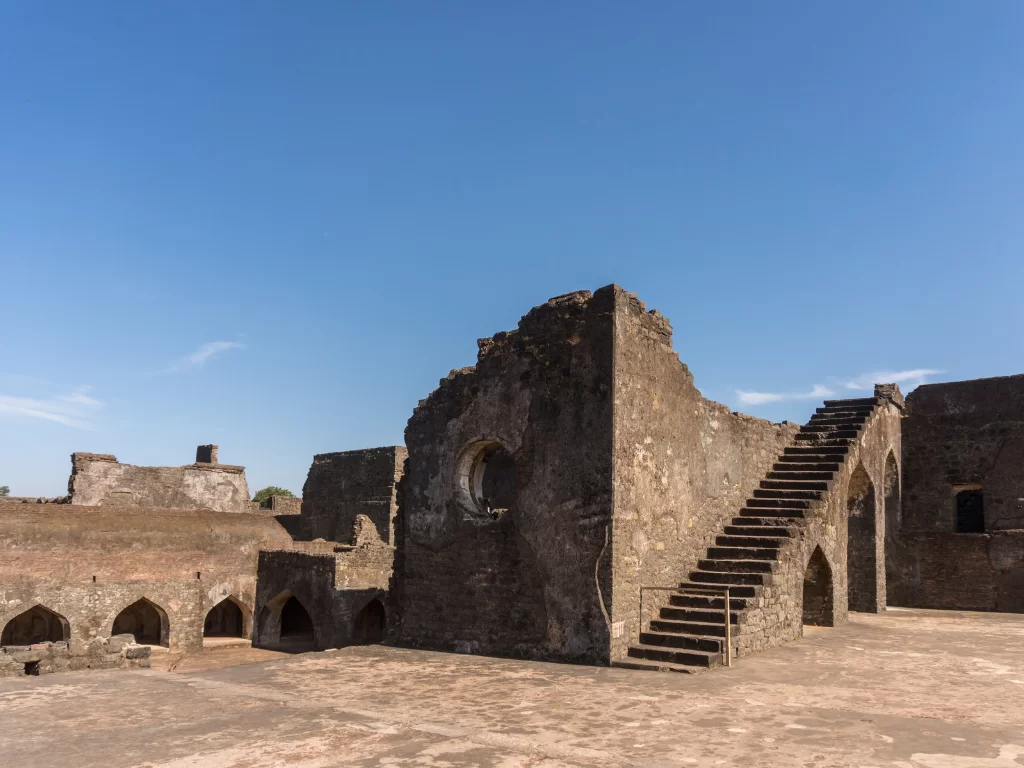
Champa Baoli, Mandu, Madhya Pradesh, India

Champa Baoli , Mandu
Tourists visit to see its stone steps, underground chambers, and its function as a water storage and cooling structure connected to Mandu’s palace complexes and fort infrastructure.

Quick Facts About Champa Baoli

Quick Facts of Champa Baoli

Entry Fee – No entry fee
Timings – Open access during daylight hours; no officially fixed timings
Altitude (m) – Approximately 555 meters above sea level (Mandu plateau)
Ideal Visit Duration – 20–30 minutes
Best Time of Day – Morning (better light and safer visibility on steps)
Crowd Level – Low to moderate; occasional tourist groups in peak season
Distance from City Centre (km) – Approximately 0.9 km from Mandu main heritage zone
Walking Difficulty – Moderate (steep stone steps and uneven surfaces)
Parking Available – No formal parking; limited roadside parking nearby
Last Mile Access – Walkable from nearby monuments and local roads
Suitable for Kids – Partially suitable; steep steps require close supervision
Suitable for Seniors – Not suitable; steep steps and slippery stone surfaces
Wheelchair Friendly – No; steep steps, narrow passages, and no accessibility features

Why Visit Champa Baoli

Visitors come to Champa Baoli to see a functional stepwell structure that shows how water storage and daily utility were integrated into Mandu’s built landscape.

The on-ground atmosphere is quiet and cool, with descending stone steps, shaded levels, and a still environment where visitors naturally slow down and move carefully through the space.

What makes this place distinct for travelers is its vertical design and purpose-driven architecture, where the experience is shaped by depth, symmetry, and interaction with a water structure rather than open views or large courtyards.

History of Champa Baoli

Champa Baoli is a historic stepwell located within the Mandu (Mandavgarh) fort complex in Madhya Pradesh. It was constructed during the Malwa Sultanate period as part of the city’s integrated water management and urban planning system.

The stepwell functioned as a royal and administrative water source, designed to ensure year-round water availability for nearby palaces, residential zones, and public structures.

Champa Baoli was not built as a ceremonial monument but as a functional hydraulic structure, reflecting Mandu’s strategic emphasis on water conservation and storage in a plateau environment.

Its design follows traditional stepwell engineering, with descending stone steps, deep water shafts, and structured access levels adapted for seasonal water fluctuations.

Today, Champa Baoli stands as a preserved historical utility structure that represents the practical infrastructure planning of Mandu’s medieval period rather than royal or religious architecture.
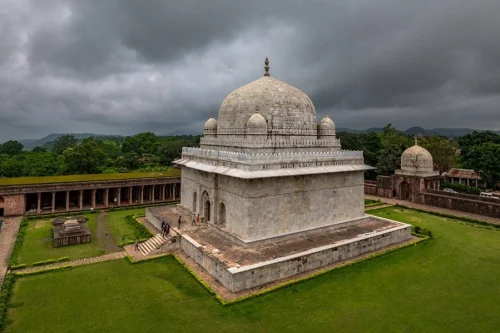
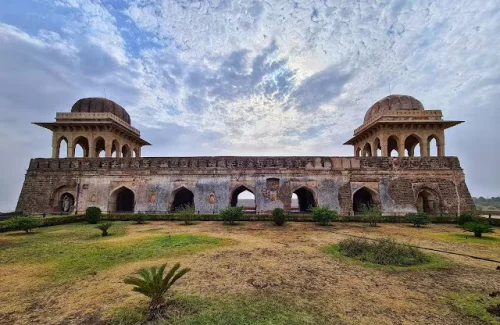
Best Time to Visit Champa Baoli

Champa Baoli is best visited during the cooler months, when exploring the stepwell structure, stone corridors, and surrounding ruins is comfortable, safe, and not affected by heat or seasonal weather conditions.

  • Ideal months: October to February
  • Best-season conditions: Cool to mild temperatures, low humidity, clear skies, and dry stone steps, making it suitable for walking, architectural exploration, and photography
  • Periods to avoid: March to June due to extreme heat and direct sun exposure on open stone surfaces; July to September because of monsoon rains, slippery steps, water accumulation, and unsafe footing inside the baoli

How to Reach Champa Baoli, Mandu, Madhya Pradesh, India

  • Nearest Airport: Devi Ahilya Bai Holkar Airport, Indore (approx. 95 km). From the airport, private taxis and cabs are the most practical option to reach Mandu, as there is no direct public transport connectivity.
  • Nearest Railway Station: Indore Junction (approx. 100 km) is the most reliable railhead with strong connectivity to major Indian cities. Ratlam Junction (approx. 125 km) is an alternative station but involves a longer road transfer.
  • Road Access & Last-Mile Connectivity: Mandu is accessible by road from Indore and Dhar via state highways and ghat roads. Buses, taxis, and shared jeeps operate to Mandu town. Champa Baoli is located near the Jahaz Mahal and Hindola Mahal complex inside the heritage zone, where roads are narrow and parking is restricted, so final access is usually on foot from nearby parking areas.

What to Expect When You Visit Champa Baoli

  • Environment and surroundings: Champa Baoli is a historic stepwell located within the Mandu plateau area, surrounded by stone ruins, dense vegetation, and quiet forested terrain. The setting feels enclosed and shaded, with a secluded, heritage-focused atmosphere rather than an open or developed tourist space.
  • Facilities and amenities: There are no visitor facilities at the site. No restrooms, drinking water points, seating areas, shops, or food services are available. Visitors must rely on amenities in other parts of Mandu.
  • Accessibility and movement: Access is by road followed by walking on uneven ground and stone pathways. Entry into the baoli involves descending steep stone steps, which can be narrow and slippery. Accessibility for elderly visitors and those with mobility challenges is very limited.
  • Typical visitor behavior and conditions: Visitors usually come for short stays focused on photography, exploration, and historical interest. The site is generally quiet, with low crowd density except during peak tourist seasons. Movement is slow and cautious due to steep steps and confined spaces.
  • Practical limitations: Safety infrastructure is minimal, with limited railings, poor lighting, and little signage. During monsoon, water accumulation and moss growth make surfaces slippery. The enclosed structure can feel humid and dark, especially in deeper sections.

Important Visitor Information for Champa Baoli

  • Crowd & Weather: Champa Baoli is generally quiet, even during peak tourist season (October–February), with only light visitor movement. Summers (April–June) are very hot, but the stepwell interior remains relatively cooler. Monsoon months increase humidity and make stone steps damp.
  • Peak & Quiet Hours: Late mornings to early afternoons (11:00 AM–2:00 PM) see slightly higher tourist presence as part of Mandu heritage routes. Early mornings and late afternoons are usually calm and uncrowded.
  • Dress Code: No formal dress code applies, but modest, practical clothing is appropriate due to the heritage and cultural setting.
  • Safety & Practical Cautions: The baoli has steep, narrow stone steps, low railings, and uneven platforms. Watch your footing, avoid wet steps during monsoon, and do not lean over open edges or climb damaged structures.

Photography and Viewpoints at Champa Baoli

  • Stepped tank viewpoints from the upper edges provide layered compositions of descending stone steps, arched galleries, and the water basin, creating strong depth and symmetry.
  • Central axis angles from the main entrance align the staircases and corridors for balanced, geometric frames typical of stepwell architecture.
  • Arched corridor perspectives allow framed shots through multiple arches, emphasizing repetition, depth, and architectural rhythm.
  • Morning light offers soft illumination inside the baoli, with indirect sunlight enhancing stone textures and reducing harsh contrast.
  • Midday lighting creates sharp shadows on the steps and walls, highlighting structure but making lower levels darker and more difficult to photograph.
  • Photography restrictions are minimal in open areas, but visitors should avoid restricted lower sections and fragile edges near the water.
  • Crowd and access factors include narrow stairways and confined platforms, making early mornings the best time for clear compositions and safe movement.

Near By Attraction

Jahaz Mahal at Mandu under golden hour glow, featuring tiered domes grand staircase and manicured gardens, perfect heritage experience with Madhya Pradesh tour packages. Monument

Jahaz Mahal Mandu

A 15th-century water palace built between two artificial lakes, resembling a floating ship.

Hindola Mahal Mandu historic swing palace with sloping walls in Madhya Pradesh tour packages Monument

Hindola Mahal

A 15th-century audience hall known for its distinctive sloping walls and T-shaped architectural design.

Jal Mahal in Mandu, Madhya Pradesh, featuring historic Afghan-style domed pavilions, stone stairways, and landscaped pathways, a key highlight of Madhya Pradesh tour packages. Historical Site

Jal Mahal Mandu

A historic water palace built during the Malwa Sultanate period within Mandu’s Royal Enclave complex.

Frequently Asked Questions About Champa Baoli

Champa Baoli is located in Mandu, Madhya Pradesh, within the Mandu Fort complex near Jahaz Mahal. It is easily accessible by road from Dhar and Indore.
Champa Baoli is generally open from morning around 8 AM until evening. Daytime visits are recommended for safe exploration of the stepwell structure.
There is an entry fee to access the Mandu heritage complex which includes Champa Baoli. Ticket prices may vary for Indian and foreign visitors.
Visitors can reach Champa Baoli by taxi or private vehicle from Indore in Madhya Pradesh. The nearest major railway station and airport are located in Indore.
Parking is available near the Mandu complex close to Champa Baoli in designated areas. Parking charges may apply depending on vehicle type.
The best time to visit Champa Baoli is between October and March when the weather in Madhya Pradesh is pleasant. The monsoon season enhances the surrounding greenery.
Most travelers spend about 20 to 30 minutes exploring Champa Baoli while visiting nearby monuments. Additional time may be needed for photography.
Champa Baoli is suitable for family visits, but visitors should supervise children near deep stepwell areas. The pathways can be uneven in certain sections.
Photography is generally allowed at Champa Baoli for personal use. Visitors should follow site guidelines while taking pictures.
Basic restroom facilities are available within the Mandu complex near Champa Baoli. Food stalls and small eateries are available in Mandu town.

Loved this place ? Let’s Plan Your Madhya Pradesh Trip

Get customized Madhya Pradesh tour planning designed around safari seasons, road travel distances, heritage site exploration time, and comfortable pacing across regions. Whether you are visiting for wildlife safaris, temple architecture, historical monume

⚡ Quick Response | 💰 Free consultation | 🕒 24×7 expert support

×

Plan Your Trip