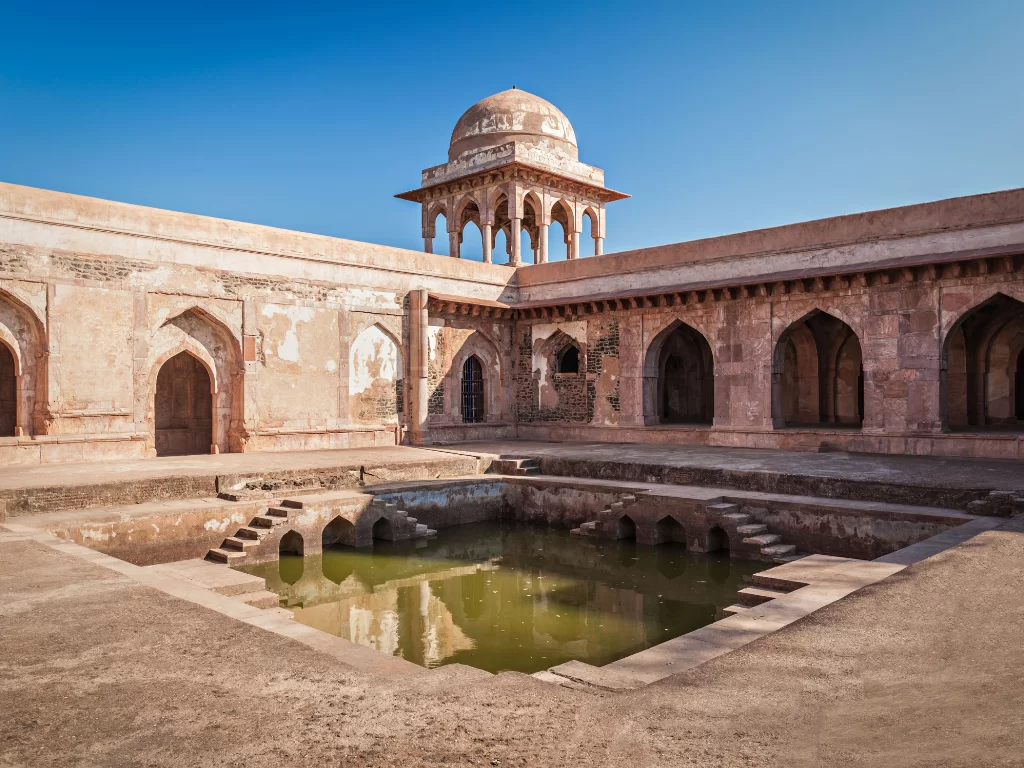
Baz Bahadur Palace, Mandu, Madhya Pradesh, India

Baz Bahadur Palace , Mandu
Tourists visit to see its Afghan-influenced architecture, open courtyards, water channels, and its historical connection to Mandu’s Malwa Sultanate period and the story of Baz Bahadur and Rani Roopmati.

Quick Facts About Baz Bahadur Palace

Quick Facts of Baz Bahadur Palace

Entry Fee – ?20 (Indian citizens); ?250 (foreign nationals); subject to revision by ASI
Timings – 8:00 AM – 6:00 PM (standard ASI monument hours; may vary seasonally)
Altitude (m) – Approximately 560 meters above sea level (Mandu plateau)
Ideal Visit Duration – 30–45 minutes
Best Time of Day – Morning or late afternoon (comfortable walking conditions, better light)
Crowd Level – Low to moderate; increases during weekends and peak season (Oct–Feb)
Distance from City Centre (km) – Approximately 1 km from Mandu main heritage zone
Walking Difficulty – Moderate (stone pathways, steps, and open courtyards)
Parking Available – Yes, limited parking near the palace approach road
Last Mile Access – Local taxis, private vehicles, and short walking access from road point
Suitable for Kids – Yes, with supervision in open ruins and elevated areas
Suitable for Seniors – Partially suitable; steps and uneven stone surfaces may be challenging
Wheelchair Friendly – No; uneven terrain, steps, and lack of ramps

Why Visit Baz Bahadur Palace

Visitors come to Baz Bahadur Palace to explore a large, open hilltop complex with wide courtyards, stone pathways, and clear views across the Mandu plateau, making it a calm and unhurried stop on the Mandu circuit.

The on-ground atmosphere is quiet and spacious, with open-air movement, light footfall, and a slow walking flow that allows visitors to explore freely without congestion or noise.

What makes this place distinct for travelers is its open architectural layout and elevated setting, where the experience is defined by space, landscape views, and stillness rather than enclosed interiors or exhibits.

History of Baz Bahadur Palace

Baz Bahadur Palace is a historic royal complex located in Mandu (Mandavgarh), Madhya Pradesh, constructed during the 16th century under the rule of the Malwa Sultanate.

The palace served as the royal residence of Sultan Baz Bahadur, the last independent ruler of Malwa, and functioned as an administrative and residential complex rather than a fortified military structure.

The architecture reflects Malwa Sultanate design traditions, with courtyards, arched corridors, water channels, and open terraces adapted to Mandu’s plateau climate and terrain.

Historically, the palace is directly linked to the final phase of Malwa’s independent ???? before the Mughal conquest, making it an important site for understanding the political transition of the region.

Today, Baz Bahadur Palace remains a preserved heritage structure within the Mandu fort complex, valued for its documented royal history and its role in the administrative and residential layout of the medieval city.
Best Time to Visit Baz Bahadur Palace

Baz Bahadur Palace is most suitable for visits during the cooler months, when the open courtyards, elevated terraces, and surrounding ruins can be explored comfortably without heat stress or weather disruptions.

  • Ideal months: October to February
  • Best-season conditions: Cool to mild temperatures, low humidity, clear skies, and dry stone pathways, ideal for walking tours, photography, and exploring palace structures
  • Periods to avoid: March to June due to intense heat and direct sun exposure in open areas; July to September because of monsoon rainfall, slippery stone floors, and restricted movement around ruins

How to Reach Baz Bahadur Palace, Mandu, Madhya Pradesh, India

  • Nearest Airport: Devi Ahilya Bai Holkar Airport, Indore (approx. 95 km). From the airport, private taxis and cabs are the most practical option to reach Mandu, as there is no direct public transport connection.
  • Nearest Railway Station: Indore Junction (approx. 100 km) is the most reliable railhead with strong connectivity to major Indian cities. Ratlam Junction (approx. 125 km) is an alternative for long-distance routes but requires a longer road transfer.
  • Road Access & Last-Mile Connectivity: Mandu is accessible by road from Indore and Dhar via state highways and ghat roads. Buses, taxis, and shared jeeps operate to Mandu town. Baz Bahadur Palace is located on the southern edge of the Mandu fort complex; access roads are narrow near the monument zone, and final entry usually involves a short walk from the nearest parking area.

What to Expect When You Visit Baz Bahadur Palace

  • Environment and surroundings: Baz Bahadur Palace is set on the Mandu plateau, surrounded by open valleys, stone ruins, and forested slopes. The atmosphere is quiet, exposed, and heritage-focused, with wide open views rather than landscaped gardens or developed surroundings.
  • Facilities and amenities: There are no on-site facilities such as cafés, restrooms, drinking water points, or shops at the palace complex. Basic amenities are available only in other parts of Mandu town. Visitors should plan for self-sufficiency.
  • Accessibility and movement: The site is accessible by road, but internal movement involves walking on uneven stone floors, steps, and open terraces. Some areas have no railings or safety barriers. Accessibility support for elderly visitors or those with mobility limitations is minimal.
  • Typical visitor behavior and conditions: Visitors generally stay for short periods, focusing on views, photography, and architectural exploration. The site is usually quiet, with moderate crowds during weekends and tourist season. The open layout means little shade and direct exposure to sun and wind.
  • Practical limitations: There is limited interpretive signage and no guided assistance on-site. Weather conditions directly affect comfort, especially in summer heat and monsoon rains. Safety infrastructure is basic, and mobile network coverage can be inconsistent in parts of the complex.

Important Visitor Information for Baz Bahadur Palace

  • Crowd & Weather: Baz Bahadur Palace is usually lightly crowded on weekdays, with higher footfall on weekends and during the tourist season (October–February). Summers (April–June) are very hot due to the open stone structure and limited shade, while monsoon months make pathways damp and slippery.
  • Peak & Quiet Hours: Peak visiting time is late morning to early afternoon (11:00 AM–2:00 PM) when most tourists arrive from Mandu circuits. Early mornings and late afternoons are quieter and more peaceful.
  • Dress Code: No formal dress code is required, but modest, comfortable clothing and sun protection are practical due to the exposed heritage complex.
  • Safety & Practical Cautions: The palace has uneven stone floors, broken edges, and open terraces without railings in some areas. Watch your footing, avoid climbing damaged structures, and take extra care during the monsoon when surfaces become slippery.

Photography and Viewpoints at Baz Bahadur Palace

  • Central courtyard viewpoints offer balanced architectural compositions, with symmetrical arches, corridors, and open sky creating clean geometric frames.
  • Upper terrace edges provide elevated views over Mandu’s plateau landscape, forest cover, and distant plains, suitable for wide-angle landscape photography.
  • Arched corridors and doorways create natural framing for depth-focused shots, especially when capturing long perspective lines through multiple archways.
  • Morning light is best for photography, as soft sunlight illuminates stone surfaces evenly and reduces harsh shadows inside corridors and halls.
  • Midday lighting creates strong contrast and sharp shadows, highlighting architectural details but making interior photography more challenging.
  • Photography rules allow general photography in open areas; visitors should follow any local restrictions and avoid climbing on structures or restricted zones.
  • Crowd and access factors include tour groups during late morning and weekends, while early mornings offer quieter access and unobstructed architectural compositions.

Near By Attraction

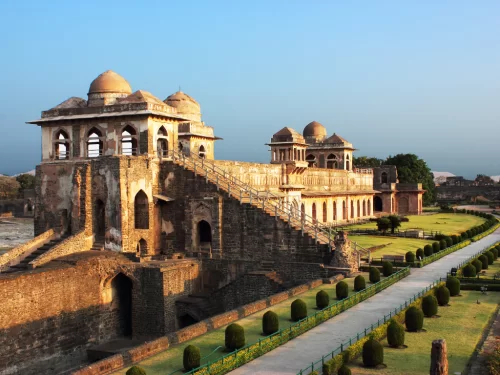
Jahaz Mahal at Mandu under golden hour glow, featuring tiered domes grand staircase and manicured gardens, perfect heritage experience with Madhya Pradesh tour packages. Monument

Jahaz Mahal Mandu

A 15th-century water palace built between two artificial lakes, resembling a floating ship.

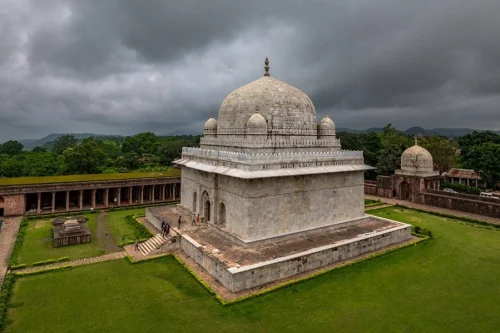
Hindola Mahal Mandu historic swing palace with sloping walls in Madhya Pradesh tour packages Monument

Hindola Mahal

A 15th-century audience hall known for its distinctive sloping walls and T-shaped architectural design.

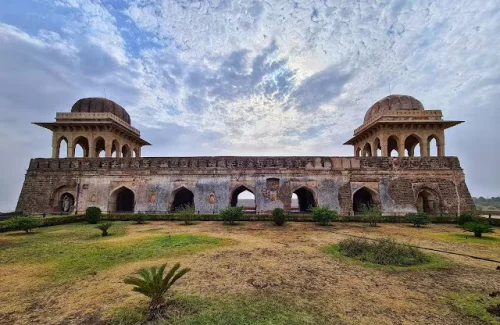
Jal Mahal in Mandu, Madhya Pradesh, featuring historic Afghan-style domed pavilions, stone stairways, and landscaped pathways, a key highlight of Madhya Pradesh tour packages. Historical Site

Jal Mahal Mandu

A historic water palace built during the Malwa Sultanate period within Mandu’s Royal Enclave complex.

Frequently Asked Questions About Baz Bahadur Palace

Baz Bahadur Palace is located in Mandu, Madhya Pradesh, within the Mandu Fort complex. It is easily accessible by road from Dhar and Indore.
Baz Bahadur Palace is generally open from morning around 8 AM until evening. Daytime visits are recommended for safe exploration and clear architectural views.
There is an entry fee to access the Mandu heritage complex which includes Baz Bahadur Palace. Ticket prices may vary for Indian and foreign visitors.
Visitors can reach Baz Bahadur Palace by taxi or private vehicle from Indore in Madhya Pradesh. Local transport options are limited, so private travel is more convenient.
Parking is available near Baz Bahadur Palace in designated areas close to the entrance. Parking charges may apply depending on vehicle type.
The best time to visit Baz Bahadur Palace is between October and March when the weather in Madhya Pradesh is pleasant. Morning hours offer comfortable conditions for exploration.
Most travelers spend about 30 to 60 minutes exploring Baz Bahadur Palace and its courtyards. Additional time may be needed for photography and visiting nearby monuments.
Baz Bahadur Palace is suitable for family visits and offers open spaces for relaxed exploration. Visitors should supervise children near elevated areas and steps.
Photography is generally allowed at Baz Bahadur Palace for personal use. Professional equipment may require additional permission from authorities.
Basic restroom facilities are available within the Mandu complex near Baz Bahadur Palace. Food stalls and small eateries are available in Mandu town.

Loved this place ? Let’s Plan Your Madhya Pradesh Trip

Get customized Madhya Pradesh tour planning designed around safari seasons, road travel distances, heritage site exploration time, and comfortable pacing across regions. Whether you are visiting for wildlife safaris, temple architecture, historical monume

⚡ Quick Response | 💰 Free consultation | 🕒 24×7 expert support

×

Plan Your Trip