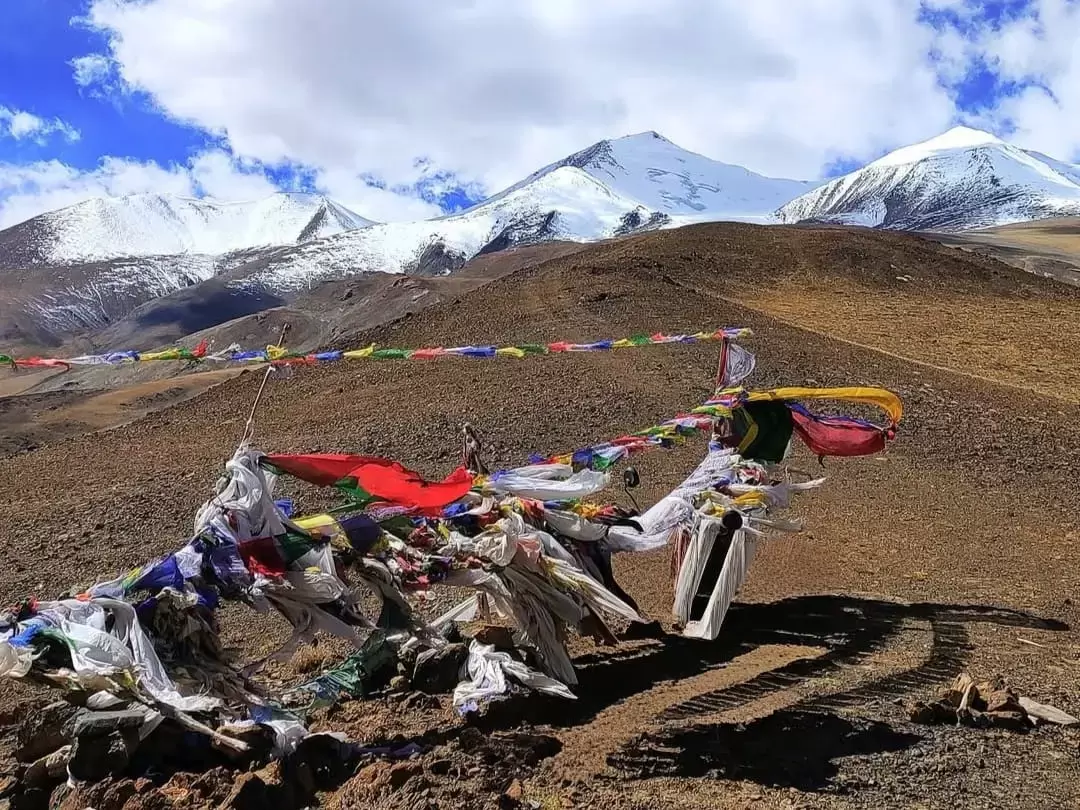
Thit Zarbo La Pass: Remote Mountain Pass in Hanle, Ladakh, India

Thit Zarbo La Pass , Hanle
Tourists visit Thit Zarbo La as part of a remote off-road circuit connecting Nyoma to Hanle via the twin high-altitude lakes of Chilling Tso and Ryul Tso. The pass is a destination for experienced overlanders and adventure motorcyclists seeking an isolated alternative to the standard routes, offering raw Himalayan landscapes and sightings of endemic wildlife like the Tibetan Gazelle.

Quick Facts About Thit Zarbo La Pass

Entry Fee Free
Timings 00:00 - 23:59
Altitude (m) 5416
Ideal Visit Duration (hrs) 0.15
Best Time of Day Morning
Crowd Level Low
Distance from Leh (km) 145
Walking Difficulty Moderate
Parking Available Yes
Last Mile Access Road
Suitable for Kids No
Suitable for Seniors No
Wheelchair Friendly No

Why Visit Thit Zarbo La Pass in Ladakh

Thit Zarbo La Pass is a formidable high-altitude crossing situated at approximately 17,103 feet, primarily used by seasoned overlanders as a remote shortcut between Nyoma and Hanle. It serves as a vital gateway for those exploring the deep interior of the Changthang plateau, providing a rugged transit route that bypasses the traditional Loma bridge crossing and leads directly into the secluded lake country of the southeast.

The atmosphere on the pass is one of profound isolation, characterized by vast, windswept plains and a complete absence of permanent settlements or commercial infrastructure. Visitors experience a raw, unshielded connection to the elements, where the silent, brown mountain ridges contrast sharply with the brilliant turquoise waters of the nearby Kyun Tso (Chilling Tso and Ryul Tso) twin lakes, creating a surreal landscape that feels untouched by modern tourism.

What makes Thit Zarbo La distinct is its technical off-road character and its role as a strategic link to the world’s highest motorable pass, Umling La. It offers a rare opportunity for adventure travelers to navigate unpaved, sandy tracks and steep gravel inclines that are largely unknown to the general public, making it a premier destination for those seeking a true frontier experience in one of the most quiet and environmentally sensitive sectors of the Indo-China borderlands.

Historical and Geographic Significance of Thit Zarbo La Pass

Thit Zarbo La is a high-altitude mountain pass situated at an elevation of approximately 5,416 meters (17,769 feet) in the Ladakh region. Located in the remote eastern sector of the Trans-Himalayas, it serves as an essential link between the Yaye Tso area and the Chushul valley, providing a rugged transit route through the high-plateau desert.

Geographically, the pass is characterized by its extreme isolation and sharp, winding gradients that navigate the mountain ridges of the Changthang. It acts as a natural drainage divide and offers a panoramic vantage point over the stark, arid landscape that defines the borderlands between the Indus Valley and the Pangong range. The terrain at the summit is dominated by permafrost and scree slopes, reflecting the harsh environmental conditions of the high-altitude steppe.

Historically, Thit Zarbo La has been utilized by the nomadic Changpa communities for the seasonal movement of pashmina goats, connecting disparate grazing grounds in the deep interior of Ladakh. In contemporary times, the pass holds significant strategic value due to its proximity to the Line of Actual Control (LAC). It is primarily used by the Border Roads Organization (BRO) and security forces for regional logistics. Because of its sensitive location and extreme altitude, access for tourists is strictly regulated and requires specific Inner Line Permits (ILP).

Best Time to Visit Thit Zarbo La Pass

Thit Zarbo La, a high-altitude pass situated at approximately 16,000 feet near the Nubra Valley, is a remote crossing that is only accessible during the core Himalayan summer. Due to its status as a lesser-traversed route compared to Khardung La, snow clearance is less frequent, making the seasonal window for a safe crossing exceptionally narrow.

  • Ideal months: July to September is the most reliable period for transit, as the high-altitude snowbanks typically require until mid-summer to melt sufficiently for standard 4x4 vehicle access.
  • Weather conditions: Expect extreme alpine conditions with daytime temperatures hovering between 5°C and 12°C; however, the pass is highly exposed to the elements, leading to sudden, sharp temperature drops and high-velocity winds that can induce rapid wind chill.
  • Periods to avoid: Avoid attempting the pass from October to June when heavy snow accumulation makes the unpaved tracks invisible and impassable; additionally, avoid crossing during the peak melt hours of late July afternoons, as glacial runoff can make the primitive approach roads highly unstable.

How to Reach Thit Zarbo La Pass

Thit Zarbo La Pass is a remote and high-altitude mountain pass located at approximately 5,420m (17,782 ft) in the Changthang region of Ladakh. It serves as a rugged link on the internal routes between the Mahe sector and the high-altitude plateaus near the Indus River, offering a true off-the-beaten-path experience for adventure travelers.

  • Nearest Airport: Kushok Bakula Rimpochee Airport (IXL) in Leh is the closest air link, roughly 200 km away. Due to the extreme elevation of Thit Zarbo La, it is critical to undergo at least 3 to 4 days of progressive acclimatization in Leh and Chumathang before attempting to cross this pass.
  • Nearest Railway Station: Jammu Tawi is the nearest major railhead, located about 830 km away. Road travel from Leh is the only practical method of access, as there are no rail links in this part of the Himalayas.
  • Road Access and Route: The pass is typically accessed via the Leh – Karu – Upshi – Chumathang – Mahe Bridge route. From the Mahe area, the track diverts into the more secluded valleys of Changthang. The route is characterized by steep, winding ascents and narrow tracks that require expert driving skills.
  • Last-Mile Connectivity: This is an expedition-grade route with very limited traffic. High-clearance 4x4 vehicles or adventure motorcycles with high torque are mandatory. The road surface is largely unpaved, consisting of loose rocks, sand, and seasonal stream crossings that can be impassable for standard passenger cars.
  • Permits and Security: Being located in a sensitive border region, a valid Inner Line Permit (ILP) for Indian tourists or a Protected Area Permit (PAP) for foreigners is strictly required. Your permit must specifically cover the Mahe and Nyoma sectors. Multiple army checkpoints are encountered along the approach, where original permits must be produced.
  • Realistic Travel Conditions: Thit Zarbo La is one of the more isolated passes in Ladakh with zero infrastructure. There is no mobile connectivity, no mechanical support, and no medical facilities within a 60-70 km radius. Travelers must carry supplementary oxygen, extra fuel, and all necessary supplies, as the pass is only accessible during the summer months from late June to September.

What to Expect When You Visit Thit Zarbo La

  • http://googleusercontent.com/map_location_reference/1
  • Environment and Surroundings: [Thit Zarbo La](http://googleusercontent.com/map_location_reference/0) is an extremely remote, high-altitude pass situated at an elevation of approximately 5,460 meters (17,913 feet) in the eastern part of Ladakh. The surroundings are characterized by a desolate, high-altitude desert landscape with vast, rolling brown peaks and significant snow cover during winter months. The area experiences intense solar radiation and frequent, biting winds that sweep across the barren Changthang plateau.
  • Facilities and Amenities: There is no infrastructure, commercial activity, or shelter at the summit. You will find no restrooms, shops, medical centers, or fuel stations. The pass is entirely undeveloped, marked only by a basic road sign and Buddhist prayer flags. Visitors must be completely self-reliant, carrying all necessary food, water, and emergency medical kits, as the nearest basic settlements are several hours away.
  • Accessibility and Movement: The pass is located on a sensitive military route that is primarily unpaved and consists of loose gravel and dirt tracks. A high-clearance 4x4 vehicle is mandatory due to the steep gradients and the possibility of road washouts from snowmelt. Because of its strategic location near the international border, access is strictly controlled; specific military clearance and a valid Inner Line Permit (ILP) are required for travel through this sector.
  • Typical Visitor Behavior and Conditions: Due to the extreme altitude, oxygen levels are very low, posing a significant risk of Acute Mountain Sickness (AMS). Most travelers spend less than 10 minutes at the summit for essential photography before descending to safer elevations. The route sees very little civilian traffic, resulting in a sense of profound isolation; mechanical failures here are critical as there is no mobile network coverage and help may not arrive for a long duration.

Essential Visitor Information for Thit Zarbo La Pass

  • Crowd and Weather: Thit Zarbo La is an extremely remote and obscure pass (approx. 5,420 meters) on the route between Chushul and Hanle; expect total isolation with virtually no other tourists. The weather is brutal, defined by oxygen-depleted air and hurricane-force winds that sweep across the high-altitude desert.
  • Peak and Quiet Visiting Hours: Recommended transit is between 10:00 AM and 1:00 PM to take advantage of the warmest part of the day; avoid this pass after 3:00 PM as the lack of any habitation or help within a 40km radius makes a late-day breakdown extremely dangerous.
  • Dress Code: Full expedition-grade clothing is mandatory year-round; wear a heavy windproof down jacket, thermal base layers, and high-altitude boots. Protection for the face and eyes is critical to prevent windburn and UV damage from the intense high-altitude sun.
  • Safety and Altitude Cautions: The risk of Acute Mountain Sickness (AMS) and HAPE is severe due to the extreme elevation; stay at the summit for no more than 5-10 minutes. Ensure you have a satellite-based communication device or are traveling in a multi-vehicle convoy, as there is no mobile network or road patrol.
  • Logistics and Permits: This is a highly sensitive border zone near the LAC; a valid Inner Line Permit (ILP) specifically covering the Chushul-Hanle direct route via Thit Zarbo La is strictly required and subject to frequent military verification.
  • Terrain and Vehicle Requirements: The road is largely unpaved, consisting of deep sand, loose scree, and sharp rocks; only experienced drivers in high-clearance 4x4 vehicles should attempt this pass, and carrying extra fuel is essential.

Photography Strategy and Viewpoints for Thit Zarbo La Pass

Thit Zarbo La is a high-altitude mountain pass located in the remote regions of Ladakh, often used as a challenging trekking or off-road link between the Indus and Nubra sectors. Its photography profile is defined by its extreme isolation and the raw, unpolished beauty of the Ladakh Range's interior, offering vistas that are rarely captured by mainstream travelers.
  • High-Altitude Desert Symmetry: The summit provides a stark, symmetrical view of the winding tracks that lead up to the pass. Capture these from an elevated ridge near the summit marker to showcase the contrast between the dark, sun-baked earth and the vast, cloud-streaked sky.
  • Hidden Valley Panoramas: Facing north, you can document the deep, unnamed valleys that feed into the larger Shyok and Indus systems. Use a telephoto lens (70-200mm) to isolate the layers of sedimentary rock, which often feature unique purple and green mineral hues.
  • Low-Angle Trail Photography: The terrain at Thit Zarbo La is frequently comprised of loose shale and sharp scree. Using a low-angle perspective for shots of vehicles or trekkers emphasizes the technical difficulty of the terrain and provides a gritty, adventurous aesthetic.
  • Harsh Light and UV Control: Given the altitude, UV radiation is extremely high, which can cause a blue color cast in digital sensors. A circular polarizer and a high-quality UV filter are mandatory to maintain color accuracy and to cut through the atmospheric haze typical of midday.
  • Environmental Resilience: This pass is subject to intense, cold winds and fine dust. It is critical to keep gear in weather-sealed bags when not in use and to perform any necessary lens changes in a sheltered area to prevent the fine Ladakhi silt from entering the camera body.
  • Remote Logistics: Because this area is largely unmapped and far from support, ensure your equipment is fully charged before departure. Using a portable solar charger or high-capacity power banks is recommended for multi-day shoots in this sector.

Near By Attraction

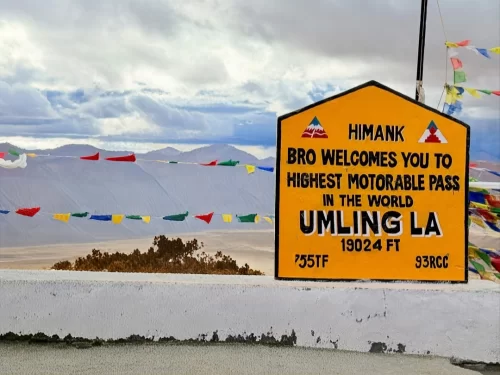
Umling La Ladakh BRO Himank signboard world's highest motorable pass 19300 ft prayer flags mountains, Changthang plateau adventure peak clouds, perfect Ladakh biking offroad expedition package. Mountain Pass

Umling La Pass

Umling La is a high-altitude mountain pass in the Eastern Ladakh region, situated at an elevation of 5,798 meters (19,024 feet) according to Guinness World Records.

Large red I Love Hanele signpost yellow road sign Way to Umlingla 63 km via Photila Top green directional poles barren Ladakh rocky terrain partly cloudy blue sky, perfect high-altitude route Ladakh adventure package. Mountain Pass

Photi La

Photi La is a high-altitude mountain pass in the Leh district that serves as a remote gateway to the Hanle region of eastern Ladakh.
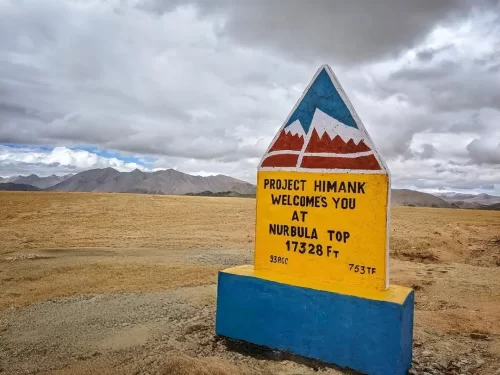
Nurbula Top (Nurbula Pass) Ladakh signboard Project Himank welcomes 17328 ft Nubra 1753 ft hazy mountains barren plateau gravel road, perfect high-altitude adventure Ladakh tour package. Mountain Pass

Nurbu La

Nurbu La is a high-altitude mountain pass in Ladakh that connects Hanle to Umling La, offering scenic high-mountain views.

Frequently Asked Questions About Thit Zarbo La Pass

Thit Zarbo La Pass is located in the southeastern part of Ladakh on the remote high altitude route connecting Nyoma to Hanle near the Kyon Tso lake region. It lies within the Changthang plateau southeast of Leh city.
Thit Zarbo La Pass can be reached from Leh city by driving via Karu, Upshi, and onward toward the Nyoma sector before continuing toward Hanle. The journey usually takes a full day because of long distances and offroad stretches.
An Inner Line Permit is required for tourists visiting Thit Zarbo La Pass as it falls within the restricted Nyoma and Hanle circuit of Ladakh. Permits must be obtained in Leh city before starting the trip.
The best time to visit Thit Zarbo La Pass in Ladakh is between July and September when high altitude desert tracks are generally clear and weather conditions are more predictable. Access outside this period depends on snowfall and road status.
Thit Zarbo La Pass stands at an altitude of over 17000 feet where oxygen levels are significantly lower than in Leh city. Even short exposure can cause breathlessness or fatigue without proper acclimatization.
There are no food stalls, fuel stations, or accommodation facilities at Thit Zarbo La Pass. Travelers must carry drinking water and essential supplies and plan overnight stays in Nyoma, Hanle, or Leh city.
A high clearance 4x4 SUV is recommended for reaching Thit Zarbo La Pass due to loose gravel, sandy patches, and rugged terrain. Vehicles should be in strong mechanical condition for remote high altitude travel.
Travelers usually spend 5 to 15 minutes at Thit Zarbo La Pass because of the extreme elevation and wind exposure. Limiting the stay reduces the risk of altitude related discomfort.
Visitors should wear layered thermal clothing, insulated gloves, and a windproof jacket when traveling to Thit Zarbo La Pass. Temperatures remain cold and winds can be strong even during summer.
Thit Zarbo La Pass is generally not accessible during winter months as heavy snowfall blocks interior Changthang routes. Travel plans should be based on updated road information from Leh city authorities.
Thit Zarbo La Pass is better suited for well acclimatized and physically fit travelers. Senior citizens or young children should carefully assess altitude sensitivity before planning this route from Leh city.
Mobile network connectivity is not available at Thit Zarbo La Pass in Ladakh. Signals are usually lost well before reaching the pass, so communication should be arranged in advance from Leh city.

Loved this place ? Let’s Plan Your Ladakh Trip

Get customized Ladakh tour planning designed around altitude comfort, acclimatization time, weather windows, and real Himalayan road conditions. Whether you are visiting for high mountain passes, monasteries, lakes, or remote valley experiences, our exper

⚑ Quick Response | πŸ’° Free consultation | πŸ•’ 24Γ—7 expert support

×

Plan Your Trip