Quick Facts About Hanle Monastery
| Entry Fee | Free |
| Timings | 06:00 - 18:00 |
| Altitude (m) | 4500 |
| Ideal Visit Duration (hrs) | 1 |
| Best Time of Day | Morning |
| Crowd Level | Low |
| Distance from Leh (km) | 255 |
| Walking Difficulty | Moderate |
| Parking Available | Yes |
| Last Mile Access | Walk |
| Suitable for Kids | No |
| Suitable for Seniors | No |
| Wheelchair Friendly | No |
Why Visit Hanle Monastery
Hanle Monastery is worth visiting for travelers who value spiritual heritage, quiet spaces, and historical context over crowded sightseeing. Its remote location and active monastic life offer a genuine experience of Ladakh’s Buddhist traditions without commercial influence.
Atmosphere
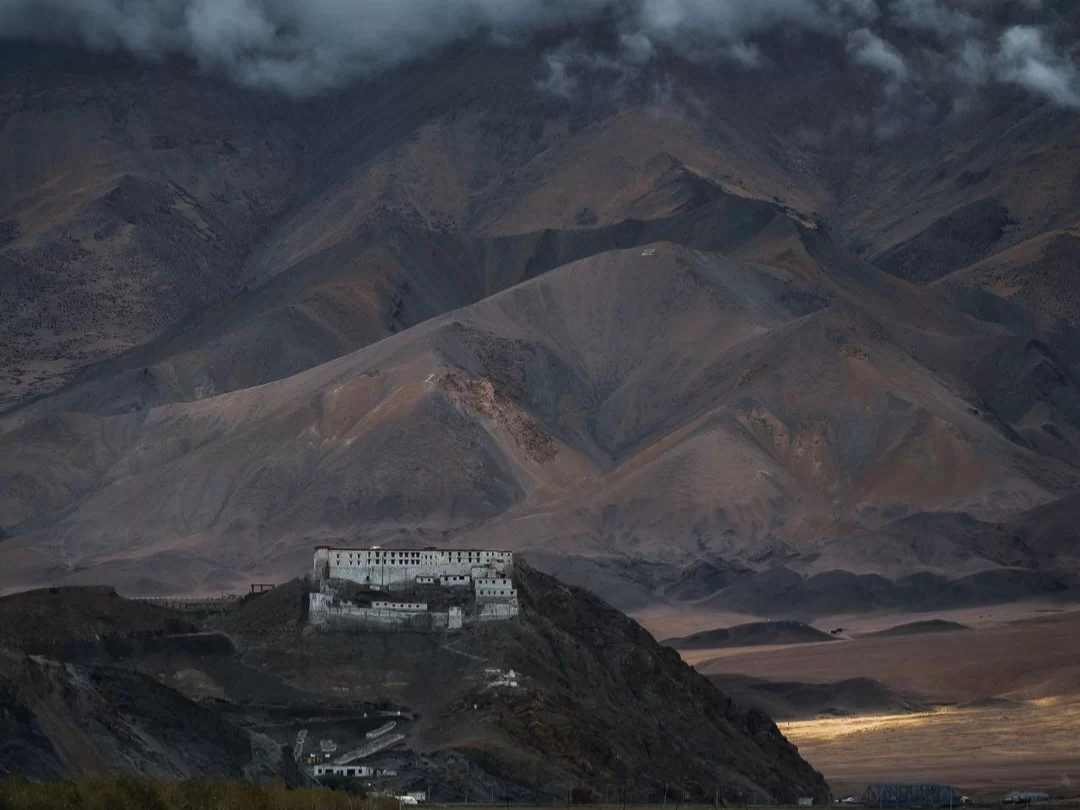
The atmosphere at Hanle Monastery is calm, austere, and deeply contemplative. Surrounded by the open Changthang plateau, the monastery feels isolated and peaceful, with minimal noise apart from prayer chants and wind. The high altitude and sparse surroundings naturally slow the pace of movement and thought.
What Makes It Special
What makes Hanle Monastery special is its historical and religious importance combined with its setting. Established in the 17th century under the Drukpa Kagyu lineage, it has served as both a spiritual center and a political landmark in eastern Ladakh. Unlike larger monasteries near Leh, Hanle remains lightly visited, allowing travelers to observe monastic life, ancient murals, and prayer halls in an unhurried and respectful environment.
Historical and Religious Background of Hanle Monastery
Hanle Monastery was established in the 17th century during a period of political and religious consolidation in Ladakh. It belongs to the Drukpa Kagyu school of Tibetan Buddhism and was founded under the patronage of Sengge Namgyal, one of Ladakh’s most influential rulers. The monastery played a strategic role in reinforcing Buddhist authority in the Changthang region, which lay close to important trade and political routes.
Historically, Hanle Monastery also functioned as a regional administrative center. Its location near the eastern frontier made it significant not only for religious practice but also for maintaining Ladakhi influence in a sparsely populated and geopolitically sensitive area. The monastery’s establishment marked a deliberate effort to strengthen cultural and spiritual ties with Tibet.
Religiously, Hanle Monastery continues to serve as an active place of worship rather than a preserved monument. Daily prayers, rituals, and seasonal ceremonies are conducted by resident monks, maintaining traditions that have continued for centuries. The prayer halls contain old wall paintings, statues, and scriptures that reflect the artistic and spiritual styles of the period in which the monastery was founded.
Unlike more accessible monasteries in central Ladakh, Hanle’s isolation has helped preserve its original character. This continuity of religious practice, rather than architectural grandeur, defines its lasting importance in Ladakh’s Buddhist landscape.
Best Time to Visit Hanle Monastery
The best time to visit Hanle Monastery is from late May to early October, when road access to the Changthang region is open and weather conditions are relatively stable. During this period, travelers can reach the monastery safely and spend time exploring the prayer halls and surroundings during daylight hours.
June to September offers the most practical window for most visitors. Snow has cleared from approach roads, and daytime temperatures are manageable despite the high altitude. Strong winds and cold evenings remain common, even in peak summer.
From October onward, temperatures drop rapidly, and early snowfall can block access roads. Between November and April, the monastery is largely inaccessible to travelers due to snowbound routes and extreme cold, making visits impractical.
- Late May and June have fewer travelers but colder mornings and evenings
- July and August provide the safest road access and more predictable travel conditions
- September offers clear skies and quiet surroundings with shorter daylight hours
- Winter months are not suitable due to road closures and severe cold
How to Reach Hanle Monastery
- Hanle Monastery is reached by road from Leh, at a distance of approximately 255 km, through the remote Changthang region of eastern Ladakh
- The commonly used route is Leh to Karu to Upshi to Chumathang to Nyoma to Loma to Hanle village
- A mandatory security check is conducted at Loma Bridge, where all travelers must carry valid government-issued identity proof
- Indian nationals require an Inner Line Permit to travel to Hanle, as it lies close to sensitive border areas
- Foreign nationals are generally restricted beyond certain points in the Changthang region and are not permitted to visit Hanle Monastery
- There is no reliable public transport to Hanle; private taxis or pre-arranged tour vehicles are the only practical options
- Road conditions vary by season, with broken stretches, dust, and occasional water crossings during summer months
- No fuel stations are available after Karu or Upshi, so vehicles must be fully refueled before starting the journey
What to Expect When You Visit Hanle Monastery
- A quiet, active Buddhist monastery set in an open high-altitude landscape with minimal surrounding development
- Simple prayer halls containing traditional murals, statues, and religious artifacts rather than elaborate decoration
- Resident monks carrying out daily prayers and routines, which visitors may observe respectfully
- Cold and windy conditions even during summer months due to the monastery’s elevation
- Very limited visitor facilities, with no cafes, restrooms, or souvenir shops within the monastery complex
- Low tourist presence, allowing an unhurried and contemplative visit
- Short walks and stairways within the complex, requiring basic physical comfort at high altitude
- A remote setting that is best experienced as part of a planned Changthang itinerary rather than a quick stop
Important Visitor Information for Hanle Monastery
- Crowd and weather notes: Hanle Monastery remains very lightly visited, but weather can change quickly with strong winds, sudden cloud cover, and sharp temperature drops even during summer
- Peak hours: Late morning to early afternoon, when travelers passing through Hanle village stop briefly at the monastery
- Quiet hours: Early mornings and late afternoons are usually empty and ideal for a peaceful visit, though temperatures are colder
- Dress code: Modest clothing is required, including covered shoulders and legs; warm layered clothing is essential due to high altitude and cold winds
- Safety notes: High altitude poses a real risk of altitude sickness; visitors should only attempt the visit after proper acclimatization in Leh
- Footwear should be sturdy, as stone paths and steps can be uneven
- There are no medical facilities nearby, and emergency assistance can take several hours to reach the area
- Visitors should maintain silence during prayer times and avoid disturbing resident monks
Photography and Viewpoints at Hanle Monastery
- The monastery complex offers elevated viewpoints overlooking Hanle village and the wide Changthang plateau, suitable for broad landscape photography
- Late morning to early afternoon provides the best natural light on the monastery walls and surrounding hills, reducing harsh shadows
- Clear weather allows long-distance views of barren mountains and open valleys, emphasizing the isolation of the site
- Interior photography inside prayer halls may be restricted; visitors should always seek permission and avoid using flash
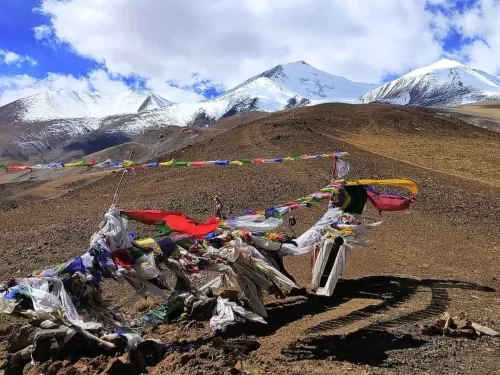
- Prayer flags, whitewashed walls, and old murals create strong visual contrast against the deep blue high-altitude sky
- Wind is common, so tripods should be weighted or stabilized when shooting wider compositions
- Sunrise and sunset light can be dramatic but temperatures drop quickly, requiring limited exposure time
- Drone photography is not advisable due to religious sensitivity and proximity to restricted border areas