Ultimate Ladakh Road Trip Guide From Delhi, Srinagar and Manali
A Ladakh road trip from Delhi through Srinagar or Manali requires detailed planning around routes, weather, fuel, permits, and high altitude travel conditions.
+91 9910402252
admin@chalbanjare.com


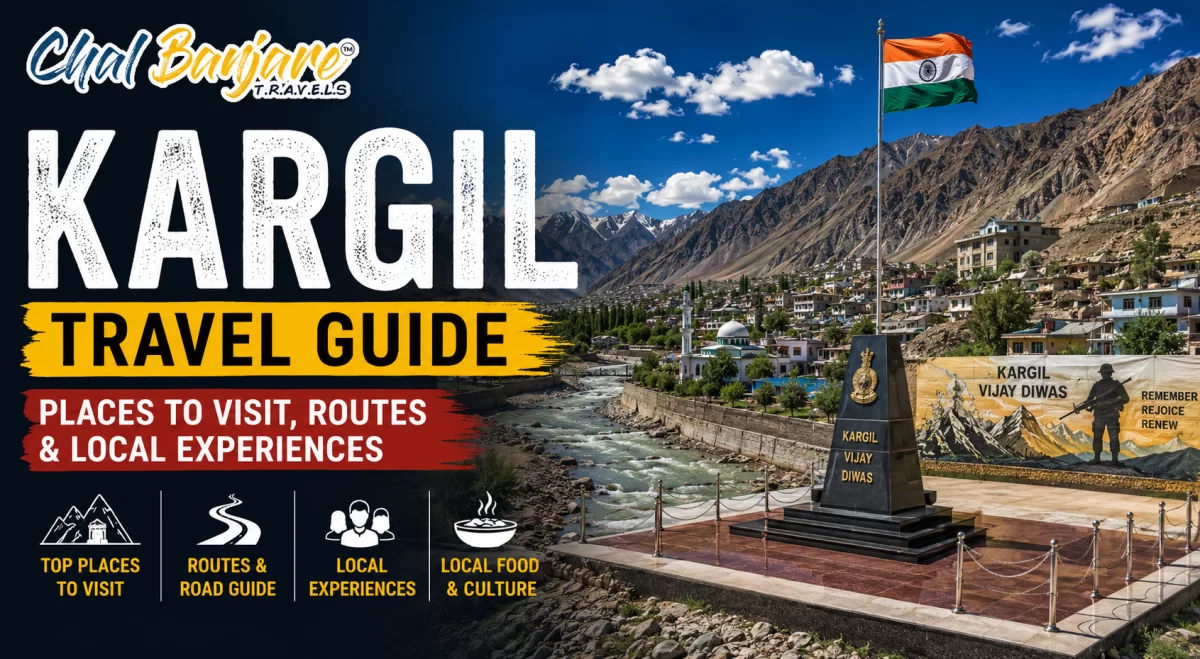
Kargil travel requires understanding routes, weather, local culture, mountain conditions, and nearby regions for a smooth Ladakh journey.
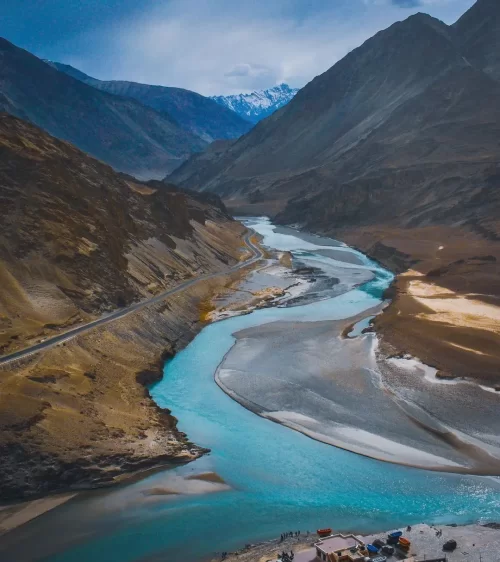
Kargil is located in western Ladakh along the Srinagar–Leh highway and acts as one of the most important transit and settlement regions between Kashmir and Leh. Situated on the banks of the Suru River, Kargil lies at a comparatively lower altitude than Leh and serves as a major acclimatization stop for travelers entering Ladakh through the Srinagar route.
The town plays a critical role in Ladakh travel because it connects multiple important regions including Leh, Zanskar Valley, Drass, Suru Valley, and Kashmir. Unlike the barren high-altitude desert landscapes around eastern Ladakh, Kargil offers greener valleys, agricultural settlements, mountain villages, and stronger road connectivity throughout western Ladakh.
Travelers entering Ladakh through Srinagar often find Kargil physically easier because the gradual altitude increase allows the body to acclimatize more comfortably before reaching higher Himalayan regions.
Kargil feels very different from the main Leh Ladakh circuit because the landscapes, culture, climate, and travel atmosphere change significantly across western Ladakh. While Leh and eastern Ladakh are known for barren cold desert terrain, high-altitude lakes, and Buddhist monasteries, Kargil features greener valleys, river-based settlements, and a different cultural identity influenced by western Himalayan traditions.
The region also receives fewer tourists compared to Leh, Nubra Valley, and Pangong Lake, which gives Kargil a quieter and more local travel atmosphere. Travelers exploring Kargil often focus on Suru Valley, Drass, monasteries, mountain villages, and Zanskar access routes instead of the classic high-altitude lake circuits of eastern Ladakh.
| Region | Main Identity | Travel Experience |
|---|---|---|
| Leh Region | Buddhist cultural and tourism center | Monasteries, markets, and acclimatization base |
| Eastern Ladakh | High-altitude lakes and plateau landscapes | Pangong, Hanle, Tso Moriri, Changthang circuits |
| Kargil Region | River valleys and western Ladakh settlements | Greener mountain landscapes and quieter tourism |
| Suru Valley | Agricultural Himalayan valley | Village landscapes and glacier views |
| Zanskar Access | Remote mountain connectivity | Adventure road travel and monastery circuits |
| Altitude Conditions | Comparatively lower than Leh | Gradual acclimatization advantage for travelers |
| Tourism Atmosphere | Less commercialized | More local and less crowded experience |
Travelers looking for quieter Himalayan road journeys, cultural diversity, and broader mountain valley landscapes often enjoy Kargil much more than the heavily visited eastern Ladakh tourism circuit.
The ideal number of days required for Kargil depends on whether travelers are using the town mainly as a transit halt between Srinagar and Leh or planning deeper exploration of Suru Valley, Drass, Zanskar, and nearby mountain regions. While many road trip travelers stay only one night during transit, the wider Kargil region deserves additional time for proper exploration.
Travelers focusing only on highway travel generally spend one night in Kargil, while those planning Suru Valley or Zanskar routes often require several additional days because distances across western Ladakh remain long and mountain roads naturally reduce travel speed.
Travelers who spend extra time around Kargil generally experience a broader side of Ladakh beyond the classic tourist circuit because the region offers quieter roads, cultural variation, and scenic Himalayan valley landscapes that are often overlooked during rushed itineraries.
Kargil town and the surrounding Suru Valley region offer a completely different side of Ladakh compared to the barren landscapes of Leh and eastern Changthang. The Suru Valley is known for its greener terrain, glacier-fed rivers, agricultural villages, and dramatic mountain scenery dominated by snow-covered Himalayan peaks.
Kargil town acts as the main urban center of western Ladakh and serves as an important stop for travelers moving between Srinagar, Leh, and Zanskar. Nearby attractions like Kartse Khar and traditional Suru Valley settlements provide a quieter and more local mountain travel experience with fewer tourist crowds compared to the main Ladakh circuit.
Travelers exploring Suru Valley should keep extra time because the region is best experienced slowly through village stops, scenic drives, and relaxed mountain travel rather than rushed transit movement.
The Drass region near Kargil is one of the most historically important areas in Ladakh because of its connection to the Kargil War and the strategic mountain ranges surrounding the Srinagar–Leh highway. Located along the route between Srinagar and Kargil, Drass is known for its dramatic mountain landscapes, military presence, and extreme winter climate conditions.
The Kargil War Memorial in Drass remains one of the most visited historical sites in the region and provides insight into the battles fought across nearby peaks such as Tiger Hill and Tololing. Several viewpoints along the highway offer distant views of strategic mountain positions connected to the conflict zone.
| Place or Region | Main Highlight | Travel Experience |
|---|---|---|
| Drass | Historic Himalayan transit town | Cold mountain valley and war history region |
| Kargil War Memorial | Memorial dedicated to soldiers | Historical and patriotic significance |
| Tiger Hill Viewpoints | Strategic mountain peak region | Visible from selected highway sections |
| Border Region Landscapes | Military-controlled mountain terrain | Strong army presence throughout the route |
| Mountain Highway Views | Dramatic Himalayan scenery | Long valley and peak photography opportunities |
| Historic Battle Areas | Kargil conflict significance | Important national history connection |
| Extreme Winter Climate | Very low seasonal temperatures | One of the coldest inhabited Himalayan regions |
Travelers visiting Drass and nearby viewpoints should remain respectful because the region remains closely connected to military operations and national memorial sites. Weather and security conditions can occasionally affect accessibility in nearby border areas.
The wider Kargil region also connects travelers to several important monastery circuits and remote Himalayan landscapes including Mulbekh, Rangdum, and Lamayuru. These regions offer dramatic scenery, Buddhist cultural heritage, isolated mountain roads, and some of the most visually striking landscapes in western Ladakh.
Mulbekh is known for its giant rock-carved Buddha statue, while Lamayuru attracts travelers because of its monastery and unusual moon-like terrain formations. Rangdum lies on the remote Zanskar route and is surrounded by glaciers, barren mountain plateaus, and isolated Himalayan valleys.
Travelers exploring these monastery circuits should keep flexible itineraries because distances remain long and road conditions can change depending on weather and seasonal accessibility across western Ladakh and Zanskar routes.
Summer is considered the best time to visit Kargil because roads remain accessible, weather conditions become comparatively stable, and the mountain valleys surrounding the region appear greener and more scenic. The main travel season generally begins around May after snow clearance improves connectivity on the Srinagar–Leh highway and continues until September.
During summer, travelers can comfortably explore Kargil town, Suru Valley, Drass, Mulbekh, and nearby monastery circuits while enjoying clear skies and pleasant daytime temperatures. Compared to Leh and eastern Ladakh, Kargil usually experiences slightly milder weather because of its lower altitude and greener valley geography.
Travelers visiting Kargil during summer should still carry warm layers because nights remain cold in mountain valleys, especially during higher altitude road journeys towards Zanskar and nearby Himalayan passes.
Winter in Kargil brings heavy snowfall, freezing temperatures, icy roads, and significant travel limitations across western Ladakh. The region experiences severe Himalayan winter conditions, especially around Drass, Zojila Pass, and remote mountain routes connecting Srinagar, Zanskar, and higher valley regions.
During peak winter months, several roads become inaccessible because of snow accumulation, black ice, and avalanche risk. Although Kargil town remains inhabited throughout winter, travel beyond major settlement areas becomes much more difficult because weather conditions can change rapidly across the mountains.
| Winter Condition | Main Impact | Ground Reality |
|---|---|---|
| Heavy Snowfall | Road accessibility issues | High mountain passes may close temporarily |
| Freezing Temperatures | Extreme cold exposure | Nights become very harsh throughout the region |
| Black Ice Roads | Driving difficulty increases | Morning and evening travel become risky |
| Zojila Pass Closure Risk | Srinagar highway disruptions | Main access route may remain blocked during storms |
| Zanskar Isolation | Remote valley accessibility problems | Several roads remain inaccessible during winter |
| Reduced Tourism Activity | Limited accommodation and services | Fewer operational camps and travel facilities |
| Snow-Covered Landscapes | Scenic winter mountain views | Excellent photography during clear weather conditions |
Travelers attempting winter trips to Kargil should carry proper thermal clothing, emergency supplies, and flexible schedules because Himalayan weather conditions can severely affect road connectivity and travel safety across western Ladakh.
Kargil experiences major seasonal weather changes throughout the year because of its mountain valley location and proximity to high Himalayan passes. Travel suitability depends mainly on road accessibility, snowfall levels, and weather conditions across the Srinagar–Leh highway and nearby western Ladakh routes.
Most travelers prefer visiting between June and September because road conditions remain stable and tourism infrastructure functions actively during this period. Winter and shoulder-season travel offers quieter landscapes and snow scenery but involves increased weather uncertainty and travel restrictions.
| Month or Season | Weather Conditions | Travel Suitability |
|---|---|---|
| April | Cold weather with possible snow near mountain passes | Road accessibility may remain uncertain |
| May | Gradual highway reopening and improving temperatures | Beginning of summer travel season |
| June | Stable weather and clear mountain visibility | Excellent for road trips and sightseeing |
| July and August | Peak tourism period | Best accessibility across western Ladakh |
| September | Clear skies and cooler nights | Excellent for photography and quieter travel |
| October | Rapid temperature drop and early snowfall possibility | Cold shoulder-season travel conditions |
| November to March | Heavy winter conditions and freezing temperatures | Suitable mainly for experienced winter travelers |
Travelers planning Kargil trips should always monitor current road status and weather forecasts before departure because mountain accessibility can change quickly depending on snowfall, landslides, and highway conditions across western Ladakh.
The Srinagar to Kargil highway route is one of the most scenic mountain drives in northern India and forms an important section of the Srinagar–Leh national highway. The journey passes through Kashmir Valley landscapes, Sonamarg, Zojila Pass, Drass, and several remote Himalayan mountain sections before reaching Kargil town.
This route is widely preferred by many travelers entering Ladakh because the gradual altitude gain helps the body acclimatize more comfortably compared to direct travel towards Leh from Manali. The highway also offers dramatic transitions from green valleys to rugged Himalayan mountain terrain during the journey.
Travelers should begin early from Srinagar because Zojila traffic, landslides, weather conditions, and army-controlled traffic management can significantly affect highway travel time during peak season.
The Leh to Kargil route via Lamayuru and Fotu La Pass forms another major section of the Srinagar–Leh highway and offers some of the most dramatic mountain landscapes in western Ladakh. The journey passes through barren valleys, Buddhist monastery regions, high mountain passes, and moon-like terrain formations before descending gradually towards Kargil.
Travelers driving from Leh towards Kargil often stop at Lamayuru Monastery because of its historic significance and unusual landscape formations. The route then continues across Fotu La Pass, one of the highest points along the highway, before moving towards Mulbekh and eventually Kargil town.
| Route Section | Main Highlight | Travel Experience |
|---|---|---|
| Leh Departure | Main Ladakh tourism center | Road trip starting point towards western Ladakh |
| Nimmu and Basgo | Indus Valley landscapes | Scenic mountain highway driving |
| Lamayuru | Historic monastery and Moonland terrain | Popular photography and cultural stop |
| Fotu La Pass | High mountain highway crossing | Wide panoramic Himalayan views |
| Mulbekh Region | Rock-carved Buddha statue | Important cultural highway attraction |
| Kargil Arrival | Western Ladakh transit hub | Lower altitude valley settlement |
| Travel Duration | Usually around 5 to 7 hours | Depends on road and weather conditions |
Travelers using this route should maintain flexible schedules because mountain weather, landslides, and road maintenance activity occasionally affect traffic movement along the Srinagar–Leh highway.
The Kargil to Zanskar Valley route is one of the most remote and adventurous road journeys in Ladakh because it connects western Ladakh with the isolated mountain valleys of Padum and surrounding Zanskar regions. The road passes through Suru Valley, Rangdum, Pensi La Pass, and glacier landscapes before entering deeper Zanskar territory.
Although road infrastructure has improved in recent years, travelers should still expect rough mountain sections, weather-sensitive roads, river crossings, and long isolated driving stretches throughout the journey. The route remains operational mainly during summer months because snowfall heavily affects accessibility around Pensi La Pass during winter.
Travelers heading towards Zanskar from Kargil should carry emergency supplies, extra fuel, medicines, and offline maps because infrastructure and support facilities remain extremely limited across the route. Slow and realistic travel planning greatly improves safety and comfort.
A 2 to 3 day Kargil itinerary covering Drass and Suru Valley is ideal for travelers wanting a balanced western Ladakh experience without rushing continuously through mountain highways. This route combines war memorial sites, glacier valleys, Himalayan villages, scenic river landscapes, and quieter mountain roads that are very different from the main Leh tourism circuit.
Most travelers begin from Srinagar or Leh and spend at least one or two nights in Kargil while exploring nearby attractions such as Drass, Suru Valley, Kartse Khar, and local monasteries. Travelers with additional time often continue towards Rangdum or Zanskar Valley for deeper exploration of western Ladakh.
| Day | Suggested Route | Main Coverage |
|---|---|---|
| Day 1 | Srinagar to Kargil | Sonamarg, Zojila Pass, Drass, War Memorial |
| Day 2 | Kargil and Suru Valley Exploration | Kartse Khar, village landscapes, glacier viewpoints |
| Day 3 | Kargil to Leh or Extended Route | Lamayuru, Fotu La, monastery circuits |
| Optional Extension | Rangdum or Zanskar Route | Remote valley exploration and glacier landscapes |
Travelers attempting shorter itineraries should still keep buffer time because mountain weather, highway traffic, and landslides occasionally affect travel speed along western Ladakh roads.
The Srinagar–Kargil–Leh road trip is considered one of the best route combinations for first-time Ladakh travelers because it allows gradual altitude gain and smoother acclimatization compared to entering Ladakh directly through the Manali route. The journey combines Kashmir Valley landscapes, high mountain passes, river valleys, monasteries, and classic Ladakh highway scenery within a single continuous road trip.
Most first-time travelers prefer spending one night in Kargil before continuing towards Leh because the lower altitude helps the body adjust gradually while reducing the chances of severe altitude sickness after entering Ladakh.
First-time travelers should avoid rushing directly from Srinagar to Leh in a single day because long driving hours and sudden altitude increase can make the journey physically exhausting despite the gradual route advantage.
An extended Kargil itinerary including Zanskar and Rangdum is ideal for travelers wanting deeper exploration of remote western Ladakh beyond the standard Leh circuit. This route combines glacier valleys, isolated monasteries, dramatic mountain passes, remote Himalayan villages, and some of Ladakh’s least crowded road trip landscapes.
The journey usually begins from Kargil and continues through Suru Valley, Rangdum, and Pensi La Pass before reaching Padum in Zanskar Valley. Since these regions involve long mountain drives and highly isolated terrain, travelers should keep additional days for acclimatization, weather delays, and relaxed exploration.
Travelers planning extended Kargil and Zanskar itineraries should carry extra fuel, medicines, cash, and offline maps because support infrastructure remains limited across remote western Ladakh mountain routes. Slow travel greatly improves both safety and overall experience.
Transport costs in the Kargil region are generally lower compared to remote eastern Ladakh circuits like Hanle or Tso Moriri, but expenses still depend heavily on route choice, travel season, and the type of vehicle used for mountain travel. Travelers usually choose between shared cabs, private taxis, self-drive vehicles, or local transport depending on budget and itinerary flexibility.
Shared taxis remain one of the most economical ways to travel between Srinagar, Kargil, Leh, and nearby regions because several travelers divide transportation costs across long highway journeys. Private taxis provide greater comfort and route flexibility but naturally increase overall trip expenses, especially for remote routes towards Zanskar and Suru Valley.
| Transport Option | Main Advantage | Ground Reality |
|---|---|---|
| Shared Cab | Budget-friendly long-distance travel | Fixed timings and limited route flexibility |
| Private Taxi | Comfortable and customizable travel | Higher cost but easier for families and groups |
| Local Transport | Cheaper regional movement | Limited frequency in remote mountain regions |
| Self Drive Vehicle | Flexible road trip planning | Requires confidence on mountain highways |
| Zanskar Route Transport | Adventure mountain access | Long isolated drives increase transport expense |
| Srinagar–Leh Highway Travel | Major transit connectivity | Travel time affected by weather and traffic |
| Fuel Consumption | Mountain road dependency | Mileage reduces significantly in high terrain |
Travelers planning extended western Ladakh circuits should maintain additional transport buffer budgets because road closures, weather delays, and long detours occasionally increase overall travel costs across mountain regions.
Kargil offers a wider range of accommodation options compared to several remote Ladakh destinations because it functions as a major transit town on the Srinagar–Leh highway. Travelers can choose between hotels, guesthouses, local homestays, and small lodges depending on comfort preferences and travel budget.
Food and stay costs in Kargil are usually more affordable than Pangong, Hanle, or Tso Moriri because supply access is comparatively better through highway connectivity. Travelers exploring Suru Valley, Rangdum, or Zanskar should still expect higher prices in remote regions because transportation and logistics become more difficult beyond Kargil town.
Travelers visiting remote western Ladakh regions should maintain realistic expectations because accommodation quality and food variety naturally decrease as routes move deeper into isolated mountain valleys.
Apart from transportation and accommodation expenses, travelers exploring Kargil and nearby western Ladakh regions should also budget for fuel costs, emergency travel support, vehicle wear, and unexpected mountain road expenses. Longer circuits involving Suru Valley, Rangdum, and Zanskar naturally increase travel budgets because of distance and isolated terrain.
Although Kargil itself does not require Inner Line Permits like several eastern Ladakh regions, extended routes towards restricted or border-sensitive areas may still involve additional documentation and travel planning expenses.
| Expense Type | Main Purpose | Practical Ground Reality |
|---|---|---|
| Fuel Expenses | Long-distance mountain travel | High-altitude terrain reduces mileage significantly |
| Vehicle Repair Costs | Road wear and emergency maintenance | Mountain roads increase mechanical stress |
| Emergency Accommodation | Weather and landslide delays | Unexpected overnight stays possible |
| Food Supply Costs | Remote route travel support | Higher pricing in isolated valleys |
| Medical Supplies | Emergency health preparation | Limited pharmacy access in remote areas |
| Offline Navigation Preparation | Mountain route guidance | Network connectivity remains inconsistent |
| Restricted Route Permissions | Special access in sensitive areas | Certain border routes may require approvals |
| Buffer Travel Budget | Weather and route disruptions | Important for longer western Ladakh itineraries |
Travelers planning Kargil and Zanskar road trips should always keep an emergency budget because landslides, snowfall, road closures, and vehicle problems can suddenly increase travel expenses across remote Himalayan highways.
Kargil offers a very different cultural experience compared to Leh and eastern Ladakh because the region is strongly influenced by Balti and Purig traditions shaped through centuries of Himalayan trade, mountain settlement life, and western Ladakh heritage. The culture here reflects a blend of Tibetan, Central Asian, and Kashmiri influences visible in local language, architecture, food habits, and daily village life.
Traditional villages around Kargil and Suru Valley remain closely connected to agriculture, river-based farming, and seasonal mountain lifestyles. Travelers exploring these regions often experience quieter settlements, traditional mud-and-stone houses, local hospitality, and slower Himalayan living conditions compared to the more tourism-focused Leh circuit.
Travelers exploring village regions around Kargil should move respectfully and slowly because local culture is deeply rooted in traditional mountain lifestyles rather than tourism-focused experiences.
Food in Kargil reflects the region’s mountain geography and cultural diversity, combining influences from Ladakhi, Balti, Kashmiri, and Central Asian traditions. Compared to eastern Ladakh, meals in Kargil often feel heavier and more suited to cold mountain weather, with locally prepared breads, soups, meat dishes, and warm beverages playing an important role in daily life.
Local markets and roadside eateries around Kargil town offer simple but filling mountain food, especially for travelers moving along the Srinagar–Leh highway or towards Suru Valley and Zanskar routes. Traditional dishes are generally less commercialized and more locally prepared compared to major tourist hubs.
| Food or Experience | Main Highlight | Travel Experience |
|---|---|---|
| Thukpa | Traditional noodle soup | Popular warm meal during cold weather |
| Momos | Stuffed dumplings | Common across Ladakh and Kargil markets |
| Balti Bread | Traditional local bread varieties | Often served with tea and soups |
| Butter Tea | Salted Himalayan tea | Traditional high-altitude beverage |
| Apricot Products | Dry fruits and local produce | Popular across Suru Valley villages |
| Local Meat Dishes | Cold-weather mountain cuisine | Heavier meals common during winters |
| Kargil Market Area | Regional food and supplies | Main commercial center in western Ladakh |
Travelers exploring remote western Ladakh regions should expect simple local food rather than luxury dining because mountain conditions and limited supply access naturally affect food variety across smaller settlements.
The Kargil region offers several cultural and regional experiences beyond standard road trip tourism, especially through monastery visits, remote village stays, and slower exploration of Suru Valley and nearby mountain settlements. Compared to mainstream Ladakh tourism, western Ladakh feels quieter and more connected to local Himalayan lifestyles.
Travelers visiting Mulbekh, Rangdum, Lamayuru, and nearby villages experience a mix of Buddhist heritage, remote mountain scenery, and traditional Himalayan settlement life. Village stays often provide stronger local interaction because tourism remains much less commercialized compared to Leh and Pangong routes.
Travelers spending extra time in village regions and monastery circuits often discover a much deeper side of Ladakh beyond the typical tourist routes because western Ladakh still preserves a quieter and more traditional Himalayan atmosphere.
Road travel in the Kargil region depends heavily on weather and mountain conditions because the Srinagar–Leh highway passes through several landslide-prone valleys, avalanche zones, and high mountain passes including Zojila. Although the highway remains one of the main access routes into Ladakh, weather disruptions and roadblocks are common during changing seasons.
Heavy rainfall, snowfall, landslides, black ice, and traffic congestion frequently affect travel speed along the Srinagar–Kargil route. Zojila Pass is especially sensitive because snow accumulation and unstable mountain conditions can temporarily close or delay highway movement during poor weather conditions.
Travelers heading towards Kargil should always check current highway conditions before departure because mountain weather can change rapidly and significantly affect travel timing across western Ladakh routes.
Compared to eastern Ladakh regions, Kargil offers better infrastructure because it is a major highway town, but travelers should still expect limitations once they move beyond the main settlement areas towards Suru Valley, Drass, Rangdum, and Zanskar. Banking access, fuel availability, internet connectivity, and emergency medical support become increasingly limited across remote mountain regions.
Mobile networks generally work inside Kargil town, but connectivity weakens significantly in isolated valleys and high mountain routes. Fuel stations and pharmacies are available mainly in larger settlements, while medical emergencies in remote areas often require evacuation towards Kargil or Leh.
| Infrastructure Limitation | Main Issue | Ground Reality |
|---|---|---|
| Mobile Network | Weak connectivity in remote valleys | Signals disappear beyond major settlements |
| Internet Access | Unstable network performance | Slow or unavailable in mountain regions |
| ATM Availability | Limited banking facilities outside town | Cash should be carried before remote travel |
| Fuel Access | Few petrol stations in isolated regions | Fuel planning important for Zanskar routes |
| Medical Facilities | Basic support in smaller villages | Major treatment mainly available in Kargil |
| Vehicle Repair Assistance | Limited mechanical support remotely | Breakdowns may cause long delays |
| Electricity Supply | Power interruptions possible | Charging support limited in remote stays |
Travelers exploring remote western Ladakh regions should carry enough cash, medicines, fuel backup, and offline navigation because infrastructure support becomes much weaker beyond the main Kargil highway corridor.
Mountain weather around Kargil and western Ladakh changes rapidly because the region lies between Kashmir Valley, Zanskar ranges, and high Himalayan passes. Even during summer, sudden rain, snowfall near passes, fog, and strong winds can affect road safety and visibility across mountain highways.
Travel delays are common because weather directly influences landslide activity, army-controlled traffic movement, and road maintenance operations across western Ladakh. Travelers moving towards Rangdum, Zanskar, or remote valleys should expect slower travel speeds and unpredictable mountain conditions throughout the journey.
Travelers planning Kargil and western Ladakh road trips should always keep flexible schedules because weather-related disruptions are a normal part of Himalayan mountain travel. Slow pacing and early departures greatly improve both comfort and safety.
One of the most common mistakes travelers make while visiting Kargil is trying to cover the entire Srinagar–Kargil–Leh route too quickly without allowing proper rest and acclimatization. Although the Srinagar highway offers gradual altitude gain compared to the Manali route, the journey still involves long mountain drives, traffic delays, landslide-prone roads, and physically exhausting travel conditions.
Many first-time travelers attempt to drive directly from Srinagar to Leh in a single day, but the long travel duration combined with mountain weather and high-altitude fatigue often makes the journey uncomfortable and risky. Spending a night in Kargil provides better acclimatization and a far more relaxed road trip experience.
Travelers who move slowly between Srinagar, Kargil, and Leh usually enjoy the journey much more because western Ladakh road travel is best experienced as a gradual mountain expedition rather than a rushed transit route.
Although Kargil lies at a lower altitude than eastern Ladakh regions, travelers should still prepare carefully for cold mountain weather, long road journeys, and infrastructure limitations across western Ladakh. Weather conditions can change rapidly in Himalayan valleys, especially near Zojila, Drass, Rangdum, and Zanskar routes.
Several remote areas beyond Kargil town have limited ATM access, weak mobile connectivity, and minimal medical facilities, making self-preparation extremely important before entering isolated mountain regions.
| Essential Item | Main Importance | Ground Reality |
|---|---|---|
| Warm Jackets and Layers | Protection from cold mountain weather | Nights and passes remain freezing even during summer |
| Personal Medicines | Emergency health support | Remote pharmacy access remains limited |
| Cash Backup | ATM and payment limitations | Digital payments may fail in remote areas |
| Power Banks | Electricity backup | Charging support limited in isolated villages |
| Offline Maps | Navigation during weak connectivity | Network coverage inconsistent across mountain regions |
| Water and Snacks | Support during long drives | Food stops sparse on remote highways |
| Emergency Fuel Planning | Long-distance road safety | Important for Zanskar and Rangdum routes |
| Thermal Clothing | Cold-weather comfort during nights | Essential for high mountain regions and winter travel |
Travelers carrying proper backup essentials generally face far fewer difficulties during western Ladakh road trips because mountain conditions and isolated routes naturally reduce access to facilities and emergency support.
The Kargil region is culturally and strategically very sensitive because it combines traditional Himalayan communities, religious diversity, military presence, and border-region geography. Travelers should approach the region respectfully and understand that local life here is very different from commercial tourist destinations.
Photography restrictions apply near army camps, bridges, military vehicles, and strategic installations across western Ladakh highways. Travelers should also respect village customs, religious places, and local privacy while exploring remote settlements and monastery regions.
Travelers who approach Kargil respectfully usually enjoy much more meaningful local experiences because the region remains deeply connected to traditional Himalayan culture and sensitive border-region realities rather than mass tourism infrastructure.
The best Kargil route combination usually includes Srinagar, Leh, and Zanskar because this circuit provides a balanced western Ladakh road trip experience covering Kashmir valleys, Himalayan passes, Buddhist monastery regions, river valleys, and remote mountain landscapes within a single journey. Travelers can experience gradual altitude gain while exploring both classic Ladakh highways and quieter western Himalayan regions.
Most travelers begin from Srinagar towards Kargil through Sonamarg and Zojila Pass before continuing towards Leh via Lamayuru and Fotu La. Travelers with additional time often extend the route towards Suru Valley, Rangdum, and Padum in Zanskar for deeper mountain exploration beyond the standard Ladakh tourist circuit.
Travelers attempting this extended route should keep flexible schedules because weather conditions, landslides, and remote road accessibility can significantly affect travel timing across western Ladakh and Zanskar highways.
Choosing between a simple overnight halt and a longer Kargil stay depends mainly on whether travelers are treating the region as a transit stop between Srinagar and Leh or planning deeper exploration of western Ladakh. Many road trip travelers spend only one night in Kargil for acclimatization, while others stay longer to explore Suru Valley, monasteries, Drass, and nearby mountain regions.
An overnight stop works well for travelers focused mainly on Leh and eastern Ladakh, while extended stays are ideal for travelers wanting quieter Himalayan experiences with fewer crowds and stronger local cultural interaction.
| Travel Style | Main Advantage | Ground Reality |
|---|---|---|
| Overnight Transit Stop | Quick acclimatization during Srinagar–Leh journey | Most common option for highway travelers |
| 2 to 3 Day Kargil Stay | Explore Drass and Suru Valley comfortably | Balanced western Ladakh experience |
| Extended Zanskar Circuit | Remote mountain exploration | Requires additional travel days and preparation |
| Photography-Focused Travel | Better glacier and valley coverage | Slower itineraries highly recommended |
| Cultural Exploration | Village stays and monastery circuits | More meaningful local interaction |
| Budget Transit Planning | Lower accommodation and travel cost | Shorter stay but limited exploration |
| Adventure Road Travel | Broader western Ladakh route experience | Road conditions remain physically demanding |
Travelers spending additional time around Kargil usually discover a quieter and less commercialized side of Ladakh because western Himalayan valleys offer a much slower and more local travel atmosphere.
Before planning a Kargil trip in 2026, travelers should prepare carefully for mountain weather, long highway journeys, landslide-prone roads, and changing Himalayan conditions across western Ladakh. Although Kargil has better infrastructure than many remote Ladakh regions, proper preparation still remains extremely important because weather and road accessibility strongly affect travel.
Several travel problems across western Ladakh occur because visitors underestimate mountain driving fatigue, weather disruptions, and infrastructure limitations beyond Kargil town. A proper checklist helps travelers stay prepared for both practical and safety-related challenges.
A successful Kargil trip depends more on flexible planning, gradual travel pacing, and proper mountain preparation than on covering maximum destinations quickly. Travelers who move slowly usually enjoy western Ladakh’s valleys, monasteries, and road journeys far more comfortably.
Get customized Ladakh tour planning designed around altitude comfort, acclimatization time, weather windows, and real Himalayan road conditions. Whether you are visiting for high mountain passes, monasteries, lakes, or remote valley experiences, our exper
⚡ Quick Response | 💰 Free consultation | 🕒 24×7 expert support