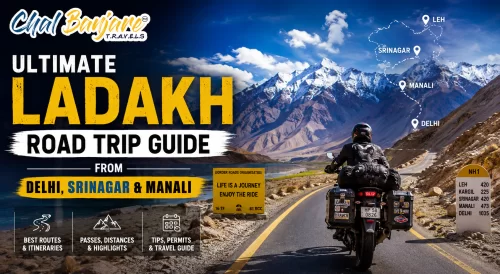
Ultimate Ladakh Road Trip Guide From Delhi, Srinagar and Manali
A Ladakh road trip from Delhi through Srinagar or Manali requires detailed planning around routes, weather, fuel, permits, and high altitude travel conditions.
+91 9910402252
admin@chalbanjare.com


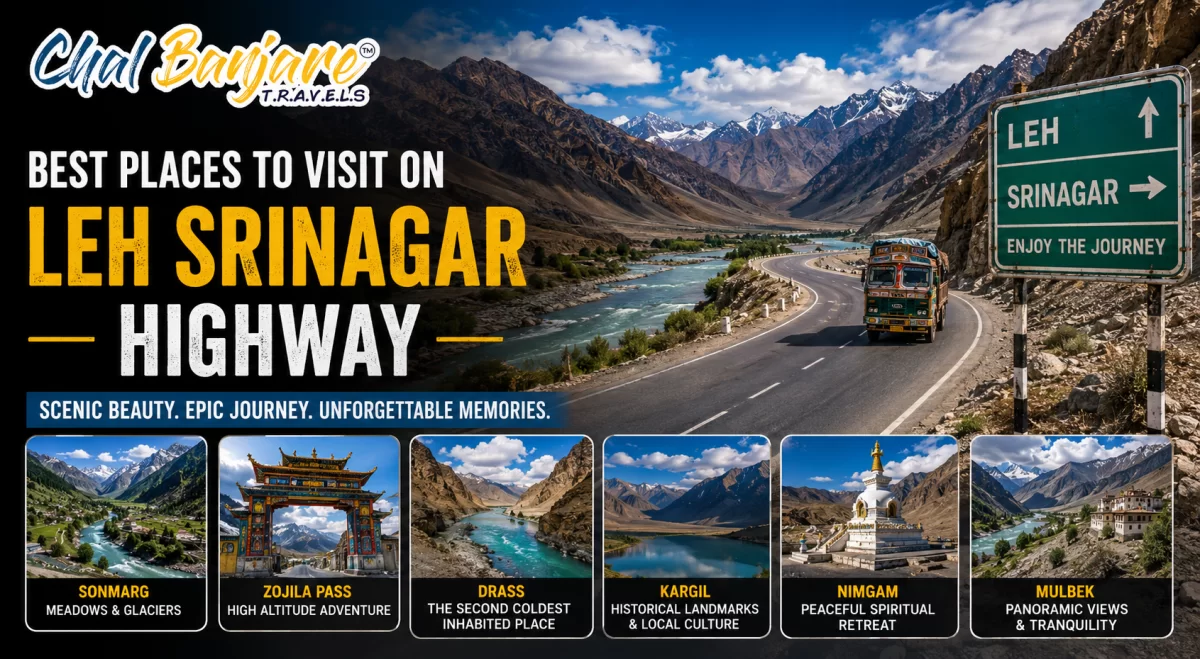
The Leh Srinagar Highway offers mountain passes, monasteries, war memorials, glaciers, and scenic valleys across one of the most important Himalayan road routes.
The Srinagar highway route near Leh contains some of the most famous sightseeing attractions in central Ladakh where travelers experience unique natural phenomena, river confluences, spiritual landmarks, and dramatic mountain scenery within a short distance from Leh town. These attractions are among the most visited stops on the Leh–Kargil highway circuit.
The route combines scenic exploration with cultural and religious experiences while showcasing the rugged landscapes and river valleys of western Ladakh.
Travelers exploring this route should begin early in the day because multiple attractions and changing mountain lighting conditions make the journey more enjoyable with slow travel pacing.
The Basgo, Alchi, and Likir monastery circuit is one of the best cultural day trips from Leh because it combines ancient Buddhist monasteries, traditional Ladakhi villages, heritage architecture, and peaceful Himalayan landscapes along the Srinagar highway route. These monasteries preserve centuries-old murals, prayer halls, and Buddhist artistic traditions.
The route offers travelers a deeper understanding of Ladakh’s spiritual and historical heritage while passing through scenic river valleys and rugged mountain terrain.
| Monastery or Attraction | Main Highlight | Travel Experience |
|---|---|---|
| Basgo Monastery | Historic fortress ruins and Buddhist heritage | Cultural and architectural exploration |
| Alchi Monastery | Ancient murals and traditional Buddhist art | Historic spiritual experience |
| Likir Monastery | Giant Buddha statue and panoramic valley views | Scenic monastery exploration |
| Traditional Ladakhi Villages | Mountain settlements and local culture | Authentic Himalayan atmosphere |
| Indus Valley Landscapes | River valleys and barren mountain scenery | Photography and sightseeing opportunities |
| Peaceful Monastery Environment | Prayer halls and spiritual surroundings | Slow cultural immersion |
| Easy Highway Connectivity | Comfortable day-trip route from Leh | Balanced scenic and heritage journey |
Travelers visiting the monastery circuit should spend time observing the murals and architecture carefully because these monasteries preserve some of Ladakh’s oldest Buddhist artistic traditions.
Lamayuru is one of the most iconic destinations on the Srinagar highway route from Leh because of its dramatic Moonland landscapes, ancient monastery, and elevated mountain setting surrounded by unusual geological formations. The region creates one of the most visually unique environments in Ladakh.
The monastery and surrounding terrain combine spiritual atmosphere with breathtaking Himalayan scenery where barren cliffs, winding mountain roads, and lunar-like landscapes dominate the environment.
Travelers visiting Lamayuru should keep enough time for the surrounding Moonland viewpoints because the unusual landscape formations are among the most photographed scenes in Ladakh.
Fotu La is the highest point on the Srinagar–Leh highway and is one of the most scenic mountain passes in western Ladakh because of its winding roads, panoramic Himalayan landscapes, and dramatic high-altitude desert terrain. The pass offers breathtaking viewpoints overlooking rugged mountain valleys and remote highway sections stretching across the barren Ladakhi landscape.
Travelers crossing Fotu La experience constantly changing scenery where steep mountain ridges, deep valleys, and wide open skies create one of the most memorable road journeys in Ladakh.
Travelers crossing Fotu La should stop briefly at the viewpoints because the panoramic scenery and winding mountain roads are among the most photographed landscapes on the Srinagar–Leh highway.
Namika La is another important mountain pass on the Srinagar–Leh highway and is known for its rugged barren terrain, dramatic rocky cliffs, and high-altitude Himalayan scenery. The route through Namika La showcases the raw desert character of Ladakh where sharp mountain ridges and isolated valleys dominate the landscape.
The pass creates a strong feeling of remote mountain travel because travelers experience steep climbs, winding roads, and open panoramic surroundings throughout the journey.
| Attraction or Feature | Main Highlight | Travel Experience |
|---|---|---|
| Namika La Pass | High-altitude mountain crossing on Srinagar highway | Scenic Himalayan road journey |
| Rocky Desert Landscapes | Rugged barren mountain scenery | Classic western Ladakh terrain |
| Steep Highway Sections | Adventure driving and biking atmosphere | Exciting mountain road experience |
| Wide Valley Viewpoints | Panoramic high-altitude landscapes | Photography opportunities |
| Remote Himalayan Environment | Minimal settlements and wilderness scenery | Authentic mountain exploration feel |
| Changing Weather Conditions | Rapid visibility and temperature shifts | Flexible travel pacing important |
| Balanced Scenic and Adventure Route | Part of the famous Srinagar–Leh highway | Memorable Ladakh road trip experience |
Travelers driving across Namika La should remain cautious because strong winds, altitude, and sharp road curves can make the journey physically tiring.
Zojila Pass is one of the most dramatic and historically important mountain passes connecting Kashmir with Ladakh because of its steep roads, massive snow walls during early summer, and rugged Himalayan landscapes. The pass marks the transition between the green valleys of Kashmir and the barren high-altitude terrain of Ladakh.
Travelers crossing Zojila experience narrow mountain roads, deep valleys, snow-covered peaks, and constantly changing weather conditions that create one of India’s most thrilling Himalayan highway journeys.
Travelers crossing Zojila Pass should monitor road conditions carefully because snowfall, landslides, and traffic congestion frequently affect accessibility across the mountain route.
Kargil town is one of the most important cultural and transit centers in western Ladakh where travelers experience river valley landscapes, traditional mountain life, local markets, and the unique cultural blend of Balti and Purig influences. Located beside the Suru River, the town provides a peaceful Himalayan atmosphere surrounded by rugged mountains and high-altitude valleys.
The local culture, food, and everyday lifestyle in Kargil offer a different perspective of Ladakh compared to the monastery-dominated regions around Leh and central Ladakh.
Travelers staying in Kargil should spend time exploring the local market area because the town’s cultural atmosphere and mountain lifestyle are best experienced slowly.
Mulbekh Monastery is one of the most historically significant Buddhist heritage sites near Kargil and is famous for its giant Maitreya Buddha rock carving located beside the Srinagar–Leh highway. The monastery reflects the ancient spread of Buddhism across western Ladakh and the importance of Himalayan trade routes connecting Kashmir and Tibet.
The surrounding village landscapes and peaceful mountain environment create an ideal setting for travelers interested in history, spirituality, and traditional Himalayan culture.
| Attraction or Feature | Main Highlight | Travel Experience |
|---|---|---|
| Mulbekh Monastery | Historic Buddhist monastery near Kargil | Spiritual and cultural exploration |
| Giant Maitreya Buddha Rock Carving | Ancient Himalayan Buddhist sculpture | Historic heritage observation |
| Traditional Mountain Village | Peaceful local Himalayan atmosphere | Cultural immersion experience |
| Scenic Highway Location | Easy accessibility from Srinagar–Leh route | Comfortable sightseeing stop |
| Mountain and Valley Landscapes | Rugged western Ladakh scenery | Photography opportunities |
| Historic Trade Route Importance | Connection with ancient Buddhist expansion | Educational travel experience |
| Balanced Nature and Heritage Experience | Culture combined with mountain landscapes | Ideal stop near Kargil region |
Travelers visiting Mulbekh should spend time observing the surrounding mountain village because the monastery’s setting is deeply connected with the local Himalayan landscape and culture.
The Suru Valley route near Kargil is one of the most scenic mountain journeys in Ladakh because it passes through green valleys, glacier viewpoints, snow-covered peaks, and remote Himalayan villages surrounded by the dramatic Nun Kun mountain range. The valley creates a striking contrast to the barren desert landscapes commonly associated with Ladakh.
Travelers driving through Suru Valley experience fertile agricultural landscapes, glacier-fed rivers, peaceful mountain settlements, and rugged high-altitude scenery while moving deeper towards Rangdum and Zanskar routes.
Travelers exploring Suru Valley should maintain flexible travel schedules because weather changes and rough mountain roads can significantly affect travel timing across remote Himalayan routes.
The Drass War Memorial is one of the most important historical and patriotic attractions in Ladakh and honors the soldiers who sacrificed their lives during the Kargil War of 1999 fought across the rugged mountain terrain of the Drass and Kargil sectors. Surrounded by dramatic Himalayan landscapes, the memorial preserves the memory of one of India’s most significant modern military conflicts.
The memorial complex contains galleries, photographs, military displays, and battlefield information that help travelers understand the challenges of high-altitude warfare and the sacrifices made during the conflict.
Travelers visiting the Drass War Memorial should spend time exploring the exhibits carefully because they provide powerful insight into the realities of mountain warfare and national sacrifice.
Tiger Hill remains one of the most historically significant battlefield regions connected with the Kargil War and is known for its strategic high-altitude mountain location overlooking the Drass sector. The surrounding rugged ridges and valleys reflect the difficult terrain where intense military operations took place during the conflict.
Travelers crossing the region experience dramatic mountain scenery while also understanding the strategic importance and harsh environmental conditions faced during high-altitude combat operations.
| Attraction or Feature | Main Highlight | Travel Experience |
|---|---|---|
| Tiger Hill Region | Historic Kargil War battlefield zone | Military history exploration |
| Battlefield Mountain Landscapes | Steep ridges and rugged Himalayan terrain | Scenic and historical observation |
| Strategic High-Altitude Location | Important military significance | Educational travel experience |
| Drass Valley Views | Panoramic mountain and valley scenery | Photography opportunities |
| Patriotic Atmosphere | Connection with national military history | Reflective travel environment |
| Harsh Himalayan Conditions | Extreme mountain warfare terrain | Realistic battlefield perspective |
| Srinagar–Leh Highway Accessibility | Visible during highway road journey | Convenient historical exploration route |
Travelers viewing the Tiger Hill region should remember that the surrounding landscapes hold deep historical and emotional significance connected with the sacrifices of the Kargil War.
The Vijaypath route through Drass and nearby border regions is one of the most meaningful patriotic road journeys in Ladakh because it passes through war memorials, battlefield landscapes, and strategic mountain highways associated with the Kargil conflict. The route combines rugged Himalayan scenery with important military history.
Travelers driving along Vijaypath experience dramatic mountain valleys, memorial landmarks, military presence, and historic war regions that together create a powerful atmosphere of remembrance and national pride.
Travelers driving along Vijaypath should maintain respectful behavior at memorial areas because these sites continue to hold great emotional and national importance connected with the Kargil War.
Sonamarg is one of the most scenic regions on the Leh–Srinagar highway and is famous for its green alpine meadows, glacier-fed rivers, snow-covered mountains, and dramatic Himalayan valley landscapes. Located in Kashmir before the Zojila Pass crossing, the region creates a striking contrast to the barren high-altitude terrain of Ladakh.
Travelers passing through Sonamarg experience lush valleys, pine forests, flowing rivers, and glacier viewpoints that make it one of the most refreshing and photogenic stretches of the highway journey.
Travelers stopping in Sonamarg should keep enough time for short walks around the meadows because the valley scenery is best experienced slowly.
Wakha Valley is one of the lesser-explored scenic regions on the Leh–Srinagar highway and is known for its rugged cliffs, traditional mountain villages, barren Himalayan landscapes, and peaceful valley atmosphere. The region showcases the raw geological beauty of western Ladakh where dramatic rock formations and winding roads dominate the scenery.
Travelers driving through Wakha Valley experience isolated mountain settlements, river valleys, and high-altitude terrain that reflect the authentic wilderness environment of Ladakh.
| Attraction or Feature | Main Highlight | Travel Experience |
|---|---|---|
| Wakha Valley | Rugged mountain landscapes and valleys | Scenic offbeat highway exploration |
| Traditional Mountain Villages | Remote Himalayan settlements | Cultural observation opportunities |
| Barren Cliff Formations | Dramatic geological scenery | Photography and sightseeing experience |
| River Valley Routes | Winding mountain highway landscapes | Adventure road trip atmosphere |
| Minimal Tourist Crowds | Peaceful remote environment | Authentic Ladakh travel experience |
| High-Altitude Desert Terrain | Classic western Ladakh scenery | Raw Himalayan landscape immersion |
| Balanced Scenic and Cultural Journey | Nature combined with village exploration | Ideal slow mountain travel route |
Travelers exploring Wakha Valley should make frequent viewpoint stops because the changing mountain formations and isolated landscapes create some of the most dramatic scenery on the highway route.
The Indus River valley sections along the Leh–Srinagar highway offer some of the best Himalayan photography opportunities in Ladakh because the route passes through deep river gorges, barren mountain landscapes, ancient monasteries, and panoramic valley viewpoints. The constantly changing terrain creates dramatic visual contrasts throughout the journey.
Travelers driving beside the Indus River experience scenic highway stretches where winding roads, rugged cliffs, monasteries, and river reflections combine to form classic Ladakhi landscapes.
Travelers photographing the Indus Valley should carry extra time for roadside stops because the highway offers continuous panoramic scenery across some of Ladakh’s most visually striking mountain regions.
Lamayuru Monastery is one of the oldest and most visually striking monasteries on the Leh–Srinagar highway because of its dramatic Moonland landscapes, ancient Buddhist heritage, and elevated mountain setting surrounded by unusual geological formations. The monastery reflects centuries of Himalayan Buddhist culture within one of Ladakh’s most iconic scenic regions.
Travelers visiting Lamayuru experience a combination of spiritual atmosphere, rugged mountain scenery, and panoramic valley views where the lunar-like terrain creates one of the most photographed landscapes in western Ladakh.
Travelers visiting Lamayuru should spend extra time around the surrounding viewpoints because the Moonland landscapes are as important as the monastery itself.
Alchi Monastery is one of the most culturally important Buddhist heritage sites in Ladakh and is famous for its ancient murals, traditional Himalayan artwork, and centuries-old monastic architecture located beside the Indus River valley. Unlike hilltop monasteries, Alchi sits within a peaceful village environment that creates a calm cultural atmosphere.
The monastery preserves some of Ladakh’s oldest Buddhist artistic traditions and remains one of the best places to understand the region’s spiritual and historical heritage.
| Attraction or Feature | Main Highlight | Travel Experience |
|---|---|---|
| Alchi Monastery | Ancient Buddhist monastery complex | Historic spiritual exploration |
| Traditional Murals and Artwork | Centuries-old Himalayan Buddhist paintings | Cultural heritage experience |
| Indus Valley Village Setting | Peaceful riverside monastery atmosphere | Slow cultural immersion |
| Ancient Monastic Architecture | Historic Ladakhi craftsmanship | Architectural observation opportunities |
| Minimal Urban Influence | Quiet mountain village environment | Authentic Himalayan atmosphere |
| Photography Opportunities | Traditional monastery and valley scenery | Balanced nature and heritage exploration |
| One of Ladakh’s Most Important Cultural Sites | Deep Buddhist historical significance | Educational travel experience |
Travelers visiting Alchi Monastery should observe the murals carefully because they represent some of the oldest surviving Buddhist artistic traditions in the Himalayan region.
Mulbekh Monastery is one of the most historically significant spiritual destinations on the Leh–Srinagar highway and is known for its giant Maitreya Buddha rock carving surrounded by rugged mountain landscapes and peaceful village surroundings. The monastery reflects the deep Buddhist heritage that spread across western Ladakh through ancient trade routes.
The calm spiritual atmosphere and dramatic Himalayan setting make Mulbekh an ideal stop for travelers interested in Buddhist history, mountain culture, and scenic exploration.
Travelers visiting Mulbekh should take time to explore the surrounding village and mountain environment because the monastery’s spiritual atmosphere is closely connected with its peaceful Himalayan setting.
The Leh–Srinagar highway is one of India’s most iconic Himalayan road journeys because it combines steep mountain passes, dramatic hairpin bends, river crossings, rugged valleys, and constantly changing high-altitude landscapes across Kashmir and Ladakh. The route offers a true expedition-style driving experience through some of the most challenging and scenic mountain terrain in the Himalayas.
Travelers crossing Zojila, Fotu La, Namika La, and various river valleys experience thrilling mountain roads where sharp turns, steep climbs, and panoramic valley views create unforgettable road trip moments.
Travelers driving on the Leh–Srinagar highway should maintain slow speeds and flexible schedules because weather conditions and mountain traffic can significantly affect travel timing.
The Leh–Srinagar highway contains countless photography locations and scenic stopovers where travelers can capture glaciers, river valleys, mountain passes, monasteries, alpine landscapes, and rugged desert terrain throughout the journey. Every section of the route offers visually different landscapes shaped by altitude, geology, and changing weather conditions.
Popular roadside viewpoints near Sonamarg, Zojila, Lamayuru, Fotu La, Sangam, and Suru Valley provide excellent opportunities for landscape photography and slow Himalayan exploration.
| Photography Spot or Stopover | Main Highlight | Travel Experience |
|---|---|---|
| Sonamarg Valley | Green meadows and glacier landscapes | Scenic Kashmir Himalayan photography |
| Zojila Pass | Snow walls and rugged mountain roads | Adventure highway photography |
| Lamayuru Moonland | Lunar-like geological formations | Iconic western Ladakh scenery |
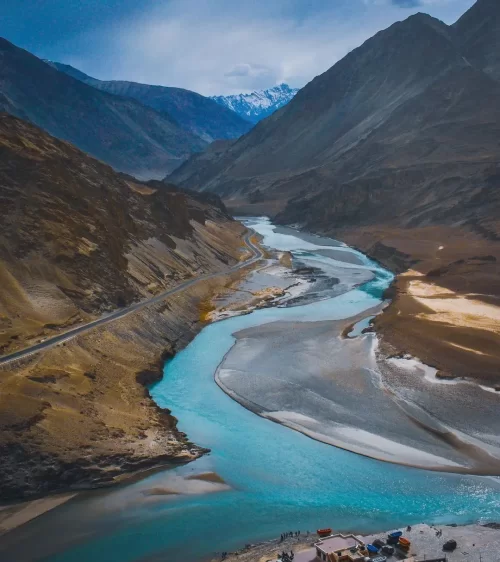
| Indus and Zanskar Sangam | River confluence and mountain valleys | Classic Ladakh landscape photography |
| Fotu La Viewpoints | Panoramic mountain highway scenery | High-altitude photography stop |
| Suru Valley Sections | Green valleys and glacier landscapes | Nature and mountain exploration |
| Roadside Monastery Stops | Traditional Buddhist architecture and scenery | Balanced culture and landscape experience |
Travelers photographing the Leh–Srinagar highway should keep extra travel time for roadside stops because the constantly changing landscapes make the journey itself one of the major attractions.
One of the most unforgettable aspects of the Leh–Srinagar highway is the way Himalayan landscapes continuously transform throughout the day with changing sunlight, weather conditions, altitude, and terrain. Sunrise and sunset create dramatic colors across mountain peaks, valleys, rivers, and desert cliffs that make the road trip visually spectacular.
Travelers experience a rare transition from Kashmir’s green valleys to Ladakh’s barren high-altitude deserts where every section of the highway presents a different atmosphere and natural environment.
Travelers exploring the Leh–Srinagar highway should avoid rushing the journey because the real beauty of the route lies in slowly experiencing the constantly changing Himalayan landscapes and mountain atmosphere.
Summer is considered the best time to travel on the Leh–Srinagar highway because major mountain passes reopen after winter snowfall, road conditions improve, and travelers can comfortably experience the full Himalayan road journey across Kashmir and Ladakh. Between May and September, the highway becomes accessible for bikes, cars, buses, and overland expeditions.
The season offers clear mountain visibility, open valleys, glacier viewpoints, monastery access, and stable weather conditions that make the route ideal for scenic road trips and photography.
Travelers using the Leh–Srinagar highway during summer should still prepare for cold mountain conditions because high-altitude passes remain windy and temperatures can drop suddenly.
During monsoon months, sections of the Leh–Srinagar highway become vulnerable to landslides, mudslides, falling rocks, and weather-related travel disruptions because heavy rainfall affects mountain slopes and narrow highway sections, especially near Zojila Pass and Kashmir valley routes.
Although Ladakh itself remains largely dry because of its cold desert climate, the Kashmir-side approach experiences unstable weather conditions that can cause road blockages, delays, and unpredictable travel timing.
| Monsoon Travel Aspect | Main Highlight | Ground Reality |
|---|---|---|
| Landslide-Prone Highway Sections | Mountain road disruptions during rainfall | Traffic delays and temporary closures possible |
| Zojila Pass Conditions | Fog, slippery roads, and unstable weather | Careful driving necessary |
| Falling Rocks and Mudslides | Common on steep mountain stretches | Slow travel conditions expected |
| Changing Visibility Conditions | Fog and cloud cover across valleys | Photography visibility may reduce |
| Traffic Congestion Risks | Long waiting times during blockages | Flexible itinerary planning important |
| Kashmir Valley Rainfall Influence | Weather instability before Ladakh region | Journey timing can change rapidly |
| Adventure Highway Atmosphere | Raw Himalayan monsoon conditions | Extra caution required during travel |
Travelers using the Leh–Srinagar highway during monsoon season should monitor daily road updates because landslides and weather conditions can quickly affect accessibility.
Winter creates severe accessibility challenges on the Leh–Srinagar highway because heavy snowfall blocks Zojila Pass and cuts off the direct road connection between Kashmir and Ladakh for extended periods. Snow accumulation, icy roads, and freezing temperatures make high-altitude travel extremely difficult across the route.
During peak winter months, travelers generally rely on flights to reach Leh because highway movement becomes unsafe or completely inaccessible across major mountain sections.
Travelers planning winter journeys towards Ladakh should verify highway status carefully because snowfall and Zojila closure frequently make the Leh–Srinagar route inaccessible for long durations.
The Leh–Srinagar highway passes through rugged Himalayan terrain where landslides, snowfall, falling rocks, traffic congestion, and weather-related disruptions frequently affect travel conditions. Mountain sections near Zojila Pass, Sonamarg, Drass, and narrow valley stretches are especially vulnerable to temporary road blockages during unstable weather periods.
Travelers often experience long waiting times because road repair operations, military convoys, and seasonal highway maintenance can slow movement across the route.
Travelers driving on the Leh–Srinagar highway should avoid strict schedules because weather changes and road disruptions can significantly increase journey duration.
Although the Leh–Srinagar highway is one of Ladakh’s major road routes, infrastructure support remains limited in many remote mountain sections where travelers may face restricted fuel availability, weak network connectivity, limited ATM access, and seasonal accommodation shortages during peak travel periods.
Major towns such as Kargil, Sonamarg, and Leh provide the best support facilities, while remote mountain stretches between these regions often have minimal services available.
| Travel Challenge | Main Impact | Ground Reality |
|---|---|---|
| Limited Fuel Availability | Long-distance planning necessary | Fuel stations sparse in remote sections |
| Weak Mobile Network Coverage | Communication difficulties during travel | Connectivity unstable across mountain regions |
| ATM Availability Issues | Cash withdrawal limitations | Major towns provide better banking access |
| Seasonal Accommodation Demand | Rooms may become limited during peak months | Advance booking recommended |
| Digital Payment Problems | Online payments may fail | Cash remains important during highway travel |
| Power and Charging Limitations | Electricity interruptions possible | Carry power backup during long journeys |
| Remote Highway Isolation | Minimal services between towns | Self-preparation strongly recommended |
Travelers using the Leh–Srinagar highway should carry sufficient cash, fuel backup, offline maps, and power banks because facilities become limited across remote mountain sections.
The Leh–Srinagar highway crosses several high-altitude regions where changing weather conditions and reduced oxygen levels can create physical challenges for travelers, especially near Zojila, Fotu La, Namika La, and Ladakh plateau sections. Sudden temperature drops, strong winds, and high-altitude fatigue are common during long road journeys.
Travelers moving rapidly from lower-altitude Kashmir regions into Ladakh may experience symptoms of altitude sickness because the body requires time to adjust to the Himalayan environment.
Travelers crossing the Leh–Srinagar highway should prioritize acclimatization and weather preparedness because Himalayan road conditions can change rapidly across high-altitude mountain regions.
Planning overnight stops properly on the Leh–Srinagar highway is important because the route covers long mountain distances across high-altitude passes, remote valleys, and changing Himalayan landscapes. Most travelers divide the journey into multiple sections to reduce fatigue and enjoy the scenic and cultural attractions along the route more comfortably.
Popular stopovers such as Kargil, Lamayuru, Sonamarg, and Drass provide accommodation, food facilities, and scenic environments that help travelers experience the highway journey more gradually.
Travelers using the Leh–Srinagar highway should avoid continuous long-distance driving because mountain conditions and altitude can quickly increase physical exhaustion.
Travelers visiting Ladakh often choose between the Srinagar route and the Manali route depending on road conditions, scenery preferences, acclimatization comfort, and overall travel experience. Both highways offer completely different Himalayan landscapes and driving conditions.
The Srinagar route is generally considered easier for acclimatization because the altitude gain happens gradually, while the Manali route is more rugged, adventurous, and physically demanding because of multiple high-altitude passes crossed in a short duration.
| Road Route | Main Highlight | Travel Experience |
|---|---|---|
| Leh–Srinagar Highway | Gradual acclimatization and varied landscapes | Balanced scenic and cultural road journey |
| Leh–Manali Highway | Extreme mountain passes and rugged terrain | Adventure-focused expedition experience |
| Srinagar Route Landscapes | Kashmir valleys, rivers, monasteries, and passes | More comfortable transition into Ladakh |
| Manali Route Landscapes | High-altitude deserts and barren mountain wilderness | Raw Himalayan road trip atmosphere |
| Altitude Adjustment | Better on Srinagar side | Lower risk of sudden altitude sickness |
| Road Conditions | Variable on both routes | Weather strongly affects accessibility |
| Best Combined Experience | Enter from Srinagar and exit via Manali | Complete Ladakh circuit journey |
Travelers visiting Ladakh for the first time usually find the Srinagar route more comfortable because gradual altitude gain helps reduce physical stress during the journey.
Proper preparation is essential before traveling on the Leh–Srinagar highway because the route passes through remote mountain terrain, high-altitude passes, landslide-prone valleys, and changing Himalayan weather conditions. Careful planning helps travelers enjoy the journey safely and comfortably.
Travelers should focus on acclimatization, fuel planning, weather monitoring, cash management, and flexible travel pacing before beginning the highway trip across Kashmir and Ladakh.
Travelers exploring the Leh–Srinagar highway should approach the journey slowly because the route itself is one of the most rewarding parts of the Ladakh travel experience.
Get customized Ladakh tour planning designed around altitude comfort, acclimatization time, weather windows, and real Himalayan road conditions. Whether you are visiting for high mountain passes, monasteries, lakes, or remote valley experiences, our exper
⚡ Quick Response | 💰 Free consultation | 🕒 24×7 expert support