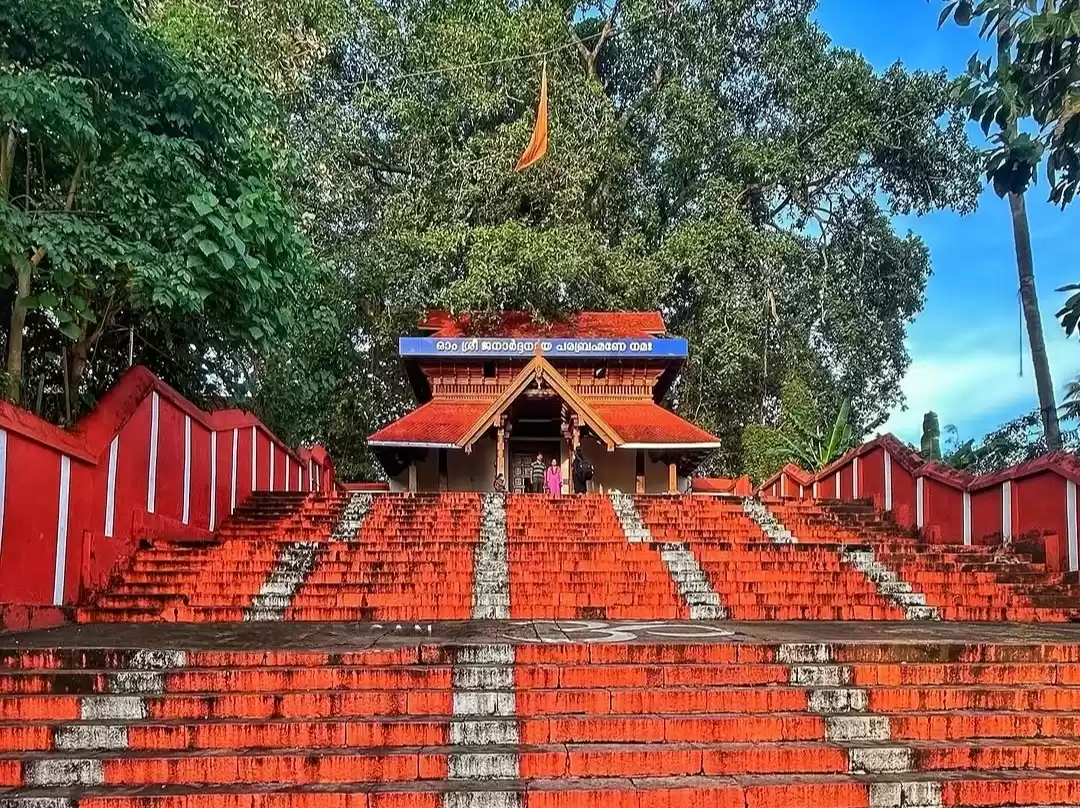
Quick Facts About Sree Janardhana Swamy Temple
| Entry Fee |
Free |
| Timings |
05:00 - 12:00, 17:00 - 20:00 |
| Altitude (m) |
15 |
| Ideal Visit Duration (hrs) |
1 |
| Best Time of Day |
Morning |
| Crowd Level |
Moderate |
| Distance from Varkala (km) |
2 |
| Walking Difficulty |
Easy |
| Parking Available |
No |
| Last Mile Access |
Walk |
| Suitable for Kids |
Yes |
| Suitable for Seniors |
Yes |
| Wheelchair Friendly |
No |
Why Visit Sree Janardhana Swamy Temple
Why Visit
Janardanaswamy Temple in Varkala is a significant Vaishnavite shrine, revered for its long-standing spiritual heritage and association with Lord Janardana (a form of Lord Vishnu). Visitors come to seek blessings, observe traditional Kerala temple rituals, and experience a sacred space that has been an integral part of Varkala’s religious life for centuries.
Atmosphere
The atmosphere is devotional, calm, and steeped in tradition, with the steady rhythm of daily ???? rituals shaping the experience. The temple’s elevated setting adds to its serene feel, while oil lamps, chants, and the presence of devotees create a sense of continuity and reverence. Mornings and evenings are particularly peaceful, marked by focused worship and a quieter flow of visitors.
What Makes it Special
What makes Janardanaswamy Temple special is its traditional Kerala-style architecture combined with its cultural role in major local festivals, including those linked with Varkala’s ritual calendar. The temple is also closely associated with the nearby Papanasam area, reinforcing its spiritual importance in ancestral and devotional practices (local belief). Its enduring rituals, community connection, and elevated setting make it a key spiritual landmark in Varkala.
History of Sree Janardhana Swamy Temple
Janardhana Swamy Temple is located in Varkala, Thiruvananthapuram district, Kerala, and is one of the oldest temples in the region. The temple is dedicated to Lord Janardhana, a form of Lord Vishnu, and has been a central place of worship for the coastal communities of Varkala for centuries.
According to long-standing tradition, the temple’s origins are associated with the sage Narada, who is believed to have consecrated the idol at this site. The shrine gradually developed into an important Vaishnav centre, closely connected to the religious life of the region and the evolution of Varkala as a sacred coastal town.
Over time, Janardhana Swamy Temple came under the administration of the Travancore royal lineage, which contributed to its maintenance and ritual continuity. Today, the temple remains historically significant for its enduring devotional practices and its role in shaping the spiritual identity of Varkala, independent of later coastal tourism development.
Best Time to Visit – Sree Janardhana Swamy Temple
The best time to visit Janardhana Swamy Temple in Varkala, Kerala, is from October to March, when the weather is pleasant and suitable for temple darshan and rituals. During these months, humidity is lower, making it comfortable for devotees to attend morning and evening poojas and to walk around the temple complex peacefully.
- October–November: Post-monsoon period with comfortable temperatures—ideal for regular darshan and temple visits.
- December–February: Coolest months—best for early morning and evening worship and festival participation.
- March: Still suitable, though daytime heat begins to rise—morning visits are recommended.
- April–May (Summer): Hot and humid; early morning and evening darshan are more comfortable.
- June–September (Monsoon): Heavy rainfall; temple visits are possible, but travel and movement around the premises may be affected.
Best time of day: 5:30 AM to 9:00 AM and 5:00 PM to 7:30 PM are ideal for darshan, aligning with traditional pooja timings and offering a calm, spiritual atmosphere.
- Spiritual tip: Morning darshan provides a quieter environment for prayer and meditation.
- Festival insight: Major festivals like Arattu and Vishu attract large crowds—plan visits accordingly.
- Dress code note: Modest attire is advised in accordance with Kerala temple customs.
How to Reach Sree Janardhana Swamy Temple
Janardhana Swamy Temple is a historic Hindu temple located in Varkala town, Thiruvananthapuram district, Kerala, about 2 km from Varkala Beach. The temple sits on elevated ground and is easily accessible from all parts of Varkala.
- By Air (Nearest airport): The nearest airport is Trivandrum International Airport, approximately 45 km away. From the airport, hire a taxi or app-based cab to Varkala. From Varkala town, local transport can take you directly to the temple.
- By Train (Nearest railway station): Varkala Sivagiri Railway Station is the closest railhead, located around 3 km from the temple. From the station, take an auto-rickshaw or taxi to reach Janardhana Swamy Temple.
- By Road: Varkala is well connected by road to Thiruvananthapuram, Kollam, and nearby towns. KSRTC and private buses operate regularly to Varkala Bus Stand. From the bus stand, the temple is a short auto-rickshaw ride away.
- Taxi / Auto-rickshaw: Auto-rickshaws and taxis are easily available throughout Varkala town. Ask for drop-off at Janardhana Swamy Temple for direct access.
- Self-drive: Self-driving is convenient within Varkala. Parking space is available near the temple, though it can be limited during festival days.
- Walking access: Visitors staying near Varkala town or the temple road can comfortably walk to the temple, as it is located within residential and market areas.
- Travel tips (EEAT): Dress modestly as this is an active place of worship. Early morning and evening visits are ideal for darshan. Expect increased crowds during major festivals such as Arattu and Sivagiri-related events.
What to Expect When You Visit Sree Janardhana Swamy Temple
Janardhana Swamy Temple is an ancient Hindu temple in Varkala, Kerala, dedicated to Lord Janardhana (a form of Lord Vishnu). Set close to the coast yet distinctly serene, the visit is devotional and tradition-focused, offering insight into Kerala’s Vaishnavite temple practices rather than a tourist-style monument experience.
- Active place of worship: expect a steady flow of devotees, especially during morning and evening poojas, shaping a calm yet spiritually vibrant atmosphere.
- Traditional Kerala temple architecture: the temple features sloping tiled roofs, wooden elements, and a functional open layout typical of Kerala-style temples.
- Strong ritual discipline: temple customs are strictly followed, and visitors are expected to observe silence and respectful behavior.
- Dress code and entry norms: modest attire is expected; men may be required to follow traditional dress practices in inner areas, and footwear must be removed.
- Limited photography access: photography is generally restricted within the temple premises—observe signage and staff guidance.
- Short but meaningful darshan experience: visits are usually brief, centered on darshan and prayer rather than prolonged exploration.
- Festival-driven vibrancy: during major festivals such as Arattu and Vishu-related observances, the temple becomes lively and crowded.
- Peaceful hilltop surroundings: despite proximity to the busy beach area, the temple setting feels calm and spiritually grounded.
- Local cultural importance: the temple plays a central role in the religious life of the Varkala community.
- Easy to combine with nearby sites: the temple visit pairs naturally with Varkala Beach and cliff walks in a single itinerary.
Tip for a smoother visit: attend early morning pooja for a quieter atmosphere, dress conservatively, and approach the visit with respect for living temple traditions rather than sightseeing expectations.
Important Visitor Information – Sree Janardhana Swamy Temple, Varkala
- Crowd & Weather Notes: Janardanaswamy Temple sees steady local footfall, with heavier crowds during festivals such as Arattu and Vishu, as well as weekends and auspicious days. Varkala’s coastal climate is humid; summers are warm, monsoon months (June to September) bring heavy rain, and winters are pleasant.
- Peak / Quiet Hours: Peak hours are during early morning and evening pooja times. For a quieter darshan, visit late morning or early afternoon on weekdays, avoiding major festival days.
- Dress Code: Modest, traditional attire is required. Shoulders and knees must be covered. Men are expected to follow customary temple practices as per local norms. Footwear must be removed before entering the temple premises.
- Safety Notes: Follow temple rules and instructions from temple staff, especially during crowded festival periods. Be cautious on smooth stone floors during rainy weather. Keep personal belongings secure and maintain silence and decorum inside the temple.
Photography and Viewpoint – Sree Janardhana Swamy Temple Varkala
Janardanaswamy Temple, located in Varkala town in Thiruvananthapuram district, Kerala, is an ancient Hindu temple dedicated to Lord Janardanaswamy (a form of Lord Vishnu). Set slightly inland from the Varkala Cliff, the temple is known for its traditional Kerala-style architecture, sloping tiled roofs, wooden structures, and calm spiritual environment. Photography here focuses on architectural documentation, devotional ambience, and cultural context rather than dramatic viewpoints.
- Best light for photography: Early morning and late afternoon provide soft, even light for exterior shots and reduce harsh shadows on temple walls.
- Exterior architectural compositions: Frame the temple’s sloping roofs, wooden pillars, and entrance structures to highlight classic Kerala temple design.
- Courtyard & approach views: Use the temple courtyard and entry paths to create balanced compositions that reflect symmetry and spatial flow.
- Detail-focused photography: Capture lamps, bells, carved wooden elements, and roof tiles where permitted to showcase craftsmanship.
- Devotional storytelling frames: Photograph devotees from a respectful distance to convey spiritual atmosphere without intruding on worship.
- Wide vs. detail strategy: Wide lenses suit full-structure and courtyard views, while detail shots emphasize textures and architectural elements.
- Mobile photography tips: Use gridlines for straight verticals, expose for shaded surfaces, and avoid flash to maintain sanctity.
- Crowd & timing awareness: Visit outside major puja and festival hours for quieter conditions and unobstructed frames.
- Dress code & etiquette: Modest attire is expected; photography should never obstruct ritual movement or priestly activities.
- Responsible religious-site photography: Follow temple signage, avoid inner sanctum photography, and prioritize respect over documentation.
Near By Attraction
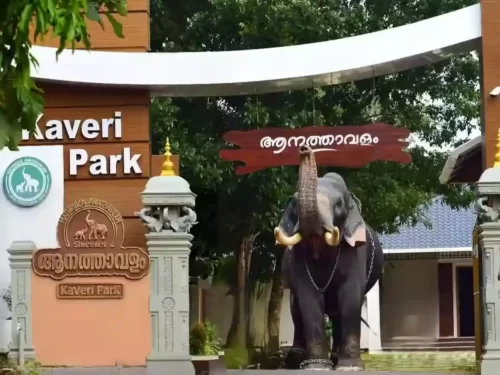 Tourist Attraction
Kaveri Elephant Park
Kaveri Elephant Park is a small elephant care and interaction center near Varkala, offering visitors a close look at trained elephants.
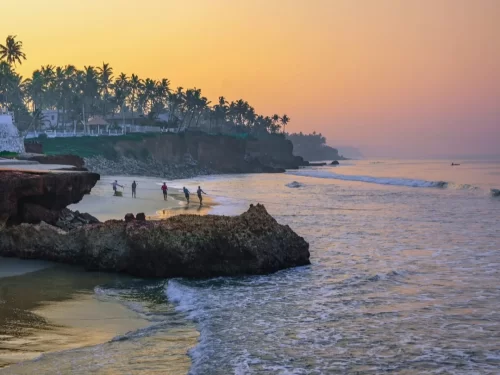 Beach
Beach
Edava Beach
Edava Beach is a serene beach near Varkala, known for its peaceful atmosphere and unspoiled natural beauty.
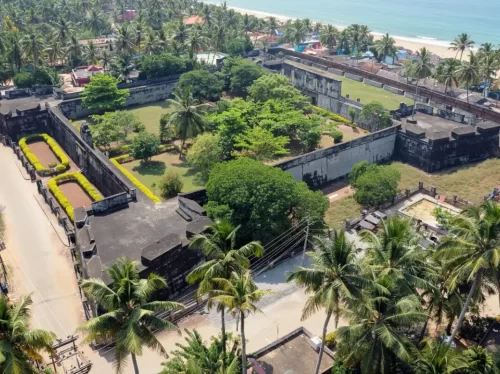 Historical Site
Anjuthengu Fort
Anjuthengu Fort is a historic coastal fort near Varkala, known for its colonial heritage and scenic sea views.