Quick Facts About Nayamakad Waterfall
Nyayamakad Waterfalls, Munnar, Kerala Quick Facts
| Entry Fee | No entry fee |
| Timings | Open throughout the day; daytime visit recommended due to forest and hill road conditions |
| Altitude (m) | Approximately 1,600 m above sea level |
| Ideal Visit Duration | 30–60 minutes |
| Best Time of Day | Morning or early afternoon for better visibility and safer access |
| Crowd Level | Low to moderate; may increase during peak tourist season and weekends |
| Distance from City Centre (km) | Approximately 10–12 km from Munnar town centre |
| Walking Difficulty | Moderate; short walk with uneven and sloping paths near the viewpoint |
| Parking Available | Limited roadside parking available near the viewpoint approach |
| Last Mile Access | Accessible by road followed by a short walk to the viewpoint area |
| Suitable for Kids | Yes, with supervision near slippery and steep areas |
| Suitable for Seniors | Partially; depends on mobility due to uneven walking paths |
| Wheelchair Friendly | No; uneven terrain and short walking paths limit accessibility |
Why Visit Nyayamakad Waterfalls, Munnar, Kerala
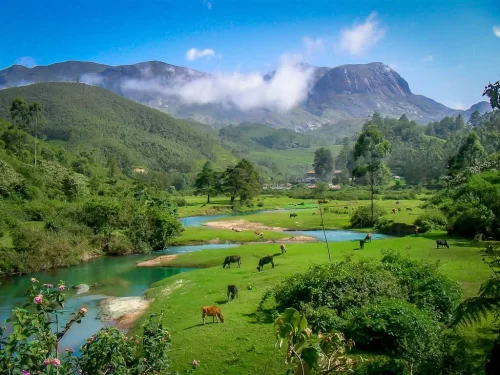
Visitors come to Nyayamakad Waterfalls near Munnar to see a seasonal cascade set within the rolling tea garden hills of the Western Ghats. It is a popular stop for travelers exploring the Eravikulam–Rajamalai stretch and scenic viewpoints around Munnar.
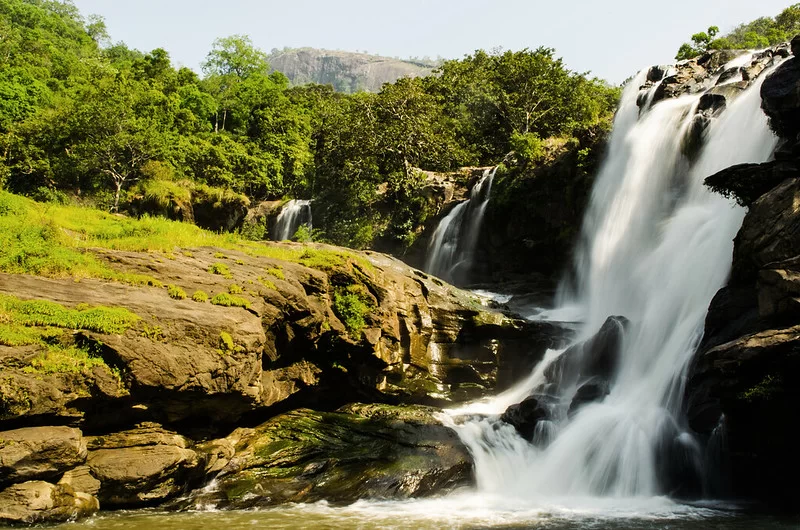
The on-ground atmosphere is natural and open, with the waterfall descending through rocky terrain surrounded by plantations and forest patches. The area is typically visited for short stops, photography, and enjoying the sound of flowing water in a high-altitude landscape.
What makes Nyayamakad Waterfalls distinct is its combination of easy roadside access and an elevated mountain setting within Munnar’s tea belt. Its seasonal flow and wide valley views create a different experience compared to larger, heavily visited waterfalls in Kerala.
History of Nyayamakad Waterfalls, Munnar, Kerala
Nyayamakad Waterfalls is a natural cascade located in the hills of Munnar in the Idukki district of Kerala. The waterfall is formed by a stream that descends through the Western Ghats, an ancient mountain range known for its ecological and geological significance.
The area surrounding Nyayamakad has long been part of the high-altitude landscape associated with Munnar’s tea-growing region, developed during the colonial period when large tea plantations were established across the hills.
Today, Nyayamakad Waterfalls is known as a scenic natural site within the Munnar region, attracting visitors for its cascading flow and its setting amid plantation and forested terrain.
Best Time to Visit Nyayamakad Waterfalls, Munnar, Kerala
Nyayamakad Waterfalls is best visited when water flow is steady but safe and the surrounding tea plantation routes remain easily accessible, allowing visitors to enjoy both the waterfall viewpoint and the scenic drive through Munnar’s hill landscape.
- Ideal Months: September to March is the most suitable period for visiting, especially for clear views and comfortable travel conditions in the hills.
- Weather Conditions: Post-monsoon months bring strong yet more controlled waterfall flow, fresh greenery, and pleasant temperatures, making it ideal for sightseeing and photography.
- Periods to Avoid: June to August should be avoided due to heavy monsoon rains, which can make access roads slippery, increase water force near the falls, and limit safe viewing areas.
How to Reach Nyayamakad Waterfalls, Munnar
- By Air: Cochin International Airport (Kochi) is the nearest airport, located around 110–120 km from Nyayamakad Waterfalls. From the airport, taxis and pre-booked cabs are available to Munnar via NH 85, followed by a hill drive to the waterfall area.
- By Train: The nearest major railway stations are Aluva (about 110 km) and Ernakulam Junction (around 130 km). Both stations are well connected to major Indian cities. From there, taxis and buses operate to Munnar town, with further local transport required to reach the falls.
- By Road: Nyayamakad Waterfalls is located approximately 10–15 km from Munnar town on the Munnar–Rajamalai road. The final stretch involves winding hill roads with limited signage and sharp curves. Private vehicles, taxis, and local jeeps are the most practical options, as public transport does not directly serve the waterfall. Visitors should be cautious during monsoon season due to slippery roads and reduced visibility in the hill section.
What to Expect When You Visit Nyayamakad Waterfalls, Munnar, Kerala
- Nyayamakad Waterfalls is located in the hill ranges near Munnar, surrounded by tea plantations, rocky slopes, and forested valleys typical of the Western Ghats landscape.
- The waterfall is seasonal in nature, with water flow depending heavily on rainfall. During monsoon and post-monsoon months, the cascade is stronger, while in dry seasons it may reduce significantly.
- Facilities at the site are minimal, with limited parking space and basic roadside stalls nearby. There are no developed tourist complexes, and food or restroom options are sparse in the immediate vicinity.
- Access involves traveling on winding hill roads followed by a short walk from the roadside viewpoint area. Movement near the waterfall can be uneven and slippery, especially during or after rain.
- Visitors typically include road travelers, photographers, and nature enthusiasts making short stops while exploring Munnar’s sightseeing circuit rather than spending extended time at the site.
- Safety barriers and viewing points may be limited, so visitors must maintain caution near water edges and rocky areas, particularly during high flow conditions.
- The overall experience is brief and nature-focused, with most visitors spending time viewing the falls, taking photographs, and enjoying the surrounding valley scenery before continuing their journey.
Important Visitor Information for Nyayamakad Waterfalls, Munnar, Kerala
- Nyayamakad Waterfalls sees higher visitor activity during weekends, public holidays, and the peak Munnar tourist season from September to March, while weekdays remain relatively quieter.
- Early morning and late afternoon visits offer the best experience with fewer crowds and better visibility of the waterfall in softer natural light, especially outside peak tour hours.
- Monsoon months (June–August) bring strong water flow, making the falls more dramatic but also increasing mist, wet rocks, and reduced safe viewing space near the cascade.
- No formal dress code applies, but warm layers and non-slip footwear are recommended due to Munnar’s cool climate and slippery pathways near the viewing points.
- Visitors should maintain a safe distance from the waterfall edge, as rocks can be extremely slippery and water currents unpredictable during high flow periods.
- Parking and roadside viewing areas can become congested during peak hours, so extra caution is advised while crossing roads and moving between viewpoints.
Photography and Viewpoints at Nyayamakad Waterfalls, Munnar, Kerala
- The primary viewpoint near the roadside pull-off offers the clearest full-frame view of Nyayamakad Waterfalls, capturing the long cascading drop against the forested Western Ghats backdrop.
- Short walking paths from the parking area provide slightly elevated angles, allowing layered compositions of the waterfall stream, rocky cliff face, and surrounding tea-clad hills.
- Morning hours offer better visibility with softer light filtering through mist and forest canopy, while post-monsoon months showcase the waterfall at its strongest flow.
- During monsoon season, dense mist and heavy spray can partially obscure distant views, but also create dramatic motion effects when photographed from safe, designated viewpoints.
- Photography is permitted from public viewing areas, but visitors are advised to avoid stepping onto slippery rocks or restricted zones near the cliff edge due to safety concerns.
- The site is less developed than major Munnar viewpoints, so clear framing often depends on limited designated spots along the roadside and small cleared platforms.
- Visitor numbers remain moderate compared to popular Munnar attractions, though weekends and holiday travel periods can increase congestion near the roadside viewing point.