Quick Facts About Ranganathittu Bird Sanctuary
| Entry Fee | 30 / 20 / 100 |
| Timings | 06:00 - 18:00 |
| Altitude (m) | 678 |
| Ideal Visit Duration (hrs) | 3 |
| Best Time of Day | Morning / Afternoon |
| Crowd Level | Moderate / High |
| Distance from City Centre (km) | 16 |
| Walking Difficulty | Easy |
| Parking Available | Yes |
| Last Mile Access | Road |
| Suitable for Kids | Yes |
| Suitable for Seniors | Yes |
| Wheelchair Friendly | No |
Why Visit Ranganathittu Bird Sanctuary
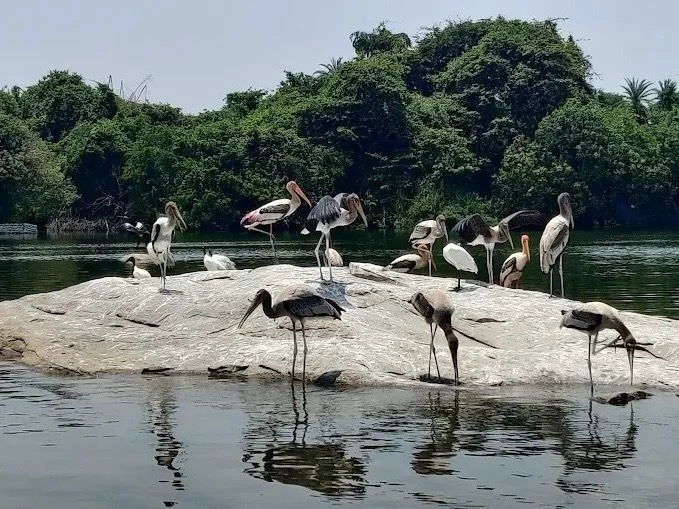
Visitors come to Ranganathittu Bird Sanctuary primarily to observe a variety of native and migratory birds, including storks, herons, egrets, and kingfishers, in their natural wetland habitat.
The sanctuary offers a calm and shaded environment along the riverbanks, with narrow trails and boat rides that allow close but non-intrusive wildlife viewing, creating a peaceful on-ground atmosphere.
What makes Ranganathittu distinct is its accessibility for educational wildlife experiences, the congregation of large bird flocks during breeding seasons, and the combination of riverine landscapes with easily navigable trails and observation points.
History of Ranganathittu Bird Sanctuary
Ranganathittu Bird Sanctuary was established in 1940 when naturalist Sri Salim Ali and local landowners recognized the area’s importance as a nesting site for migratory birds along the Kaveri River.
The sanctuary’s islands were formed by the river’s natural sand deposits and flooding patterns, creating safe breeding grounds for herons, storks, and egrets, which remain protected today.
Best Time to Visit Ranganathittu Bird Sanctuary
The sanctuary is most active and visually rewarding for birdwatching between November and May, when migratory birds arrive and the weather is favorable for outdoor visits.
- Ideal months: November to May
- Weather conditions during the best season: Warm and dry with comfortable daytime temperatures, minimal rainfall
- Periods to avoid: June to September, during the monsoon, as heavy rains can make the sanctuary’s boat trails and paths difficult to navigate
How to Reach Ranganathittu Bird Sanctuary
- Nearest airport: Mysore Airport (MYQ), approximately 14 km away; limited flights, taxi or cab required to reach the sanctuary
- Nearest railway station: Srirangapatna Railway Station, about 5 km from the sanctuary; short taxi or auto-rickshaw ride needed for last-mile access
- Road access and last-mile connectivity: Well-connected by road from Mysore and Bangalore; private vehicles, taxis, and buses are common; narrow approach roads can get congested during peak tourist days
What to Expect When You Visit Ranganathittu Bird Sanctuary
- The sanctuary features wetlands and riverine islets with abundant birdlife; expect open viewing areas and boat rides along the river for close-up sightings.
- Basic facilities include a small visitor center, guided boat tours, benches, and shaded areas; restrooms are limited and may not be available on all islets.
- Walking paths are short and mostly flat, but some areas near the riverbank can be muddy; movement may be restricted on certain islets to protect nesting birds.
- Visitors typically arrive in small groups; early mornings are quieter, while weekends can be crowded; maintain silence around nesting zones to avoid disturbing birds.
Important Visitor Information for Ranganathittu Bird Sanctuary
- Peak visiting hours are between 9:00 AM and 11:00 AM; early mornings are quieter for birdwatching. Monsoon months may make paths slippery.
- Visitors should wear comfortable walking shoes; light, breathable clothing is recommended due to warm daytime temperatures.
- Boats are available for guided tours, but life jackets must be worn; avoid approaching nesting areas and do not feed the birds.
- Carry water and sun protection; mobile network can be weak in certain areas of the sanctuary.
Photography and Viewpoints at Ranganathittu Bird Sanctuary
- Best viewpoints are along the riverbank and designated observation towers, providing clear shots of nesting birds and the waterway.
- Early morning light between 6:30 AM and 9:00 AM offers the most natural lighting and active bird behavior.
- Photography is allowed; avoid using flash near nesting areas to prevent disturbing birds.
- Boat rides provide close-up angles of waterbirds, but crowded boats may limit mobility and framing options.