Quick Facts About Regional Museum of Natural History Mysuru
Quick Facts About Regional Museum of Natural History, Mysuru
| Entry Fee | Free |
|---|---|
| Timings | 10:00 AM–6:00 PM, Tuesday to Sunday; closed on Mondays and National/Public Holidays. |
| Altitude (m) | Approximately 760 m above sea level. |
| Ideal Visit Duration | 1–2 hours |
| Best Time of Day | Morning (10:00 AM–12:00 PM) for a quieter visit. |
| Crowd Level | Usually low to moderate; busier during weekends, school excursions, and holidays. |
| Distance from City Centre (km) | Approximately 5 km from Mysuru city centre. |
| Walking Difficulty | Easy; exhibits are spread across level indoor galleries. |
| Parking Available | Yes, free visitor parking is available. |
| Last Mile Access | Accessible by city bus, taxi, auto-rickshaw, or private vehicle, followed by a short walk from the entrance. |
| Suitable for Kids | Yes; interactive exhibits and educational displays make it especially suitable for children. |
| Suitable for Seniors | Yes |
| Wheelchair Friendly | Yes; the museum provides wheelchair-accessible facilities and pathways. |
Why Visit Regional Museum of Natural History, Mysuru
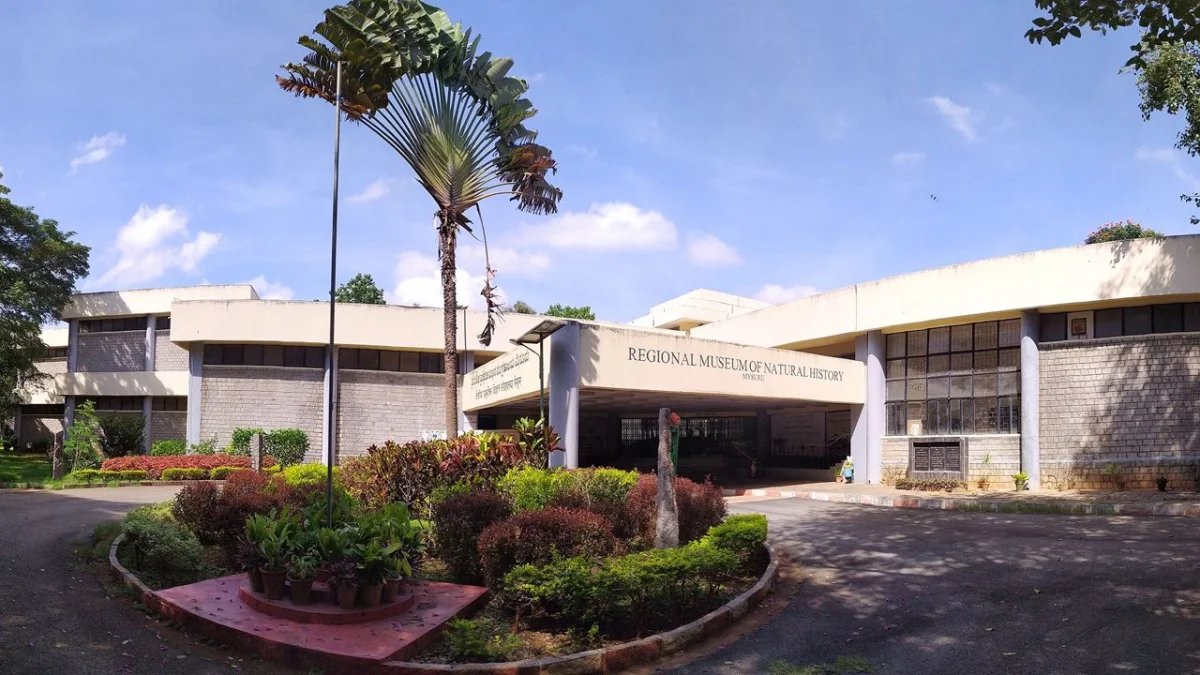
The Regional Museum of Natural History in Mysuru is a popular destination for visitors interested in wildlife, ecology, geology, and environmental science. Its exhibits appeal to families, students, and nature enthusiasts exploring Mysuru's educational attractions.
The museum offers a calm and informative atmosphere with galleries featuring life-size animal models, fossils, dioramas, interactive displays, and exhibits on the ecosystems of southern India and the Western Ghats. The landscaped outdoor spaces further enhance the learning experience.
What makes the Regional Museum of Natural History distinct is its focus on India's biodiversity and environmental conservation through immersive, scientifically curated exhibits. Its location near Karanji Lake and other major attractions also makes it an easy addition to a Mysuru sightseeing itinerary.
History of Regional Museum of Natural History, Mysuru
The Regional Museum of Natural History in Mysuru was established in 1995 by the Ministry of Environment, Forest and Climate Change, Government of India. It was created to promote awareness of India's rich natural heritage through educational exhibits on biodiversity, geology, ecology, and environmental conservation, with a special focus on the ecosystems of southern India.
Since its inception, the museum has served as an important center for environmental education, welcoming students, researchers, and tourists alike. Its interactive galleries, dioramas, and nature-based displays help visitors understand the region's wildlife, forests, and ecological diversity, making it one of Mysuru's leading educational attractions.
Best Time to Visit Regional Museum of Natural History, Mysuru
The best time to visit the Regional Museum of Natural History is from October to February, when the weather is pleasant for combining a museum visit with sightseeing around Mysuru. As an indoor attraction, the museum is suitable to visit throughout the year.
- Ideal months: October to February for comfortable weather and exploring nearby attractions in Mysuru.
- Best-season weather: Cool mornings, mild daytime temperatures, and lower humidity make city travel enjoyable.
- Periods to avoid: April and May can be quite warm during the day, while June to September brings seasonal rainfall that may affect outdoor sightseeing, although the museum remains a convenient indoor destination.
How to Reach Regional Museum of Natural History Mysuru
- Nearest Airport: Mysore Airport is the nearest airport, located about 18 km from the Regional Museum of Natural History. Kempegowda International Airport in Bengaluru, around 185 km away, offers better domestic and international connectivity. Taxis and buses are available from both airports.
- Nearest Railway Station: Mysuru Junction Railway Station is approximately 5 km from the museum and is well connected to major cities. Auto rickshaws, taxis, and city buses provide convenient onward travel.
- Road Access: The Regional Museum of Natural History is located on the Mysuru–Chamundi Hill Road near Siddarthanagar and is easily accessible by private vehicles, taxis, auto rickshaws, and KSRTC city buses from all parts of Mysuru.
- Last Mile Connectivity: Visitors can reach the museum entrance directly by road. Parking is available within the museum premises, and the approach roads remain accessible throughout the year.
What to Expect When You Visit Regional Museum of Natural History, Mysuru
- Museum Environment: The Regional Museum of Natural History features indoor galleries dedicated to biodiversity, wildlife, ecology, geology, and environmental conservation. Exhibits include preserved specimens, life-size models, dioramas, and educational displays.
- Facilities: Basic visitor amenities such as parking, restrooms, drinking water, seating areas, and information counters are available. The museum grounds also include landscaped outdoor spaces for short walks.
- Accessibility: Located within Mysuru city, the museum is easily accessible by road. Most galleries are connected by wide walkways, allowing visitors to explore comfortably, though some areas may involve ramps or stairs.
- Visitor Experience: Most visitors spend one to two hours exploring the exhibits, reading interpretive panels, and viewing educational displays. School groups and families are common, particularly on weekdays and during educational visits.
- Atmosphere: The museum maintains a quiet and educational environment focused on natural history and environmental awareness. Visitors are expected to follow museum rules, avoid touching exhibits, and keep noise to a minimum.
- Practical Considerations: Photography policies may vary across different galleries, and some sections may have restrictions. Checking current opening hours before your visit is recommended, especially on public holidays.
Important Visitor Information for Regional Museum of Natural History, Mysuru
- Crowd & Weather: The museum sees its highest footfall during weekends, school holidays, and educational excursions. As the galleries are indoors, it is a comfortable attraction to visit throughout the year regardless of the weather.
- Peak & Quiet Hours: Late mornings and early afternoons are generally the busiest due to school groups. Weekday mornings usually offer a quieter experience with more time to explore the exhibits.
- Safety & Practical Notes: Follow museum guidelines, avoid touching exhibits unless permitted, and adhere to photography restrictions where applicable. Children should be supervised, and visitors are encouraged to maintain a quiet environment for educational programs and other guests.
Photography and Viewpoints at Regional Museum of Natural History, Mysuru
- The museum’s exhibition galleries, life-size animal displays, biodiversity sections, and educational installations provide the best photography opportunities, with detailed exhibits offering close-up views of natural history themes.
- Indoor gallery lighting is designed for display visibility, so photographs are best taken during quieter hours when visitors can frame exhibits without interruptions. Morning visits usually provide a more relaxed experience for exploring and photographing the collections.
- Photography rules may vary across different galleries. Visitors should follow museum instructions, avoid using flash where prohibited, and maintain distance from exhibits to protect the displays.
- The museum attracts school groups, families, and tourists, especially on weekends, holidays, and educational tour days. Visiting on weekday mornings generally offers fewer crowds and better opportunities for clear photographs of the exhibits.