Quick Facts About Namdroling Monastery Golden Temple
Namdroling Monastery (Golden Temple), Coorg Quick Facts
| Entry Fee | Free |
|---|---|
| Timings | Generally 9:00 AM–6:00 PM; prayer hall access may be restricted during religious ceremonies. |
| Altitude (m) | Approximately 890 m |
| Ideal Visit Duration | 1–2 hours |
| Best Time of Day | Morning to early afternoon; visit during prayer sessions for a more immersive experience while maintaining silence. |
| Crowd Level | Moderate on weekdays; high during weekends, public holidays, and Buddhist festivals. |
| Distance from City Centre (km) | Approximately 35 km from Madikeri (Coorg) town centre. |
| Walking Difficulty | Easy; the monastery complex is mostly flat with paved walkways. |
| Parking Available | Yes, parking is available near the monastery entrance. |
| Last Mile Access | Accessible by motorable road, followed by a short walk from the parking area to the monastery buildings. |
| Suitable for Kids | Yes |
| Suitable for Seniors | Yes |
| Wheelchair Friendly | Partially; the main courtyard and several areas are accessible, but some sections may involve steps. |
Why Visit Namdroling Monastery (Golden Temple), Coorg
Visitors come to Namdroling Monastery, popularly known as the Golden Temple, to experience one of India's largest Tibetan Buddhist monasteries. The monastery is renowned for its towering golden Buddha statues, intricate Tibetan artwork, and active monastic community.
The atmosphere is calm and contemplative, with monks engaged in daily prayers, rhythmic chanting, and traditional Buddhist rituals. Spacious prayer halls, colorful murals, and well-maintained grounds create a peaceful environment for visitors interested in spirituality, architecture, or cultural heritage.
What makes Namdroling Monastery distinct is its authentic Tibetan Buddhist setting in southern India, where visitors can observe monastic life while appreciating detailed craftsmanship and religious traditions. Its cultural significance and serene surroundings make it one of the most rewarding attractions near Coorg.
History of Namdroling Monastery (Golden Temple), Coorg
Namdroling Monastery, popularly known as the Golden Temple, is located at Bylakuppe near Coorg in Karnataka. It was established in 1963 by His Holiness Pema Norbu Rinpoche (Penor Rinpoche) after Tibetan refugees settled in the region following their exile from Tibet. The monastery belongs to the Nyingma school, the oldest tradition of Tibetan Buddhism.
Over the decades, Namdroling Monastery has grown into one of the largest Tibetan Buddhist monasteries in India. Its grand prayer halls, richly decorated murals, and towering gilded statues of Buddha, Guru Padmasambhava, and Amitayus reflect traditional Tibetan Buddhist art and architecture. The monastery also serves as an important center for Buddhist education, meditation, and monastic training.
Today, Namdroling Monastery is both a major place of worship and one of the most visited cultural attractions near Coorg. Visitors come to experience its peaceful atmosphere, observe daily prayers, and learn about Tibetan Buddhist heritage preserved within the Bylakuppe Tibetan settlement.
Best Time to Visit Namdroling Monastery (Golden Temple), Coorg
The best time to visit Namdroling Monastery (Golden Temple) is from October to March, when the weather is pleasant for exploring the monastery complex and nearby attractions in Coorg. The monastery remains open throughout the year, but the cooler months offer a more comfortable experience.
- Ideal months: October to March, when temperatures are comfortable for sightseeing and spending time around the monastery grounds.
- Best season conditions: Cool to mildly warm weather with generally clear skies, making it enjoyable to admire the Tibetan architecture, prayer halls, and landscaped surroundings.
- Periods to avoid: June to September if possible, as heavy monsoon rainfall is common in the region, which can affect outdoor exploration and road travel, although the monastery itself remains open.
How to Reach Namdroling Monastery (Golden Temple), Coorg
- Nearest Airport: The nearest airport is Mysuru Airport, approximately 95 km from Namdroling Monastery. For better flight connectivity, Kempegowda International Airport, Bengaluru, about 245 km away, is the preferred option. Taxis and rental cars are available from both airports.
- Nearest Railway Station: Mysuru Junction Railway Station, around 90 km away, is the nearest major railhead. It is well connected with Bengaluru, Chennai, and other major cities. Visitors can hire taxis or board buses from Mysuru to Bylakuppe.
- By Road: Namdroling Monastery is located at Bylakuppe, about 35 km from Madikeri (Coorg), on the Mysuru–Madikeri Highway. KSRTC and private buses operate regularly between Mysuru, Madikeri, and Bylakuppe. The monastery is easily accessible by car or taxi, with parking available near the entrance. Roads are well maintained and suitable for travel throughout the year.
What to Expect When You Visit Namdroling Monastery (Golden Temple), Coorg
- Namdroling Monastery, commonly known as the Golden Temple, is located in Bylakuppe near Coorg and is one of the largest Tibetan Buddhist monasteries in India. The campus features prayer halls, landscaped grounds, and residential quarters for monks.
- Visitors can expect a peaceful atmosphere, with monks engaged in prayers, study, and daily monastery activities. Prayer ceremonies may be in progress depending on the time of day.
- The main prayer hall houses large gilded statues of Buddha, Padmasambhava, and Amitayus, along with colorful murals and traditional Tibetan artwork. Visitors are expected to maintain silence and behave respectfully inside the prayer hall.
- The monastery is easily accessible by road, and most areas are connected by paved walkways. A moderate amount of walking is required to explore the campus, but movement is generally straightforward.
- Basic facilities, including parking, restrooms, drinking water, souvenir shops, and small food outlets, are available near the monastery entrance. Additional restaurants and accommodations can be found in the surrounding area.
- Footwear must be removed before entering the main prayer hall. Modest clothing is recommended, and visitors should avoid disturbing monks during prayers or religious ceremonies.
- The monastery attracts tourists, photographers, and pilgrims throughout the year. Weekends, public holidays, and peak tourist seasons generally see higher visitor numbers, although the spacious campus helps distribute crowds.
- Photography is generally permitted in outdoor areas, but restrictions may apply inside prayer halls during religious activities. Visitors should follow the guidelines displayed on the premises.
Important Visitor Information for Namdroling Monastery (Golden Temple), Coorg
- Crowd and weather: The monastery is busiest on weekends, public holidays, and during the peak tourist season from October to March. Heavy monsoon rains between June and September may affect outdoor exploration of the monastery grounds.
- Peak and quiet visiting hours: Early morning offers a quieter atmosphere and the opportunity to observe monks during prayer sessions. Late mornings and afternoons are generally the busiest as tourist groups arrive.
- Dress code: As an active Tibetan Buddhist monastery, visitors should wear modest clothing that covers the shoulders and knees. Maintain silence inside the prayer hall and avoid disturbing monks during religious ceremonies.
- Safety and practical cautions: Photography is generally permitted in outdoor areas, but always follow signs regarding restrictions inside prayer halls. Remain within visitor-designated areas, respect ongoing religious activities, and supervise children, especially around prayer halls and monastery courtyards.
Photography and Viewpoints at Namdroling Monastery (Golden Temple), Coorg
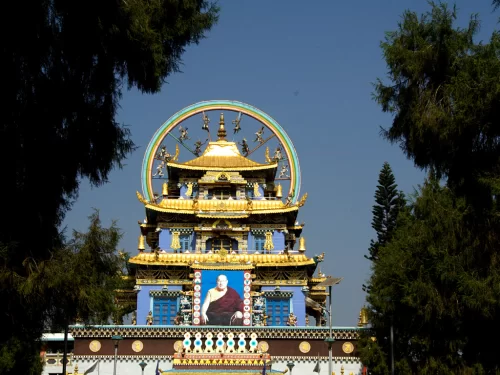
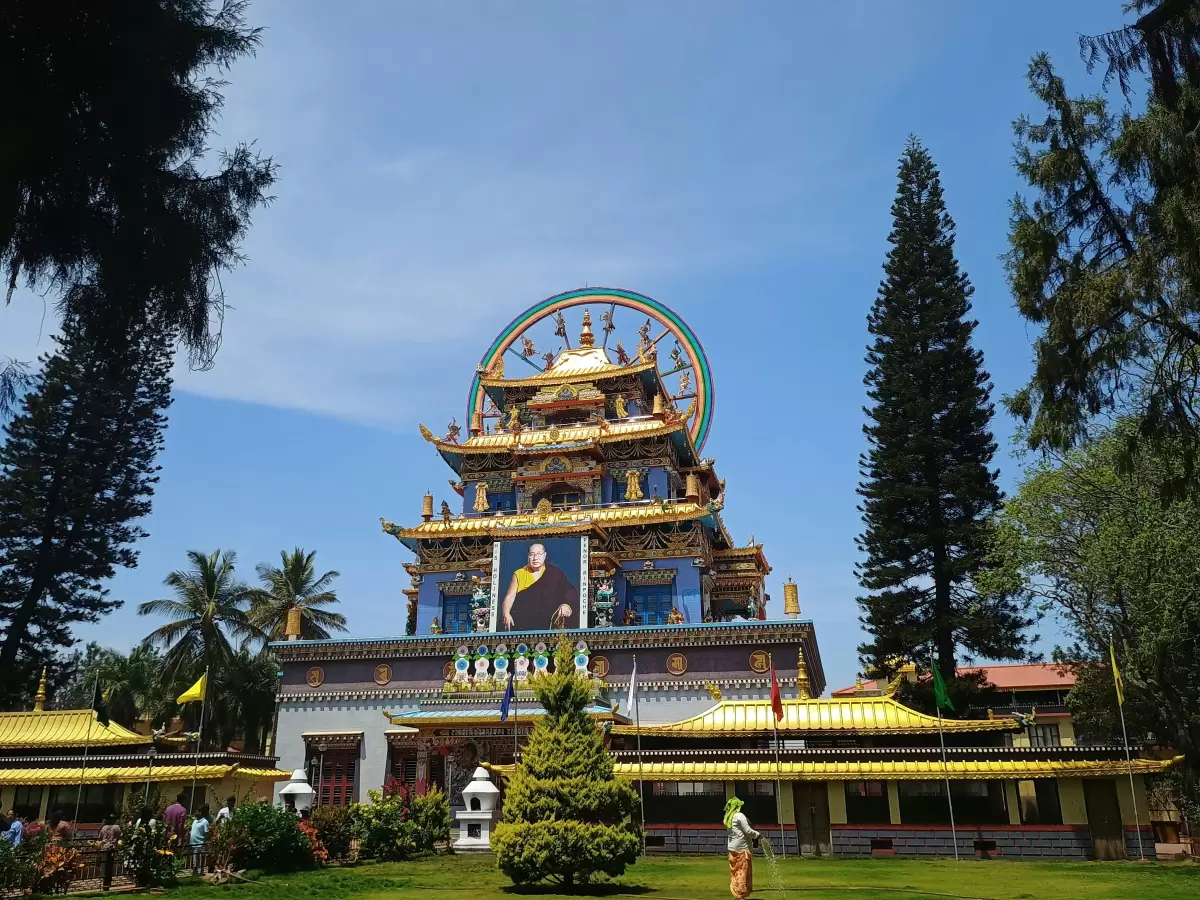
- The main courtyard provides the best viewpoint for capturing the monastery's ornate Tibetan architecture, golden prayer towers, and the impressive façade of the Golden Temple.
- Inside the main prayer hall, the towering gilded statues of Buddha, Guru Padmasambhava, and Amitayus create striking photographic compositions where photography is permitted. Visitors should always follow any instructions displayed by the monastery or given by staff.
- Morning light offers even illumination across the monastery complex and fewer visitors, while late afternoon enhances the vibrant colors of the murals, prayer flags, and temple exteriors.
- Photography is generally allowed in most outdoor areas of the monastery. However, flash photography, photography during prayer ceremonies, or access to restricted sections may not be permitted.
- The monastery attracts the largest crowds on weekends, public holidays, and during Tibetan Buddhist festivals. Visiting on weekday mornings provides better opportunities for unobstructed photographs of the courtyard and temple interiors.