Quick Facts About Namdroling Monastery
| Entry Fee | Free |
| Timings | 06:00 - 20:00 |
| Altitude (m) | 1100 |
| Ideal Visit Duration (hrs) | 2 |
| Best Time of Day | Morning |
| Crowd Level | Moderate / High |
| Distance from City Centre (km) | 35 |
| Walking Difficulty | Easy |
| Parking Available | Yes |
| Last Mile Access | Road |
| Suitable for Kids | Yes |
| Suitable for Seniors | Yes |
| Wheelchair Friendly | Yes |
Why Visit Namdroling Monastery, Bylakuppe
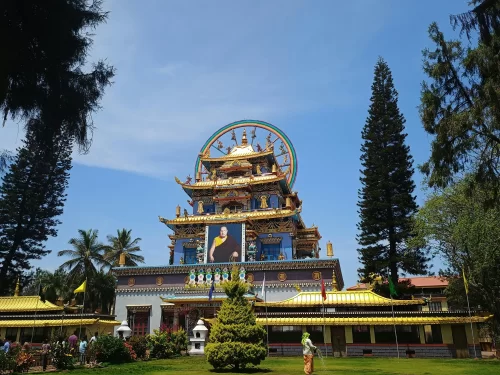
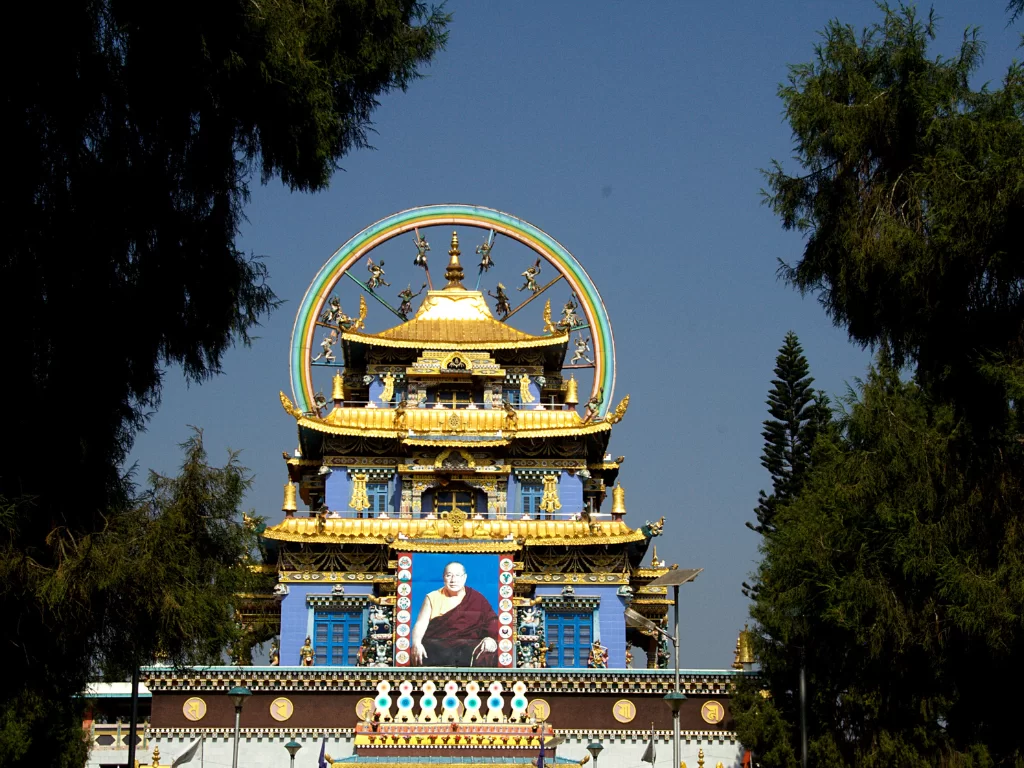
Namdroling Monastery, also known as the Golden Temple, is one of the largest Tibetan Buddhist monasteries in India. Visitors come to experience its serene atmosphere, intricate architecture, and spiritual ambiance, offering a peaceful escape in the midst of nature.
The monastery is located in a tranquil environment surrounded by lush greenery, providing a calm and meditative space. The sound of monks chanting and the sight of majestic statues add to the soothing experience, making it a perfect place for reflection and spiritual rejuvenation.
What makes Namdroling Monastery distinct is its vibrant Tibetan culture and art. The monastery features stunning golden statues, colorful murals, and intricate carvings, which offer an authentic insight into Tibetan Buddhism. The community here maintains its traditions, making it an enriching experience for travelers interested in learning more about Tibetan heritage.
History of Namdroling Monastery, Bylakuppe
Namdroling Monastery, founded in 1963 by His Holiness Pema Norbu Rinpoche, is a prominent Tibetan Buddhist monastery located in Bylakuppe, Karnataka. It serves as the main center of the Nyingma school of Tibetan Buddhism in India.
The monastery is an important religious and cultural hub for Tibetan refugees in India, housing a large community of monks and nuns. It is renowned for its golden statues, vibrant murals, and sacred artifacts that reflect the rich traditions of Tibetan Buddhism.
Namdroling Monastery has also played a key role in preserving Tibetan culture and promoting spiritual teachings, making it a significant landmark for both Tibetan Buddhists and visitors seeking to understand Tibetan heritage.
Best Time to Visit Namdroling Monastery, Bylakuppe
The best time to visit Namdroling Monastery is during the cooler months, from October to March. This period offers pleasant weather, ideal for exploring the monastery and its surroundings comfortably.
- Ideal months: October to March
- Weather: Mild temperatures and clear skies, with cooler evenings and pleasant daytime temperatures.
- Periods to avoid: June to September. Monsoon season brings heavy rainfall, which may affect travel conditions and outdoor exploration.
How to Reach Namdroling Monastery, Bylakuppe
- Nearest Airport: Mangalore International Airport (IXE), approximately 180 km away. A taxi or private car is recommended for the last-mile journey.
- Nearest Railway Station: Mysuru Junction (MYS), around 30 km away. Taxis or local buses are available for transfer to the monastery.
- Road Access: Bylakuppe is well-connected by road from major cities in Karnataka. The monastery is easily accessible via NH275. Expect some narrow roads as you approach the site, but the road conditions are generally good.
What to Expect When You Visit Namdroling Monastery, Bylakuppe
- Environment and surroundings: The monastery is located in a peaceful, scenic area surrounded by lush greenery and Tibetan-style architecture. It offers a tranquil and spiritual atmosphere, ideal for reflection.
- Facilities and amenities: The site has basic amenities like toilets and a small shop selling Tibetan handicrafts. There are also seating areas for visitors to relax. However, food options within the monastery are limited.
- Accessibility and movement: The monastery is wheelchair accessible in most areas, but certain sections may be challenging to navigate due to steps. There is a paved path for easy movement, but visitors with limited mobility may find it difficult to explore the entire site.
- Typical visitor behavior and conditions: Visitors typically engage in quiet observation, taking in the peaceful environment. While photography is permitted in most areas, respect for the religious sanctity of the place is expected. Be mindful of the local customs and dress modestly when visiting temples.
Important Visitor Information for Namdroling Monastery, Bylakuppe
- Crowd and weather notes: The monastery attracts a steady flow of visitors, especially during the morning and evening prayers. Weekends and holidays tend to be busier. The weather is pleasant year-round, but summers (March–May) can get hot, while winters (November–February) are cool and ideal for visiting.
- Peak and quiet visiting hours: Early mornings and late afternoons are the best times for a peaceful experience, with fewer tourists. Peak hours are typically from 10:00 AM to 2:00 PM. Visiting during off-peak times ensures a more serene environment.
- Dress code: Visitors are expected to dress modestly, covering shoulders and knees. It is advised to avoid wearing revealing clothing out of respect for the religious setting.
- Safety notes and practical cautions: While the monastery is generally safe, keep an eye on personal belongings due to the large number of visitors. Wear comfortable shoes as the site involves some walking. Be cautious while walking around prayer halls, as there may be monks in meditation.
Photography and Viewpoints at Namdroling Monastery, Bylakuppe
- Best viewpoints or angles for photography: The main prayer hall (Golden Temple) offers the best photographic opportunities, especially the golden statues of Buddha and the intricate murals. The courtyard and surrounding temple structures also provide a beautiful perspective of the monastery’s architecture.
- Lighting conditions and time-of-day considerations: Early morning and late afternoon provide the best lighting for capturing the grandeur of the monastery, with soft natural light enhancing the golden statues. Midday can result in harsher sunlight and shadows, which may not be ideal for photography.
- Rules or restrictions on photography: Photography is allowed in most areas, but be respectful when taking photos inside prayer halls or when monks are in session. Flash photography is discouraged, as it can be disruptive. Always check for any specific signs or announcements regarding photography restrictions.
- Crowd or access factors that affect photography: The monastery can get crowded, especially during festivals or prayer times, which can limit access to certain areas for photography. Visiting during early morning hours or weekdays may provide more opportunities for unobstructed shots.