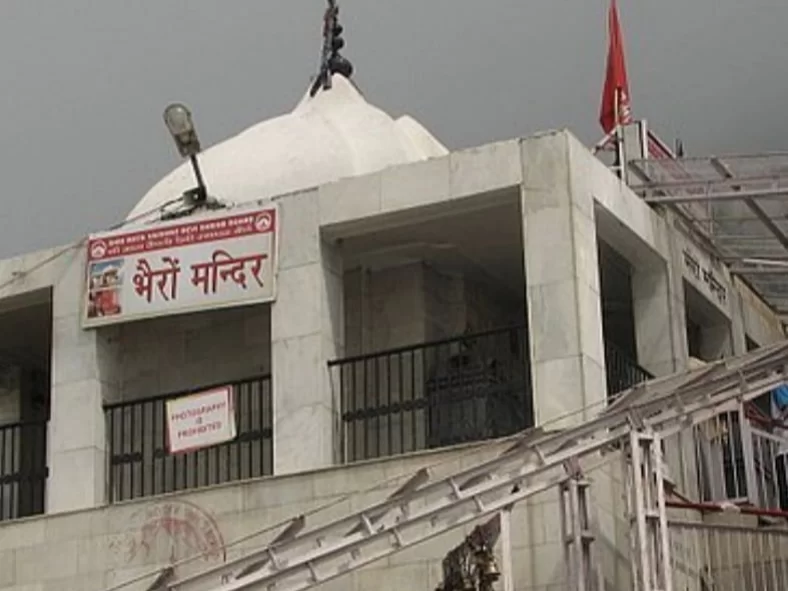
Bhairo Baba Temple Katra, Jammu and Kashmir, India

Bhairo Baba Temple , Katra
Pilgrims traditionally visit this temple after completing darshan at the Vaishno Devi shrine, as part of the established pilgrimage route. The temple is accessible by a steep uphill path and ropeway from Bhawan, and is managed under the Shri Mata Vaishno Devi Shrine Board.

Quick Facts About Bhairo Baba Temple

Entry Fee Free
Timings 00:00 - 23:59
Altitude (m) 2000
Ideal Visit Duration (hrs) 1
Best Time of Day Morning
Crowd Level Moderate
Distance from Bhawan (km) 2
Distance from Katra (km) 15
Walking Difficulty Hard
Parking Available No
Last Mile Access Trek
Suitable for Kids Yes
Suitable for Seniors Yes
Wheelchair Friendly No

Why Visit Bhairo Baba Temple, Katra

Bhairo Baba Temple is the final religious stop in the Vaishno Devi pilgrimage circuit, located uphill from the Bhawan shrine. Pilgrims visit after completing Mata Vaishno Devi darshan, as tradition holds that the yatra is considered complete only after offering prayers at Bhairo Baba Temple.

The atmosphere at Bhairo Baba Temple is devotional yet less crowded than the main Bhawan area, especially outside peak pilgrimage seasons. The temple sits at a higher elevation, offering open views of the surrounding Trikuta Hills, and can be reached via a steep paved path or ropeway service from Bhawan.

What makes Bhairo Baba Temple distinct is its role as the concluding point of the Vaishno Devi yatra combined with its elevated mountain setting. Unlike mid-route stops, this shrine represents the final ascent and completion ritual, adding both spiritual closure and panoramic Himalayan views to the pilgrimage experience.

History of Bhairo Baba Temple, Katra

Bhairo Baba Temple is located near the Bhawan of Vaishno Devi in the Trikuta Hills of Reasi district, Jammu and Kashmir. The shrine is intrinsically linked to the Vaishno Devi pilgrimage and forms the final traditional stop of the yatra. Its origin is rooted in the same religious tradition that defines the main cave shrine.

According to long-standing devotional belief, Bhairon Nath pursued Goddess Vaishno Devi and was ultimately defeated by her near the present-day Bhawan. It is believed that before his death, Bhairon Nath repented, and the Goddess granted him a boon that pilgrims would not be considered to have completed their pilgrimage without visiting his temple. This narrative forms the spiritual foundation of the shrine.

Historically, the temple developed as an integral extension of the Vaishno Devi pilgrimage circuit, with access traditionally involving a steep uphill trek from the main shrine. Today, managed under the Shri Mata Vaishno Devi Shrine Board, Bhairo Baba Temple continues to hold religious importance as a mandatory concluding point in the pilgrimage tradition.

Best Time to Visit – Bhairo Baba Temple Katra

Bhairo Baba Temple, located above the Vaishno Devi Bhawan in the Trikuta Hills, is best visited when weather conditions support safe uphill movement, as the final stretch involves a steep climb or ropeway ride exposed to changing mountain conditions.
  • Ideal months: March to June and September to November offer the most stable trekking and viewing conditions.
  • Weather during the best season: Spring and early summer bring moderate temperatures (around 8–22°C at higher elevation), clearer skies, and manageable trekking conditions after darshan at Bhawan. Post-monsoon autumn provides crisp air and improved visibility across the Trikuta ranges.
  • Periods to avoid (and why): July to August sees monsoon rainfall, which can make the steep pathway slippery and occasionally slow ropeway operations due to weather conditions. December to January can be very cold with occasional snowfall near Bhawan, affecting both trekking comfort and visibility.

How to Reach Bhairo Baba Temple Katra

  • Nearest Airport: Jammu Airport (Satwari Airport), approximately 50 km from Katra. From the airport, taxis to Katra usually take 1.5–2 hours depending on traffic and highway conditions.
  • Nearest Railway Station: Shri Mata Vaishno Devi Katra Railway Station is the nearest and most convenient railhead, located within Katra town and directly connected to major Indian cities. Jammu Tawi Railway Station (around 50 km away) is an alternative option.
  • Road Access & Last-Mile Connectivity: Bhairo Baba Temple is located approximately 1.5–2 km uphill from the Vaishno Devi Bhawan. Vehicles are not permitted beyond Katra. Pilgrims must first complete the 13 km trek from Katra to Bhawan on foot, pony, palki, or battery car (on designated stretches). From Bhawan, the final stretch to Bhairo Baba involves a steep paved climb; a ropeway service connects Bhawan to Bhairo Temple, subject to operational timings and weather conditions. During peak pilgrimage seasons, crowd movement and waiting times can increase significantly.

What to Expect When You Visit Bhairo Baba Temple Katra

  • Environment and Surroundings: Bhairo Baba Temple is located above the Vaishno Devi Bhawan at an altitude of approximately 2,000 metres in the Trikuta Hills, Reasi district, Jammu and Kashmir. The temple sits on a steep ridge and offers expansive views of surrounding mountains and valleys. The area is exposed to wind and changing weather conditions. Summers can be mild but physically demanding due to the climb, monsoon brings rain and slippery pathways, and winters can be very cold with occasional snowfall.
  • Facilities and Amenities: Basic facilities such as drinking water points, small food outlets, and rest shelters are available near the temple area under the management of the Shri Mata Vaishno Devi Shrine Board. Public toilet facilities are present but limited. Seating space is minimal, and most visitors move through designated darshan lines. Commercial activity is controlled compared to Katra town.
  • Accessibility and Movement: The temple is approximately 1.5–2 km uphill from the main Bhawan shrine. Pilgrims can reach by walking on a paved path with railings or by ropeway service (subject to operational status and weather conditions). The walking route includes steep inclines and steps. During peak seasons, crowd flow may slow movement, and during adverse weather, ropeway operations may be temporarily suspended.
  • Typical Visitor Behavior and Conditions: Many pilgrims visit Bhairo Baba Temple after completing darshan at Vaishno Devi, as it is traditionally considered the final part of the pilgrimage. Footfall is high during Navratri and peak yatra months (May–June and September–October). Visitors typically spend 20–40 minutes at the temple. Weather conditions and crowd volume can significantly affect waiting times and overall experience.

Important Visitor Information – Bhairo Baba Temple Katra

  • Crowd & Weather Notes: Bhairo Baba Temple receives steady pilgrim flow as part of the Vaishno Devi Yatra, with peak crowds during Navratri (March–April and September–October) and summer months (May–June). Winters (December to February) can be extremely cold at this higher elevation, with occasional snowfall. Monsoon (July to September) brings rain and slippery stretches on the pathway.
  • Peak / Quiet Hours: The temple remains open in alignment with the Vaishno Devi Yatra schedule. Visitor movement increases after pilgrims complete darshan at Bhawan. Late evenings and festival periods typically see longer queues, while early weekday mornings may be relatively less crowded.
  • Dress Code: Modest attire is required as it is an active Hindu temple. Footwear must be removed before entering the shrine area. Warm clothing is essential in winter due to strong winds and low temperatures.
  • Safety Notes: The temple is located approximately 2 km uphill from the main Bhawan, involving a steep ascent; ropeway services operate between Bhawan and Bhairon Temple, subject to weather conditions. Use designated paths only and follow Shrine Board instructions. During winter or rain, surfaces may become slippery, requiring extra caution.

Photography and Viewpoints – Bhairo Baba Temple, Katra

  • Best viewpoints/angles: The temple’s hilltop location above the Vaishno Devi Bhawan offers expansive views of the Trikuta ranges—position near the outer railing areas for layered mountain compositions; elevated bends of the final approach path provide strong frames of the temple structure against steep valley backdrops; on clear days, wide-angle shots capture the Bhawan complex far below.
  • Lighting & time-of-day: Early morning provides clearer long-distance visibility across the mountains before haze develops; late afternoon enhances ridge contours with directional light; winter months often offer crisper views compared to humid summer conditions, while monsoon clouds can quickly obscure distant peaks.
  • Rules/restrictions: Photography inside the sanctum is generally prohibited; follow Shrine Board regulations regarding cameras and electronic devices; drone usage is strictly banned in the shrine and pilgrimage zone; respect ongoing ???? (worship) and devotee privacy.
  • Crowd & access factors: The temple is visited after Vaishno Devi darshan and sees steady pilgrim movement, especially during Navratri and peak seasons; early morning hours offer relatively clearer railing space; the final stretch involves a steep climb or ropeway access, and narrow viewing areas can limit uninterrupted framing.

Near By Attraction

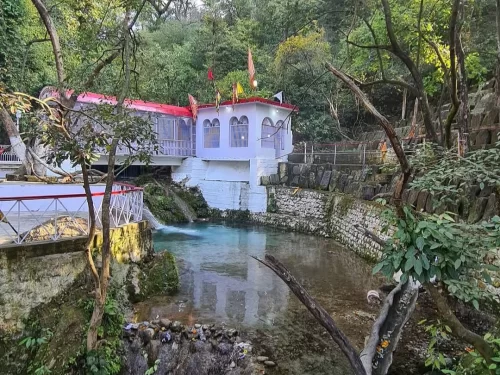
Baba Dhansar Katra sacred temple and natural spring surrounded by lush forest in Jammu and Kashmir tour packages Temple

Baba Dhansar

Baba Dhansar is a natural cave shrine dedicated to Lord Shiva, located near Karua village about 15 km from Katra in Reasi district, Jammu and Kashmir, India.
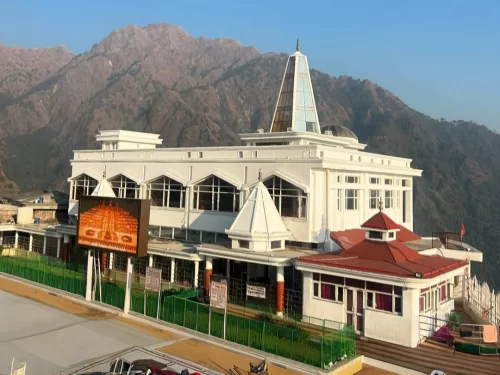
Ardhkuari Temple Katra sacred cave shrine of Mata Vaishno Devi in Jammu and Kashmir tour packages Temple

Ardhkuwari Temple

Ardhkuwari Temple is a Hindu shrine located midway along the Vaishno Devi pilgrimage route near Katra in Reasi district, Jammu and Kashmir, India.
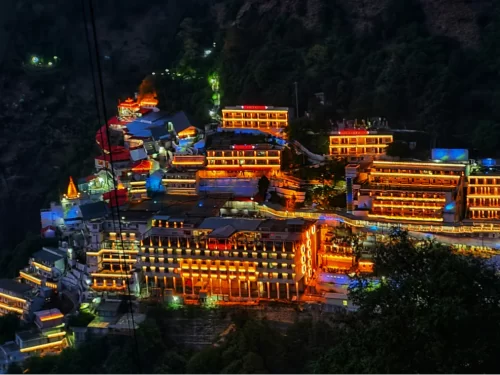
Vaishno Devi Bhawan Katra Jammu Kashmir night lights, featuring illuminated hotels temples cable car perched forested Trikuta mountains backdrop, perfect pilgrimage experience Jammu Kashmir tour packages. Temple

Vaishno Devi Temple

Vaishno Devi Temple is a major Hindu pilgrimage shrine dedicated to Goddess Vaishno Devi, located in the Trikuta Hills near Katra town in Reasi district, Jammu and Kashmir, India.

Frequently Asked Questions About Bhairo Baba Temple

Bhairo Baba Temple is located near the Vaishno Devi shrine above Bhawan in Katra, Jammu and Kashmir.
Visitors can reach Bhairo Baba Temple by trekking from Bhawan in Katra, Jammu and Kashmir or by using the available ropeway service.
There is no separate entry fee to visit Bhairo Baba Temple, as it is part of the Vaishno Devi pilgrimage route from Katra.
The best time to visit Bhairo Baba Temple is between March and June and September to November when the weather in Katra, Jammu and Kashmir is manageable for trekking.
Bhairo Baba Temple remains open throughout the day and night, similar to the Vaishno Devi pilgrimage schedule from Katra.
Most travelers spend about 30 minutes to 1 hour at Bhairo Baba Temple after completing the main Vaishno Devi darshan.
A steep trek of about 1 to 2 kilometers is required to reach Bhairo Baba Temple from Bhawan, though ropeway access reduces walking distance.
Basic food stalls and restroom facilities are available along the Vaishno Devi route near Bhairo Baba Temple.
A ropeway service operates between Bhawan and Bhairo Baba Temple, making the journey easier for pilgrims from Katra, Jammu and Kashmir.
Bhairo Baba Temple is suitable for family visits, especially with ropeway access, but visitors should be prepared for high-altitude walking conditions.

Loved this place ? Let’s Plan Your Jammu and Kashmir Trip

Get customized Jammu and Kashmir tour planning designed around seasonal weather patterns, valley travel routes, snow conditions, and realistic hill road timing. Whether you are visiting for scenic landscapes, serene lakes, spiritual journeys, meadow stays

⚑ Quick Response | πŸ’° Free consultation | πŸ•’ 24Γ—7 expert support

×

Plan Your Trip