Quick Facts About Rohtang Pass
| Entry Fee | Permit Required |
| Timings | 06:00 - 18:00 |
| Altitude (m) | 3978 |
| Ideal Visit Duration (hrs) | 2 |
| Best Time of Day | Morning |
| Crowd Level | High |
| Distance from Manali (km) | 51 |
| Walking Difficulty | Moderate |
| Parking Available | Yes |
| Last Mile Access | Car |
| Suitable for Kids | No |
| Suitable for Seniors | No |
| Wheelchair Friendly | No |
Why Visit Rohtang Pass
Rohtang Pass is a must-visit for travelers seeking a true high-altitude Himalayan experience. It offers dramatic mountain scenery, snow-covered landscapes, and a sense of adventure that contrasts sharply with the greener valleys below Manali.
Atmosphere: The atmosphere at Rohtang Pass is raw and intense. Thin air, cold winds, and vast open views create a rugged alpine environment, often changing rapidly with clouds, snowfall, and sunlight within minutes.
What Makes it Special: Rohtang Pass stands out as a natural gateway between two very different regions—lush Kullu Valley and the stark landscapes of Lahaul. Its high elevation, frequent snow presence even in summer, and panoramic Himalayan vistas make it one of the most iconic mountain passes in India.
History of Rohtang Pass
Rohtang Pass has long served as a natural corridor between the Kullu Valley and the Lahaul region, playing an important role in seasonal movement and trade across the Himalayas. For centuries, local communities, shepherds, and traders used this route to transport goods, livestock, and supplies between the two regions during the short summer window when the pass was open.
The name “Rohtang” is commonly interpreted as meaning “pile of corpses,” reflecting the harsh weather, unpredictable snowstorms, and difficult terrain that historically made crossings dangerous. This reputation highlights the pass’s natural challenges rather than any constructed or political history.
With the development of modern roads during the 20th century, Rohtang Pass became strategically important for connectivity and later emerged as a major tourist destination. Despite increased access, its significance remains rooted in its geography and role as a high-altitude gateway shaped by extreme Himalayan conditions.
Best Time to Visit Rohtang Pass
Rohtang Pass is a seasonal destination, with access strictly dependent on weather and road conditions. Snowfall and harsh winters keep the pass closed for a large part of the year.
- May to June: The most popular visiting period, offering snow-covered landscapes, open roads, and relatively stable weather conditions.
- Early July: Accessible in some years, though melting snow and unpredictable weather may affect road safety.
- August to April: Closed due to heavy snowfall, landslides, and unsafe travel conditions.
- Best Time of Day: Early morning hours provide clearer skies, reduced traffic, and better visibility.
- Weather Consideration: Sudden snow, fog, or strong winds can occur even during peak season.
How to Reach Rohtang Pass
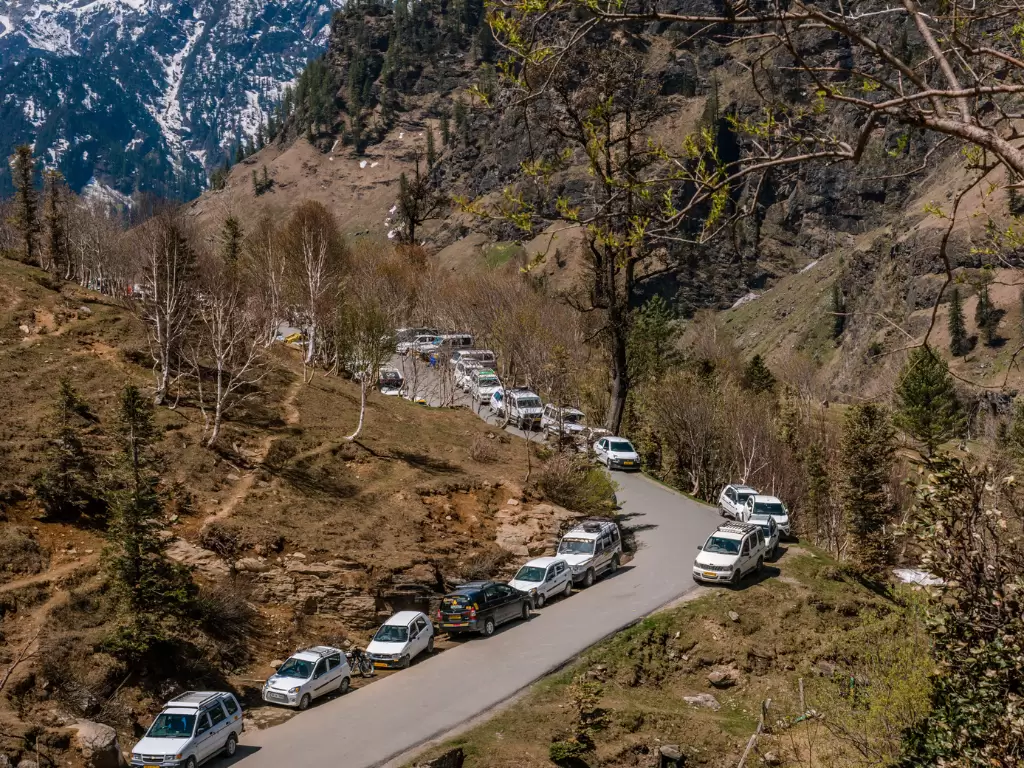
- From Manali: Rohtang Pass is located about 51 km from Manali and is reached via the Manali–Leh Highway, passing through Gulaba and Marhi.
- Permit Requirement: All visitors must obtain a Rohtang Pass permit in advance, issued by local authorities, with daily vehicle limits enforced.
- By Taxi: Registered local taxis from Manali are the most common mode of transport and are familiar with road and permit regulations.
- By Private Vehicle: Allowed only with a valid permit; vehicles must comply with environmental and timing restrictions.
- Road Conditions: Roads are steep, narrow, and weather-sensitive; sudden closures can occur due to snow or landslides.
What to Expect When You Visit Rohtang Pass
- High-altitude conditions with thin air, cold temperatures, and strong winds even during summer months.
- Snow-covered landscapes, glaciers, and dramatic mountain views depending on seasonal snow levels.
- Limited time allowed at the pass due to altitude sensitivity and traffic regulations.
- Heavy tourist presence during peak months, especially between May and June.
- Rapid weather changes, including sudden fog, snowfall, or reduced visibility.
- Basic facilities only, with limited food stalls and no permanent infrastructure.
Important Visitor Information
- Crowd & Weather Notes: Rohtang Pass experiences heavy tourist traffic during May and June, especially on weekends. Weather can change rapidly, with sudden snow, fog, or strong winds even on clear days.
- Peak / Quiet Hours: Peak hours are from 9:00 am to 2:00 pm. Early mornings between 6:00 am and 8:00 am are quieter and offer better visibility.
- Dress Code: Wear warm layered clothing, including jackets, gloves, woolen caps, and waterproof footwear, regardless of the season.
- Safety Notes: Acclimatize properly before visiting, avoid overexertion, and follow local advisories. Do not stay for extended periods due to altitude risks and always respect permit and time restrictions.
Photography and Viewpoint
- Rohtang Pass offers expansive alpine views with snowfields, glaciers, and layered mountain ridges stretching into Lahaul.
- Early morning light provides the best conditions for photography, with clearer skies and softer shadows on snow and rock.
- Cloud movement and changing weather create dramatic visual contrasts, ideal for landscape and nature photography.
- Natural roadside pull-offs near the pass serve as informal viewpoints, offering wide-angle perspectives without climbing.
- Photography should be done cautiously due to slippery snow, strong winds, and vehicle movement.
- Drone usage is restricted and generally prohibited without official permission due to security and environmental regulations.