Quick Facts About Atal Tunnel
Atal Tunnel Quick Facts
| Entry Fee | No entry fee |
| Timings | Open 24 hours for vehicular traffic, subject to weather conditions, maintenance work, and traffic regulations. |
| Altitude (m) | South Portal: Approximately 3,060 m above sea level |
| Ideal Visit Duration | 30 minutes–1 hour including viewpoint stops near the portals |
| Best Time of Day | Morning for lighter traffic and clearer mountain views around the tunnel portals |
| Crowd Level | High during weekends, holidays, snowfall periods, and peak tourist seasons |
| Distance from City Centre (km) | Approximately 28 km from Manali town centre |
| Walking Difficulty | Easy; viewing areas near the portals require minimal walking |
| Parking Available | Limited designated parking areas are available near the North and South Portal viewpoints |
| Last Mile Access | Direct access by road via the Manali–Leh Highway; no trekking required |
| Suitable for Kids | Yes |
| Suitable for Seniors | Yes |
| Wheelchair Friendly | Partially; roadside viewing areas are accessible, but terrain around viewpoints may vary |
Why Visit Atal Tunnel, Rohtang
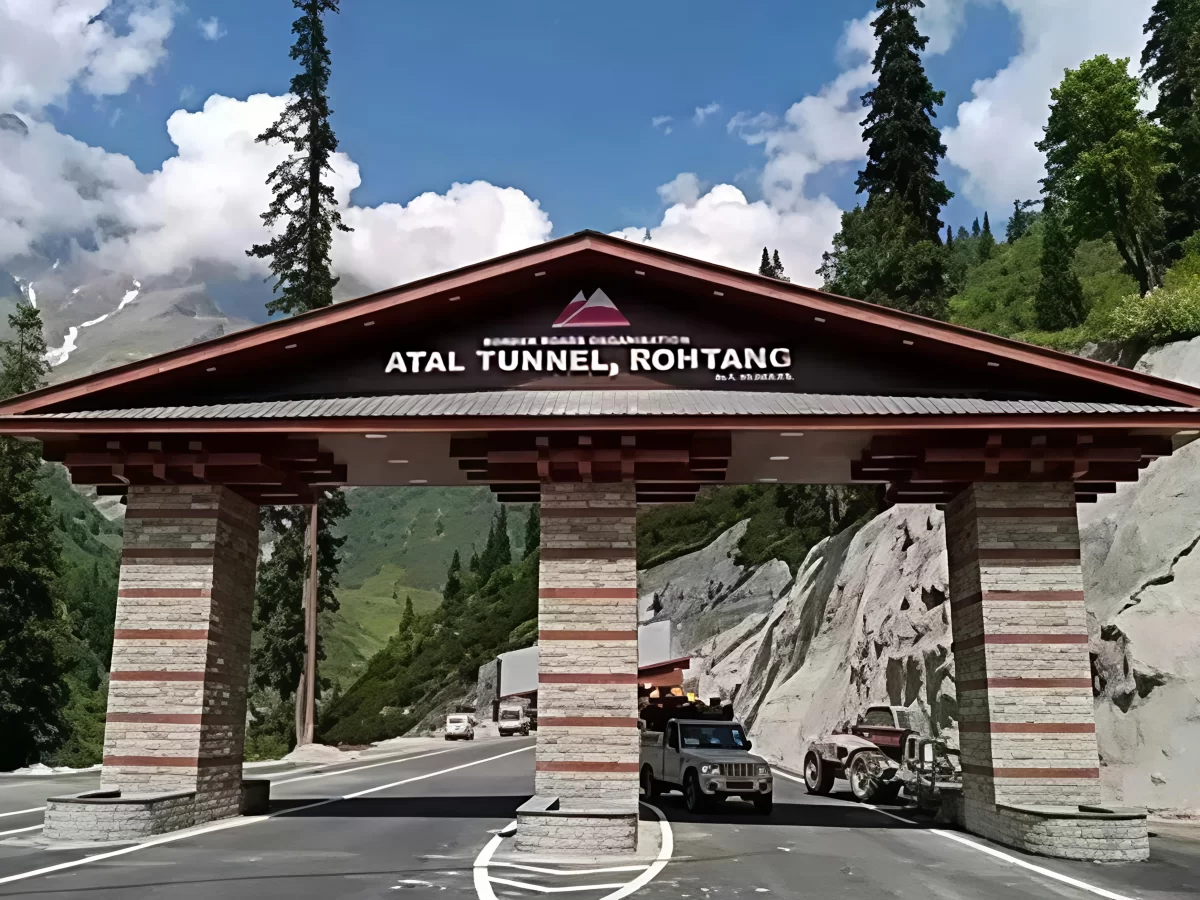
Visitors come to Atal Tunnel to experience one of the world's longest high-altitude road tunnels and to access the Lahaul Valley more conveniently from the Kullu region.
The atmosphere around the tunnel is active and travel-focused, with visitors stopping at designated viewpoints near the north and south portals to enjoy the surrounding mountain scenery.
What makes Atal Tunnel distinct is its year-round connectivity through the Pir Panjal range, significantly reducing travel time between Manali and Lahaul while offering a unique engineering landmark in the Himalayas.
History of Atal Tunnel
Atal Tunnel is a modern engineering project built beneath the Rohtang Pass in Himachal Pradesh to provide all-weather road connectivity between the Kullu Valley and the Lahaul region. The tunnel is named in honor of former Prime Minister Atal Bihari Vajpayee, who announced the project to improve access to the remote Himalayan districts.
Construction of the tunnel began in 2010 and involved overcoming challenging geological and climatic conditions in the Pir Panjal range. Opened to the public in 2020, Atal Tunnel significantly reduced travel time between Manali and Lahaul, becoming one of the world's longest highway tunnels above 3,000 meters and a landmark infrastructure achievement in the Indian Himalayas.
Best Time to Visit Atal Tunnel
Atal Tunnel can be visited throughout the year, but the most favorable period is from May to October when road conditions are generally stable and visitors can comfortably explore both the Manali and Lahaul sides of the tunnel.
- Ideal months: May to October offers the best balance of accessibility, sightseeing opportunities, and pleasant weather in the surrounding valleys.
- Weather conditions during the best season: Roads are usually clear, temperatures are comfortable for travel, and visitors can easily combine the tunnel visit with nearby attractions in Solang Valley, Sissu, and Lahaul.
- Periods to avoid: While the tunnel remains operational year-round, heavy snowfall in winter and occasional adverse weather conditions in the higher Himalayan region can lead to traffic restrictions, delays, or temporary travel advisories on approach roads.
How to Reach Atal Tunnel
- Nearest Airport: Bhuntar Airport (Kullu–Manali Airport), approximately 50 km from the south portal of Atal Tunnel, is the nearest airport. Taxis and private vehicles are the most convenient options for onward travel.
- Nearest Railway Station: Joginder Nagar Railway Station, about 165 km away, is the nearest railway station. Chandigarh Railway Station is often preferred by travelers due to its wider rail connectivity.
- Road Access and Last-Mile Connectivity: Atal Tunnel is located on the Manali–Leh Highway and is directly accessible by road from Manali and Lahaul Valley. Visitors can reach both the South Portal near Dhundi and the North Portal near Sissu by private vehicle, taxi, motorcycle, or bus. The approach roads are fully motorable throughout the year, although temporary traffic restrictions or weather-related advisories may occasionally affect movement during heavy snowfall or maintenance operations.
What to Expect When You Visit Atal Tunnel
- Environment and Surroundings: Atal Tunnel is a modern highway tunnel beneath the Pir Panjal range, connecting Manali with the Lahaul Valley. Visitors can expect dramatic mountain scenery, river valleys, and changing landscapes on either side of the tunnel rather than a traditional sightseeing complex.
- Facilities and Amenities: There are no tourist facilities inside the tunnel itself. Basic amenities, food outlets, parking areas, and rest stops are available at nearby locations around the north and south portals, particularly near Manali and Sissu.
- Accessibility and Movement: The tunnel is fully accessible by road and forms part of a functioning national highway. Visitors generally experience it while driving through, and stopping inside the tunnel is strictly prohibited for safety reasons.
- Visitor Conditions: Traffic volume can be high during weekends, holidays, and peak tourist seasons. Weather-related delays may occur on approach roads during heavy snowfall or adverse conditions, although the tunnel significantly improves year-round connectivity compared to older routes.
Important Visitor Information for Atal Tunnel
- Atal Tunnel experiences heavy traffic during summer holidays, long weekends, snowfall periods in Lahaul Valley, and peak tourist seasons in Manali.
- Early morning hours generally offer smoother traffic flow, while late mornings and afternoons can see congestion near the tunnel entrances and surrounding viewpoints.
- Weather conditions outside the tunnel can change rapidly, especially during winter and snowfall events, which may affect travel beyond the tunnel toward Lahaul and adjoining routes.
- No dress code applies, but visitors stopping at nearby viewpoints should carry suitable clothing for cold and windy conditions, particularly during winter months.
- Stopping, parking, walking, or taking photographs inside the tunnel is prohibited. Drivers should follow traffic regulations, maintain lane discipline, and check road conditions before travelling beyond the tunnel.
Photography and Viewpoints at Atal Tunnel
- The best photography opportunities are found at the North Portal near Sissu and the South Portal near Dhundi, where visitors can capture the tunnel entrances against dramatic Himalayan landscapes.
- Several designated viewpoints around the North Portal offer wide views of the Lahaul Valley, surrounding snow-clad peaks, waterfalls, and the Chandra River valley.
- Morning hours generally provide the clearest mountain visibility, while late afternoon creates favorable lighting on the surrounding slopes and valley scenery.
- Photography inside the tunnel is discouraged for safety reasons, and stopping vehicles within the tunnel is strictly prohibited. Visitors should use designated parking and viewing areas outside the tunnel portals.
- Winter often provides striking snow-covered landscapes around both tunnel approaches, while summer and autumn offer clearer views of the surrounding mountains and valleys.
- Peak tourist seasons can lead to congestion near the popular viewing points, particularly at the North Portal, making early morning visits preferable for unobstructed photographs.
- Drone operations may be restricted because the tunnel is a strategic infrastructure project. Visitors should verify current regulations before using drones in the area.