Gyuto Karmapa Temple, Dharamshala – History, Timings & Visitor Guide

Gyuto Karmapa Temple , Dharamshala
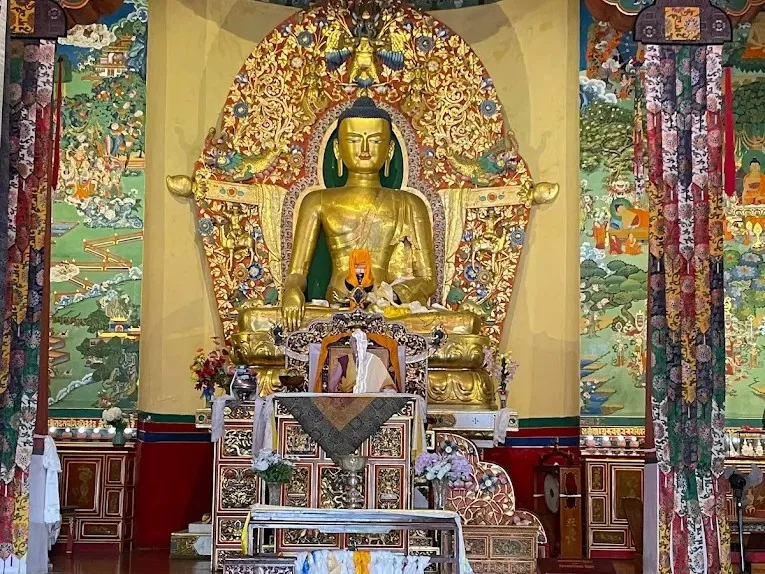
Located near Sidhbari on the outskirts of Dharamshala, Gyuto Karmapa Temple serves as the main seat of the Gyuto Tantric Monastery. The temple is renowned for its impressive architecture, intricate murals, and the large gilded statue of Lord Buddha. It is also a center for advanced tantric studies and traditional Tibetan Buddhist chanting, attracting monks, devotees, and visitors interested in Buddhist philosophy and culture.

Quick Facts About Gyuto Karmapa Temple

Entry Fee Free
Timings 08:00 - 18:00
Altitude (m) 1250
Ideal Visit Duration (hrs) 2
Best Time of Day Morning
Crowd Level Moderate
Distance from Dharamshala (km) 7
Walking Difficulty Easy
Parking Available Yes
Last Mile Access Road
Suitable for Kids Yes
Suitable for Seniors Yes
Wheelchair Friendly No

Why Visit Gyuto Karmapa Temple

Gyuto Karmapa Temple is a place of deep spiritual importance and serene beauty, attracting visitors seeking peace, meditation, and insight into Tibetan Buddhism. As the main seat of the Gyuto Tantric Monastery, it represents a significant center for advanced Buddhist learning and practice in exile.

Atmosphere: The temple offers a calm and contemplative atmosphere, enhanced by the rhythmic sound of monks’ chanting and the gentle movement of prayer flags. The spacious complex, open courtyards, and mountain backdrop create an environment ideal for reflection and quiet observation.

What Makes it Special: What truly sets Gyuto Karmapa Temple apart is its striking golden statue of Lord Buddha, intricate wall murals depicting Buddhist teachings, and the rare opportunity to witness traditional tantric chanting performed by resident monks. The blend of spiritual depth, architectural elegance, and panoramic views makes the temple a meaningful and memorable destination.

History of Gyuto Karmapa Temple

Gyuto Karmapa Temple is closely associated with the Gyuto Tantric Monastery, one of the most important institutions of Vajrayana Buddhism. The monastery was originally founded in Tibet in the 15th century and later re-established in exile in India following the Tibetan diaspora. Dharamshala was chosen as its new base due to its spiritual environment and proximity to the Tibetan community.

The temple serves as the main seat of the Gyuto Monastery and functions as a center for advanced tantric studies, ritual practices, and traditional Tibetan chanting. Over the years, it has played a vital role in preserving and transmitting rare Buddhist teachings and monastic disciplines.

The construction of the present temple complex reflects traditional Tibetan architectural principles combined with modern craftsmanship. Today, it stands as a symbol of continuity, resilience, and spiritual dedication, maintaining its importance as an active monastic institution and a place of learning.

Best Time to Visit Gyuto Karmapa Temple

Gyuto Karmapa Temple can be visited year-round, but the overall experience is best during seasons with pleasant weather and clear surroundings. The temple’s open courtyards, mountain views, and chanting sessions are most enjoyable when temperatures are comfortable and visibility is good.

  • March to June: The most favorable period to visit, with mild temperatures and clear skies. This season is ideal for attending prayer sessions, exploring the temple complex, and enjoying panoramic views of the surrounding hills.
  • July to September: Monsoon months bring lush greenery but also occasional heavy rainfall. While the temple remains open, visitors should be cautious of wet roads and reduced visibility.
  • October to November: One of the best times to visit, offering cool weather, fresh post-monsoon landscapes, and fewer crowds. The atmosphere is calm and well-suited for quiet observation and photography.
  • December to February: Winter months are colder, especially in the mornings and evenings. The temple is less crowded during this time, appealing to visitors seeking a peaceful and introspective experience.
  • Best Time of Day: Morning hours are ideal to witness traditional chanting rituals, while late afternoons offer a quieter setting and softer natural light.

How to Reach Gyuto Karmapa Temple

  • By Air: Kangra Airport (Gaggal) is the nearest airport, located approximately 15 km from Gyuto Karmapa Temple. The airport has regular domestic flights from Delhi. From the airport, taxis are readily available, and the drive to the temple takes about 30–40 minutes.
  • By Train: Pathankot Junction is the nearest major railway station, situated around 85–90 km away. It is well connected to major Indian cities such as Delhi, Amritsar, and Jammu. From Pathankot, visitors can hire a taxi or take a bus to Dharamshala, followed by local transport to the temple.
  • By Road: Dharamshala is well connected by road to cities like Delhi, Chandigarh, and Shimla. Regular buses operated by HRTC and private operators run to Dharamshala. Gyuto Karmapa Temple is located near Sidhbari, about 7 km from Dharamshala city centre, and is easily reachable by taxi or private vehicle.
  • Local Access: The temple is located along the Dharamshala–Palampur road. The approach road is well-maintained, and the temple complex is accessible with minimal walking from the parking area.

What to Expect When You Visit Gyuto Karmapa Temple

  • Serene Spiritual Environment: Visitors can expect a calm and contemplative atmosphere, with the deep rhythmic chanting of monks creating a powerful spiritual presence throughout the temple complex.
  • Impressive Golden Buddha Statue: One of the main highlights is the large gilded statue of Lord Buddha, which serves as the focal point of the temple and reflects fine Tibetan craftsmanship and devotion.
  • Traditional Tibetan Art: The temple walls are adorned with intricate murals and symbolic artwork depicting Buddhist teachings, deities, and mandalas, offering insight into Tibetan spiritual traditions.
  • Quiet Exploration: The spacious layout allows visitors to walk calmly through courtyards and prayer halls. Silence and respectful behavior are expected, especially during prayer sessions.
  • Panoramic Views: The elevated location provides pleasant views of the surrounding hills and valleys, adding to the overall sense of peace and reflection.

Important Visitor Information

  • Crowd & Weather Notes: Gyuto Karmapa Temple generally experiences low to moderate crowds. Visitor numbers may increase during prayer hours, weekends, and important Buddhist festivals. Weather is pleasant from spring to autumn, while monsoon months may bring rain and mist, and winters can be cold, especially in the mornings.
  • Peak / Quiet Hours: Peak hours are usually during morning and evening chanting sessions when monks gather for prayers. Quiet hours are late mornings and mid-afternoons, which are ideal for peaceful exploration and meditation.
  • Dress Code: Modest and respectful clothing is recommended, as the temple is an active monastic site. Visitors should wear clothes that cover shoulders and knees. Footwear must be removed before entering prayer halls.
  • Safety Notes: The temple complex is safe and well-maintained. Visitors should walk carefully on steps and stone floors, especially during rainy weather. Silence and respectful conduct are expected at all times within the monastery premises.

Photography and Viewpoint

  • Architectural Photography: Gyuto Karmapa Temple offers excellent opportunities to capture Tibetan Buddhist architecture, including the ornate prayer hall, colorful murals, and the impressive golden statue of Lord Buddha. The symmetry and detailing of the structure make it ideal for wide-angle shots.
  • Spiritual Moments: Visitors may photograph monks during chanting sessions from a respectful distance. These moments provide powerful visual storytelling, though discretion and silence should always be maintained.
  • Scenic Mountain Views: The temple’s elevated location near Sidhbari provides panoramic views of the surrounding hills and valleys. Clear days offer especially striking backgrounds for landscape photography.
  • Best Time for Photography: Early morning and late afternoon are ideal, offering soft natural light and fewer visitors. Morning light highlights the golden statue beautifully, while evenings create a peaceful ambiance.
  • Photography Guidelines: Photography is generally allowed in outdoor areas and common spaces. Flash photography and filming inside prayer halls may be restricted during rituals, and visitors should always follow on-site instructions.

Near By Attraction

Masroor Rock-Cut Temple near Dharamshala featuring ancient monolithic stone temples carved from rock, reflected in a green water tank with clear blue sky above. Historical Site

Masroor Rock-cut Temple

The Masroor Rock-cut Temple is a stunning ancient temple complex carved directly into rock, located in the Kangra Valley of Himachal Pradesh.

Kangra Art Museum in Dharamshala featuring a grand yellow and maroon building with wide red staircases, decorative emblem at the entrance, and snow-capped Dhauladhar mountains in the background. Museum

Kangra Art Museum

The Kangra Art Museum is a vibrant cultural space in Dharamshala dedicated to preserving and showcasing the unique art and heritage of the Kangra Valley.

The Tibet Museum in Dharamshala featuring a grand Tibetan-style building with golden rooftops, red facade, wide staircase lined with flowers, and visitors at the entrance under a blue sky. Museum

The Tibet Museum

The Tibet Museum in Dharamshala offers a deep insight into the rich cultural heritage and history of Tibet through captivating exhibits and displays.

Frequently Asked Questions About Gyuto Karmapa Temple

The best time to visit Gyuto Karmapa Temple, Dharamshala is from March to June when the weather is pleasant and skies are clear. Autumn also offers comfortable conditions for travel in Dharamshala Himachal Pradesh.
Gyuto Karmapa Temple, Dharamshala is generally open from morning until early evening. Timings may vary during special ceremonies in Dharamshala Himachal Pradesh so checking locally is advisable.
There is no entry fee for Gyuto Karmapa Temple, Dharamshala for regular visitors. Donations are voluntary and can be offered inside the monastery complex.
Gyuto Karmapa Temple, Dharamshala is located near Sidhbari about 8 kilometers from McLeod Ganj. Visitors can reach by taxi private vehicle or local bus within Dharamshala Himachal Pradesh.
Most visitors spend around 45 minutes to one hour at Gyuto Karmapa Temple, Dharamshala. Extra time may be needed if attending prayer sessions or exploring the surrounding grounds.
Photography is generally allowed in the outer areas of Gyuto Karmapa Temple, Dharamshala. Inside prayer halls photography may be restricted so visitors should follow displayed guidelines.
Visitors should wear modest and respectful clothing at Gyuto Karmapa Temple, Dharamshala. Comfortable footwear is recommended as shoes must be removed before entering prayer areas.
Parking is available near Gyuto Karmapa Temple, Dharamshala with adequate space for private vehicles. During peak tourist season in Dharamshala Himachal Pradesh availability may vary.
Gyuto Karmapa Temple, Dharamshala can be visited during winter though temperatures in Dharamshala Himachal Pradesh can drop significantly. Warm clothing is necessary between December and February.
Gyuto Karmapa Temple, Dharamshala can be combined with visits to Norbulingka Institute and Dalai Lama Temple. These attractions are within short driving distance in Dharamshala Himachal Pradesh.

Loved this place ? Let’s Plan Your Himachal Pradesh Trip

Get customized Himachal Pradesh tour planning designed around season, road conditions, hill travel pacing, and comfort preferences. Whether you are visiting for snow experiences, mountain landscapes, temple towns, adventure activities, or relaxed valley s

⚡ Quick Response | 💰 Free consultation | 🕒 24×7 expert support

×

Plan Your Trip