Bethu Ki Ladi Temple in Dharamshala, Himachal Pradesh, India

Bathu ki Ladi Temple , Dharamshala
The temple is visited by devotees and travelers seeking a quiet spiritual experience away from the busier tourist areas of Dharamshala. It offers a calm atmosphere with views of the surrounding landscape and reflects the region\'s local religious traditions.

Quick Facts About Bathu ki Ladi Temple

Bethu Ki Ladi Temple Dharamshala Quick Facts

Entry Fee No entry fee
Timings Generally open daily from early morning to evening; exact opening and closing times may vary during festivals and local religious events.
Altitude (m) Approximately 1,450 m above sea level
Ideal Visit Duration 30–60 minutes
Best Time of Day Morning or late afternoon for pleasant weather and a quieter temple atmosphere
Crowd Level Usually low to moderate; higher during religious festivals and weekends
Distance from City Centre (km) Approximately 3 km from Dharamshala town centre
Walking Difficulty Easy; short walk with a few steps near the temple entrance
Parking Available Limited roadside parking is available nearby
Last Mile Access Accessible by road, followed by a short walk to the temple
Suitable for Kids Yes
Suitable for Seniors Yes, although a few steps may require assistance for visitors with limited mobility
Wheelchair Friendly No; steps and uneven access may limit wheelchair entry

Why Visit Bathu Ki Ladi Temple Dharamshala

Visitors come to Bathu Ki Ladi Temple to see a rare temple cluster inside the Pong Dam reservoir area, accessible mainly when the water level drops in summer.

The on-ground atmosphere is quiet, open, and seasonal, with reservoir views, exposed stone structures, and limited facilities, so visitors should plan transport and timing carefully.

What makes Bathu Ki Ladi Temple distinct is its changing access; the site remains submerged for much of the year and appears only during low-water months.

History of Bethu Ki Ladi Temple Dharamshala

Bethu Ki Ladi Temple, commonly referred to as Bathu Ki Ladi, is an ancient cluster of stone temples in Kangra district, often visited from Dharamshala as a day trip. Local traditions connect the temples with the Pandavas, while other accounts associate their construction with early medieval Himachal temple architecture.

The temple cluster became especially distinct after the creation of the Pong Dam reservoir, also known as Maharana Pratap Sagar. Since then, the temples remain submerged for much of the year and become accessible mainly when the reservoir water level drops.

For visitors, the historical interest lies in seeing a surviving temple complex that stands within a changing reservoir landscape. The site is valued for its stone-built shrine remains, seasonal visibility, and its unusual setting near Jawali in the wider Kangra region.

Best Time to Visit Bethu Ki Ladi Temple Dharamshala

The most comfortable time to visit Bethu Ki Ladi Temple is from March to June and September to November, when the weather is generally pleasant for reaching the temple and exploring the surrounding area. Winter visits are possible, while the peak monsoon season may make travel less convenient due to heavy rainfall in the region.
  • Ideal Months: March to June and September to November.
  • Weather During the Best Season: Mild to pleasant temperatures with clearer skies, making temple visits and short walks around the site more comfortable.
  • Monsoon Considerations: July and August often receive heavy rainfall in the Dharamshala region, which can make roads slippery and outdoor visits less enjoyable.
  • Winter Visits: December to February offers a quieter atmosphere, but mornings and evenings can be cold, so warm clothing is recommended.
  • Best Time of Day: Visit during the morning or late afternoon for comfortable temperatures and a peaceful temple environment.

How to Reach Bethu Ki Ladi Temple Dharamshala

  • Nearest airport: Kangra Airport at Gaggal is the closest airport, located around 55–65 km from the temple area, depending on the access route.
  • Nearest railway station: Pathankot Railway Station is the main railhead for long-distance trains, while smaller stations near Kangra Valley may help for local connectivity.
  • Road access: Visitors usually travel by road from Dharamshala toward the Pong Dam lake region, with the final approach depending on seasonal water levels and local route conditions.
  • Last-mile connectivity: Local taxis or private vehicles are the most practical option, as direct public transport to the temple site is limited.
  • Travel limitation: Bethu Ki Ladi Temple is accessible mainly when Pong Dam water levels are low, usually outside the monsoon period, so visitors should confirm local access before planning the trip.

What to Expect When You Visit Bethu Ki Ladi Temple Dharamshala

  • Environment: Bethu Ki Ladi Temple is located near the Pong Dam reservoir area, away from central Dharamshala, with open water views, exposed stone temple structures, and a quiet rural setting.
  • Seasonal access: The temple remains partly or fully submerged when the reservoir water level is high, so visibility and access depend strongly on seasonal water conditions.
  • Facilities: Do not expect developed tourist facilities, large food stalls, washrooms, ticket counters, or guided visitor infrastructure at the site.
  • Accessibility: Visitors usually need a private vehicle or local taxi for road access, followed by short walking on uneven ground depending on the water level and approach route.
  • Movement: The temple area may involve rough surfaces, loose stones, muddy patches, or slippery sections, especially near the reservoir edge.
  • Visitor conditions: Crowds are usually limited compared to major Dharamshala attractions, but local visitors may come during low-water months and weekends.
  • Typical experience: Most visitors come for photography, quiet exploration, reservoir views, and to see the unusual partially submerged temple setting.
  • Limitations: There may be no fixed staff, formal safety barriers, or clear signage, so visitors should avoid entering unsafe water-facing areas.

Important Visitor Information for Bethu Ki Ladi Temple Dharamshala

  • Seasonal access: Bethu Ki Ladi Temple is usually visible when Pong Dam water levels fall, mainly from March to June; outside this period, the temple complex may remain partly or fully submerged.
  • Crowd conditions: Visitor movement is highest during the summer visibility period, especially on weekends and local holiday periods.
  • Quiet visiting hours: Early morning is generally calmer and more comfortable for walking around the exposed temple area before heat increases.
  • Weather note: The exposed reservoir surroundings can feel hot and open in late spring and early summer, with limited shade near the temple structures.
  • Dress code: Modest clothing is advisable because the site is a Hindu temple complex dedicated mainly to Lord Shiva and Goddess Parvati.
  • Safety caution: Avoid stepping into wet, slippery, or partially submerged sections, as water levels and ground conditions can change around the reservoir.
  • Practical caution: Carry drinking water and basic sun protection, as tourist facilities near the temple are limited compared with central Dharamshala attractions.

Photography and Viewpoints at Bethu Ki Ladi Temple Dharamshala

  • Temple cluster view: The best photographs are from the open reservoir side, where the stone temples appear in a line against the wide Pong Dam water spread.
  • Low-water season: Photography is most practical from March to June, when the temple complex is usually visible and accessible after the water level drops.
  • Morning light: Early morning gives softer light on the stone structures and fewer visitors, making it easier to photograph the temple without crowding.
  • Evening frames: Late afternoon light can work well for wide shots of the temple, reservoir, and open landscape, but return access should be planned before dark.
  • Reflection shots: When shallow water remains around the complex, visitors may get clear reflection angles, especially from the lower open edges near the temple approach.
  • Access caution: The ground around the exposed temple area can be uneven, muddy, or slippery depending on the reservoir level, which affects tripod use and movement.
  • Photography restrictions: There are no widely published tourist photography restrictions for the outer temple area, but visitors should avoid intrusive photography during worship or local rituals.

Near By Attraction

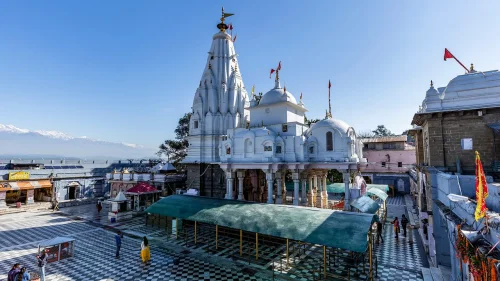
Brajeshwari Devi Temple featuring a prominent white shikhara tower, domed secondary structures, a checkered courtyard, and snow-capped mountains under a clear blue sky. Temple

Brajeshwari Devi Temple

Brajeshwari Devi Temple is a prominent Hindu temple dedicated to Goddess Brajeshwari, located in Kangra near Dharamshala in Himachal Pradesh.
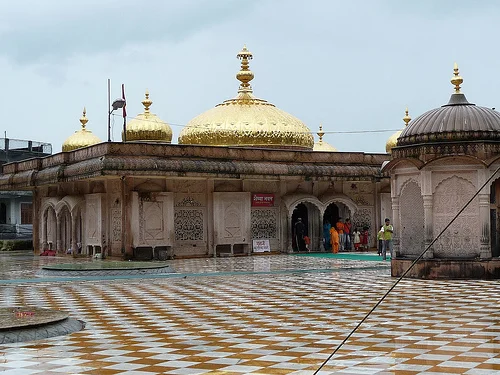
Jwala Ji Temple featuring distinct golden domes, intricate white marble facades, arched entryways, and a glossy checkered courtyard floor under an overcast sky. Temple

Jwala Ji Temple

Jwala Ji (Jwalamukhi) Temple is a revered Hindu temple dedicated to Goddess Jwalamukhi, located in Kangra district of Himachal Pradesh and recognized as one of the important Shakti Peethas in India.
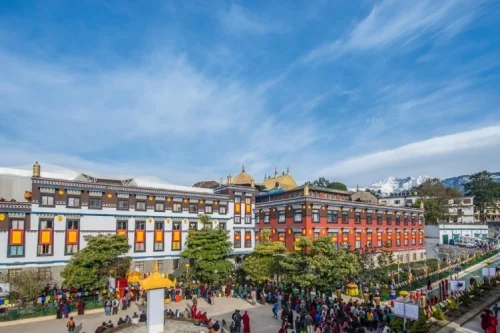
Baglamukhi, Deshu, Baijnath temples, Dharamshala, Langza, Hikkim, and Sherabling Monastery showcase Himachal Pradesh's rich heritage. Monastery

Sherabling Monastery

Sherabling Monastery is a Tibetan Buddhist monastery situated in the Bhattu area of Kangra district, Himachal Pradesh, and serves as the seat of the Tai Situpa lineage of the Kagyu school of Buddhism.

Frequently Asked Questions About Bathu ki Ladi Temple

This temple is a peaceful religious destination that attracts devotees as well as travellers interested in local culture and heritage. Visitors can enjoy the spiritual atmosphere, admire the traditional architecture, offer prayers, and spend time exploring the surrounding area at a relaxed pace.
The best time to visit is during the morning when the temple is generally quieter and the weather is pleasant. Visiting outside major festivals also helps avoid large crowds and provides a more comfortable and peaceful experience.
Most visitors spend around one to two hours at the temple. This allows enough time for darshan, observing the architecture, taking permitted photographs, and exploring the surrounding area without feeling rushed.
There is generally no entry fee for visiting the temple. Devotees may make voluntary donations or purchase offerings, but there is normally no compulsory admission charge for entering the premises.
Parking is usually available close to the temple, although spaces may become limited during weekends and religious festivals. Arriving earlier in the day makes finding a convenient parking space much easier.
The temple is well connected by road and can be reached using buses, taxis, or private vehicles. The final approach is straightforward, making it convenient for visitors planning either a short stop or a dedicated pilgrimage.
Yes the temple is suitable for families, children, and most senior citizens because access is relatively easy. During busy festivals visitors should allow extra time and move carefully through crowded areas.
Some areas may be accessible, but steps and uneven surfaces can make movement difficult for wheelchair users. Travelling with a companion is recommended if mobility assistance is required.
Photography is generally permitted in outdoor areas while restrictions may apply inside the main shrine or during religious ceremonies. Visitors should always follow instructions provided by the temple authorities.
Comfortable footwear, drinking water, modest clothing, sun protection, and some cash for offerings or small purchases are useful items that help make the visit more comfortable and convenient.
Visitors should avoid wearing inappropriate clothing, making excessive noise, ignoring local customs, entering restricted areas, or taking photographs where they are not permitted to ensure a respectful and enjoyable visit.

Loved this place ? Let’s Plan Your Himachal Pradesh Trip

Get customized Himachal Pradesh tour planning designed around season, road conditions, hill travel pacing, and comfort preferences. Whether you are visiting for snow experiences, mountain landscapes, temple towns, adventure activities, or relaxed valley s

⚑ Quick Response | πŸ’° Free consultation | πŸ•’ 24Γ—7 expert support

×

Plan Your Trip

