Gangeshwar Temple, Diu, Gujarat, India

Gangeshwar Temple , Diu
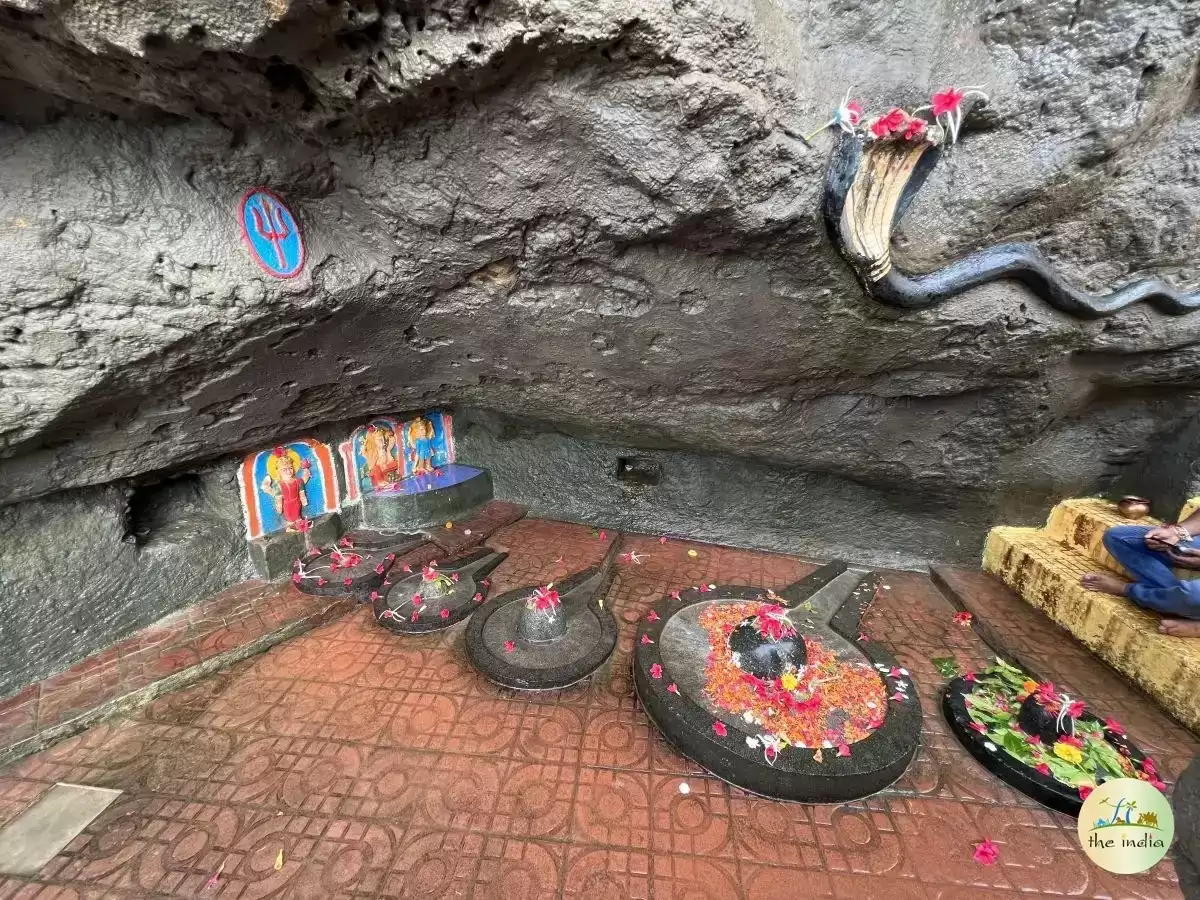
Tourists visit the temple to see the five large Shiva lingas placed along the seashore, enjoy the coastal views, and experience the temple’s spiritual and cultural significance. It is a unique site combining religious devotion with scenic beauty.

Quick Facts About Gangeshwar Temple

Quick Facts About Gangeshwar Temple, Diu

Entry Fee Free
Timings Open daily (usually 6:00 AM – 8:00 PM)
Altitude (m) Approx. 5 m (sea level)
Ideal Visit Duration 30 minutes – 1 hour
Best Time of Day Morning or late afternoon
Crowd Level Low to Moderate (busier during festivals)
Distance from City Centre (km) Approx. 5 km from Diu city centre
Walking Difficulty Easy (short walk within temple premises)
Parking Available Limited parking near the temple
Last Mile Access Auto-rickshaw, taxi, or private vehicle access available
Suitable for Kids Yes (safe for family visits)
Suitable for Seniors Yes (easy walking, seating available)
Wheelchair Friendly Partially (main area accessible; some steps may be present)

Why Visit Gangeshwar Temple, Diu

Gangeshwar Temple in Diu is an ancient Hindu shrine attracting visitors for its religious significance and scenic coastal location. Tourists come here to offer prayers to Lord Shiva, witness the unique setting of the temple on the rocky shore, and experience a tranquil spiritual environment. It is a key destination for devotees and travelers exploring Diu’s cultural heritage.

The atmosphere at Gangeshwar Temple is serene and contemplative, with the sound of waves, temple bells, and chants creating a spiritually immersive environment. Visitors can explore the temple complex, walk along the rocky shoreline, and enjoy the calming effect of the sea. Early mornings and evenings are particularly peaceful, offering a reflective setting for worship and photography.

What makes Gangeshwar Temple special is its unique combination of coastal beauty and religious significance. The temple’s rock-cut Shiva lingas, along with its location overlooking the Arabian Sea, provide travelers with a distinctive spiritual and scenic experience. For visitors, it is both a culturally enriching and visually striking destination in Diu.

History of Gangeshwar Temple, Diu

Gangeshwar Temple in Diu, a union territory of India, is an ancient Hindu temple dedicated to Lord Shiva. The temple is historically significant and is believed to have been established several centuries ago by local devotees, reflecting the island’s longstanding Shaivite traditions.

The temple is particularly famous for its five large Shiva lingas situated along the seashore, which are naturally carved from stone. These lingas and the coastal setting highlight the integration of natural features into religious worship practices in the region.

Today, Gangeshwar Temple is a major spiritual and heritage landmark in Diu. Pilgrims and tourists visit to offer prayers, observe the unique coastal lingas, and experience the temple’s religious and historical significance within the island’s cultural landscape.

Best Time to Visit Gangeshwar Temple, Diu

Gangeshwar Temple in Diu is best visited during the cooler months when the weather is pleasant for exploring the temple, walking along the seafront, and enjoying the coastal surroundings. Comfortable conditions make sightseeing, photography, and temple visits more enjoyable.
  • Ideal Months: October to February (best for temple visits, beach walks, and heritage exploration).
  • Weather During Best Season: Mild daytime temperatures with gentle sea breezes, ideal for exploring the temple premises, nearby Shiva lingas, and the coastal viewpoints.
  • Periods to Avoid: April to June due to intense summer heat, which can make outdoor visits tiring, and July to September during monsoon when heavy rains may affect accessibility and coastal safety.

How to Reach Gangeshwar Temple, Diu

  • Nearest Airport: The nearest airport is Diu Airport, located around 8–10 km from Gangeshwar Temple. From the airport, tourists can hire a taxi or auto-rickshaw via local roads to reach the temple.
  • Nearest Railway Station: Diu does not have a railway station. The nearest major railway station is Veraval Railway Station, approximately 85–90 km away. From Veraval, tourists can hire a taxi or take a bus to reach Diu.
  • Road Access & Last-Mile Connectivity: Gangeshwar Temple is located along the coastal road in Diu town and is accessible via well-maintained local roads. Private vehicles, taxis, and auto-rickshaws provide smooth last-mile connectivity. Short walking may be required from parking areas to the temple.
  • Travel Conditions to Note: The temple area can get crowded during weekends, festivals, and tourist peak season. Parking is available nearby but may be limited during peak hours. Early morning visits are recommended for a peaceful experience. Roads are generally in good condition, and mobile connectivity is stable.

What to Expect When You Visit Gangeshwar Temple, Diu

  • Coastal Shiva temple environment: Expect a historic temple located near the sea, with five large Shiva lingams set on the rocks along the shoreline, offering a unique spiritual and scenic setting.
  • Peaceful and devotional atmosphere: The temple is generally calm, with devotees performing rituals, prayers, and aarti. The sound of waves adds to the serene experience.
  • Walking and terrain considerations: Access involves walking along rocky coastal areas and uneven steps. Visitors should wear comfortable footwear and exercise caution near wet or slippery rocks.
  • Limited facilities: Amenities are basic, including small shaded areas and benches. Restrooms and food stalls are limited or available only outside the temple complex.
  • Photography opportunities: The temple’s coastal location and the arrangement of Shiva lingams provide excellent photography spots, particularly during sunrise or sunset.
  • Accessibility considerations: Uneven rocks and coastal steps may pose challenges for seniors, children, or wheelchair users.
  • Visitor behavior: Quiet and respectful conduct is expected. Visitors usually come for darshan, photography, or enjoying the unique coastal setting.
  • Crowd conditions: The temple experiences higher footfall during festivals like Maha Shivratri and on weekends, while weekdays are generally quieter.
  • Weather impact: The temple is exposed to sun and wind. Summers can be hot, and monsoon season may make rocks slippery and waves rough. Early morning or late afternoon visits are ideal.
  • Visit duration: Most visitors spend 30 minutes to 1 hour exploring the temple, taking photographs, and observing the coastal surroundings.

Important Visitor Information for Gangeshwar Temple, Diu

  • Crowd & Weather Notes: Gangeshwar Temple is a popular coastal Shiva temple in Diu, attracting devotees, tourists, and local visitors. Winter months (October to February) are the most comfortable for visiting. Summers can be hot and humid, and monsoon rains may make the rocky coastal area around the temple slippery.
  • Peak Visiting Hours: The temple is busiest during morning and evening darshan hours (6:00 AM to 10:00 AM and 5:00 PM to 7:00 PM), especially on weekends, public holidays, and during Mahashivratri or other festival days.
  • Quiet Visiting Hours: Mid-mornings on weekdays and early afternoons are generally quieter, ideal for peaceful darshan, photography, and enjoying the coastal scenery without heavy crowds.
  • Dress Code (If Applicable): Modest clothing is recommended. Visitors should cover shoulders and knees. Footwear must be removed before entering temple premises.
  • Safety & Practical Cautions: Exercise caution on rocky surfaces near the shoreline, especially during high tide or after rain. Supervise children closely. Photography is allowed in most areas but avoid disturbing devotees during rituals. Carry water and sun protection during summer visits.

Photography and Viewpoints at Gangeshwar Temple, Diu

  • Best viewpoint for the temple exterior: The main entrance and surrounding coastal area provide a clear view of Gangeshwar Temple, capturing the Shiva lingams along the seashore and the temple structure in a wide-angle frame.
  • Most photogenic spot: The western side along the shoreline allows photographers to frame the temple with the Arabian Sea in the background, adding depth and scenic contrast.
  • Best time of day for natural lighting: Early morning (6 AM to 9 AM) provides soft, diffused sunlight and calmer sea waves, ideal for serene landscape and temple shots.
  • Golden hour advantage: Late afternoon to sunset (4:30 PM to 6:30 PM) casts warm light on the temple, lingams, and coastline, producing dramatic and visually striking photographs.
  • Midday lighting conditions: Between 11 AM and 3 PM, harsh sunlight can create glare on the sea and flatten details on the temple stone surfaces, making morning or late afternoon preferable.
  • Best photography subjects: Shiva lingams along the shoreline, temple façade, coastal rocks, waves, and reflections on wet sand are ideal for wide-angle and close-up shots.
  • Crowd factors affecting photography: The temple can be busier during weekends, local festivals, and religious ceremonies, which may limit unobstructed frames along the shore and temple entrances.
  • Best crowd-free photography window: Weekday mornings are ideal for capturing the temple, lingams, and seashore without visitors in the frame.
  • Photography restrictions: Visitors should respect religious practices and avoid using flash near the lingams or during rituals. Stepping on wet or slippery rocks should be avoided for safety.
  • Drone and professional shoot rules: Drone photography and commercial filming require prior permission from local authorities to ensure safety, heritage protection, and minimal disturbance to visitors and worshippers.

Near By Attraction

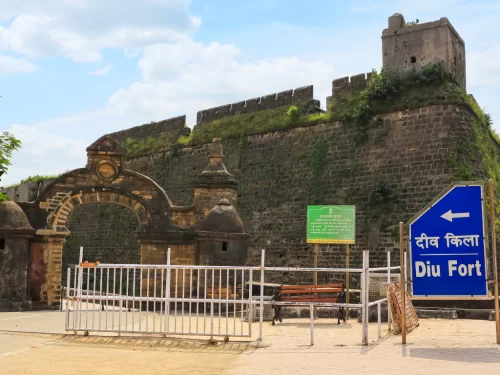
Heritage entrance at Diu Fort during daylight, featuring ancient bastions and Hindi signboard, perfect adventure Diu tour package. Fort

Diu Fort

Diu Fort is a historic Portuguese-built fort located on the coast of Diu, Gujarat.

Panikota Fort, historic sea fort in Jamnagar Gujarat, island fortress and heritage tourist attraction in India. Fort

Panikota Fort

Panikota Fort is a historic coastal fort located near Diu town in Gujarat.

INS Khukri Memorial Diu, naval war memorial honoring Indian Navy heroes, coastal tribute site and tourist attraction. Memorial

INS Khukri Memorial

INS Khukri Memorial is a naval memorial located in Diu, Gujarat, commemorating the crew of the Indian Navy ship INS Khukri lost in 1971.

Frequently Asked Questions About Gangeshwar Temple

Gangeshwar Temple is located near Fudam village on Diu Island along the Arabian Sea coast in Gujarat. It is situated a short drive from Diu town.
Gangeshwar Temple is dedicated to Lord Shiva and is known for five Shiva lingams placed on coastal rocks. The temple is closely associated with local religious traditions.
Gangeshwar Temple is generally open throughout the day as it is an open coastal shrine. Visitors usually come during daylight hours.
There is no entry fee to visit Gangeshwar Temple. Visitors can access the temple area without charge.
A visit to Gangeshwar Temple typically takes around 30 minutes to 1 hour. The duration depends on prayer time and time spent near the shoreline.
Gangeshwar Temple can be reached by taxi, auto-rickshaw, or private vehicle from Diu town. The approach road is paved and accessible.
Gangeshwar Temple remains accessible during most times, but high tide can partially submerge the Shiva lingams. Visitors should check tide timings for a clearer view.
Photography is allowed at Gangeshwar Temple as it is an open site. Visitors should maintain respect for religious practices while taking photos.
The best time to visit Gangeshwar Temple is from October to March when the weather remains comfortable. Visiting during low tide provides better visibility of the lingams.
Basic facilities such as parking and small local stalls are available near Gangeshwar Temple. Additional amenities can be found in Diu town.

Loved this place ? Let’s Plan Your Gujarat Trip

Get customized Gujarat tour planning designed around seasonal climate conditions, long-distance road travel flow, festival timing, and realistic pacing across regions. Whether you are visiting for heritage sites, desert experiences, coastal retreats, wild

⚡ Quick Response | 💰 Free consultation | 🕒 24×7 expert support

×

Plan Your Trip