Quick Facts About Diu Fort
Quick Facts About Diu Fort
| Entry Fee | Free |
|---|---|
| Timings | Open daily (sunrise to sunset; best visited during daylight hours) |
| Altitude (m) | Approx. 5 m (sea level) |
| Ideal Visit Duration | 1 – 2 hours |
| Best Time of Day | Morning or late afternoon |
| Crowd Level | Moderate (busier on weekends and holidays) |
| Distance from City Centre (km) | Located within Diu city |
| Walking Difficulty | Moderate (some climbing and uneven pathways) |
| Parking Available | Limited parking near fort entrance |
| Last Mile Access | Private vehicle, taxi, or auto-rickshaw access available |
| Suitable for Kids | Yes (supervised visits recommended due to steps and elevated areas) |
| Suitable for Seniors | Limited (uneven paths and steps may be challenging) |
| Wheelchair Friendly | No (steep steps and uneven terrain) |
Why Visit Diu Fort, Diu
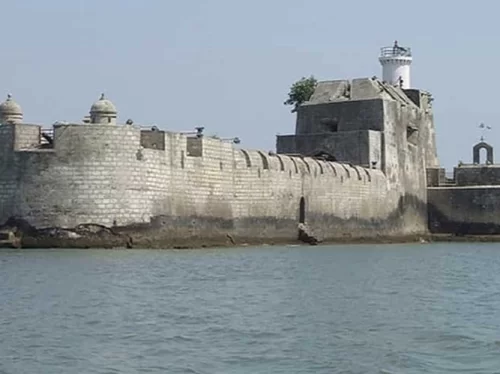
Diu Fort is a massive 16th-century Portuguese sea fort attracting visitors interested in history, architecture, and coastal defense structures. Tourists come here to explore its bastions, old cannons, double moat, and lighthouse, as well as to learn about the fort’s role in maritime security and colonial history. It is one of Diu’s most iconic heritage landmarks.
The atmosphere at Diu Fort is both historic and scenic, with panoramic views of the Arabian Sea and surrounding coastline. Visitors can walk along the fort walls, explore the bastions, and enjoy the coastal breeze while photographing the architecture. The expansive grounds provide a peaceful yet engaging environment for exploration.
What makes Diu Fort special is its blend of Portuguese architecture, coastal strategic importance, and panoramic seaside views. The fort’s imposing structure and well-preserved features offer travelers a tangible connection to Diu’s colonial past. For visitors, it provides a combination of history, culture, and scenic beauty in one destination.
History of Diu Fort, Diu
Diu Fort, located on the island of Diu in India, is a historic fort built by the Portuguese in the early 16th century. Constructed to protect Portuguese trade routes and settlements, the fort played a key role in controlling maritime access along the Arabian Sea and defending the island against regional and foreign invasions.
The fort features massive stone walls, bastions, and watchtowers, showcasing typical Portuguese military architecture. Over the centuries, it served as both a defensive stronghold and an administrative center, reflecting the strategic and colonial importance of Diu during Portuguese rule.
Today, Diu Fort is a major historical and cultural landmark. Visitors explore its expansive ramparts, coastal views, and preserved structures, gaining insight into the island’s colonial past and maritime heritage, making it one of Diu’s most significant tourist attractions.
Best Time to Visit Diu Fort
Diu Fort is best visited during the cooler months when the weather is comfortable for exploring the fort’s ramparts, bastions, and sea-facing viewpoints. Pleasant conditions enhance sightseeing, photography, and walking along the historic fort without discomfort from heat or humidity.
- Ideal Months: October to February (best for heritage exploration, photography, and walking around the fort).
- Weather During Best Season: Mild temperatures with gentle sea breezes, making it ideal for exploring the fort, enjoying panoramic views, and capturing scenic photographs comfortably.
- Periods to Avoid: April to June due to intense summer heat, which can make walking and outdoor exploration tiring, and July to September during monsoon when heavy rains may affect accessibility and safety.
How to Reach Diu Fort, Diu
- Nearest Airport: The nearest airport is Diu Airport, located around 5–6 km from Diu Fort. From the airport, tourists can hire a taxi or auto-rickshaw via local roads to reach the fort.
- Nearest Railway Station: Diu does not have a railway station. The nearest major railway station is Veraval Railway Station, approximately 85–90 km away. From Veraval, tourists can hire a taxi or take a bus to reach Diu.
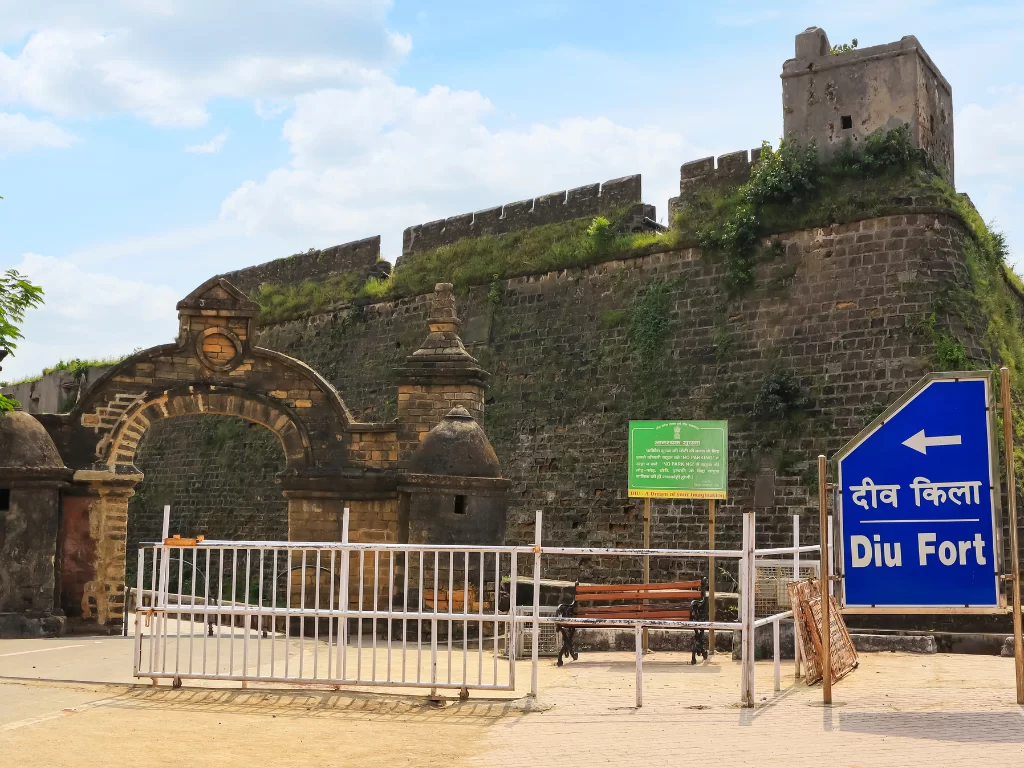
- Road Access & Last-Mile Connectivity: Diu Fort is located along the coastal area in Diu town and is accessible via well-maintained local roads. Private vehicles, taxis, and auto-rickshaws provide smooth last-mile connectivity. Walking from nearby parking areas is required to enter the fort premises.
- Travel Conditions to Note: The fort can get crowded during weekends, public holidays, and peak tourist seasons. Early morning visits are recommended for a serene experience and better photography. Roads are generally in good condition, and mobile connectivity is stable within Diu town.
What to Expect When You Visit Diu Fort
- Historic Portuguese coastal fort: Expect a sprawling fort built in the 16th century, featuring massive stone walls, bastions, gates, and a commanding view of the Arabian Sea.
- Scenic and open environment: The fort offers panoramic sea views, landscaped courtyards, and open terraces perfect for photography, relaxation, and leisurely walks.
- Walking and exploration: Exploring the fort involves walking along ramparts, stairways, and cobbled pathways. Comfortable footwear is recommended due to uneven stone surfaces.
- Facilities and amenities: Basic amenities include benches, shaded areas, and small refreshment kiosks. Restrooms are available, but larger dining options are found outside the fort complex.
- Photography opportunities: Excellent for wide-angle shots of the fort architecture, sea vistas, and sunsets. Early morning or late afternoon lighting is ideal.
- Accessibility considerations: Some sections include steps, uneven surfaces, and narrow passages, which may challenge seniors, children, or wheelchair users.
- Visitor behavior: Most visitors come for sightseeing, photography, and historical exploration. Respectful conduct is expected, especially near preserved sections and cannons.
- Crowd conditions: The fort can get moderately busy during weekends, holidays, and school trips. Weekdays are generally quieter for a more relaxed visit.
- Weather impact: Summers can be hot, and monsoon season may make pathways slippery. Morning or late afternoon visits are preferable for comfort and photography.
- Visit duration: Most tourists spend 1 to 2 hours exploring the fort, walking the ramparts, taking photographs, and enjoying the coastal views.
Important Visitor Information for Diu Fort, Diu
- Crowd & Weather Notes: Diu Fort is one of the most visited heritage sites on the island, attracting tourists, history enthusiasts, and photographers year-round. Winter months (October to February) are the most comfortable for exploring. Summers can be hot and humid, while monsoon rains may make outdoor walkways and ramparts slippery.
- Peak Visiting Hours: The fort is busiest during late morning to early afternoon (10:00 AM to 1:00 PM) and late afternoon (4:00 PM to 6:30 PM), particularly on weekends, public holidays, and during school excursions or tourist peak seasons.
- Quiet Visiting Hours: Early mornings (7:00 AM to 9:00 AM) and weekday afternoons are generally quieter, ideal for photography, leisurely walks, and exploring the fort’s bastions, cannons, and surrounding views without crowds.
- Dress Code (If Applicable): There is no formal dress code. Comfortable casual clothing and sturdy footwear are recommended for walking on uneven stone surfaces, steps, and ramparts.
- Safety & Practical Cautions: Visitors should stay on designated paths, avoid climbing on fort walls or unstable structures, and supervise children closely. Carry water and sun protection during summer months. Walk carefully on slippery surfaces during or after rain. Photography is allowed, but restricted zones should be respected.
Photography and Viewpoints at Diu Fort, Diu
- Best viewpoint for wide fort shots: The main entrance and upper ramparts provide panoramic views of Diu Fort, capturing the massive stone walls, bastions, and surrounding coastline in a wide-angle frame.
- Most photogenic spot: The southern and western bastions overlooking the Arabian Sea offer dramatic coastal perspectives, including waves crashing against rocks and the fort’s strategic positioning along the shore.
- Best time of day for natural lighting: Early morning (7 AM to 9 AM) provides soft sunlight that highlights stone textures and architectural details without harsh shadows, ideal for wide-angle and detailed shots.
- Golden hour advantage: Late afternoon to sunset (4 PM to 6:30 PM) casts warm light on the fort walls and coastal rocks, enhancing depth, contrast, and producing striking photographs.
- Midday lighting conditions: Between 11 AM and 3 PM, harsh sunlight can flatten textures, create glare on stone surfaces, and reduce visual contrast, making early morning or late afternoon preferable.
- Best photography subjects: Fort ramparts, bastions, cannons, stone steps, coastal cliffs, and waves provide varied opportunities for wide-angle and close-up shots.
- Crowd factors affecting photography: The fort attracts more visitors on weekends and public holidays, which may limit unobstructed shots along main pathways and viewing points.
- Best crowd-free photography window: Weekday mornings offer the calmest environment for capturing fort architecture and scenic coastal views without visitors in the frame.
- Photography restrictions: Visitors should remain within designated paths and avoid stepping on fragile ramparts. Flash is unnecessary outdoors and may be restricted inside enclosed bastions.
- Drone and professional shoot rules: Drone photography and commercial filming require prior permission from local authorities to ensure safety, heritage preservation, and minimal disturbance to visitors.