+91 9910402252
admin@chalbanjare.com


| Entry Fee | Free |
|---|---|
| Timings | Open daily; generally accessible from sunrise to sunset. |
| Altitude (m) | Approximately 8 m |
| Ideal Visit Duration | 45 minutes–1.5 hours |
| Best Time of Day | Early morning or late afternoon for comfortable weather and good views of the Daman Ganga River. |
| Crowd Level | Low to moderate; visitor numbers increase on weekends and public holidays. |
| Distance from City Centre (km) | Approximately 2 km from Daman city centre (Moti Daman). |
| Walking Difficulty | Easy; the fort can be explored on foot over mostly level pathways. |
| Parking Available | Yes, limited parking is available near the fort entrance. |
| Last Mile Access | Accessible by motorable road, followed by a short walk through the entrance gate. |
| Suitable for Kids | Yes |
| Suitable for Seniors | Yes; most areas are accessible with minimal walking. |
| Wheelchair Friendly | Partially; the entrance and some pathways are accessible, but uneven surfaces may limit access to certain sections. |
Visitors come to St. Jerome Fort to explore a well-preserved Portuguese-era fort overlooking the Daman Ganga River. The site appeals to travelers interested in colonial architecture, riverside views, and the historical landmarks of the former Portuguese settlement.
The atmosphere is relaxed, with massive stone walls, arched gateways, old bastions, and open courtyards offering a pleasant place to walk. From the fort's ramparts, visitors can enjoy views of the river, fishing boats, and the surrounding areas of Nani Daman.
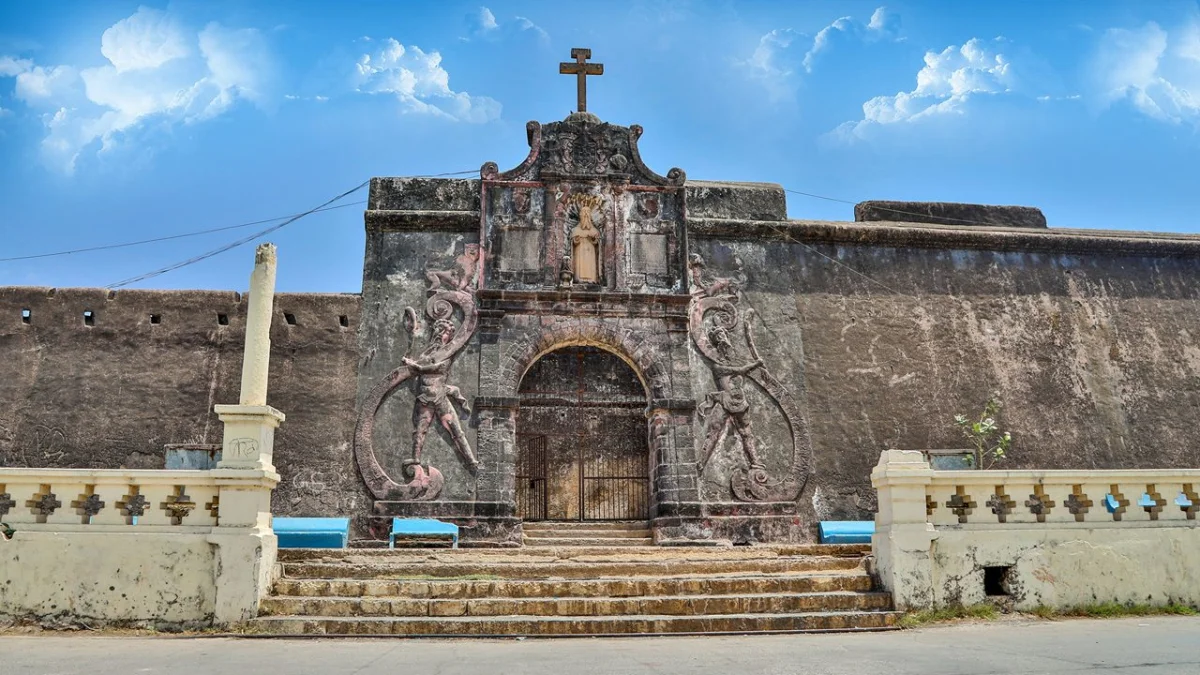
What makes St. Jerome Fort distinct is its blend of military architecture and religious heritage, featuring the iconic gateway with statues of St. Jerome and other historic structures within the fort complex. Its riverside location and well-preserved Portuguese character make it one of Daman's most notable heritage attractions.
St. Jerome Fort, also known as Nani Daman Fort, was built by the Portuguese in 1614 on the northern bank of the Daman Ganga River in present-day Daman, the Union Territory of Dadra and Nagar Haveli and Daman and Diu. Although often associated with nearby Gujarat due to its proximity, the fort is not located within the state of Gujarat. It was constructed to strengthen Portuguese defenses and protect the settlement of Nani Daman from maritime attacks.
The fort was named after St. Jerome (São Jerónimo), a Christian saint revered by the Portuguese. Its imposing gateway features statues of St. Jerome and other decorative elements reflecting Portuguese colonial architecture. Inside the fort are historic structures, including the Church of Our Lady of the Sea, which continues to be an active place of worship.
Today, St. Jerome Fort is a well-preserved colonial landmark that offers visitors insight into the region's Portuguese heritage. Its riverside location, defensive walls, and historic architecture make it one of the notable heritage attractions in Daman.
The best time to visit St. Jerome Fort is from October to March, when the weather is pleasant for exploring the historic fort and enjoying views of the Daman Ganga River and the Arabian Sea. The cooler months are ideal for combining a fort visit with nearby beaches and other heritage attractions.
 Church
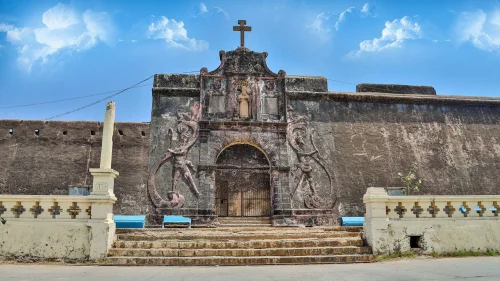
St. Jerome Church is a historic Roman Catholic church located within St. Jerome Fort in Daman, India.
Get customized Gujarat tour planning designed around seasonal climate conditions, long-distance road travel flow, festival timing, and realistic pacing across regions. Whether you are visiting for heritage sites, desert experiences, coastal retreats, wild
⚡ Quick Response | 💰 Free consultation | 🕒 24×7 expert support