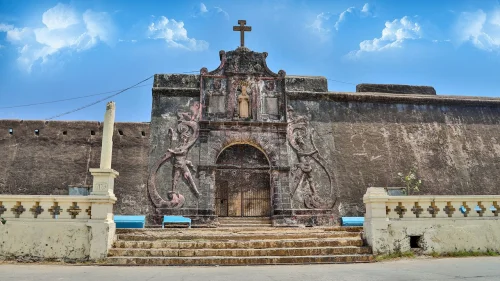
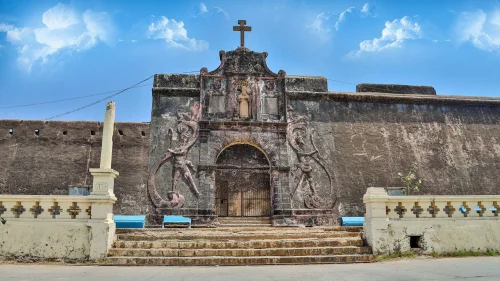
Diu Museum, Diu, Gujarat, India

Diu Museum , Diu
Tourists visit the museum to view colonial-era artifacts, weaponry, sculptures, and exhibits showcasing Diu’s history under Portuguese rule. It is a key attraction for those interested in the island’s cultural and historical heritage.

Quick Facts About Diu Museum

Quick Facts About Diu Museum

Entry Fee Paid (nominal fee; confirm at museum entrance)
Timings Open daily (generally 9:00 AM – 5:00 PM; closed on Mondays)
Altitude (m) Approx. 5 m (sea level)
Ideal Visit Duration 1 – 2 hours
Best Time of Day Late morning or early afternoon
Crowd Level Low to Moderate (busier during weekends and school holidays)
Distance from City Centre (km) Approx. 2 km from Diu city centre
Walking Difficulty Easy (mostly indoor museum visit)
Parking Available Limited parking near the museum
Last Mile Access Auto-rickshaw, taxi, or private vehicle
Suitable for Kids Yes (educational and cultural exhibits)
Suitable for Seniors Yes (comfortable indoor visit with seating)
Wheelchair Friendly Partially (ground floor accessible; some exhibits may have steps)

Why Visit Diu Museum, Diu

Diu Museum is a prominent cultural and historical attraction housed in the historic Portuguese-era Fort of Diu. Visitors come here to explore artifacts, paintings, and exhibits that showcase the colonial history, maritime heritage, and local culture of the island. It is a key stop for travelers interested in history, architecture, and the Portuguese legacy in India.

The atmosphere at Diu Museum is quiet and educational, with well-organized galleries and informative displays that allow visitors to explore at a relaxed pace. The fort setting adds a sense of historical grandeur, while the museum interiors provide a calm environment for studying exhibits and appreciating the preserved artifacts. Weekdays are particularly peaceful for an uninterrupted visit.

What makes Diu Museum special is its combination of colonial architecture and curated collections that highlight Diu’s unique history and maritime significance. Unlike typical museums, it offers a comprehensive view of the island’s cultural heritage within the scenic fort premises. For travelers, it provides both historical insight and a visually engaging experience.

History of Diu Museum, Diu

Diu Museum, located in Diu Fort, is a historical museum established to preserve and showcase the island’s Portuguese colonial heritage. The museum was developed to display artifacts, weaponry, and cultural items from Diu’s history under Portuguese rule, which lasted for over four centuries.

The museum features exhibits including sculptures, paintings, manuscripts, and military relics that reflect the architectural, cultural, and social history of Diu. Its location within Diu Fort emphasizes the strategic and historical importance of the fort during colonial times.

Today, Diu Museum serves as a key heritage and educational landmark. Visitors come to explore the island’s colonial past, understand its cultural evolution, and appreciate the historical artifacts preserved within the fort, making it an essential destination in Diu.

Best Time to Visit Diu Museum

Diu Museum is best visited during the cooler months when the weather is comfortable for exploring both indoor and outdoor sections, including its fort surroundings. Pleasant conditions make walking, sightseeing, and photography more enjoyable.
  • Ideal Months: October to February (best for heritage exploration, museum visits, and walking around the fort).
  • Weather During Best Season: Mild temperatures with low humidity, making it ideal for exploring exhibits, walking through the fort complex, and capturing photographs comfortably.
  • Periods to Avoid: April to June due to peak summer heat, which can make outdoor exploration tiring, and July to September during monsoon when heavy rains may limit access to fort areas and museum surroundings.

How to Reach Diu Museum, Diu

  • Nearest Airport: The nearest airport is Diu Airport, located around 5–6 km from Diu Museum. From the airport, tourists can hire a taxi or auto-rickshaw via local roads to reach the museum.
  • Nearest Railway Station: Diu does not have a railway station. The nearest major railway station is Veraval Railway Station, approximately 85–90 km away. From Veraval, tourists can hire a taxi or take a bus to Diu.
  • Road Access & Last-Mile Connectivity: Diu Museum is located within Diu town and is accessible via well-maintained local roads. Private vehicles, taxis, and auto-rickshaws provide convenient last-mile connectivity. Walking from nearby parking or drop-off points is required to reach the museum entrance.
  • Travel Conditions to Note: The museum can get crowded during weekends, public holidays, and school trips. Early morning visits are recommended for a quieter experience. Roads are generally in good condition, and mobile connectivity is stable within Diu town.

What to Expect When You Visit Diu Museum

  • Historic Portuguese-era fort setting: Expect the museum to be housed inside the 16th-century Fort of Diu, featuring stone walls, courtyards, and colonial architecture that adds historic ambiance to the visit.
  • Diverse cultural and historical exhibits: Visitors can explore collections of weapons, sculptures, manuscripts, coins, and artifacts reflecting Diu’s history under Portuguese rule and local culture.
  • Quiet and educational atmosphere: The museum is generally calm, ideal for history enthusiasts, students, and tourists seeking to learn about Diu’s heritage.
  • Walking and gallery navigation: Exploring the museum involves walking through multiple halls, staircases, and courtyards. Comfortable footwear is recommended for navigating uneven floors or stone steps.
  • Photography considerations: Photography may be restricted in certain galleries or for delicate artifacts. Exterior shots of the fort and courtyard are usually allowed.
  • Facilities and amenities: Basic amenities include seating areas and restrooms. Food or beverage options are generally outside the museum, near the fort or nearby local shops.
  • Accessibility considerations: Some sections include steps or narrow corridors, which may be challenging for seniors or wheelchair users.
  • Visitor behavior: Quiet, respectful behavior is expected. Most visitors spend time reading information boards, observing artifacts, and photographing allowed areas.
  • Crowd conditions: Weekdays are generally quieter, while weekends, holidays, and school visits may increase footfall.
  • Visit duration: Visitors typically spend 45 minutes to 1.5 hours exploring exhibits, courtyards, and fort architecture depending on interest in history and photography.

Important Visitor Information for Diu Museum, Diu

  • Crowd & Weather Notes: Diu Museum, located inside the historic Diu Fort, attracts history enthusiasts, school groups, and tourists year-round. Winter months (October to February) are the most comfortable for visiting. Summers can be hot and humid, while monsoon rains may make outdoor areas and stone pathways slippery.
  • Peak Visiting Hours: The museum is busiest during late morning to early afternoon (10:00 AM to 1:00 PM) and on weekends or public holidays, particularly when group tours and school excursions arrive.
  • Quiet Visiting Hours: Early mornings soon after opening (9:00 AM to 10:30 AM) and weekday afternoons are generally quieter, ideal for exploring exhibits, photography, and reading informational displays without crowd interference.
  • Dress Code (If Applicable): There is no formal dress code. Comfortable casual clothing and walking shoes are recommended, especially for exploring the museum’s outdoor fort areas and galleries.
  • Safety & Practical Cautions: Do not touch exhibits or artefacts unless permitted. Walk carefully on polished floors and stone pathways. Supervise children closely, especially in outdoor or stairway sections. Photography may be restricted in certain galleries, so confirm at the entrance. Carry water during summer visits and follow all museum guidelines for a safe and respectful experience.

Photography and Viewpoints at Diu Museum, Diu

  • Best viewpoint for exterior shots: The main entrance and courtyard provide a clear, symmetrical view of the museum building, showcasing its Portuguese colonial architecture, arched windows, and surrounding gardens in a wide-angle frame.
  • Most photogenic spot: Side pathways and slightly elevated corners allow photographers to capture the façade, arches, and architectural detailing, adding depth and perspective to compositions.
  • Best time of day for natural lighting: Early morning (8 AM to 10 AM) provides soft sunlight that highlights the stone textures and architectural details without harsh shadows, ideal for exterior photography.
  • Golden hour advantage: Late afternoon (4 PM to 6 PM) casts warm light across the building, enhancing textures and producing visually striking, vibrant photographs.
  • Midday lighting conditions: Between 11 AM and 3 PM, harsh sunlight can flatten building details and produce glare on lighter surfaces, making morning or late afternoon more suitable.
  • Best photography subjects inside (where allowed): Exhibits such as historical artifacts, sculptures, colonial-era items, and weaponry provide interesting subjects for close-up and detailed photography.
  • Interior photography restrictions: Flash photography is often prohibited to protect artifacts. Certain sections may not allow photography at all, so visitors must follow signage and staff instructions.
  • Crowd factors affecting photography: Weekends, school visits, and public holidays may bring more visitors, which can limit unobstructed shots inside exhibition areas.
  • Best crowd-free photography window: Weekday mornings are ideal for photographing both exterior and interior spaces without interference from visitors.
  • Drone and professional shoot rules: Drone photography and commercial filming require prior permission from museum authorities to ensure safety and preservation of exhibits.

Near By Attraction

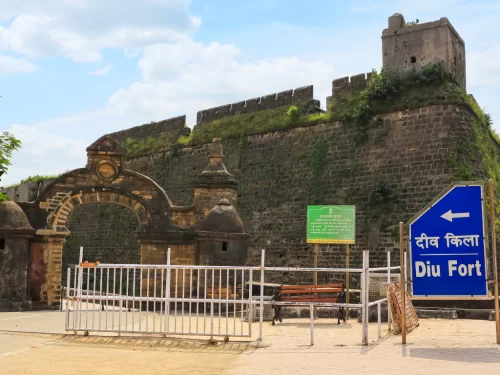
Heritage entrance at Diu Fort during daylight, featuring ancient bastions and Hindi signboard, perfect adventure Diu tour package. Fort

Diu Fort

Diu Fort is a historic Portuguese-built fort located on the coast of Diu, Gujarat.

Panikota Fort, historic sea fort in Jamnagar Gujarat, island fortress and heritage tourist attraction in India. Fort

Panikota Fort

Panikota Fort is a historic coastal fort located near Diu town in Gujarat.

INS Khukri Memorial Diu, naval war memorial honoring Indian Navy heroes, coastal tribute site and tourist attraction. Memorial

INS Khukri Memorial

INS Khukri Memorial is a naval memorial located in Diu, Gujarat, commemorating the crew of the Indian Navy ship INS Khukri lost in 1971.

Frequently Asked Questions About Diu Museum

Diu Museum is located in Diu town on Diu Island along the western coast. It is housed in a former Portuguese church structure in the main town area.
Diu Museum showcases artifacts from the Portuguese colonial period and local history of the region. The building itself reflects colonial architectural style.
Diu Museum is generally open from morning to evening except on designated closed days. Timings may vary slightly depending on local administration rules.
An entry fee is charged to visit Diu Museum. Ticket rates are typically nominal for both adults and children.
A visit to Diu Museum usually takes around 45 minutes to 1.5 hours. The duration depends on the time spent exploring galleries and exhibits.
Diu Museum displays wooden carvings, statues, inscriptions, and artifacts related to Diu’s colonial history. The exhibits focus on religious art and regional heritage.
Diu Museum can be reached by auto-rickshaw, taxi, or private vehicle within Diu town. The nearest major railway station is Veraval in Gujarat.
Photography inside Diu Museum may be restricted in certain sections. Visitors should follow the guidelines provided at the entrance.
The best time to visit Diu Museum is from October to March when the coastal weather remains comfortable. Summers can be hot and humid during midday hours.
Basic facilities such as ticket counters and limited parking are available near Diu Museum. Additional amenities are available in Diu town.

Loved this place ? Let’s Plan Your Gujarat Trip

Get customized Gujarat tour planning designed around seasonal climate conditions, long-distance road travel flow, festival timing, and realistic pacing across regions. Whether you are visiting for heritage sites, desert experiences, coastal retreats, wild

⚡ Quick Response | 💰 Free consultation | 🕒 24×7 expert support

×

Plan Your Trip