
Best Places to Visit in Odisha with Family
Find destinations in Odisha for a family trip, considering beaches, heritage sights and nature outings to choose places that suit different ages and interests.
+91 9910402252
admin@chalbanjare.com


Prepare for a visit to Lingaraj Temple in Bhubaneswar with an overview of darshan timings and visitor considerations to help you plan your pilgrimage.
Odisha Tourism currently lists Lingaraj Temple’s hours as 5:00 AM–9:00 PM, with a closure between 12:30 PM and 3:30 PM. Treat this as published visitor guidance rather than a guarantee of continuous darshan during every listed hour.
Other public tourism pages show different hours, and rituals or special observances can affect access. Confirm the applicable arrangement locally before making an early-morning or late-evening journey.
The religious day includes opening and preparation, bathing and adornment, food offerings, lamp ceremonies and concluding services. These activities take priority over an ordinary sightseeing timetable.
A dependable, current clock-by-clock ritual schedule could not be established consistently from the official visitor sources. Ask the temple office or authorised assistance if attending a particular ceremony matters to you.
Plan a morning or late-afternoon visit with flexibility. Avoid reaching during the published afternoon break or scheduling an inflexible departure immediately after darshan.
Entry into Lingaraj Temple is restricted to Hindus. Visitors should respect the eligibility requirement and clarify uncertainty directly rather than assuming an escort or paid service can override it.
An elevated viewing platform outside the complex provides an alternative for visitors who cannot enter. Ask about its current access, opening arrangements and any applicable charge before planning around it.
The platform offers an architectural view; it is not equivalent to entering the courtyard or receiving darshan inside.
Visitors unable to enter can combine the external view with Bindu Sagar and nearby heritage temples, checking each site’s own access rules. Mukteswar and Parsurameswar provide opportunities to appreciate architectural detail.
Carry identification if needed and answer eligibility questions honestly. Do not photograph prohibited areas simply because you are standing outside the boundary.
The principal Lingaraj complex is associated with the 11th century and Somavamsi patronage, within a sacred landscape whose traditions are older. Later additions and continuing worship have also shaped the site.
Lingaraj’s worship incorporates Harihara, bringing together Shiva and Vishnu traditions. This religious character helps explain why the temple should not be understood solely as an architectural monument.
The presiding linga is regarded as swayambhu, or self-manifested, within the temple’s religious tradition.
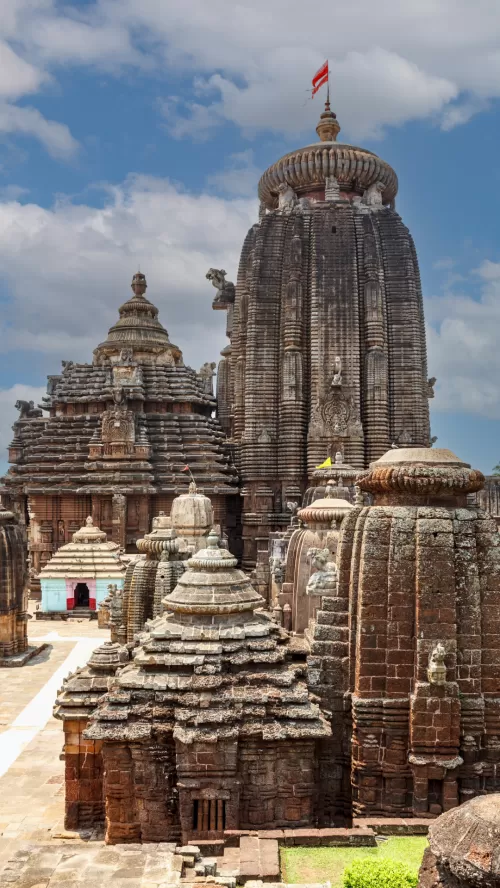
The main composition progresses through the sanctuary tower, assembly hall, performance hall and offering hall. Their differing forms create the characteristic visual rhythm of a developed Kalinga temple.
Look at the relationship between the tall curving sanctuary tower and the lower halls rather than concentrating only on height. Carved surfaces and subsidiary structures contribute to the overall design.
Appreciate the architecture from areas available to visitors without entering restricted service spaces.
For eligible visitors, the main shrine is the centre of the visit, but the surrounding sacred spaces also deserve attention when movement and rituals permit.
Follow the designated approach for darshan and the instructions given by staff and servitors. The permitted viewing position can depend on the arrangements operating that day.
Do not assume access means you may touch the deity, enter every space or perform an offering independently.
The complex includes numerous smaller shrines and sacred images associated with the wider worship tradition. Look for representations connected with Parvati, Ganesha and Kartikeya, seeking an explanation from an appropriate guide or servitor where useful.
Rather than rushing through a checklist, ask which areas are currently open and allow worshippers space at active shrines.
Offerings, movement of servitors and daily services form part of the experience. Keep passages clear and avoid treating ritual areas as places to pause for lengthy sightseeing discussions.
Arrive in modest clothing with minimal belongings. Security and storage arrangements should be checked at the entrance before joining the darshan queue.
Clothing covering the shoulders and legs is a practical choice. Avoid beachwear, revealing garments and outfits that are uncomfortable for barefoot movement where required.
Plan to leave phones and cameras outside, and confirm current restrictions on bags, electronics and leather articles. Use permitted storage, retain any token and clarify how necessary medicines should be handled.
Do not assume that carrying a phone is acceptable simply because you do not intend to use its camera.
Treat the interior as a no-photography environment and follow displayed instructions. For external views, ask about restrictions before taking photographs from a platform or nearby property.
If requesting a religious service, establish its nature and payment beforehand. Avoid handing over valuables or agreeing to unspecified charges under pressure.
Lingaraj Temple is in Bhubaneswar’s Old Town, also known as the Ekamra heritage area. Give your driver the temple’s visitor approach rather than only a general Old Town destination.
Biju Patnaik International Airport and Bhubaneswar railway station are both connected to Old Town by road. Allow approximately 20–45 minutes as a broad transfer estimate, with more time during congestion or festivals.
A taxi or auto-rickshaw can be convenient, but the final drop-off may involve walking because of local controls.
Check available bus routes and the walk from the relevant stop if using public transport. For a combined heritage circuit, agree on waiting time and all intended stops before hiring a vehicle.
Hotel check-in or secure luggage storage is preferable to arriving directly with several bags. Confirm the return pickup location before depositing phones and entering the temple.
Travellers needing assistance should ask about the actual distance from the permitted drop-off point, not simply the driving distance shown on a map.
October to March generally provides more comfortable conditions for an Old Town visit. Morning sightseeing is useful in warmer months, while monsoon visits need attention to rain and slippery surfaces.
Mahashivaratri attracts substantial numbers of devotees and involves special religious observances. Ashokashtami’s Rukuna Rath Yatra is another major occasion with changes to movement and local arrangements.
Chandan Yatra also connects temple traditions with activities around Bindu Sagar. Confirm dates and public access rather than assuming ordinary darshan arrangements apply.
For an ordinary visit, reserve approximately one to two hours, plus transfers and any additional waiting. This is a sightseeing allowance rather than a queue prediction.
During major occasions, leave considerably more flexibility and ask about arrangements for seniors or visitors with limited mobility. Avoid promises of guaranteed quick access.
If attending a specific festival is not your aim, choose another date when possible for a simpler architectural and pilgrimage visit.
Lingaraj fits naturally into a selective Old Town circuit. Keep nearby visits flexible so that additional sightseeing does not become tiring after darshan.
The sacred tank forms an important part of the surrounding religious landscape. Walk only in permitted public areas and respect bathing, offerings and ceremonial activity.
Do not treat access to the water as an invitation to enter it. Steps and edges can be uneven or slippery.
Mukteswar rewards a closer look at its carved arched gateway and decorative stonework. Allow approximately 30–45 minutes if you want to examine details rather than make only a brief stop.
Nearby Parsurameswar offers a useful comparison with Mukteswar and the larger Lingaraj complex. Its compact scale makes it a manageable addition to the circuit.
Begin with Lingaraj darshan when available, continue to Bindu Sagar, then visit Mukteswar and Parsurameswar. Reverse the order if the temple’s afternoon break or other arrangements make that more practical.
Allow around half a day for a relaxed circuit with walking, transfers and a break.


Get customized Odisha tour planning designed around temple visit timing, coastal weather patterns, wildlife seasonality, and realistic travel pacing across regions. Whether you are visiting for spiritual journeys, heritage architecture, beach relaxation,
⚡ Quick Response | 💰 Free consultation | 🕒 24×7 expert support

