
Best Places to Visit in Odisha with Family
Find destinations in Odisha for a family trip, considering beaches, heritage sights and nature outings to choose places that suit different ages and interests.
+91 9910402252
admin@chalbanjare.com


Find ways to experience Puri beyond Jagannath Temple, with ideas for beach outings, local food and cultural activities to add variety to your visit.
Begin a morning on Puri Beach to experience the seafront before the day becomes hotter and busier. Walking along the sand, watching the changing light and stopping for breakfast nearby make a simple, rewarding outing.
The Swargadwar side is convenient for visitors staying near the main beach market, although it can remain lively even early in the day. The designated managed Golden Beach section has separate access arrangements, so confirm its current opening time if planning a sunrise visit there.
Check sunrise for your travel dates and arrive approximately 20–30 minutes beforehand. Cloud and haze can obscure the sun, but the morning atmosphere can still make the walk worthwhile.
Do not assume that calm-looking water is safe for swimming. Beach walks are enjoyable without entering the sea, especially when warning flags or rough conditions are present.
Raghurajpur, approximately 14 kilometres from Puri, offers a chance to understand traditional art through the people who make it. Plan a visit to its homes and workshops rather than approaching it only as a souvenir-shopping stop.
Pattachitra uses detailed compositions, decorative borders and stories drawn from religious traditions. Ask an artist to explain the subject, preparation of the painting surface and stages of work.
Palm-leaf engraving and other crafts provide further variety. What you see being made will depend on the workshop and the artist’s current projects.
Keep approximately two hours available, with additional time for a pre-arranged workshop. Confirm any demonstration or participation fee before starting.
Raghurajpur works well as a half-day outing or a planned detour during a transfer towards Bhubaneswar. It is not directly on the Puri–Konark coastal road.
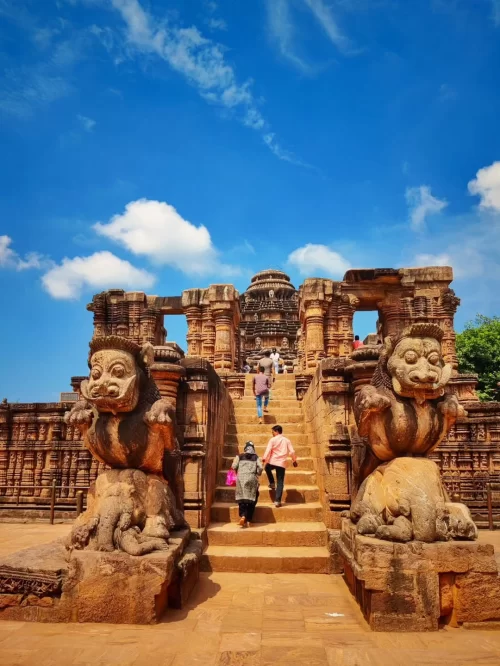
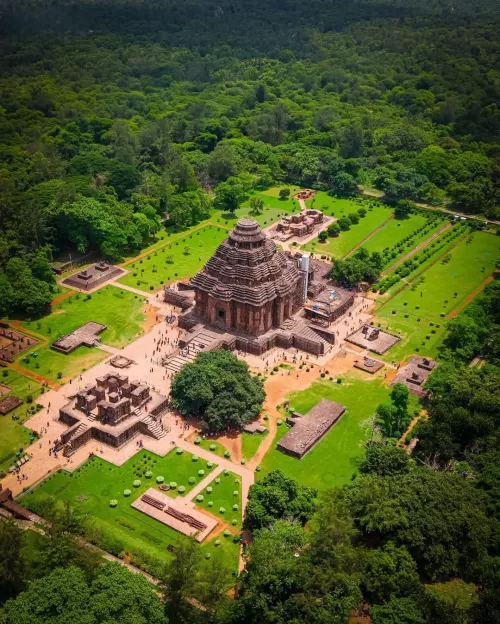
Konark Sun Temple is approximately 35 kilometres from Puri and is one of the most rewarding heritage excursions nearby. Reserve at least half a day, extending the outing if you want the archaeological museum and coastal stops.
The UNESCO-listed monument represents the chariot of Surya, with carved wheels, horses and extensive sculptural detail. Look beyond the familiar wheel photographs to notice dancers, musicians, animals and scenes of everyday life.
Allow approximately two hours for the monument. An authorised guide can help explain the layout and carvings; agree on the fee and duration beforehand.
The temple is partly ruined, and conservation restrictions affect access to its remaining structures. Expect an archaeological visit rather than an intact sanctuary interior.
The nearby ASI archaeological museum adds context through sculptures and architectural fragments. Check its opening day and ticket arrangements separately from the Sun Temple.
Start early in warmer months, carry drinking water and wear comfortable footwear. If attending an evening light-and-sound programme, confirm operation and arrange your return journey before leaving Puri.
Chandrabhaga and Ramchandi add coastal scenery to a Konark excursion without requiring a separate long journey. Choose short stops that suit the weather rather than spending the hottest part of the day on exposed sand.
Close to Konark, Chandrabhaga offers a broad shoreline for walking and photography. A sunrise visit requires an early departure from Puri; otherwise, combine it with the Sun Temple at a comfortable time.
Allow approximately 30–45 minutes for a simple visit. Follow local warnings and do not treat the beach as an unrestricted swimming area.
Ramchandi, also written Ramachandi, lies along the coastal approach between Puri and Konark. The goddess temple and nearby Kusabhadra river-mouth landscape offer a different experience from Chandrabhaga’s open seafront.
Ask about visitor access at the shrine and keep clear of unstable banks and tidal channels. Boat trips or water activities may be offered, but check authorisation, life jackets, conditions and the full charge before booking.
Use established parking areas and leave time for the return drive. Strong winds, heavy rain or official coastal warnings should take priority over completing every planned stop.
Satapada, approximately 50 kilometres from Puri, provides access to the southeastern part of Chilika’s brackish-water lagoon. Keep most of a day available for the return drive, boarding arrangements and your chosen boat route.
Trips commonly visit Irrawaddy dolphin habitat, while longer routes may continue towards the lagoon’s sea-mouth area. Ask the operator to explain the actual stopping points, duration and total time on the water.
Confirm whether the fare applies per passenger or per boat, and clarify additional charges and weather-related cancellation terms. Do not assume every attraction elsewhere on Chilika is a practical addition from Satapada.
Sightings are not guaranteed, and dolphins may surface only briefly or at a distance. Choose an operator who maintains space rather than chasing, circling or crowding animals.
Keep your return evening flexible. Boating is dependent on conditions, and a tightly timed train connection can turn an enjoyable excursion into a rushed journey.
Make time for an Odia meal rather than relying entirely on familiar tourist menus. A restaurant serving regional dishes provides a useful introduction before you explore individual snacks and sweets.
Try dalma, made with lentils and vegetables, alongside rice and seasonal accompaniments. Pakhala, rice served in water and sometimes fermented, is particularly associated with warm-weather meals; ask how it is prepared and what comes with it.
Coastal menus may include fish, prawns and mustard-based preparations. Confirm seafood type, portion size and price before ordering, especially when a dish is charged by weight.
Chhena poda is a baked fresh-cheese sweet with a browned exterior. Khaja, a layered sweet closely associated with Puri’s food traditions, makes another worthwhile tasting stop.
Buy small quantities first and ask about freshness, ingredients and storage. Chhena-based sweets require more care during transport than dry snacks, particularly in hot weather.
A food walk can be enjoyable, but confirm its actual stops and inclusions rather than assuming access to private kitchens or religious food-preparation areas.
Puri offers accessible shopping for textiles, appliqué products and regional crafts. Browse with a specific interest in mind so you can compare materials and workmanship rather than buying the first item labelled an Odisha souvenir.
Swargadwar Market is convenient for combining shopping with an evening beach walk. Look for handloom clothing, dress materials and decorative items, while asking where and how each product was made.
Neelachal Haat is another option for exploring Odisha’s handicrafts and handlooms. Check current opening arrangements and participating stalls before making a dedicated journey.
Pipili appliqué, or Chandua, uses coloured fabric pieces to create decorative designs. Inspect stitching, lining and finishing on bags, wall hangings, umbrellas and lampshades.
For handloom textiles, ask about the weaving location, fibre and whether the cloth is handwoven. A printed pattern should not automatically be presented as woven ikat.
Pipili itself lies approximately 40 kilometres from Puri and fits a planned Bhubaneswar transfer better than a hurried addition to a beach evening.
A slower walk through Puri’s established neighbourhoods reveals markets, smaller shrines and sacred waterbodies beyond the main temple visit. Keep the route selective and remember that residential lanes and religious institutions are working community spaces.
Explore accessible sections of Grand Road and consider Gundicha Temple, the destination of the annual Rath Yatra procession. Confirm current visitor access rather than assuming its arrangements match those of Shri Jagannath Temple.
Mausi Maa Temple is another sacred stop associated with Rath Yatra traditions. Ask about darshan availability and photography rules before entering.
Narendra Tank, also called Narendra Pokhari, is associated with Puri’s ritual calendar, including Chandan Yatra. View it from permitted public areas without obstructing ceremonies or assuming boating is available for tourists.
Lokanath Temple adds an important Shiva shrine to a broader pilgrimage visit. It generally requires a separate local transfer, so avoid describing all these sites as one short walking loop.
A locally knowledgeable guide can help explain shrines, markets and monastic institutions while clarifying which spaces welcome visitors. Confirm the route and fee in advance.
Visit in cooler daylight hours, dress modestly and ask before photographing residents. At Swargadwar’s cremation area, keep a respectful distance and never photograph funerals or grieving families.


Get customized Odisha tour planning designed around temple visit timing, coastal weather patterns, wildlife seasonality, and realistic travel pacing across regions. Whether you are visiting for spiritual journeys, heritage architecture, beach relaxation,
⚡ Quick Response | 💰 Free consultation | 🕒 24×7 expert support

