
Best Places to Visit in Odisha with Family
Find destinations in Odisha for a family trip, considering beaches, heritage sights and nature outings to choose places that suit different ages and interests.
+91 9910402252
admin@chalbanjare.com


Learn about Konark Sun Temple’s history, entry fees and visiting hours, with travel guidance to help you prepare for sightseeing at this heritage monument.
Konark Sun Temple is an Archaeological Survey of India ticketed monument. The standard admission structure distinguishes between the lower domestic and eligible-country category, other foreign visitors, and children below 15.
Recheck the applicable category and final amount before paying, as charges and booking arrangements can change. Carry identification supporting your ticket category and age eligibility where relevant.
Use the monument ticket counter or the booking service linked through ASI’s official website. Select the correct monument, date and visitor details, and retain your ticket for entry.
Do not assume admission includes a guide, parking, the archaeological museum or an evening programme. Confirm these separately rather than buying an unclear combined service from an unsolicited intermediary.
ASI lists Konark Sun Temple’s visiting hours as sunrise to sunset. Use this official guidance when planning the monument visit rather than assuming that an evening show means ordinary sightseeing remains available after dark.
October to March generally provides more manageable conditions for outdoor exploration. November to February is particularly useful for walking, although clear skies are never guaranteed.
In summer, visit early and avoid an extended midday circuit. During monsoon, carry rain protection and take care on wet stone and paths.
Check the current hours and weekly closure of the archaeological museum independently. Arrive with a comfortable margin before closing instead of relying on a last-minute entry.
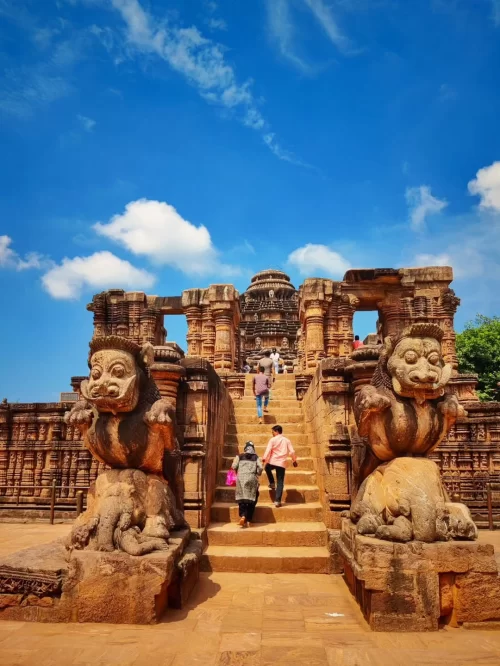
Konark Sun Temple was built in the 13th century under King Narasimhadeva I of the Eastern Ganga dynasty. Dedicated to Surya, the Sun God, it represents a major achievement in Odisha’s temple architecture and sculptural art.
The temple was conceived as Surya’s immense stone chariot. Its scale and decoration reflected royal patronage, religious ideas and the artistic capabilities of the period.
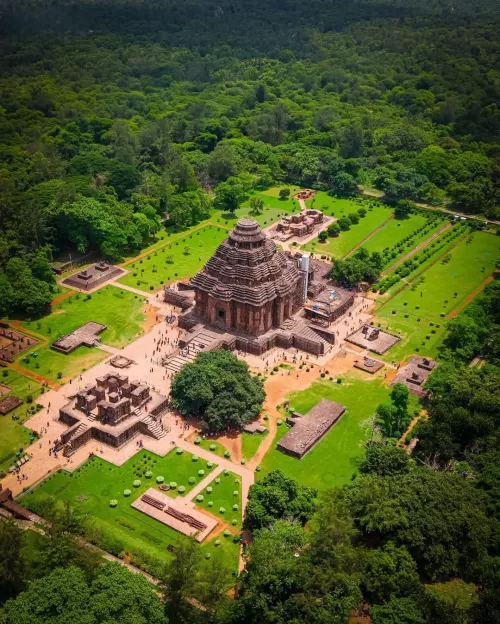
The monument survives in a partly ruined state. Understanding the original arrangement helps visitors distinguish the surviving structures from the lost principal tower and other missing elements.
Konark was inscribed on the UNESCO World Heritage List in 1984. Its significance includes the integration of architecture and sculpture, its testimony to the medieval kingdom of Odisha and its association with Surya worship.
The carvings also provide insight into social life, performance, animals, religious imagery and courtly culture.
Stories about magnets, a floating idol or a single dramatic cause of collapse should be distinguished from established historical evidence. Enjoy local legends without treating every explanation as documented fact.
Begin by looking at the monument as a complete composition before examining individual carvings. This makes its chariot concept easier to understand.
The design incorporates 24 ornamented wheels and seven horses, representing the celestial chariot. Look closely at the spokes, rims and miniature scenes rather than viewing the wheels only as photograph locations.
Guides often demonstrate shadow-based time readings at selected wheels. Such explanations are best understood in context, without assuming every popular numerical interpretation is historically settled.
The principal remains include the imposing assembly hall, or jagamohana, and the dance-hall remains. The original sanctuary tower no longer survives in its complete form.
Follow the permitted visitor circuit; do not expect ordinary access inside the assembly hall or a functioning inner sanctum.
Look for musicians, dancers, animals, processions, mythological subjects and erotic imagery. Together, these create a broader picture of the temple’s artistic programme.
Stay behind conservation barriers and avoid touching or climbing carvings. A selective, attentive circuit is more rewarding than rushing to identify every panel.
Konark is reached by road from Puri and Bhubaneswar. Choose your starting point according to your accommodation and onward travel rather than returning unnecessarily to the same city.
The coastal road journey is approximately 35 km. Allow around one to one-and-a-half hours without substantial stops, depending on your hotel and traffic.
A round-trip car is convenient for adding Ramchandi and Chandrabhaga. Bus travellers should confirm the boarding point, Konark drop-off and return connection before setting out.
Konark is approximately 65 km from Bhubaneswar, with around two to two-and-a-half hours a useful road-travel allowance. Exact timing depends on the route and pickup location.
Biju Patnaik International Airport and Bhubaneswar railway station provide onward connections, but their reporting requirements need a separate buffer.
Visitors touring Odisha can travel from Bhubaneswar through Konark to Puri rather than making a return excursion. Confirm luggage storage in the vehicle and include all waiting, parking and transfer charges in the quotation.
The archaeological museum adds useful context to the Sun Temple, while nearby coastal stops offer a change of pace. Choose additions according to daylight, weather and your onward journey.
Managed by ASI, the museum preserves sculptures and architectural material associated with the site. Allow approximately 45–60 minutes.
Check its current opening hours, admission and weekly closure before travelling. Its schedule is separate from the monument’s, so temple access does not establish museum availability.
Chandrabhaga Beach is close to Konark and suits a short coastal walk when conditions permit. Ramchandi Temple lies along the road towards Puri and can be included on that transfer.
Follow local sea warnings and avoid assuming that a sightseeing beach is suitable for swimming.
The Kuruma Buddhist site may interest travellers seeking a less hurried archaeological excursion. Verify the approach and visitor arrangements before making a special detour.
For cultural events or evening programmes, confirm dates and operating arrangements separately. They should not be assumed to run simply because the monument is open.
A little preparation makes Konark easier to explore, particularly for families and travellers who need regular breaks. Much of the experience involves outdoor walking and observing details at different heights.
Engage an authorised guide if you want help understanding the layout and sculpture. Agree on language, duration, group size and the complete fee before starting.
Follow displayed photography rules. Tripods, drones, commercial filming and professional equipment may require separate permission; a general entry ticket should not be treated as authorisation.
Ask site staff about current wheelchair routes, steps and the closest permitted drop-off point. Access to parts of the grounds does not necessarily mean every platform or viewpoint is accessible.
During rain or strong heat, shorten the circuit according to comfort rather than trying to complete every viewpoint.
Konark can be visited from Puri or Bhubaneswar, but an overnight stay suits travellers who want a slower heritage visit or a confirmed evening event.
Puri provides a broad accommodation and dining choice for visitors combining the monument with pilgrimage and beach time. Bhubaneswar works well for airport or railway access and a wider heritage circuit.
For a stay in Konark or the surrounding coastal area, check meal availability, transport, vehicle access and the exact distance from the monument. A coastal property may require a separate transfer for sightseeing.
Look for Odia rice meals, dalma and vegetable preparations, explaining dietary requirements clearly. Agree on prices before ordering seafood sold by size or weight.
If departing Odisha the same day, prioritise the monument and protect your transfer buffer rather than adding every nearby stop.


Get customized Odisha tour planning designed around temple visit timing, coastal weather patterns, wildlife seasonality, and realistic travel pacing across regions. Whether you are visiting for spiritual journeys, heritage architecture, beach relaxation,
⚡ Quick Response | 💰 Free consultation | 🕒 24×7 expert support

