What is Meghalaya Famous For?
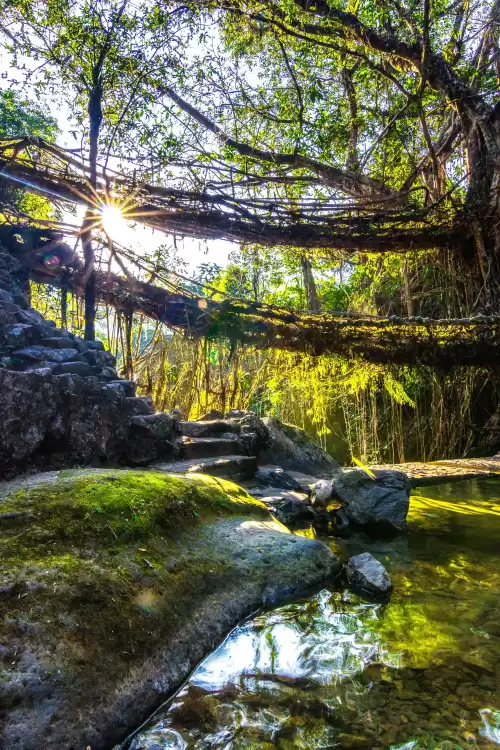
Meghalaya is famous for its living root bridges, waterfalls, caves, hills, tribal culture, clean villages, crystal clear rivers, and unique natural landscapes that attract travellers throughout the year.
+91 9910402252
admin@chalbanjare.com


Trekking routes like Nongriat offer some of Meghalaya’s most rewarding nature experiences, but steep stairways, long descents and physically demanding climbs may not be suitable for every traveler.
Nongriat is one of Meghalaya's most famous trekking destinations and is known for its living root bridges, natural surroundings, and unique village environment. Unlike destinations that can be explored primarily by vehicle, Nongriat requires visitors to complete a physically demanding trek involving thousands of steps.
This makes the experience very different from traditional sightseeing locations. Travelers should understand that reaching Nongriat requires effort, endurance, and preparation rather than simply arriving at an attraction by road.
Understanding the nature of the trek helps travelers decide whether Nongriat matches their physical abilities and travel expectations.
The route to Nongriat is largely based on stairways that descend into deep valleys before requiring a return ascent. While many visitors focus on the descent, the return journey often proves more physically demanding because it involves climbing thousands of steps uphill.
The trek requires sustained physical effort and can be challenging for individuals who are not accustomed to extended walking or stair climbing.
Travelers should evaluate their fitness honestly before attempting the Nongriat trek.
Many visitors are attracted by photographs of living root bridges without fully understanding the effort required to reach them. Setting realistic expectations beforehand helps prevent disappointment and ensures a safer travel experience.
Those who approach Nongriat as a trekking destination rather than a simple sightseeing stop are generally better prepared for the journey.
| Trek Characteristic | Expectation |
|---|---|
| Physical Effort | High |
| Stair Climbing | Extensive |
| Endurance Requirement | Important |
| Preparation Needed | Recommended |
Realistic expectations are one of the most important factors for enjoying the Nongriat trek safely and comfortably.
The Nongriat trek requires sustained physical effort over a prolonged period, particularly during the return climb. Long sections of stairs place continuous demands on the body and may be challenging for individuals with serious heart-related health concerns.
Travelers should recognize that the route involves considerably more exertion than many standard tourist attractions in Meghalaya.
Individuals with known cardiovascular concerns should carefully assess whether the trek matches their physical capabilities.
The combination of distance, stair climbing, changing elevations, and prolonged activity can place notable demands on cardiovascular fitness. Travelers who are not accustomed to regular physical activity may find the trek more challenging than expected.
Understanding these demands helps visitors make informed decisions before committing to the journey.
Awareness of the trek's physical requirements supports safer travel planning.
Travelers with serious heart conditions should consider their personal health situation carefully before planning the trek. Understanding individual fitness levels and seeking professional guidance when appropriate can help visitors make informed decisions.
Choosing attractions that align with personal health and comfort levels contributes to a safer and more enjoyable Meghalaya experience.
| Consideration | Importance |
|---|---|
| Fitness Evaluation | Essential |
| Physical Endurance | Important |
| Route Difficulty | High |
| Travel Suitability Assessment | Recommended |
Careful assessment helps travelers choose experiences that match their capabilities and comfort levels.
The Nongriat trek involves continuous movement over long distances and significant stair climbing. Individuals who experience breathing difficulties during physical activity may find certain sections of the route demanding, particularly during the uphill return journey.
Understanding personal limitations before beginning the trek is important for maintaining comfort and safety throughout the experience.
Travelers should honestly evaluate their ability to sustain prolonged physical activity before attempting the trek.
Although the trek passes through beautiful natural scenery, visitors should remember that it remains a physically demanding journey from start to finish. The route requires endurance, consistent movement, and the ability to manage extended periods of activity.
Many travelers underestimate the effort required because photographs often focus on the destination rather than the journey itself.
Understanding the full scope of the trek helps visitors prepare more effectively.
Travelers with severe respiratory concerns should evaluate their suitability for physically demanding activities before visiting Nongriat. Professional guidance can help individuals understand whether the trek aligns with their health circumstances and physical abilities.
Making informed decisions before travel helps ensure a safer and more comfortable experience.
| Evaluation Area | Importance |
|---|---|
| Breathing Capacity | Essential |
| Physical Endurance | Important |
| Trek Difficulty Awareness | High |
| Personal Suitability Review | Recommended |
Careful planning helps travelers choose experiences that match their physical abilities and travel goals.
The Nongriat trek is heavily dependent on stairways, making it particularly demanding for travelers who experience knee pain, joint discomfort, or mobility-related limitations. The continuous descent places pressure on the knees, while the return ascent requires sustained effort from the legs and joints.
Even individuals who are comfortable with regular sightseeing may find the repetitive stair movement more demanding than expected. Understanding these physical requirements is important before planning the trek.
Travelers with existing knee or joint concerns should evaluate whether the trek aligns with their physical comfort levels.
Many visitors focus on reaching Nongriat but underestimate the challenge of returning. The upward climb requires considerably more effort than the descent and can be especially demanding for those experiencing joint stiffness or reduced mobility.
The physical challenge increases gradually throughout the day, making endurance and lower-body strength important factors for completing the journey comfortably.
Understanding the demands of both directions of the trek helps visitors make informed travel decisions.
Before attempting the Nongriat trek, travelers should consider how comfortable they are with prolonged walking, stair climbing, and uneven terrain. Honest self-assessment can help prevent unnecessary discomfort and reduce the likelihood of abandoning the trek midway.
Choosing activities that match personal mobility levels contributes to a safer and more enjoyable Meghalaya experience.
| Mobility Factor | Importance |
|---|---|
| Knee Comfort | Essential |
| Walking Ability | Important |
| Stair Climbing Capacity | High |
| Physical Endurance | Recommended |
Careful assessment helps travelers select experiences that suit their physical capabilities and travel goals.
The Nongriat trek requires considerably more stamina than many traditional sightseeing experiences in Meghalaya. While age alone does not determine whether someone can complete the trek, physical endurance plays a significant role in overall comfort and safety.
Senior travelers who remain physically active may enjoy the journey, but those with limited endurance should carefully consider the effort involved before making plans.
Understanding stamina requirements helps senior travelers evaluate whether Nongriat is suitable for their travel style.
Long trekking days can create physical fatigue, especially when combined with steep stairways and changing terrain. Senior citizens who attempt the trek should maintain a comfortable pace, allow adequate rest periods, and avoid unnecessary rushing.
Managing energy levels effectively can significantly improve comfort and make the experience more enjoyable.
Thoughtful pacing helps reduce physical strain during the trek.
Meghalaya offers many beautiful attractions that require significantly less physical effort than Nongriat. Lakes, viewpoints, waterfalls, cultural attractions, and scenic drives provide rewarding experiences without the demands of a long stair-based trek.
Travelers should choose destinations according to their comfort levels rather than feeling obligated to attempt every popular attraction.
| Travel Preference | Recommendation |
|---|---|
| Relaxed Sightseeing | Highly Suitable |
| Scenic Drives | Recommended |
| Viewpoints and Lakes | Comfortable Option |
| Nongriat Trek | Requires Fitness Assessment |
Choosing attractions that match endurance levels helps create a more enjoyable Meghalaya vacation.
The Nongriat trek can be challenging for families traveling with infants and toddlers because the route involves thousands of stairs, extended walking periods, and significant physical effort. Carrying very young children throughout the journey increases the demands placed on parents or guardians.
Families should carefully evaluate whether the trek aligns with the comfort, safety, and needs of both adults and children before making plans.
Understanding the realities of the route helps families make informed travel decisions.
Steep stairways, changing weather conditions, and long walking distances can make certain sections of the trek more demanding when traveling with very young children. Maintaining a comfortable pace and prioritizing safety become especially important throughout the journey.
Parents should consider whether the physical requirements match the needs of their family before choosing Nongriat as part of their itinerary.
Careful planning helps families evaluate whether the trek is suitable for their travel circumstances.
Families with infants and toddlers can still enjoy many of Meghalaya's most beautiful destinations without undertaking a demanding trek. Scenic lakes, viewpoints, waterfalls, cultural attractions, and comfortable road-trip destinations offer rewarding experiences with far less physical strain.
Selecting attractions based on family comfort often results in a more enjoyable vacation for all members of the group.
| Family Travel Factor | Importance |
|---|---|
| Child Comfort | Essential |
| Safety | Very High |
| Physical Effort Required | Important |
| Alternative Attractions | Recommended |
Family-friendly destination choices help ensure a comfortable and memorable Meghalaya travel experience.
Many visitors are attracted to Nongriat because of its famous living root bridges and beautiful natural surroundings. However, travelers who have little experience with trekking or extended walking often underestimate the physical effort required to complete the journey comfortably.
The route demands sustained movement over a long period and includes thousands of stairs. Individuals who are not accustomed to regular physical activity may find the trek considerably more demanding than traditional sightseeing experiences.
Understanding the nature of the trek helps first-time visitors prepare more effectively for the experience.
Unlike short walks around tourist attractions, the Nongriat trek requires the ability to maintain activity for an extended period. Physical stamina becomes increasingly important during the return journey when visitors must climb back up long stair sections.
Travelers who regularly participate in walking, hiking, or fitness activities generally find it easier to manage the route compared to those with limited experience.
Recognizing endurance requirements beforehand allows travelers to make informed decisions about attempting the trek.
Visitors planning the Nongriat trek can benefit from basic physical preparation before travel. Regular walking, stair climbing, and light endurance activities can help improve comfort and confidence during the journey.
Even modest preparation may make a noticeable difference in how travelers experience the route and recover afterward.
| Preparation Activity | Benefit |
|---|---|
| Regular Walking | Improves Endurance |
| Stair Practice | Builds Trek Readiness |
| Fitness Training | Improves Stamina |
| Realistic Planning | Increases Comfort |
Physical preparation helps many travelers enjoy Nongriat more comfortably and confidently.
Monsoon transforms Nongriat into an exceptionally green and scenic destination, but heavy rainfall can also make trekking conditions more challenging. Stairways, trails, and natural surfaces often become wet and slippery, requiring additional caution throughout the route.
Travelers should understand that the physical demands of the trek may increase during rainy periods due to changing ground conditions and reduced traction on certain sections.
Understanding monsoon conditions helps visitors prepare appropriately for the trek.
Rainfall not only affects walking surfaces but can also influence visibility, comfort, and overall trekking pace. Travelers may need to move more slowly and allow additional time to complete the route safely.
Patience and weather awareness become especially important during periods of sustained rainfall.
Visitors who understand seasonal challenges are generally better equipped to enjoy the trek safely.
Before planning a Nongriat trek during monsoon, travelers should evaluate current weather patterns, personal comfort with wet conditions, and overall fitness levels. Some visitors enjoy the dramatic monsoon scenery, while others may prefer drier conditions for easier trekking.
Choosing the right season according to personal preferences helps create a more enjoyable experience.
| Monsoon Factor | Impact |
|---|---|
| Rainfall | High |
| Trail Conditions | More Challenging |
| Scenery | Excellent |
| Preparation Requirement | Important |
Evaluating seasonal conditions helps travelers determine whether monsoon is the right time for their Nongriat adventure.
Nongriat is often featured in travel photography because of its remarkable living root bridges and natural beauty. However, reaching the destination requires considerable physical effort, making it very different from destinations that can be explored primarily by vehicle.
Travelers expecting a relaxed sightseeing experience may be surprised by the physical demands of the route if they have not researched the trek beforehand.
Understanding the nature of the trek helps visitors determine whether it matches their travel preferences.
Unlike typical sightseeing destinations where attractions are easily accessible, Nongriat requires visitors to invest time, effort, and physical energy before reaching the main highlights. The journey itself forms a major part of the overall experience.
Travelers who enjoy active outdoor exploration often appreciate this aspect of the destination, while others may prefer attractions requiring less physical effort.
Choosing destinations that match travel preferences often leads to more enjoyable vacations.
Meghalaya offers a wide variety of attractions beyond Nongriat, including scenic viewpoints, waterfalls, lakes, cultural experiences, and comfortable road-trip destinations. Travelers who prefer leisure-focused vacations should consider selecting attractions that align with their desired pace and comfort level.
There is no single right way to explore Meghalaya. The best destinations are those that match personal interests and physical capabilities.
| Travel Style | Suitable Experience |
|---|---|
| Active Adventure | Nongriat Trek |
| Leisure Sightseeing | Road-Based Attractions |
| Family Comfort | Accessible Destinations |
| Relaxed Exploration | Viewpoints and Scenic Drives |
Matching destinations to travel style helps create a more satisfying and enjoyable Meghalaya journey.
The Nongriat trek is most enjoyable for travelers who possess a reasonable level of physical fitness and endurance. Individuals who regularly participate in walking, hiking, running, cycling, or other outdoor activities often adapt more easily to the physical demands of the route.
Good fitness does not necessarily mean being an athlete. Rather, it involves having sufficient stamina to manage long periods of walking and extensive stair climbing without excessive fatigue.
Travelers with good stamina are generally able to focus more on the scenery and less on the physical challenge of the trek.
Nongriat is particularly rewarding for travelers who enjoy immersive nature experiences. The trek passes through forested landscapes, traditional village environments, suspension bridges, and natural surroundings that are very different from conventional tourist attractions.
Visitors who appreciate outdoor exploration often view the trek itself as an important part of the experience rather than simply a way of reaching the destination.
Nature-focused travelers often find Nongriat to be one of Meghalaya's most memorable experiences.
Even fit travelers benefit from preparation before attempting the trek. Proper footwear, realistic expectations, hydration planning, and sufficient rest all contribute to a more comfortable experience.
Those who prepare well are typically able to enjoy the destination more fully while reducing unnecessary fatigue during the return journey.
| Preparation Area | Benefit |
|---|---|
| Physical Fitness | Improves Endurance |
| Good Footwear | Enhances Comfort |
| Hydration Planning | Supports Energy Levels |
| Realistic Expectations | Improves Experience |
Preparation and fitness together help transform the Nongriat trek into a rewarding and memorable adventure.
Nongriat is one of Meghalaya's most unique destinations, but it is not suitable for every traveler. The trek requires physical effort, endurance, and a willingness to embrace an active outdoor experience. Visitors should evaluate both their fitness level and travel preferences before making plans.
Travelers who enjoy nature, walking, and adventure often find the experience highly rewarding, while those seeking relaxed sightseeing may prefer more accessible attractions.
| Traveler Type | Suitability |
|---|---|
| Active Travelers | Highly Suitable |
| Nature Enthusiasts | Recommended |
| Leisure Travelers | May Prefer Alternatives |
| Mobility-Limited Visitors | Requires Careful Evaluation |
Choosing experiences that align with personal abilities and interests leads to safer and more enjoyable travel.
Seasonal conditions influence the trekking experience significantly. While monsoon creates lush landscapes and dramatic scenery, it can also make trails more challenging. Drier periods generally provide easier trekking conditions and greater comfort for many visitors.
Regardless of season, preparation remains one of the most important factors in determining the quality of the experience.
Thoughtful preparation helps travelers make the most of their Nongriat adventure.
Before attempting the trek, travelers should assess fitness levels, prepare appropriate gear, review weather conditions, organize hydration needs, and ensure they understand the physical demands of the route. These steps help create a safer and more enjoyable experience.
With proper preparation and realistic expectations, Nongriat can become one of the most memorable highlights of a Meghalaya trip.
| Trek Preparation Checklist | Status to Confirm |
|---|---|
| Fitness Assessment Completed | Ready |
| Weather Conditions Reviewed | Checked |
| Suitable Footwear Packed | Prepared |
| Hydration Plan Organized | Ready |
| Essential Supplies Packed | Complete |
| Travel Expectations Set | Confirmed |
| Trek Difficulty Understood | Reviewed |
| Recovery Time Planned | Organized |
Preparation, awareness, and realistic expectations are the keys to enjoying the Nongriat trek safely and comfortably.


Get customized Meghalaya tour planning designed around rainfall patterns, road connectivity, seasonal visibility, and realistic hill travel timing. Whether you are visiting for waterfalls, cave exploration, scenic drives, village experiences, or nature-fo
⚡ Quick Response | 💰 Free consultation | 🕒 24×7 expert support