
What is Meghalaya Famous For?
Meghalaya is famous for its living root bridges, waterfalls, caves, hills, tribal culture, clean villages, crystal clear rivers, and unique natural landscapes that attract travellers throughout the year.
+91 9910402252
admin@chalbanjare.com


Meghalaya offers stunning waterfalls, crystal-clear rivers, living root bridges, caves, scenic villages, and mist-covered landscapes that make it one of India’s most beautiful travel destinations.
Shillong offers a balanced mix of natural beauty and urban culture, and Ward’s Lake, Shillong Peak, and Police Bazaar together represent this contrast perfectly. Ward’s Lake sits in the heart of the city as a calm, landscaped water body surrounded by walking paths and gardens, making it ideal for relaxed sightseeing and short breaks.
Shillong Peak, the highest point in the region, provides sweeping panoramic views of the entire city and surrounding Khasi Hills. On clear days, the layered landscape of valleys, forests, and settlements becomes clearly visible, especially during early morning or late afternoon light conditions.
Police Bazaar represents the commercial and cultural core of Shillong, where local markets, food stalls, and shops create a lively urban atmosphere.
It is one of the most complete city experiences in Meghalaya.
These three spots define Shillong’s core travel identity.
Elephant Falls is one of the most visited natural attractions near Shillong, featuring a multi-tiered waterfall system that flows through lush green surroundings. The short walking path to the falls makes it easily accessible for most travelers, including families and casual visitors.
Laitlum Canyon, in contrast, offers a completely different experience with vast open valleys, steep cliffs, and dramatic landscapes that stretch into the distance. The viewpoint is especially striking during misty or cloudy conditions when clouds move through the valley below.
It is one of the most visually contrasting sightseeing combinations near Shillong.
Together, they offer both accessible nature and dramatic landscapes in a single circuit.
This pairing showcases Shillong’s natural diversity in a compact form.
Umiam Lake, located just before Shillong when arriving from Guwahati, is one of the largest artificial lakes in Meghalaya and serves as a major scenic stop for travelers. The lake is surrounded by forested hills and offers calm water views that reflect the sky and changing weather conditions.
Nearby nature attractions include viewpoints, picnic spots, and small forest patches that enhance the overall experience of the region. The lake area is especially popular during sunrise and sunset when lighting conditions create reflective surfaces on the water.
It is one of the most important entry-point attractions in Meghalaya.
Umiam Lake sets the tone for the scenic journey into Shillong and beyond.
Umiam Lake is the first major visual highlight of Meghalaya travel.
Cherrapunji is home to some of the most powerful and iconic waterfalls in India, with Nohkalikai Falls and Seven Sisters Falls standing out as major highlights. Nohkalikai Falls is known for its dramatic drop from high cliffs into a deep green pool, creating a striking visual contrast between rock, water, and forest.
Seven Sisters Falls features multiple streams cascading side by side from cliff edges, especially powerful during monsoon when rainfall significantly increases water flow. The surrounding viewpoints provide wide-angle perspectives of the valley and waterfall systems.
It is one of the most famous waterfall circuits in Meghalaya.
Both waterfalls represent the raw power and beauty of Cherrapunji’s rainfall-driven landscape.
These waterfalls define Cherrapunji’s global identity.
Mawsmai Cave is one of the most accessible limestone caves in Cherrapunji, featuring narrow passages, natural rock formations, and dimly lit chambers that can be explored with minimal difficulty. It is suitable for most travelers due to its short and guided route system.
Arwah Cave offers a more expansive and adventurous experience with fossil-rich limestone structures and longer walking sections inside natural rock formations. The cave environment is cooler and darker, requiring careful movement and proper lighting.
It is one of the most interesting geological experiences in Meghalaya.
Both caves showcase the underground limestone landscape of the region.
These caves reveal Meghalaya’s hidden underground world.
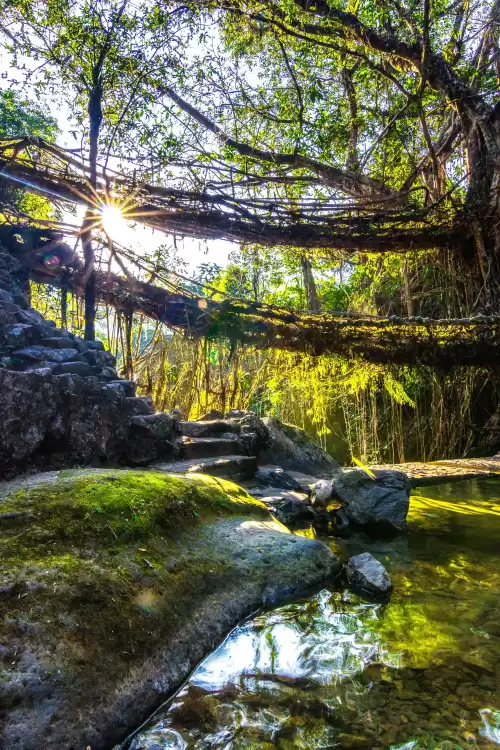
Nongriat is a remote village famous for the Double Decker Living Root Bridge, a unique natural structure formed by intertwining tree roots shaped over generations by the Khasi community. Reaching the village requires a long descent of stone steps through dense forest terrain.
The journey is physically demanding but rewarding, as it passes through waterfalls, streams, and rainforest landscapes before reaching the bridge area. Rainbow Falls, located further along the trail, adds another layer of natural beauty to the experience.
It is one of the most iconic trekking destinations in Meghalaya.
Nongriat represents the perfect blend of culture, nature, and endurance travel.
Nongriat offers one of Meghalaya’s most unforgettable trekking experiences.
The Umngot River in Dawki is one of the most visually striking natural attractions in Meghalaya, known for its exceptionally clear water where boats appear to float over a transparent surface. During the dry and post-monsoon months, the river achieves peak clarity, creating surreal reflections of the sky and surrounding hills.
The river’s calm flow through green valleys makes it ideal for slow boat rides and peaceful observation of nature. The clarity changes with seasons, but even during slightly cloudy periods, the water retains its unique visual depth.
It is one of the most famous natural rivers in Northeast India.
The experience is defined by calmness, transparency, and immersive natural beauty.
Umngot River is Dawki’s most iconic natural highlight.
Shnongpdeng, located near Dawki, is a popular riverside destination known for its adventure activities and scenic camping spots along the Umngot River. The area offers a more immersive natural experience compared to the main Dawki viewpoint.
Visitors can engage in activities such as boating, kayaking, and cliffside relaxation, depending on water levels and seasonal conditions. The surroundings include rocky riverbanks, clear water stretches, and forested hills.
It is one of the most active adventure zones in Meghalaya.
Shnongpdeng combines natural beauty with light adventure experiences.
Shnongpdeng offers a more immersive version of the Dawki experience.
The India Bangladesh border viewpoint near Dawki provides a unique geographical perspective where travelers can observe the natural boundary between two countries marked by the river and surrounding landscape. The area is calm and lightly populated, offering a reflective travel experience.
The viewpoint is often visited alongside river activities, giving travelers a combined experience of natural beauty and geopolitical significance. The landscape remains peaceful, with hills and water defining the boundary region.
It is one of the most distinctive border viewpoints in Meghalaya.
The location adds cultural and geographical depth to the Dawki experience.
The border viewpoint adds a unique dimension to Dawki travel.
Mawlynnong is widely recognized as one of the cleanest villages in Asia, where well-maintained pathways, bamboo dustbins, and community-managed cleanliness create a uniquely organized rural environment. The village layout reflects strong collective responsibility among residents.
Walking through the village gives travelers a calm and structured rural experience, where flower-lined paths, traditional Khasi houses, and natural greenery coexist in harmony. The slow pace of life adds to the peaceful atmosphere of the area.
It is one of the most well-maintained village experiences in Meghalaya.
The cleanliness and community discipline make Mawlynnong a model eco-tourism destination.
Mawlynnong reflects disciplined and sustainable rural living.
The Bamboo Skywalk in Mawlynnong is a tall bamboo structure that provides panoramic views of the surrounding green landscapes and distant plains of Bangladesh on clear days. Built entirely using traditional materials, it blends with the natural environment while offering an elevated viewing experience.
The climb to the top is relatively simple, and once at the viewing platform, visitors can observe layered hills, forests, and open countryside stretching across the horizon. Weather conditions greatly influence visibility.
It is one of the most scenic viewpoints in the region.
The skywalk highlights both engineering simplicity and natural beauty.
The skywalk offers a unique elevated perspective of Meghalaya’s landscape.
The Riwai Living Root Bridge, located close to Mawlynnong, is a naturally formed bridge created by guiding the roots of rubber trees over time. It represents the traditional Khasi practice of shaping living roots into functional structures that strengthen with age.
The bridge is surrounded by forested paths and small streams, creating a peaceful environment for short walks and photography. Compared to longer treks like Nongriat, this bridge is easily accessible and suitable for most travelers.
It is one of the most accessible living root bridges in Meghalaya.
The site combines cultural heritage with natural engineering.
Riwai Bridge showcases Khasi bioengineering in its simplest form.
The Double Decker Living Root Bridge in Nongriat is one of Meghalaya’s most extraordinary natural wonders, formed by guiding and shaping living tree roots over generations. Reaching it requires a challenging descent of steep stone steps through dense rainforest from Tyrna village.
The trek is physically demanding but deeply rewarding, passing through thick forest cover, small streams, and misty surroundings. The bridge itself stands as a remarkable example of Khasi ecological knowledge and long-term natural engineering.
It is one of the most iconic trekking landmarks in Meghalaya.
The experience combines endurance, nature immersion, and cultural heritage in a single journey.
The journey is as significant as the destination itself.
Rainbow Falls lies further beyond the Double Decker Living Root Bridge and requires an additional trek through forest paths and river crossings. The waterfall is known for its pristine surroundings and occasional rainbow formations created by sunlight interacting with mist.
The route to the falls is less crowded and more natural, offering deeper immersion into Meghalaya’s rainforest environment. The journey is physically demanding but highly rewarding for experienced trekkers.
It is one of the most scenic hidden waterfalls in Meghalaya.
The falls represent the deeper, untouched side of Nongriat’s landscape.
Rainbow Falls adds depth to the Nongriat trekking experience.
The trekking route to Nongriat and beyond is filled with natural pools, bamboo bridges, and forest trails that showcase Meghalaya’s untouched rainforest ecosystem. These areas provide resting points and refreshing water spots for trekkers during the long journey.
The trails vary in terrain, from steep stone steps to soft forest paths surrounded by thick vegetation. The presence of clear water streams adds a refreshing element to the physically demanding trek.
It is one of the most immersive forest trekking environments in Meghalaya.
Every section of the route feels naturally rich and visually diverse.
The journey through Nongriat’s trails is deeply connected to nature at every step.
Meghalaya is home to some of the most dramatic waterfalls in India, and Nohkalikai Falls, Wei Sawdong Falls, and Krang Suri Waterfall together represent three distinct styles of natural beauty. Nohkalikai Falls is known for its immense height and powerful drop into a deep green pool, especially striking during monsoon.
Wei Sawdong Falls offers a multi-tiered structure with emerald-colored pools that require a short trek to reach, making it both scenic and adventurous. Krang Suri Waterfall is famous for its turquoise waters and well-maintained viewing areas, making it more accessible compared to remote falls.
It is one of the most visually diverse waterfall clusters in Meghalaya.
Each waterfall reflects a different aspect of the state’s terrain, from cliffs to pools to layered cascades.
These waterfalls showcase Meghalaya’s dramatic natural variety.
Seven Sisters Falls, located in Cherrapunji, features multiple streams flowing side by side from high cliffs, creating a wide and powerful waterfall system during the rainy season. It is especially impressive during monsoon when water volume increases significantly.
Elephant Falls near Shillong is a multi-tiered waterfall that is easily accessible and popular among families and casual travelers. Its structured viewing paths make it suitable for short visits while still offering strong scenic appeal.
It is one of the most visited waterfall combinations in Meghalaya.
Together, they represent both natural intensity and accessibility.
These waterfalls highlight Meghalaya’s accessibility and raw power.
Dainthlen Falls in Cherrapunji is known for its wide rock formations and strong water flow during the monsoon season, creating a powerful visual landscape shaped by natural erosion and local legends. The surrounding plateau adds to its open scenic character.
Tyrshi Falls near Jowai offers a more tranquil setting with cascading water flowing through green hills and rural landscapes. It is less crowded and ideal for slow exploration and photography.
It is one of the most balanced waterfall experiences in Meghalaya.
Together, they represent both dramatic and peaceful waterfall environments.
These waterfalls add depth to Meghalaya’s natural landscape diversity.
Shillong Peak is the highest point in the region and offers a wide panoramic view of Shillong city, surrounding hills, and distant valleys. On clear days, the layered geography of Meghalaya becomes visible, making it one of the best locations to understand the terrain from above.
Laitlum Canyon, in contrast, delivers a dramatic cliffside experience with deep gorges, rolling clouds, and vast open valleys. The viewpoint feels especially atmospheric during monsoon when mist moves through the canyon, constantly changing visibility.
It is one of the most iconic viewpoint combinations in Meghalaya.
Together, they represent both urban elevation and raw natural drama.
These viewpoints define Meghalaya’s elevation-based landscapes.
Mawkdok Dympep Valley Viewpoint lies on the route to Cherrapunji and offers a sweeping view of a deep green valley surrounded by cliffs and rolling hills. The viewpoint is easily accessible from the main road, making it a convenient stop for travelers.
The valley often remains partially covered in mist, especially during monsoon and early morning hours, creating a layered visual effect that highlights the depth of the terrain.
It is one of the most accessible scenic viewpoints in Meghalaya.
The location is popular for short stops and landscape photography.
Mawkdok offers quick but powerful visual impact.
Eco Park in Cherrapunji provides well-maintained viewpoints overlooking deep valleys and waterfall-fed landscapes, making it a comfortable and scenic stop for visitors exploring the region. The park layout allows easy walking and multiple viewing angles.
Thangkharang Park offers broader views of the Bangladesh plains and surrounding cliffs, especially during clear weather conditions. It is known for its open landscapes and calm environment, ideal for relaxed sightseeing.
It is one of the most peaceful viewpoint zones in Meghalaya.
Both parks combine accessibility with wide scenic perspectives.
These parks offer structured and comfortable viewing experiences.
Mawsmai Cave in Cherrapunji is one of the most accessible limestone caves in Meghalaya, known for its narrow passages, natural rock formations, and short guided walking route. The cave is well-lit in sections, making it suitable for most travelers, including families and first-time visitors.
Arwah Cave offers a more expansive and adventurous underground experience with longer tunnels, fossil impressions, and deeper limestone structures. The natural formations inside the cave reflect millions of years of geological activity, creating a raw and immersive environment.
It is one of the most important cave systems in Meghalaya.
Together, these caves showcase both easy-access and exploratory underground travel experiences.
These caves reveal Meghalaya’s hidden underground landscape.
Siju Cave is one of the longest and most significant cave systems in the Garo Hills, featuring complex limestone formations, underground river sections, and deep natural chambers. The cave is located near the Simsang River and forms part of a larger karst landscape.
Exploration inside Siju Cave requires guidance due to its depth, darkness, and water-filled sections. The cave environment remains cool and humid, offering a completely different experience from surface landscapes.
It is one of the most important cave ecosystems in Northeast India.
The experience combines geology, adventure, and natural mystery.
Siju Cave offers a deep underground exploration experience.
Liat Prah Cave, located in the Jaintia Hills region, is known as one of the longest cave systems in India, attracting adventure enthusiasts and speleologists. The cave features extensive underground passages, some of which remain partially unexplored.
The environment inside is dark, complex, and requires proper equipment and expert guidance for safe exploration. Its scale and geological formations make it a significant site for advanced cave exploration in Meghalaya.
It is one of the most extensive cave systems in the country.
The cave is suited for experienced explorers rather than casual tourists.
Liat Prah represents Meghalaya’s extreme cave exploration frontier.
Mawphlang Sacred Forest is one of the most important ecological and cultural sites in Meghalaya, preserved for centuries through Khasi traditions that restrict cutting or disturbing the natural ecosystem. The forest is dense, moss-covered, and filled with ancient trees that create a naturally protected biodiversity zone.
Umiam Lake, on the other hand, offers a completely different experience with its vast artificial reservoir surrounded by rolling green hills. The lake reflects changing skies and is especially scenic during sunrise and sunset when light conditions enhance the water’s surface.
It is one of the most contrasting nature combinations in Meghalaya.
Together, they represent both sacred ecology and scenic water landscapes.
These two sites define Meghalaya’s ecological diversity.
Balpakram National Park in the Garo Hills is known for its dramatic landscapes, deep gorges, and plateau formations, often referred to in local traditions as a spiritually significant land. The park supports a variety of wildlife and unique geological formations.
Nokrek National Park, a UNESCO Biosphere Reserve, is a dense forest region known for its high biodiversity and rare plant species. It represents one of the most ecologically rich zones in Meghalaya, with limited human interference and deep forest cover.
It is one of the most important conservation regions in Northeast India.
Both parks offer contrasting experiences of dramatic terrain and dense rainforest ecology.
These parks highlight Meghalaya’s ecological richness.
Living Root Bridges are one of Meghalaya’s most unique natural attractions, created by guiding the roots of rubber fig trees over years to form strong, living structures that grow stronger over time. These bridges are primarily found in regions like Nongriat and nearby villages.
Surrounding river valleys enhance the experience with flowing streams, dense forests, and natural pools that form part of the trekking routes leading to these bridges. The combination of culture and nature makes this experience highly distinctive.
It is one of the most iconic natural engineering wonders in the world.
These landscapes reflect the deep relationship between Khasi culture and nature.
Living Root Bridges represent living architecture shaped by nature and tradition.
Meghalaya offers a wide variety of destinations that can be planned based on the kind of travel experience a visitor is looking for, whether it is nature-focused, adventure-driven, or culturally immersive. Each region contributes a different layer, from waterfalls and caves to sacred forests and living traditions.
Shillong and its surroundings are ideal for balanced travel with easy access to viewpoints, lakes, and cultural spaces, while Cherrapunji offers dramatic waterfalls and caves. Dawki and Mawlynnong focus more on riverside beauty and village life, whereas deeper regions like Garo and Jaintia Hills offer offbeat exploration.
It is one of the most diverse travel destinations in Northeast India.
A thoughtful selection of places ensures a more meaningful and less rushed travel experience.
Destination choice defines the overall Meghalaya travel experience.
First-time travelers to Meghalaya benefit most from a structured itinerary that balances popular attractions with enough time for travel between destinations. A typical route includes Shillong as a base, followed by Cherrapunji, Dawki, and Mawlynnong, depending on the number of travel days available.
Short trips may focus only on Shillong and nearby attractions, while longer itineraries allow inclusion of Nongriat treks and deeper exploration of waterfalls and caves. Travel time between destinations should always be considered due to winding hill roads.
It is one of the most itinerary-sensitive destinations in Northeast India.
Proper pacing ensures both comfort and better experience across all regions.
A well-paced itinerary enhances every aspect of Meghalaya travel.
Before exploring Meghalaya, travelers should prepare for varying weather conditions, long road journeys, and mixed terrain that includes forests, hills, and river valleys. Proper clothing, especially waterproof and layered options, is essential due to frequent rainfall and changing temperatures.
Basic travel essentials such as cash, medicines, and power backups are important, especially in remote regions where connectivity may be limited. Comfortable footwear is crucial for walking, trekking, and exploring uneven natural paths.
It is one of the most important preparation steps for Northeast India travel.
Good preparation ensures smoother travel across Meghalaya’s diverse landscapes.
Proper preparation ensures a safe, comfortable, and memorable Meghalaya journey.

Get customized Meghalaya tour planning designed around rainfall patterns, road connectivity, seasonal visibility, and realistic hill travel timing. Whether you are visiting for waterfalls, cave exploration, scenic drives, village experiences, or nature-fo
⚡ Quick Response | 💰 Free consultation | 🕒 24×7 expert support