
What is Meghalaya Famous For?
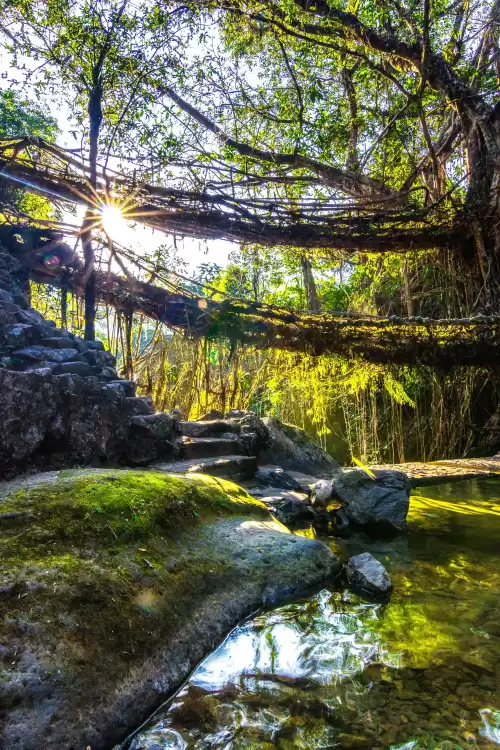
Meghalaya is famous for its living root bridges, waterfalls, caves, hills, tribal culture, clean villages, crystal clear rivers, and unique natural landscapes that attract travellers throughout the year.
+91 9910402252
admin@chalbanjare.com


Mobile network availability in Meghalaya varies across Shillong, hill stations, villages, waterfalls, and remote areas, making SIM selection important for communication during travel.
Mobile connectivity in Meghalaya varies considerably depending on the region you are visiting. Major towns such as Shillong, Tura, Jowai, Nongpoh, and several district headquarters generally enjoy reliable mobile coverage from multiple telecom operators. However, as travellers move towards mountain roads, deep valleys, forests, waterfalls, and remote villages, network strength may fluctuate because of the challenging terrain. Hills, dense vegetation, and changing elevations naturally influence signal availability across different parts of the state.
Tourists travelling through Meghalaya should therefore avoid assuming that mobile coverage remains equally strong throughout the journey. While most popular tourist destinations have basic communication services, internet speed and signal quality can vary throughout the day depending on location and weather conditions. Understanding these regional differences helps visitors prepare appropriate communication arrangements before beginning their trip.
Knowing how connectivity changes across Meghalaya helps travellers avoid unnecessary inconvenience while ensuring they remain connected during both city sightseeing and remote nature exploration.
Shillong offers the most dependable mobile connectivity in Meghalaya because it has better telecom infrastructure than most other parts of the state. Visitors can usually expect stable calling and mobile internet services throughout much of the city. Other towns also provide satisfactory coverage, although speeds may differ between operators depending on local infrastructure.
Outside urban centres, especially in hill regions, villages, and forested areas, mobile signals may become weaker or unavailable for short stretches. Road journeys between destinations such as Shillong, Cherrapunji, Dawki, Mawlynnong, Jowai, and remote villages occasionally pass through areas where coverage temporarily drops. These brief interruptions are a normal part of travelling through mountainous terrain and should be anticipated while planning the journey.
| Region | Expected Connectivity | General Reliability |
|---|---|---|
| Shillong | Strong coverage | High |
| Major Towns | Good coverage | Moderate to High |
| Villages | Variable coverage | Moderate |
| Remote Hills | Occasional signal gaps | Limited |
Understanding these regional differences allows travellers to plan digital communication more effectively while avoiding unnecessary concern during temporary network interruptions in remote parts of Meghalaya.
Choosing the right SIM card before arriving in Meghalaya helps ensure uninterrupted communication throughout the trip. Travellers planning to visit only Shillong and nearby destinations may find one reliable operator sufficient. However, those travelling extensively through Cherrapunji, Dawki, Mawlynnong, Jowai, Mawsynram, or more remote regions may benefit from carrying a backup SIM from another telecom provider to improve the chances of maintaining connectivity.
Downloading offline maps, hotel confirmations, transport details, emergency contacts, and digital copies of important travel documents before entering remote areas is equally important. Carrying a fully charged power bank ensures mobile devices remain operational throughout long sightseeing days, especially when using navigation, photography, or mobile internet extensively.
Thoughtful communication planning greatly improves convenience while travelling through Meghalaya. A combination of reliable mobile networks, offline resources, and backup power ensures visitors remain connected throughout their journey.
Several major telecom operators provide mobile services throughout Meghalaya, allowing travellers to stay connected while exploring the state. Airtel, Jio, Vi, and BSNL all operate across different parts of Meghalaya, although coverage quality varies according to the destination, surrounding terrain, and distance from urban centres. No single operator offers identical performance everywhere, making it useful to understand the strengths of each network before travelling.
Shillong and other larger towns generally receive coverage from all major operators, while remote villages and mountain regions may experience differences in signal availability depending on the network. Visitors planning extended road trips across multiple districts should therefore consider their itinerary before selecting a preferred SIM card for communication and mobile internet usage.
Understanding the strengths of different operators allows travellers to make informed decisions before beginning their Meghalaya journey. The best network often depends more on travel routes than on the operator itself.
Although all major telecom companies provide services within Meghalaya, differences exist in network coverage, internet speeds, and reliability across individual destinations. Urban areas generally support stronger mobile signals and faster data services, while mountain roads, valleys, and remote villages occasionally experience reduced speeds or temporary signal interruptions due to terrain.
Travellers should also remember that weather conditions can occasionally influence mobile performance in some regions, especially during periods of heavy rainfall. Rather than focusing solely on internet speed, visitors should evaluate overall network consistency along their planned route when selecting a SIM card for the trip.
| Factor | Urban Areas | Remote Areas |
|---|---|---|
| Calling Quality | Generally stable | May vary |
| Mobile Internet | Usually faster | Variable speeds |
| Signal Strength | Strong | Depends on terrain |
| Reliability | Higher | Location dependent |
Understanding these differences helps visitors prepare realistic expectations while travelling across Meghalaya. Stable communication often depends on both the chosen network and the specific destination being visited.
The most suitable mobile network depends largely on where you plan to travel within Meghalaya. Visitors staying mainly in Shillong generally experience reliable connectivity with all major operators. Those exploring multiple districts, undertaking long road trips, or visiting remote villages should consider carrying a secondary SIM card to maximise connectivity across changing landscapes.
Travellers who rely heavily on navigation, digital payments, online bookings, remote work, or frequent communication should prepare additional offline resources before leaving urban areas. Downloading maps, storing hotel confirmations, and keeping important contact numbers accessible without internet access ensures uninterrupted travel even if temporary signal gaps occur during the journey.
Choosing a network based on your actual itinerary rather than general recommendations provides the best communication experience while travelling through Meghalaya's diverse landscapes. Careful preparation ensures visitors remain connected wherever practical throughout their journey.
Airtel is one of the commonly used mobile networks in Meghalaya and provides coverage across many of the state's important towns and tourist destinations. Travellers visiting Shillong, Nongpoh, Jowai, Tura, Cherrapunji, Dawki, and several other populated areas generally find Airtel suitable for regular communication. Coverage is usually more reliable in towns and along major highways than in isolated valleys or remote villages.
During road journeys between popular destinations, Airtel users may occasionally experience temporary signal fluctuations while passing through mountainous terrain, dense forests, or deep valleys. These interruptions are generally short and are typical of travel across Meghalaya's hilly landscape. For most sightseeing itineraries covering the state's major attractions, Airtel remains a practical communication option.
Travellers visiting Meghalaya's well-known destinations generally find Airtel suitable for staying connected. Understanding where coverage naturally varies helps visitors prepare realistic expectations before entering remote regions.
In urban centres such as Shillong, Airtel generally provides dependable calling services together with mobile internet suitable for navigation, messaging, online bookings, and everyday browsing. Visitors travelling through popular sightseeing areas often experience satisfactory connectivity, allowing them to upload photographs, access digital maps, and communicate with accommodation providers during their trip.
Performance may vary around remote waterfalls, caves, forest trails, and isolated viewpoints where mountain terrain naturally affects signal strength. Travellers should therefore complete important online tasks before leaving towns whenever possible. Downloading offline maps and storing booking confirmations locally remains a useful precaution regardless of the chosen network.
| Location | Calling | Mobile Internet |
|---|---|---|
| Shillong | Generally reliable | Good for everyday use |
| Major Tourist Areas | Usually available | Generally satisfactory |
| Mountain Roads | Occasional fluctuations | May vary |
| Remote Locations | Limited in some areas | Variable connectivity |
Airtel performs well for most routine travel requirements across Meghalaya. Travellers should nevertheless remain prepared for occasional network variations while exploring more remote natural attractions.
Travellers requiring dependable calling, navigation, messaging, and moderate mobile internet usage throughout Meghalaya often consider Airtel among their preferred network choices. Visitors spending most of their time in Shillong and other major destinations generally experience convenient connectivity for everyday travel requirements.
Those planning longer journeys through multiple districts or remote villages may benefit from carrying a second SIM card from another operator as a backup. Combining reliable communication with offline maps, downloaded travel documents, and a fully charged power bank provides additional confidence during extended sightseeing trips across Meghalaya.
Airtel offers a practical communication solution for many Meghalaya itineraries. Proper preparation with offline resources ensures visitors remain connected even if temporary signal variations occur during remote travel.
Jio is another widely used telecom network across Meghalaya and provides connectivity in many of the state's major towns, tourist destinations, and frequently travelled routes. Visitors travelling through Shillong, Cherrapunji, Dawki, Nongpoh, Jowai, Tura, and surrounding areas generally find Jio suitable for calling and mobile internet during everyday travel. Coverage is strongest around populated areas where telecom infrastructure is more developed.
Like all mobile operators in Meghalaya, Jio may experience temporary signal changes while travelling through mountainous terrain, forested roads, and remote valleys. These variations are influenced primarily by geography rather than network quality alone. Travellers should therefore anticipate occasional connectivity gaps while exploring isolated locations beyond the main tourist routes.
Jio provides dependable connectivity across much of Meghalaya's popular travel circuit. Understanding where natural terrain influences signal strength helps travellers prepare more effectively for their journey.
Travellers using Jio generally experience satisfactory mobile internet performance in Shillong and other major towns where network infrastructure is stronger. Data services are commonly used for navigation, hotel bookings, digital payments, messaging applications, and sharing travel photographs during sightseeing. Performance may gradually change while moving towards more remote attractions where terrain becomes increasingly mountainous.
Visitors travelling to waterfalls, caves, trekking routes, or isolated villages should avoid depending entirely on continuous internet connectivity. Downloading offline maps, saving booking confirmations, and storing emergency contact numbers before leaving urban areas remains a sensible precaution for every traveller regardless of the network being used.
| Area | Expected Data Performance | General Usage |
|---|---|---|
| Shillong | Generally stable | Everyday internet use |
| Tourist Towns | Usually reliable | Navigation and communication |
| Hill Roads | Variable | Intermittent connectivity possible |
| Remote Attractions | Limited in some places | Offline preparation recommended |
Jio provides sufficient mobile internet for most visitors travelling through Meghalaya's principal tourist destinations. Preparing offline resources remains advisable before entering more isolated regions.
Visitors who rely on digital navigation, online reservations, messaging, remote work, or frequent internet access often include Jio among their preferred SIM choices while travelling through Meghalaya. Its availability across major tourist routes makes it practical for travellers who remain mainly within the state's well-connected regions.
Travellers planning extensive road trips covering remote villages, forest routes, and less-developed districts should still consider carrying an additional SIM from another network as backup. Combining multiple communication options with downloaded maps and sufficient battery backup ensures uninterrupted access to important travel information whenever possible.
Jio remains a practical choice for visitors requiring dependable connectivity throughout much of Meghalaya. Careful preparation and realistic expectations help ensure smooth communication during both urban sightseeing and remote exploration.
Vi provides mobile services across several towns and populated regions of Meghalaya, offering travellers another option for voice calls and mobile internet during their journey. Visitors staying in Shillong and travelling through other important towns generally find Vi suitable for routine communication, digital payments, messaging, and navigation. Coverage is usually more dependable in urban centres and along frequently travelled roads than in isolated mountain regions.
As with every telecom operator in Meghalaya, network strength naturally changes depending on terrain. Deep valleys, dense forests, high-altitude roads, and sparsely populated villages may experience reduced signal strength or temporary interruptions. Travellers should therefore consider their complete itinerary rather than selecting a network based only on city performance.
Vi offers practical connectivity for many Meghalaya itineraries, especially those centred around the state's larger towns. Understanding natural coverage variations helps visitors prepare more effectively for travel beyond urban areas.
Travellers using Vi can generally expect reliable calling services and mobile internet in well-connected destinations such as Shillong and other district headquarters. Visitors can comfortably use navigation applications, access hotel bookings, communicate through messaging services, and perform everyday online activities while staying in areas with established telecom infrastructure.
Connectivity may become less consistent while travelling through remote hill roads, waterfalls, caves, and smaller villages where terrain affects signal strength. Downloading offline maps, travel documents, and important contact information before leaving urban centres remains advisable for visitors relying heavily on digital resources during their trip.
| Location | Voice Calls | Mobile Internet |
|---|---|---|
| Shillong | Generally reliable | Suitable for everyday use |
| Major Towns | Usually available | Generally stable |
| Hill Roads | May fluctuate | Variable performance |
| Remote Villages | Limited in some areas | Offline preparation recommended |
Understanding where connectivity naturally changes allows travellers to use Vi effectively while planning suitable offline alternatives during exploration of remote parts of Meghalaya.
Vi is a practical option for travellers spending most of their time in Shillong and other well-connected towns where communication requirements are generally met without difficulty. Visitors planning sightseeing, shopping, accommodation bookings, and regular internet usage within these areas are likely to find the network suitable for routine travel needs.
Travellers undertaking extensive road trips through remote districts or villages should consider carrying a backup SIM from another operator for additional flexibility. Keeping power banks charged, downloading offline navigation, and saving important contact details locally ensures uninterrupted access to essential information whenever mobile coverage changes during the journey.
Vi supports comfortable travel across many parts of Meghalaya when combined with sensible preparation. Using offline resources alongside your preferred network helps ensure reliable communication throughout the trip.
BSNL has a long-standing presence across Meghalaya and continues to provide connectivity in many areas where travellers explore both popular and less-developed destinations. While network performance varies by location, BSNL can be available in certain regions where terrain limits the reach of other operators. Visitors travelling extensively through remote districts sometimes keep a BSNL SIM as an additional communication option during longer journeys.
In larger towns such as Shillong, travellers have several network choices available, but BSNL may become useful while travelling towards smaller settlements where network availability differs between operators. Since coverage depends heavily on local infrastructure and geography, travellers should avoid assuming identical performance across every destination.
BSNL remains a valuable network for travellers exploring beyond Meghalaya's main tourist circuit. Carrying it alongside another operator can improve communication flexibility during remote travel.
Many experienced travellers choose BSNL as a secondary SIM because network availability differs between telecom operators across Meghalaya's mountainous terrain. While one network may experience weak coverage in a particular valley or village, another may continue providing basic connectivity. Carrying BSNL alongside a primary network therefore increases the likelihood of maintaining communication during extended journeys.
This approach is particularly useful for visitors travelling through multiple districts, undertaking long road trips, or exploring remote villages where uninterrupted connectivity cannot always be expected. Although internet speeds and network performance vary depending on the exact location, having an additional SIM offers valuable flexibility during emergencies or when one network experiences temporary signal loss.
| Situation | How BSNL Can Help |
|---|---|
| Remote villages | Additional communication option |
| Mountain road journeys | Backup network availability |
| Multi-district travel | Improved connectivity flexibility |
| Long sightseeing days | Alternative communication support |
Using BSNL as part of a dual-SIM strategy provides additional confidence during journeys across Meghalaya, particularly for travellers visiting remote destinations beyond the state's major towns.
Travellers who depend on mobile communication for navigation, accommodation coordination, photography uploads, emergency contact, or remote work should consider keeping BSNL as a secondary SIM while using another primary operator. This combination provides greater flexibility when travelling through regions where coverage naturally varies because of hills, valleys, forests, and changing elevations.
Regardless of the chosen network, visitors should still download offline maps, save accommodation details, store emergency numbers, and carry a fully charged power bank before beginning long sightseeing days. Good preparation remains the most reliable way to stay connected while exploring Meghalaya's diverse landscapes.
Combining BSNL with another telecom operator creates a practical communication strategy for many Meghalaya itineraries. This approach allows travellers to explore remote regions with greater confidence while remaining prepared for natural network variations.
Much of Meghalaya is made up of rolling hills, deep valleys, forests, cliffs, and winding mountain roads. These natural features create breathtaking scenery but also influence how mobile networks perform. Unlike flat urban areas where telecom towers provide broad coverage, signals in mountainous regions can weaken when roads pass through valleys, dense forests, or isolated hilltops. Travellers should therefore expect occasional fluctuations while exploring destinations away from major towns.
Popular hill destinations including Laitlum Canyon, the Khasi Hills, Jaintia Hills, Garo Hills, and scenic viewpoints across the state generally have connectivity near settlements, but coverage may reduce as visitors move towards trekking routes, remote viewpoints, waterfalls, and nature trails. Temporary signal loss during road journeys is normal and usually improves once travellers reach another populated area.
Understanding how Meghalaya's mountainous landscape affects connectivity helps travellers prepare realistic expectations. Temporary network changes are a natural part of travelling through the state's beautiful hill regions.
Road trips are among the highlights of travelling through Meghalaya. Routes connecting Shillong with Cherrapunji, Dawki, Mawlynnong, Mawsynram, Jowai, Tura, and other destinations pass through spectacular mountain scenery where network availability changes depending on elevation, surrounding hills, and nearby settlements. Travellers may notice stable connectivity for long stretches followed by short areas with reduced signal.
These changes rarely affect the overall journey if travellers prepare in advance. Navigation can continue using downloaded offline maps, while previously saved hotel confirmations and emergency contacts remain accessible without internet access. Preparing digital resources before leaving larger towns significantly improves convenience throughout long scenic drives.
| Journey Section | Typical Connectivity | Preparation |
|---|---|---|
| Major Highways | Generally reliable | Normal mobile usage |
| Mountain Roads | Occasional fluctuations | Keep offline maps ready |
| Remote Viewpoints | Variable | Download travel information beforehand |
| Forest Sections | Temporary signal gaps possible | Carry backup communication options |
Scenic road journeys remain enjoyable when travellers understand that mobile connectivity naturally changes with the landscape. A little preparation ensures uninterrupted access to important travel information throughout the drive.
Visitors planning to explore Meghalaya's hill regions should organise communication requirements before beginning the journey. Fully charged mobile devices, downloaded maps, offline travel documents, emergency contact numbers, and accommodation details provide valuable support if internet connectivity temporarily becomes unavailable. Travellers undertaking long road trips may also benefit from carrying a backup SIM card from another telecom operator.
Power banks become especially useful during full-day sightseeing because continuous photography, navigation, and internet use can quickly reduce battery levels. Good preparation allows visitors to focus on Meghalaya's spectacular landscapes rather than worrying about communication during remote travel.
Thoughtful communication planning makes travelling through Meghalaya's hill regions significantly easier. Combining reliable mobile networks with offline resources ensures visitors remain prepared while exploring some of Northeast India's most scenic mountain landscapes.
Mobile internet is available across most of Meghalaya's popular tourist destinations, allowing travellers to access navigation, accommodation bookings, digital payments, messaging services, and travel information throughout much of their journey. Shillong offers the strongest internet connectivity, while towns such as Cherrapunji, Dawki, Jowai, Nongpoh, and Tura generally provide satisfactory mobile data services depending on the network operator being used.
As visitors move towards remote waterfalls, caves, forests, trekking routes, and smaller villages, internet performance may naturally vary because of terrain and distance from telecom infrastructure. These changes are common across mountainous destinations and should be expected while travelling beyond the main tourist centres.
Most visitors can comfortably use mobile internet across Meghalaya's primary travel circuit. Understanding where speeds naturally change helps travellers plan digital activities more effectively.
Urban destinations generally provide faster and more consistent mobile internet than rural villages or isolated mountain regions. Shillong has the strongest telecom infrastructure, making it the ideal location for downloading travel documents, uploading photographs, making video calls, or completing online work. Rural areas generally support everyday communication, but speeds may fluctuate according to network availability and local geography.
Visitors relying on continuous internet access should complete important online tasks before leaving well-connected towns. Downloading offline maps and travel information reduces dependence on real-time connectivity while exploring remote attractions across Meghalaya.
| Area | Typical Internet Experience |
|---|---|
| Shillong | Generally faster and more consistent |
| Major Towns | Suitable for everyday internet use |
| Villages | Variable speeds |
| Remote Attractions | Internet availability may fluctuate |
Recognising these differences helps travellers schedule online activities more efficiently while reducing inconvenience during visits to Meghalaya's rural and mountainous destinations.
The most suitable mobile data plan depends on how travellers intend to use their devices during the trip. Visitors relying mainly on navigation, messaging, and occasional browsing usually require moderate daily data, while photographers, remote workers, and travellers regularly uploading images or videos may benefit from larger data allowances.
Regardless of the chosen plan, downloading maps, travel guides, accommodation confirmations, and emergency information before leaving Shillong remains a sensible habit. Combining sufficient mobile data with offline resources creates a reliable communication strategy throughout Meghalaya.
Choosing an appropriate mobile data plan improves convenience throughout the journey. Together with offline preparation, it allows visitors to stay connected while exploring Meghalaya's diverse destinations.
The ideal SIM card for travelling in Meghalaya depends largely on the destinations included in the itinerary and the traveller's communication requirements. Families often prioritise dependable calling for coordination during sightseeing, while couples may rely on navigation, digital payments, accommodation bookings, and sharing travel updates. Solo travellers usually require consistent connectivity for maps, transport planning, emergency communication, and staying connected with family throughout the journey.
Since no single network performs identically across every part of Meghalaya, many experienced travellers prefer carrying a primary SIM together with a secondary backup SIM when planning to visit multiple districts. This approach increases the chances of maintaining communication while travelling through mountain roads, villages, forests, and remote sightseeing locations where network availability naturally changes.
Choosing the right SIM before beginning the journey helps reduce communication concerns during travel. Matching your network choice with your travel style creates a smoother and more convenient experience across Meghalaya.
Travellers who frequently use mobile internet require slightly different preparation from visitors using their phones mainly for voice calls. Photographers often upload images, back up files to cloud storage, access weather forecasts, and use navigation throughout the day. Remote workers may also depend on stable internet for emails, messaging applications, and occasional online meetings while staying in larger towns.
Although mobile internet performs well in many urban locations, visitors should remember that speeds can naturally vary in remote destinations. Downloading offline maps, saving attraction details, and storing accommodation confirmations before leaving Shillong or other well-connected towns reduces dependence on continuous internet connectivity.
| Traveller Type | Primary Requirement | Recommended Preparation |
|---|---|---|
| Families | Reliable communication | Carry backup SIM |
| Couples | Navigation and bookings | Download offline maps |
| Solo Travellers | Safety and connectivity | Save emergency contacts |
| Photographers and Digital Travellers | Mobile internet access | Carry power bank and offline resources |
Preparing according to your communication needs ensures that digital tools remain useful throughout the journey. A combination of suitable data plans and offline resources provides the greatest flexibility while travelling across Meghalaya.
Short holidays focused on Shillong and nearby attractions usually require only one dependable SIM card because mobile connectivity remains relatively consistent across the city and surrounding tourist areas. However, travellers planning longer itineraries covering Cherrapunji, Dawki, Mawlynnong, Jowai, Tura, Mawsynram, or remote villages should consider additional communication options before departure.
Trip duration also influences battery usage, data consumption, and offline storage requirements. Longer journeys benefit from larger mobile data plans, power banks, downloaded maps, and backup communication methods. Preparing these essentials before entering remote regions helps minimise inconvenience during extended road trips.
Matching your SIM choice to the destinations and duration of your Meghalaya holiday creates a more reliable travel experience. Careful planning ensures uninterrupted communication throughout both city sightseeing and remote exploration.
One of the simplest ways to improve communication while travelling through Meghalaya is to carry a backup SIM card from another telecom operator. Since mobile coverage naturally varies across hills, valleys, forests, villages, and remote tourist destinations, having access to more than one network increases the likelihood of maintaining connectivity throughout the journey. This is particularly useful for travellers visiting multiple districts over several days.
Dual SIM smartphones make this arrangement convenient because travellers can switch between networks whenever signal strength changes. Even if one network experiences temporary fluctuations along a mountain road or in a remote village, the second SIM may continue to provide calling or mobile internet services depending on local coverage conditions.
A backup SIM provides additional flexibility without requiring major preparation. It is one of the most practical ways to improve communication reliability while exploring Meghalaya's varied landscapes.
Offline preparation is essential for travelling through Meghalaya because internet connectivity naturally changes between urban areas and remote destinations. Before leaving Shillong or another well-connected town, travellers should download offline maps covering the entire route together with hotel reservations, attraction details, transport confirmations, emergency contact numbers, and identification documents.
Offline navigation allows visitors to continue travelling confidently even if mobile data becomes temporarily unavailable during road trips. Saving information locally also reduces battery consumption because devices do not need to search continuously for mobile networks while passing through areas with weaker coverage.
| Offline Resource | Benefit During Travel |
|---|---|
| Offline Maps | Navigation without internet |
| Hotel Confirmations | Easy accommodation access |
| Emergency Contacts | Quick communication when required |
| Travel Documents | Access without mobile data |
| Attraction Information | Useful during sightseeing |
Preparing digital resources before entering remote areas ensures travellers always have access to essential information. Offline planning remains one of the most valuable habits for travelling across Meghalaya.
Mobile phones perform many important functions during travel, including navigation, photography, hotel bookings, communication, digital payments, and emergency contact. Continuous use of these features throughout the day can reduce battery life much faster than expected. Carrying a fully charged power bank allows travellers to recharge devices during long sightseeing trips without searching for charging facilities.
This becomes particularly valuable when visiting waterfalls, caves, villages, trekking routes, or scenic viewpoints where electricity may not be readily available. Charging devices overnight and carrying suitable charging cables further improves convenience during multi-day Meghalaya holidays.
Reliable battery backup is just as important as good mobile coverage. Keeping devices charged allows travellers to communicate confidently while enjoying Meghalaya's waterfalls, villages, mountains, and scenic road journeys.
One of the most common mistakes travellers make is assuming that a single mobile network will provide identical coverage across every destination in Meghalaya. Although major towns generally support multiple operators, remote villages, mountain roads, forests, and valleys may experience different levels of connectivity depending on the network. Relying entirely on one SIM card can occasionally create unnecessary communication difficulties during extended road trips.
Visitors travelling across several districts should consider carrying a second SIM from another telecom operator whenever possible. This simple precaution provides additional flexibility and improves the chances of maintaining communication throughout the journey.
Using more than one network greatly improves communication reliability across Meghalaya. A little preparation before the trip often prevents unnecessary inconvenience during travel.
Another frequent mistake is expecting uninterrupted mobile internet while visiting waterfalls, caves, trekking routes, isolated villages, or mountain viewpoints. Meghalaya's terrain naturally influences network coverage, and temporary signal changes are a normal part of travelling through many remote landscapes. Visitors should avoid assuming that navigation, online payments, or messaging services will remain continuously available everywhere.
Preparing offline alternatives allows travellers to continue sightseeing comfortably even when internet connectivity changes. Downloaded maps, locally stored travel documents, and saved emergency contacts remain accessible regardless of mobile signal availability.
| Common Mistake | Better Approach |
|---|---|
| Expecting constant internet everywhere | Prepare offline resources |
| Using only one SIM | Carry a backup network |
| Ignoring battery levels | Carry a power bank |
| Travelling without downloaded maps | Save maps before departure |
Recognising the natural limitations of mountain connectivity helps travellers avoid frustration while making better communication decisions throughout their Meghalaya holiday.
Perhaps the biggest communication mistake is beginning long road trips without downloading essential travel resources. Travellers who depend entirely on live internet connections may face inconvenience if temporary signal changes occur while navigating remote roads or visiting isolated attractions. Offline preparation requires only a few minutes but offers significant advantages throughout the journey.
Before leaving Shillong or another major town, visitors should save maps, accommodation confirmations, emergency contact numbers, attraction details, transport bookings, and identification documents on their devices. Combined with a backup SIM and fully charged power bank, these preparations create a dependable communication strategy for exploring Meghalaya.
Simple offline preparation eliminates many common communication problems during Meghalaya travel. Visitors who prepare before leaving urban areas can confidently enjoy the state's mountains, waterfalls, villages, and scenic landscapes.
Selecting the right mobile network for Meghalaya depends more on your travel itinerary than on a single telecom operator. Visitors spending most of their holiday in Shillong and other major towns generally experience reliable connectivity with the major networks available in the state. However, travellers planning extended road trips through Cherrapunji, Mawsynram, Dawki, Mawlynnong, Jowai, Tura, or remote villages should prepare for changing coverage conditions as they move through mountainous terrain.
Families, solo travellers, photographers, remote workers, and adventure enthusiasts all have different communication requirements. Travellers who rely heavily on navigation, online bookings, cloud storage, or digital payments benefit from carrying a secondary SIM card whenever possible. This provides greater flexibility if one network experiences temporary signal fluctuations in certain locations.
The most suitable communication setup is one that matches both your destinations and your travel habits. Planning ahead allows visitors to remain connected while exploring Meghalaya comfortably and confidently.
Reliable communication is achieved not only through choosing the right mobile network but also by preparing practical backup solutions before travelling. Downloading offline maps, storing hotel reservations, saving transport confirmations, keeping emergency contacts accessible, and carrying a fully charged power bank all contribute to a smooth travel experience. These preparations become especially valuable while travelling through villages, waterfalls, forests, and mountain roads where network conditions naturally change.
Visitors should also complete important online activities before leaving Shillong or other well-connected towns. Updating navigation applications, downloading travel documents, and confirming accommodation details in advance reduces dependence on continuous mobile internet during the journey.
| Preparation | Benefit |
|---|---|
| Backup SIM | Additional communication flexibility |
| Offline Maps | Navigation without internet |
| Power Bank | Extended battery life during sightseeing |
| Offline Travel Documents | Access important information anytime |
| Emergency Contacts | Quick communication when required |
Combining reliable mobile networks with sensible offline preparation creates the best communication strategy for travelling across Meghalaya. These simple precautions minimise inconvenience while maximising travel confidence.
Before beginning your Meghalaya journey, review every communication requirement carefully. Ensure your preferred SIM card is active, download offline maps covering your complete itinerary, save accommodation details, transport bookings, emergency numbers, and identification documents on your device. Charge all electronic equipment before leaving each day and keep a power bank readily accessible throughout sightseeing.
While travelling, remember that temporary network changes are a normal part of exploring mountainous destinations. Rather than depending entirely on continuous internet connectivity, combine mobile networks with offline resources and realistic expectations. This approach allows travellers to focus on enjoying Meghalaya's waterfalls, forests, villages, scenic roads, and cultural experiences without unnecessary concern about communication.
With proper planning, staying connected throughout Meghalaya is straightforward and convenient. A combination of suitable mobile networks, offline preparation, backup communication options, and responsible travel planning ensures visitors can confidently explore every part of this remarkable hill state while remaining connected whenever practical.


Get customized Meghalaya tour planning designed around rainfall patterns, road connectivity, seasonal visibility, and realistic hill travel timing. Whether you are visiting for waterfalls, cave exploration, scenic drives, village experiences, or nature-fo
⚡ Quick Response | 💰 Free consultation | 🕒 24×7 expert support