
What is Meghalaya Famous For?
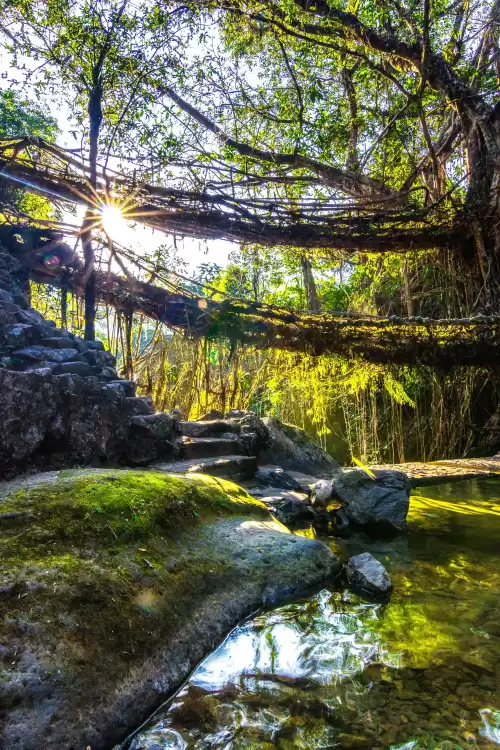
Meghalaya is famous for its living root bridges, waterfalls, caves, hills, tribal culture, clean villages, crystal clear rivers, and unique natural landscapes that attract travellers throughout the year.
+91 9910402252
admin@chalbanjare.com


Mawphlang is one of Meghalaya’s most fascinating cultural and nature destinations, known for its ancient sacred forest, Khasi traditions, monoliths, rolling grasslands, and unique eco-cultural experiences.
Mawphlang is a culturally and ecologically significant destination in the East Khasi Hills of Meghalaya, known primarily for its sacred forest and deeply rooted Khasi traditions. The area reflects a rare balance between natural conservation and indigenous belief systems, where nature is not just preserved but respected as a living entity.
The overall travel atmosphere in Mawphlang is calm, reflective, and nature-oriented. Unlike commercial tourist hubs, the region maintains a quiet rural character with open landscapes, forest edges, and small Khasi settlements that preserve traditional ways of life.
It is one of the most culturally grounded nature destinations in Meghalaya.
Visitors experience a blend of ecological exploration and cultural understanding, making Mawphlang ideal for slow travel and mindful exploration rather than rushed sightseeing.
Mawphlang offers a deeply immersive experience into Khasi culture and ecological balance.
First-time visitors typically spend half a day to one full day in Mawphlang, depending on how deeply they want to explore the Sacred Forest and surrounding areas. The compact nature of the destination makes it suitable for short visits from Shillong.
A half-day itinerary is enough for guided Sacred Forest walks and nearby viewpoints, while a full-day plan allows inclusion of cultural exploration, countryside walks, and nearby attractions like Laitlum Canyon if combined efficiently.
It is one of the most flexible short-trip destinations near Shillong.
The calm environment encourages slow exploration rather than tightly packed schedules.
Mawphlang is best experienced without rushing through its natural and cultural layers.
A balanced Mawphlang itinerary combines guided forest exploration with cultural understanding and light countryside travel. The Sacred Forest is the central highlight, but nearby villages and landscapes add important context to the overall experience.
Travelers often begin with a forest walk led by local guides, followed by visits to nearby open areas, traditional spaces, and viewpoints. The itinerary should allow enough time for observation, photography, and understanding Khasi ecological beliefs.
It is one of the most peaceful eco-cultural circuits in Meghalaya.
A well-planned visit ensures both nature appreciation and cultural learning without fatigue.
Mawphlang rewards travelers who engage deeply with both nature and tradition.
The Mawphlang Sacred Forest is one of the most well-preserved ecological sites in Meghalaya, maintained for centuries by Khasi traditional beliefs that prohibit cutting trees or removing natural elements. The forest is dense, shaded, and filled with ancient trees that form a naturally protected ecosystem.
Walking through the trails requires a local guide, who explains the significance of various plants, stones, and natural formations within the forest. The paths are narrow and covered with roots, moss, and fallen leaves, creating a deeply immersive forest experience.
It is one of the most protected sacred forests in India.
The experience feels both educational and spiritual, as the forest remains untouched by modern exploitation.
The Sacred Forest reflects centuries of ecological protection through belief systems.
The Sacred Forest is protected not by formal laws alone but by Khasi spiritual beliefs that consider the forest sacred and inhabited by guardian spirits. This belief system has played a crucial role in preserving biodiversity without external enforcement mechanisms.
As a result, the forest has remained untouched for generations, maintaining its original ecological structure. This form of conservation demonstrates how cultural values can effectively protect natural environments over long periods.
It is one of the most unique conservation models in the world.
Visitors gain insight into how indigenous belief systems can support environmental sustainability in practical ways.
Mawphlang shows how culture can protect nature effectively.
Inside the Sacred Forest, the biodiversity is rich and highly specialized due to centuries of undisturbed growth. The forest floor is covered in thick moss, while ancient trees support a variety of epiphytes, ferns, and medicinal plants that thrive in the humid environment.
The ecosystem supports a wide range of insects, birds, and small wildlife that depend on the stable and protected habitat. Every section of the forest feels layered, with natural textures changing from ground level to canopy height.
It is one of the most ecologically rich sacred sites in Meghalaya.
The visual experience of moss-covered stones and dense vegetation makes the forest feel timeless and untouched.
The forest feels like a living museum of natural evolution.
The Mawphlang Sacred Forest is not just a natural attraction but a guided cultural experience where visitors must enter with local Khasi guides who explain the ecological and spiritual importance of the forest. This guided system ensures both protection of the ecosystem and meaningful interpretation of its natural elements.
During the walk, travelers move through dense forest trails filled with ancient trees, medicinal plants, moss-covered stones, and naturally preserved biodiversity. Each section of the forest carries cultural significance explained through stories passed down through generations.
It is one of the most protected forest experiences in Meghalaya.
The guided exploration transforms the visit into both a nature walk and a cultural learning experience.
Guided walks ensure both protection and deeper understanding of the forest.
Around Mawphlang, several Khasi heritage sites and traditional settlements reflect the region’s cultural depth and historical continuity. These areas showcase traditional village layouts, ancestral practices, and community-based living systems that are still active today.
Visitors can observe how daily life integrates with nature through farming, forest interaction, and small-scale rural activities. These settlements are not staged for tourism but function as living cultural spaces.
It is one of the most authentic cultural zones in East Khasi Hills.
Exploring these areas provides a grounded understanding of Khasi traditions beyond the forest itself.
Heritage sites here reflect living traditions rather than preserved exhibits.
The countryside surrounding Mawphlang features rolling green landscapes, open grasslands, and gentle hills that create a calm and expansive natural setting. These areas are ideal for slow walks, photography, and quiet observation of Meghalaya’s rural environment.
Seasonal changes significantly affect the scenery, with monsoon bringing lush greenery and winter offering clearer skies and softer light conditions. The simplicity of the landscape makes it suitable for relaxed exploration without heavy trekking.
It is one of the most peaceful rural landscapes near Shillong.
The open environment allows travelers to experience Meghalaya’s countryside at a gentle and unhurried pace.
The countryside around Mawphlang offers a calm contrast to dense forest environments.
The landscapes around Mawphlang are defined by a beautiful mix of rolling grasslands and scattered forest patches that create a soft, open countryside feel. Unlike dense rainforest zones, these areas feel more expansive, allowing uninterrupted views of hills and valleys stretching across the East Khasi Hills region.
The terrain gently shifts between open green meadows and tree-lined sections, giving travelers a constantly changing visual experience during short drives or walks. During monsoon and post-monsoon seasons, the greenery becomes especially vibrant, while winter brings clearer skies and softer golden tones.
It is one of the most naturally soothing landscapes near Shillong.
This combination of openness and greenery makes Mawphlang ideal for slow travel and peaceful nature observation.
The countryside here feels calm, open, and naturally balanced.
Mawphlang’s countryside is ideal for slow walks where travelers can experience quiet rural paths surrounded by greenery, small farms, and natural vegetation. These walks are not structured trails but organic routes that pass through village outskirts and open landscapes.
Birdwatching is a rewarding activity in this region due to the mix of forest and grassland ecosystems that support a variety of local and migratory species. Early mornings are especially active with natural sounds and bird movement across open fields and tree lines.
It is one of the most relaxing nature activities in Meghalaya.
The calm environment allows visitors to engage with nature at a slow and mindful pace.
Nature walks here are simple, peaceful, and deeply refreshing.
Seasonal wildflowers add subtle yet beautiful color to the Mawphlang landscape, especially during post-monsoon months when moisture levels support fresh plant growth. These flowers appear naturally across grasslands, forest edges, and rural pathways without any cultivated arrangement.
The changing seasons bring noticeable shifts in scenery, from lush monsoon greenery to clearer winter landscapes where distant hills become more visible. This seasonal rhythm gives Mawphlang a dynamic natural identity throughout the year.
It is one of the most seasonally diverse nature zones near Shillong.
These natural changes enhance photography and slow travel experiences across the region.
The landscape changes gently but beautifully with every season.
Mawphlang and its surrounding regions offer a deep insight into Khasi customs and traditional belief systems that have been preserved for generations. These traditions are closely connected to nature, community living, and ancestral respect, forming the foundation of local cultural identity.
Khasi folklore is often shared through oral storytelling, where legends about forests, spirits, and natural elements explain how the community historically understood and respected the environment. These stories are still remembered and passed on within families and villages.
It is one of the most culturally rooted regions in Meghalaya.
Visitors experience culture not as staged performances but as part of everyday beliefs and living traditions.
Khasi culture in Mawphlang is deeply connected with nature and ancestry.
Traditional village life around Mawphlang reflects a slow and community-centered lifestyle where daily activities are shaped by agriculture, seasonal cycles, and forest-based resources. Villages maintain a close connection with the natural environment that surrounds them.
Local heritage is visible in village structures, land use patterns, and communal spaces that serve both social and cultural purposes. These elements highlight how tradition and environment work together in shaping daily life.
It is one of the most authentic rural cultural environments in East Khasi Hills.
The experience helps travelers understand the balance between cultural continuity and natural surroundings.
Village life here reflects harmony between tradition and environment.
Indigenous Khasi architecture in Mawphlang is simple, functional, and closely adapted to the local climate and environment. Traditional houses are typically built using natural materials such as wood, bamboo, and thatch, reflecting a sustainable approach to construction.
Cultural practices are equally rooted in sustainability and community cooperation, where shared responsibilities and collective decision-making play an important role in daily life. These practices have evolved over time while still preserving core traditional values.
It is one of the most environmentally integrated cultural systems in Meghalaya.
This combination of architecture and tradition reflects a lifestyle deeply aligned with nature.
Khasi architecture reflects a practical and nature-aligned way of living.
Mawphlang offers gentle yet highly scenic forest trails that pass through sacred groves, grassland edges, and quiet woodland areas. These trails are not extreme treks but slow walking routes that allow visitors to experience Meghalaya’s natural environment at a comfortable pace.
The forest paths often transition between shaded tree cover and open stretches where light filters through gently, creating a calm and balanced walking experience. Guided walks inside the Sacred Forest also add cultural context to the natural surroundings.
It is one of the most peaceful forest walking experiences in Meghalaya.
These trails are ideal for travelers who prefer slow exploration rather than physically demanding treks.
Mawphlang’s trails are designed for calm and mindful exploration.
Beyond the Sacred Forest, the Mawphlang region features rolling hills and countryside routes that offer light trekking opportunities through open landscapes and village surroundings. These routes are generally less structured and provide a more natural walking experience.
The terrain includes gentle slopes, grassy patches, and rural pathways that connect small settlements and natural viewpoints. The experience varies with season, becoming greener and more vibrant during monsoon months.
It is one of the most accessible trekking-friendly regions near Shillong.
These routes are suitable for beginners who want a taste of Meghalaya’s outdoor landscape without technical difficulty.
The countryside offers soft trekking experiences for all types of travelers.
Outdoor experiences in Mawphlang focus more on nature immersion than adventure sports, making it suitable for travelers who prefer calm engagement with the environment. Activities such as nature walks, birdwatching, and guided forest exploration form the core of outdoor experiences here.
The open landscapes, fresh air, and quiet surroundings create a refreshing atmosphere for spending extended time outdoors without the intensity of high-adrenaline activities.
It is one of the most nature-focused outdoor destinations in Meghalaya.
This makes Mawphlang ideal for slow travelers seeking meaningful interaction with natural surroundings.
Outdoor experiences here are calm, natural, and deeply immersive.
Mawphlang is surrounded by ancient Khasi monoliths and ceremonial spaces that reflect the region’s deep historical and cultural roots. These stone structures were traditionally erected to honor ancestors, mark important events, and symbolize community identity over generations.
The monolith sites are often located in open clearings near villages, where large upright stones and flat slabs form silent reminders of historical traditions. Each structure carries cultural significance that is closely tied to Khasi oral history and ancestral practices.
It is one of the most important heritage landscapes in East Khasi Hills.
These sites are not just archaeological remains but active cultural symbols that continue to hold meaning for local communities today.
Monoliths reflect centuries of Khasi heritage and identity.
Around Mawphlang village, several historical landmarks highlight the region’s long-standing connection between community life and traditional governance systems. These include old village pathways, gathering grounds, and culturally significant locations used for decision-making and social events.
These landmarks are often simple in appearance but deeply meaningful in function, representing how Khasi society has historically organized itself around community consensus and shared spaces rather than formal structures.
It is one of the most culturally significant rural heritage zones in Meghalaya.
Exploring these spaces provides insight into the social evolution of Khasi communities over time.
These landmarks reflect the social foundation of Khasi village life.
The cultural history of Mawphlang is deeply rooted in Khasi traditions that blend nature worship, community living, and oral storytelling. Unlike written historical records, much of the region’s history is preserved through folklore, rituals, and living practices.
This form of heritage emphasizes continuity rather than change, where traditions are passed down through generations with minimal disruption. The Sacred Forest and surrounding cultural sites serve as physical and symbolic representations of this continuity.
It is one of the most culturally preserved regions in Meghalaya.
Understanding this heritage helps visitors appreciate how history is actively lived rather than only documented.
Mawphlang’s history is preserved through living traditions and natural spaces.
Laitlum Canyon is one of the most dramatic viewpoints near Mawphlang, known for its vast open valleys, deep gorges, and sweeping cloud-filled landscapes. The viewpoint sits at a high elevation, offering a wide-angle perspective of Meghalaya’s rolling hills and distant settlements.
The landscape changes constantly with shifting light and weather, especially during early morning when mist settles over the valleys, creating a surreal and layered visual effect. The open edges and steep drops add to the grandeur of the scenery.
It is one of the most iconic viewpoints in East Khasi Hills.
The experience is best suited for slow travelers and photographers who want uninterrupted panoramic views of Meghalaya’s terrain.
Laitlum offers one of the most breathtaking natural viewpoints near Mawphlang.
Shillong, located close to Mawphlang, serves as the main urban hub of the region and offers a mix of cultural, culinary, and natural attractions. Within easy reach of the city, Elephant Falls stands as one of the most visited natural waterfalls, featuring a multi-tiered cascade surrounded by greenery.
The falls are easily accessible via short walks from the parking area, making them suitable for all types of travelers. Shillong itself adds contrast to Mawphlang’s rural environment with its cafés, markets, and urban viewpoints.
It is one of the most convenient combined travel experiences near Mawphlang.
Together, Shillong and Elephant Falls provide a balanced mix of city life and natural scenery.
This combination offers both cultural and natural contrast near Mawphlang.
The David Scott Trail is one of Meghalaya’s most historic trekking routes, passing through forests, rivers, and rural landscapes that once formed an important colonial trade path. The trail offers a long but scenic walking experience through varied terrain and cultural regions.
Along the route, travelers encounter river crossings, stone pathways, and open countryside views that reflect both natural beauty and historical significance. The trail is well-suited for moderate trekkers interested in combining nature and history.
It is one of the most historic trekking routes in Meghalaya.
The experience blends heritage, nature, and rural life into a continuous walking journey.
David Scott Trail connects history with Meghalaya’s natural beauty.
The post-monsoon season is one of the most visually rewarding times to visit Mawphlang, as the entire region turns into a rich green landscape with fresh vegetation, blooming wild plants, and rejuvenated forest ecosystems. The Sacred Forest, grasslands, and surrounding countryside appear especially vibrant after continuous rainfall.
During this period, the air feels clean and cool, and visibility across valleys and hills improves significantly after the monsoon clouds begin to clear. Streams and small water bodies also remain active, adding to the natural charm of the region.
It is one of the most scenic seasonal periods in Meghalaya.
This season is ideal for photography, nature walks, and guided forest exploration due to the balanced combination of greenery and stable weather conditions.
Post-monsoon brings Mawphlang’s natural beauty to its fullest expression.
Winter is another excellent time to visit Mawphlang, offering cool and dry weather that is ideal for outdoor exploration and forest walks. The reduced humidity makes trekking and walking more comfortable, especially for longer periods spent outdoors.
During winter, the skies are generally clearer, allowing better visibility of surrounding hills and landscapes. While the greenery is less intense compared to post-monsoon, the calm atmosphere and crisp air create a pleasant travel experience.
It is one of the most comfortable travel seasons in East Khasi Hills.
This season is particularly suitable for travelers who prefer relaxed sightseeing without heavy rainfall interruptions.
Winter offers calm and comfortable exploration across Mawphlang.
Mawphlang experiences distinct seasonal variations that significantly influence travel conditions and landscape appearance throughout the year. Monsoon brings heavy rainfall and dense greenery, while post-monsoon enhances freshness and clarity across forests and grasslands.
Summer offers moderate conditions suitable for short visits, while winter provides the most stable and comfortable weather for extended outdoor exploration. Each season presents a different version of the same landscape, making timing an important part of travel planning.
It is one of the most seasonally dynamic regions in Meghalaya.
Understanding these variations helps travelers choose the right time based on their interests in photography, trekking, or cultural exploration.
Seasonal awareness ensures a more enjoyable and well-timed Mawphlang visit.
Mawphlang offers a travel experience that blends sacred forests, cultural heritage, and open countryside landscapes, allowing visitors to shape their journey based on personal interests. Some travelers focus on the Sacred Forest for its ecological and spiritual importance, while others explore nearby villages and grasslands for a broader rural experience.
The destination is not defined by fast sightseeing but by slow observation and meaningful engagement with nature and Khasi traditions. Guided forest walks, cultural interactions, and quiet countryside exploration together create a balanced travel experience.
It is one of the most balanced eco-cultural destinations in Meghalaya.
Choosing experiences thoughtfully ensures a deeper understanding of both natural and cultural dimensions of the region.
Mawphlang rewards travelers who engage with both its ecology and traditions.
A Mawphlang visit fits well into a broader Meghalaya countryside itinerary, especially when combined with nearby destinations like Laitlum Canyon and Shillong. The short travel distances make it easy to design a relaxed schedule that avoids long road fatigue while still covering diverse landscapes.
Most travelers prefer a half-day or full-day plan depending on how deeply they wish to explore the Sacred Forest and surrounding countryside. The region works best when treated as a slow travel destination rather than a quick stop.
It is one of the most peaceful short-trip circuits in East Khasi Hills.
A well-paced itinerary ensures time for both guided exploration and quiet observation of the landscape.
A relaxed itinerary enhances the overall Mawphlang experience.
Before visiting Mawphlang, travelers should prepare for forest-based exploration and rural travel conditions. Comfortable walking shoes are essential for navigating forest trails and uneven ground, especially inside the Sacred Forest where natural terrain is preserved.
Light rain protection, layered clothing, and basic essentials such as water and personal medication are also recommended, as weather conditions can change quickly in the hills. Carrying cash is useful since digital connectivity may be limited in some rural areas.
It is one of the most important preparation steps for Meghalaya travel.
Respecting local customs, following guide instructions, and avoiding disturbance to natural areas ensures a responsible and meaningful visit.
Proper preparation ensures a calm, safe, and enriching Mawphlang experience.


Get customized Meghalaya tour planning designed around rainfall patterns, road connectivity, seasonal visibility, and realistic hill travel timing. Whether you are visiting for waterfalls, cave exploration, scenic drives, village experiences, or nature-fo
⚡ Quick Response | 💰 Free consultation | 🕒 24×7 expert support