
What is Meghalaya Famous For?
Meghalaya is famous for its living root bridges, waterfalls, caves, hills, tribal culture, clean villages, crystal clear rivers, and unique natural landscapes that attract travellers throughout the year.
+91 9910402252
admin@chalbanjare.com


Mawlynnong is a picturesque village in Meghalaya known for its cleanliness, bamboo skywalk, living root bridges, lush greenery, and authentic Khasi cultural experiences.
Mawlynnong is widely known as one of the cleanest villages in Asia and stands as a strong example of community-led eco-tourism in Meghalaya. The village is maintained through collective responsibility, where cleanliness, waste management, and environmental care are part of daily life rather than a separate initiative.
The atmosphere here is calm, organized, and deeply rooted in Khasi traditions. Narrow pathways, flower-lined lanes, bamboo structures, and neatly maintained surroundings create a visually pleasing rural environment that feels both simple and well-structured.
It is one of the most environmentally disciplined village destinations in Northeast India.
Visitors experience a slower pace of life where tourism is integrated with community values, making Mawlynnong a model for sustainable rural tourism in India.
Mawlynnong reflects how sustainability and daily life can coexist naturally.
First-time visitors typically spend half a day to one full day in Mawlynnong, depending on whether they combine it with nearby destinations like Dawki or Shnongpdeng. The village itself is compact, making it easy to explore within a few hours at a relaxed pace.
A half-day visit is sufficient for covering main viewpoints, the bamboo skywalk, and village walkways, while a full-day itinerary allows for a slower experience with time for photography, nature walks, and nearby attractions.
It is one of the most flexible short-stay destinations in Meghalaya.
Most travelers include Mawlynnong as part of a larger circuit rather than a standalone destination, which makes duration planning important for efficient travel flow.
Proper timing helps travelers enjoy Mawlynnong without rushing through its peaceful environment.
Mawlynnong is best experienced as part of a relaxed travel plan that also includes nearby attractions such as the Riwai Living Root Bridge and viewpoints overlooking the Bangladesh plains. The short distances between these spots make it easy to explore them without long travel times.
A slow-paced itinerary allows travelers to enjoy village life, walk through clean pathways, and spend time observing local traditions without feeling rushed. This approach also creates space for photography and cultural interaction.
It is one of the most peaceful rural travel experiences in Meghalaya.
Combining Mawlynnong with nearby destinations enhances the overall experience while keeping travel comfortable and well-structured.
A relaxed itinerary helps fully absorb Mawlynnong’s calm rural atmosphere.
Walking through Mawlynnong village is one of the most distinctive experiences in Meghalaya, where cleanliness is not just maintained but culturally practiced. The pathways are neatly arranged, and waste management systems are visibly integrated into daily village life.
Colorful flowers line many of the village paths, adding natural beauty to the already well-organized environment. The combination of greenery, bamboo structures, and floral decorations creates a visually harmonious rural setting.
It is one of the most well-maintained village environments in Asia.
This walking experience allows travelers to observe how community discipline shapes a sustainable and aesthetically pleasing living space.
Mawlynnong’s streets reflect a strong culture of cleanliness and order.
Traditional Khasi houses in Mawlynnong are built using natural materials such as bamboo, wood, and thatch, reflecting the region’s sustainable architectural practices. These homes are designed to blend naturally with the environment while providing functional living spaces for local families.
The village surroundings include small gardens, community spaces, and agricultural plots that showcase the self-sustaining nature of rural Khasi life. The overall layout is simple but highly organized.
It is one of the most authentic rural architectural experiences in Meghalaya.
Visitors gain insight into how traditional building methods continue to shape everyday life in modern times.
The village architecture reflects harmony between tradition and nature.
Mawlynnong is a strong example of community-led eco-tourism where tourism activities are managed in a way that supports both environmental conservation and local livelihoods. Cleanliness drives, waste management systems, and visitor guidelines are implemented collectively by villagers.
This approach ensures that tourism does not disrupt daily life but instead contributes positively to the community. Visitors are encouraged to follow responsible travel practices during their stay.
It is one of the most successful eco-tourism models in India.
The village demonstrates how tourism can be both sustainable and community-driven without large-scale commercialization.
Mawlynnong shows how tourism and sustainability can work together effectively.
The Bamboo Skywalk in Mawlynnong is a unique man-made viewing structure built entirely using bamboo, reflecting the traditional Khasi skill of working with natural materials. The climb to the top is relatively short but slightly steep, passing through narrow bamboo steps and supportive wooden frames that lead upward through the village canopy.
As you ascend, the surroundings gradually open up from village lanes to wider views of the surrounding green hills and forested valleys. The structure itself is designed to blend into the environment, making the experience feel organic rather than artificially constructed.
It is one of the most distinctive viewpoint experiences in Meghalaya.
From the top, visitors get a layered perspective of Mawlynnong village, nearby forests, and distant hills that stretch across the horizon, creating a complete visual transition from village life to natural landscape.
The Bamboo Skywalk offers a seamless blend of human craftsmanship and natural scenery.
On clear days, the Bamboo Skywalk provides distant views of the Bangladesh plains, which lie beyond the rolling hills of Meghalaya. This geographical transition from elevated green hills to flat plains creates a striking contrast that is especially visible during early morning or post-monsoon clarity.
The view from the top highlights Mawlynnong’s unique borderland location, where nature and geography intersect across international boundaries. Mist and cloud movement often add depth to the landscape, making the view feel dynamic and constantly changing.
It is one of the most geographically unique viewpoints in Northeast India.
This perspective helps travelers understand the larger terrain context of Meghalaya beyond its immediate village setting.
The skywalk offers a rare cross-border landscape view from a village setting.
The visibility from the Bamboo Skywalk is highly dependent on weather conditions, making timing an important factor for the experience. Clear mornings and post-monsoon months generally offer the best long-distance views, while heavy mist or rain can limit visibility to nearby surroundings.
During favorable conditions, the skywalk provides a wide panoramic experience where layers of hills, forests, and distant plains can be seen in a single frame. The changing light throughout the day also affects how the landscape appears from above.
It is one of the most weather-sensitive viewpoints in Meghalaya.
Planning the visit during stable weather conditions significantly enhances the overall visual experience from the top.
Good timing ensures the Bamboo Skywalk delivers its full scenic potential.
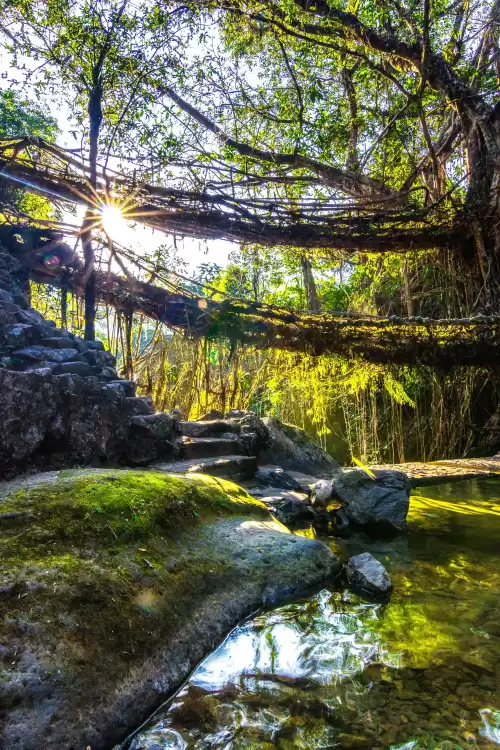
The Riwai Living Root Bridge is one of the most accessible examples of Meghalaya’s famous living root bridge system, located just a short distance from Mawlynnong village. Unlike the more physically demanding Nongriat trek, this bridge can be reached with a brief and easy walk, making it suitable for all types of travelers.
The bridge is formed naturally by guiding the roots of rubber fig trees across a small stream, where they gradually strengthen over time to create a functional walking structure. The surrounding area is quiet and green, with small forest patches that enhance the natural atmosphere of the site.
It is one of the most beginner-friendly root bridge experiences in Meghalaya.
This location offers a perfect introduction to the concept of living architecture without requiring long trekking routes or physical strain.
Riwai offers a simple yet authentic glimpse into Meghalaya’s living root bridge tradition.
Living root bridges are a remarkable example of traditional Khasi craftsmanship, where local communities guide and shape the roots of rubber fig trees over many years to form natural bridges. This process requires patience, knowledge of plant growth, and continuous care from generation to generation.
Unlike modern construction, these structures evolve slowly over decades, becoming stronger as the roots grow and interweave naturally. The technique reflects a deep understanding of ecology and sustainable living practices that have been preserved for centuries.
It is one of the most unique forms of bioengineering in the world.
This living system highlights how human effort and natural growth can work together to create long-lasting infrastructure without harming the environment.
Root bridges represent a rare harmony between human knowledge and nature.
The forest trail leading to the Riwai Living Root Bridge passes through shaded greenery, small cultivated fields, and quiet rural surroundings that reflect everyday village life in Mawlynnong’s region. The walk is short but scenic, offering a gentle introduction to Meghalaya’s natural environment.
Along the way, travelers can observe native vegetation, small water streams, and traditional pathways used by locals. The trail is well-defined and does not require advanced trekking skills, making it accessible for most visitors.
It is one of the most peaceful short nature walks in Meghalaya.
This approach adds context to the bridge experience by connecting it with the surrounding landscape rather than treating it as an isolated attraction.
The trail enhances the experience by blending nature and village life together.
The areas surrounding Mawlynnong are filled with calm countryside scenery where forest patches, small water streams, and agricultural fields blend seamlessly with village life. Unlike heavily commercial tourist zones, this region maintains a slow, natural rhythm that reflects everyday rural Meghalaya.
Walking or driving through these surroundings gives travelers a closer look at how the landscape supports local livelihoods, with betel nut plantations, bamboo groves, and seasonal crops shaping the environment. The atmosphere remains quiet and refreshing, especially in early mornings when mist settles over the hills.
It is one of the most peaceful rural landscapes in Meghalaya.
These natural surroundings are best experienced slowly, allowing time to observe small details like flowing streams, bird activity, and changing light across the hills.
The countryside around Mawlynnong offers a calm and grounded natural experience.
Several natural viewpoints around Mawlynnong provide wide-angle views of rolling hills and distant plains, especially on clear days. These viewpoints are often located along village paths or short detours, making them easy to access without long travel times.
From these elevated spots, visitors can observe layered green hills gradually transitioning into flatter landscapes toward the Bangladesh plains. The scenery changes with weather conditions, creating different visual experiences throughout the day.
It is one of the most naturally scenic village regions in Meghalaya.
These viewpoints are especially rewarding for travelers who enjoy quiet observation rather than crowded tourist spots.
Mawlynnong’s viewpoints offer simple yet expansive natural perspectives.
One of the most enjoyable experiences in Mawlynnong is simply walking through its green surroundings, where well-maintained paths pass through gardens, bamboo groves, and village outskirts. The environment is naturally clean and quiet, encouraging slow exploration.
These walks allow travelers to disconnect from busy travel routes and experience the simplicity of rural life. The sound of birds, rustling leaves, and distant village activity creates a calm atmosphere throughout the journey.
It is one of the most relaxing walking experiences in Meghalaya.
Such walks are not about specific destinations but about experiencing the overall rhythm and harmony of the village environment.
Walking through Mawlynnong feels like moving through a naturally maintained living space.
Mawlynnong offers one of the most naturally photogenic village environments in Meghalaya, where every lane feels carefully arranged yet completely organic in its rural setting. The flower-lined pathways, bamboo fences, and neatly maintained surroundings create soft visual frames that are ideal for photography throughout the day.
Traditional Khasi houses add another layer of visual depth to the village landscape. Built with bamboo, wood, and thatch, these homes blend naturally into the greenery while reflecting the region’s sustainable architectural style. Morning light often highlights the textures of these structures, making them especially appealing for cultural photography.
It is one of the most naturally composed village photography locations in Northeast India.
Unlike heavily staged tourist areas, Mawlynnong provides authentic everyday scenes that allow photographers to capture real-life rural beauty without artificial setups.
Every corner of Mawlynnong feels naturally designed for calm visual storytelling.
The Bamboo Skywalk is one of the most visually striking structures in Mawlynnong, offering both architectural interest and wide-angle landscape views. Built entirely from bamboo, the structure itself becomes an important subject for photography, especially when captured against the backdrop of surrounding hills.
From the top, photographers can frame layered hills, forest stretches, and distant plains that change appearance based on light and weather conditions. Early morning and late afternoon light create soft shadows and enhanced depth across the valley.
It is one of the most scenic elevated viewpoints in Meghalaya.
The combination of human-made bamboo design and natural geography allows for creative composition opportunities in both wide-angle and detailed shots.
The skywalk offers a perfect blend of structure and natural scenery for photography.
The area around the Riwai Living Root Bridge provides multiple small scenic corners that are ideal for close-up and nature photography. The combination of flowing water, natural root formations, and surrounding greenery creates a balanced composition of organic textures.
These spots are particularly beautiful during post-monsoon months when vegetation is lush and water flow is steady. Soft light filtering through trees adds depth and natural contrast to photographs taken near the bridge.
It is one of the most intimate nature photography locations in Meghalaya.
Unlike wide viewpoints, this area focuses more on detailed natural elements, making it suitable for macro-style and storytelling photography.
The Living Root Bridge area allows for deeply natural and textured photography.
Mawlynnong offers a deeply rooted cultural experience shaped by the Khasi community’s long-standing traditions, where hospitality is simple, respectful, and closely connected to daily village life. Visitors often experience a calm welcome atmosphere rather than formal tourism interactions, which makes the cultural exchange feel more genuine.
The village lifestyle reflects a strong sense of community responsibility, where cleanliness, order, and environmental care are shared values practiced by all households. This collective mindset is an important part of understanding how Mawlynnong functions as a living example of sustainable rural culture.
It is one of the most authentic cultural village experiences in Meghalaya.
Rather than staged performances, cultural understanding here comes through observation of everyday life, conversations with locals, and slow immersion into the village environment.
Mawlynnong’s culture is experienced through everyday life rather than tourism displays.
One of the most defining cultural aspects of Mawlynnong is its community-led cleanliness system, where every household actively participates in maintaining the village environment. This includes waste management, regular cleaning of public spaces, and shared responsibility for keeping surroundings tidy.
Sustainable living practices are naturally integrated into daily routines, with minimal reliance on plastic and a strong emphasis on biodegradable materials. These habits are not enforced externally but are part of the village’s cultural identity.
It is one of the most successful examples of community-driven sustainability in India.
This approach offers travelers a practical understanding of how environmental responsibility can be embedded into everyday life at a grassroots level.
Cleanliness in Mawlynnong is a lived cultural practice, not just a rule.
Local handicrafts in Mawlynnong reflect the traditional skills of the Khasi community, with items such as bamboo baskets, woven materials, and simple handmade tools being part of everyday life. These crafts are not mass-produced but created for practical use within the village.
The village lifestyle remains closely tied to agriculture and natural resources, with daily routines centered around farming, gardening, and small-scale trade. This creates a self-sustained ecosystem that supports both livelihood and cultural continuity.
It is one of the most grounded rural lifestyle experiences in Meghalaya.
For visitors, observing these practices provides insight into how traditional knowledge continues to shape modern rural living without losing its authenticity.
Mawlynnong’s handicrafts and lifestyle reflect a strong connection to nature and tradition.
Dawki is one of the most popular nearby destinations from Mawlynnong, located within a short scenic drive through the West Jaintia Hills. The journey itself is highly visual, passing through rolling green landscapes, small villages, and shifting viewpoints that gradually open into river valleys.
The main highlight of Dawki is the Umngot River, known for its extraordinary water clarity during non-monsoon months. The river often appears so transparent that boats seem to float directly over the riverbed, creating a surreal visual effect that has made this region internationally recognized.
It is one of the most iconic natural river destinations near Mawlynnong.
The combination of calm river experiences and scenic surroundings makes Dawki an essential extension for travelers staying in Mawlynnong.
Dawki offers a dramatic river contrast to Mawlynnong’s village landscape.
Shnongpdeng, located near Dawki, is a quieter riverside destination known for its adventure activities and natural camping experiences. Unlike the more structured tourist spots, this area offers a raw and open environment along the Umngot River.
Activities such as kayaking, cliff jumping, and riverside camping are commonly available here, making it a preferred spot for travelers seeking both relaxation and light adventure. The calm stretches of the river also provide excellent opportunities for photography and slow travel experiences.
It is one of the most scenic adventure hubs near Mawlynnong.
The peaceful surroundings combined with outdoor activities make Shnongpdeng an ideal extension of a Mawlynnong itinerary.
Shnongpdeng blends adventure and nature in a peaceful river setting.
The region surrounding Mawlynnong includes several small rural villages and natural viewpoints that offer a deeper look into Meghalaya’s countryside. These locations are often accessed through short drives or walking trails that pass through forest patches and agricultural land.
From elevated viewpoints, travelers can observe layered hills, valleys, and sometimes distant plains depending on weather conditions. These quieter locations are ideal for those who prefer less commercialized travel experiences.
It is one of the most peaceful rural exploration zones in Meghalaya.
These surrounding areas enhance the overall Mawlynnong experience by adding variety beyond the main village attractions.
The surrounding region adds depth and variety to Mawlynnong travel.
A Mawlynnong itinerary is usually planned as a half-day or full-day experience depending on how deeply travelers want to explore the village and its surroundings. Since the village is compact and walkable, most core attractions can be covered within a few hours at a relaxed pace.
A half-day visit typically includes the Bamboo Skywalk, village walkways, and the Riwai Living Root Bridge nearby, making it suitable for travelers combining Mawlynnong with other destinations like Dawki. A full-day plan allows more time for slow exploration, photography, and extended walks through surrounding countryside areas.
It is one of the most flexible village itineraries in Meghalaya.
The slow pace of Mawlynnong encourages travelers to spend more time observing daily life rather than rushing between attractions.
Mawlynnong is best enjoyed at a slow and unhurried pace.
One of the most popular travel circuits in Meghalaya combines Mawlynnong, Dawki, and Shnongpdeng into a single route that showcases village life, river landscapes, and adventure experiences. This combination allows travelers to experience three distinct travel environments within a short geographic range.
The journey typically starts from Shillong, moving first toward Mawlynnong for village exploration, followed by Dawki for the Umngot River experience, and finally extending to Shnongpdeng for camping and adventure activities if time permits.
It is one of the most balanced short circuits in Meghalaya.
This route structure helps reduce travel backtracking while maximizing exposure to different types of landscapes and cultural settings.
This circuit offers a complete view of Meghalaya’s southern region in a short span.
The road journey from Shillong to Mawlynnong passes through scenic hill roads, small settlements, and forested stretches that gradually transition into the West Jaintia Hills region. The drive is approximately 90 kilometers and usually takes around 3 to 3.5 hours depending on road and weather conditions.
The route is known for its changing scenery, starting with urban Shillong, moving through green valleys and winding roads, and eventually reaching the peaceful village landscapes of Mawlynnong. Road conditions are generally stable, but caution is required in narrow bends and during monsoon seasons.
It is one of the most scenic rural drives in Meghalaya.
Early morning departures are recommended to ensure smoother travel and better use of daylight for sightseeing.
The journey to Mawlynnong is as scenic as the destination itself.
Mawlynnong offers a travel experience that can be shaped very differently depending on individual preferences, ranging from slow cultural immersion to combined regional circuits with nearby destinations. Travelers who enjoy quiet environments can focus on village walks, clean streets, and local interactions, while those seeking variety can extend their trip to Dawki and Shnongpdeng.
The village is best experienced without rushing, as its charm lies in observing daily life, natural surroundings, and community-led practices at a slow and mindful pace. Photography enthusiasts may prefer early morning hours, while cultural travelers often enjoy spending more time interacting with locals and understanding their lifestyle.
It is one of the most adaptable village destinations in Meghalaya.
Matching experiences to travel style ensures a more meaningful and comfortable visit, especially in a destination where simplicity and sustainability define the overall atmosphere.
Mawlynnong rewards travelers who move slowly and observe carefully.
A relaxed itinerary for Mawlynnong works best when combined with nearby natural attractions in a way that avoids long travel stress and allows sufficient time at each stop. The region is compact, but its charm is best experienced through unhurried movement and flexible scheduling.
Most travelers include Mawlynnong as part of a broader Meghalaya circuit, connecting it with Dawki, Shnongpdeng, and Shillong. This structure allows for a balanced combination of village culture, river landscapes, and light adventure activities within a single journey.
It is one of the most peaceful travel circuits in Northeast India.
Proper planning ensures that travel time is optimized while still leaving enough space for spontaneous exploration and relaxation.
A calm itinerary helps fully appreciate Mawlynnong’s simplicity and charm.
Before visiting Mawlynnong, travelers should prepare for a rural travel environment where services may be limited compared to urban areas. Carrying essentials such as cash, basic medicines, and weather-appropriate clothing is important for a smooth experience.
Footwear suitable for walking is recommended due to uneven village paths and nearby natural attractions. Travelers should also plan accommodation in advance if staying overnight, especially during peak tourist seasons when nearby stays can fill quickly.
It is one of the most important preparation steps for Meghalaya travel.
Respecting local customs, maintaining cleanliness, and following community guidelines ensure a responsible and respectful visit to this eco-friendly village.
Good preparation ensures a smooth, respectful, and enriching Mawlynnong experience.


Get customized Meghalaya tour planning designed around rainfall patterns, road connectivity, seasonal visibility, and realistic hill travel timing. Whether you are visiting for waterfalls, cave exploration, scenic drives, village experiences, or nature-fo
⚡ Quick Response | 💰 Free consultation | 🕒 24×7 expert support