What is Meghalaya Famous For?
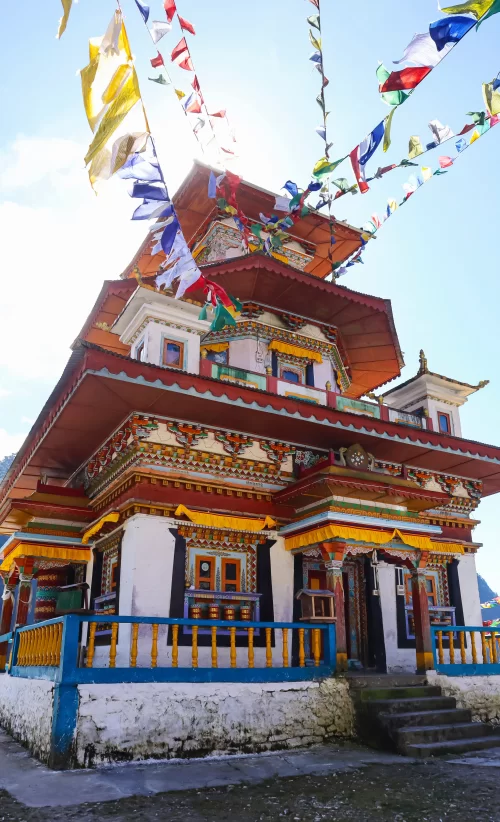
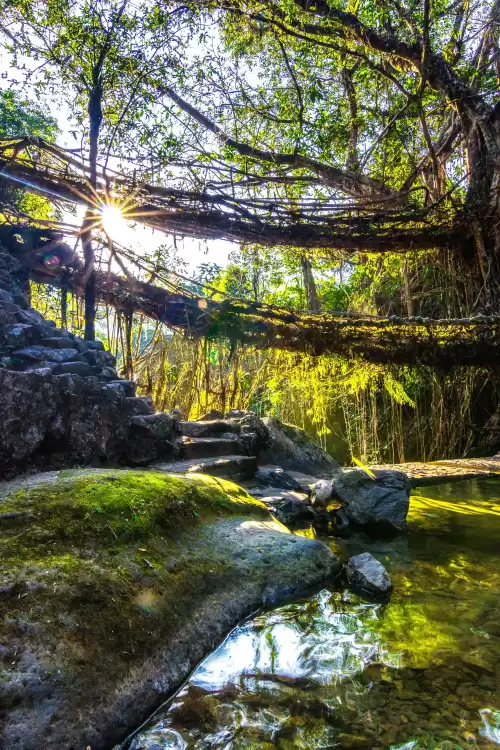
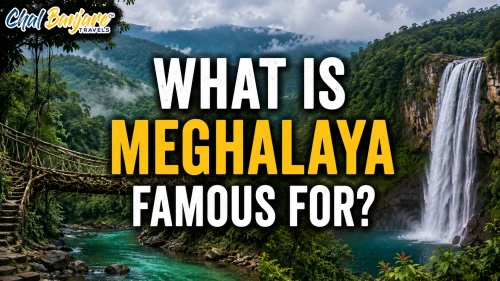
Meghalaya is famous for its living root bridges, waterfalls, caves, hills, tribal culture, clean villages, crystal clear rivers, and unique natural landscapes that attract travellers throughout the year.
+91 9910402252
admin@chalbanjare.com


Beyond Shillong and Cherrapunji, Meghalaya hides remote valleys, turquoise waterfalls, crystal-clear rivers, sacred forests, hidden villages, and untouched landscapes perfect for offbeat travelers.
Phe Phe Falls in the Jaintia Hills is one of the most secluded waterfall experiences in Meghalaya, surrounded by dense greenery, quiet forest trails, and scattered rural landscapes. Unlike heavily visited sites, the journey here feels more personal and exploratory due to its offbeat location.
The waterfall itself flows in layered sections, often more vibrant during monsoon when rainfall strengthens the cascade and deepens the surrounding greenery. The pools below reflect shades of blue and green depending on sunlight and weather conditions.
It is one of the most peaceful waterfall destinations in Meghalaya.
The location rewards slow and mindful exploration.
Phe Phe offers a calm and untouched waterfall experience.
Shnongrim Canyon is one of the lesser-known dramatic landscapes in Meghalaya, featuring deep valleys, rugged rock formations, and expansive views of the surrounding terrain. The canyon remains largely unexplored, offering a raw and untouched natural setting.
The terrain here is defined by steep drops and layered rock structures, shaped over time by natural erosion. During clear weather, the views extend across wide valleys, making it a striking location for landscape observation.
It is one of the most underrated geological sites in Meghalaya.
The canyon reflects the raw power of natural formation.
Shnongrim Canyon offers a rare untouched geological experience.
West Jaintia Hills is home to several hidden villages that remain largely untouched by mainstream tourism, where traditional Khasi lifestyles continue in their original form. These settlements are surrounded by forests, farmlands, and natural water sources.
Traveling through these villages offers a quiet cultural experience, where daily life is closely connected to agriculture and natural surroundings. The simplicity of lifestyle provides a strong contrast to urban environments.
It is one of the most authentic rural regions in Meghalaya.
These villages preserve traditional ways of life.
Hidden villages reflect Meghalaya’s untouched cultural roots.
Shnongpdeng is widely known for its riverfront activities, but beyond the main area lies a quieter and more natural landscape where the Umngot River flows through rocky banks, forest patches, and open fields. These areas offer a more immersive and less commercialized experience.
Walking further from the main tourist zone reveals peaceful river stretches where the water remains clear and calm, surrounded by untouched greenery. The environment becomes increasingly serene as crowds thin out.
It is one of the most peaceful extensions of the Dawki region.
The hidden sections highlight the river’s natural flow.
Shnongpdeng beyond the main area feels completely untouched.
Along the Umngot River, several quiet riverside spots exist away from the main boating and camping areas, where the river flows gently through open natural landscapes. These locations are ideal for travelers seeking solitude and uninterrupted views of nature.
The sound of flowing water combined with minimal human presence creates a calm environment suitable for reflection and relaxation. These areas often remain unnoticed by mainstream visitors.
It is one of the most tranquil experiences near Dawki.
The river shows its quieter personality here.
These hidden river spots offer pure silence and natural beauty.
Beyond Dawki’s main tourist zones, small Khasi villages are spread across the surrounding hills and valleys, where traditional lifestyles remain closely tied to agriculture and river-based living. These villages are quiet and rarely visited by tourists.
Travelers passing through these settlements experience simple rural life, local interactions, and landscapes that remain largely untouched by development. The environment is calm and deeply connected to nature.
It is one of the most authentic cultural zones near Dawki.
These villages preserve Meghalaya’s traditional identity.
Nearby villages offer a raw and authentic Meghalaya experience.
Kongthong, known as the Whistling Village, is one of the most unique cultural destinations in Meghalaya where each resident is traditionally identified by a whistled tune instead of a spoken name. This rare communication system is deeply rooted in Khasi heritage and continues to be practiced in daily life.
The village is surrounded by rolling hills, bamboo groves, and quiet rural landscapes that enhance its peaceful environment. The journey to Kongthong itself passes through scenic countryside routes that remain largely untouched by heavy tourism.
It is one of the most culturally distinct villages in Northeast India.
The tradition makes Kongthong globally unique.
Kongthong preserves one of the rarest cultural practices in the world.
Laitkynsew is a quiet village located near Cherrapunji, offering open landscapes, gentle hills, and a calm rural environment far from crowded tourist routes. The village is often used as a base for exploring nearby natural attractions while enjoying peaceful stays.
The surroundings include agricultural fields, forest patches, and small pathways that provide a relaxed walking experience. The slow pace of life here allows travelers to connect deeply with Meghalaya’s rural charm.
It is one of the most peaceful villages in the Sohra region.
The village offers a calm escape from tourist-heavy areas.
Laitkynsew offers a slow and calming countryside experience.
Nohwet Village, located near Mawlynnong, is a lesser-known settlement that offers authentic Khasi rural life without heavy tourist presence. The village is surrounded by greenery, small farms, and natural walking paths that reflect traditional living conditions.
Visitors can experience simple village life, interact with locals, and observe sustainable practices that have been maintained for generations. The environment is quiet, making it suitable for slow and immersive travel.
It is one of the most authentic offbeat villages in the region.
The village maintains a strong cultural identity.
Nohwet offers a pure glimpse into rural Meghalaya life.
Phe Phe Falls in the Jaintia Hills remains one of Meghalaya’s most serene hidden waterfall experiences, surrounded by forested slopes, quiet trails, and scattered rural settlements. The approach itself feels like a gradual transition from village life into a more untouched natural zone.
The waterfall flows in layered sections, forming natural pools and clear streams that change appearance with seasons. During monsoon and post-monsoon months, the surrounding greenery becomes denser and the water flow gains more strength, enhancing the visual depth of the landscape.
It is one of the most peaceful offbeat waterfalls in Meghalaya.
The setting feels far removed from mainstream tourist routes.
Phe Phe offers a quiet and immersive waterfall experience.
Langshiang Falls is among the tallest waterfalls in Meghalaya, located in a remote region where deep valleys, forested hills, and river systems shape the landscape. The waterfall drops dramatically into a wide natural basin, creating a powerful visual impact.
The surrounding area remains largely untouched, with minimal infrastructure and limited tourist activity. This isolation preserves the raw beauty of the landscape and makes the journey feel more exploratory and adventurous.
It is one of the most dramatic natural waterfalls in the state.
The location showcases Meghalaya’s untouched wilderness.
Langshiang represents Meghalaya’s raw and untouched terrain.
Across Meghalaya, numerous seasonal waterfalls appear during periods of heavy rainfall, especially in monsoon months. These waterfalls are often temporary, forming along cliffs, forest edges, and roadside slopes where water flow intensifies due to continuous rain.
Their appearance is unpredictable and varies depending on rainfall patterns, making each journey unique. Some waterfalls may disappear or reduce significantly during dry months, while monsoon transforms them into active cascades.
It is one of the most dynamic waterfall experiences in the region.
Nature continuously reshapes these hidden formations.
Meghalaya’s hidden waterfalls evolve with every rainfall.
Shnongrim Ridge in the Jaintia Hills offers expansive and largely untouched panoramic views of deep valleys, layered hills, and forested stretches that extend far into the horizon. The location remains quiet due to limited tourist access, preserving its raw natural atmosphere.
From the ridge, the terrain unfolds in multiple layers, especially striking during early morning when mist settles across the valleys. The changing light throughout the day continuously reshapes the visual depth of the landscape.
It is one of the most underrated viewpoints in Meghalaya.
The ridge provides a wide-angle natural panorama.
Shnongrim Ridge reveals Meghalaya’s vast natural scale.
Mawteibah viewpoints are located within forested stretches of the Khasi Hills, offering quiet and shaded vantage points where travelers can observe valleys and surrounding greenery without crowds. The environment is calm, with dense vegetation framing the views.
These viewpoints are often reached through short forest paths, making the journey as immersive as the destination. The combination of elevation and greenery creates a balanced natural perspective.
It is one of the most peaceful forest viewpoints in Meghalaya.
The area is ideal for slow and mindful travel.
Mawteibah offers calm, shaded perspectives of Meghalaya’s landscape.
Across the Khasi Hills, several lesser-known sunrise spots provide soft morning light over valleys, forests, and rolling terrain. These locations are typically away from main tourist circuits, offering uninterrupted views of early morning landscapes.
As the sun rises, mist gradually lifts from the valleys, revealing layered hills and scattered villages below. The changing light creates a calm and atmospheric start to the day.
It is one of the most peaceful visual experiences in Meghalaya.
Sunrise reveals the region’s soft natural beauty.
Khasi sunrise views offer calm and untouched natural moments.
Balpakram National Park in the Garo Hills is one of Meghalaya’s most remote and ecologically rich landscapes, known for its deep canyons, dense forests, and dramatic terrain. The park is often described as a “land of perpetual winds,” with shifting weather patterns that shape its atmosphere.
The region is home to unique biodiversity and offers a raw wilderness experience far from mainstream tourism routes. Reaching Balpakram involves long drives through rural roads, adding to its sense of isolation and adventure.
It is one of the most untouched natural parks in Northeast India.
The landscape feels wild, vast, and deeply layered.
Balpakram offers a rare wilderness experience in Meghalaya.
Nokrek Biosphere Reserve is a UNESCO-recognized ecological zone in the Garo Hills, known for its dense forests, rare plant species, and untouched natural environment. The reserve plays a key role in preserving Meghalaya’s biodiversity.
The landscape is covered in thick vegetation, rolling hills, and quiet forest trails that remain largely unexplored. Wildlife sightings are possible, although the region is best known for its ecological importance rather than tourism infrastructure.
It is one of the most important conservation areas in Meghalaya.
The ecosystem remains largely undisturbed by human activity.
Nokrek preserves Meghalaya’s purest ecological landscape.
Beyond well-known tourist circuits, Meghalaya is filled with hidden forests, river stretches, and grasslands that remain largely unexplored. These areas are often located between villages, hills, and valleys, offering continuous natural transitions.
The landscapes change frequently, from dense forest corridors to open grass-covered slopes and slow-moving river systems. These offbeat zones provide a deeper sense of Meghalaya’s natural diversity.
It is one of the most naturally varied regions in Northeast India.
The terrain constantly shifts across short distances.
These landscapes reveal Meghalaya beyond its famous destinations.
Liat Prah Cave in the Jaintia Hills is one of the longest cave systems in India, known for its vast underground passages, limestone formations, and natural chambers that extend deep into Meghalaya’s karst landscape. The cave remains largely unexplored beyond certain sections, adding to its sense of mystery.
Inside, the environment changes continuously from narrow passages to wider chambers, with rock formations shaped over thousands of years by underground water flow. The experience is raw and requires careful navigation with local guidance.
It is one of the most extensive cave systems in Meghalaya.
The cave reflects the hidden geological world of the region.
Liat Prah offers a deep underground exploration experience.
Krem Um Ladaw is a lesser-known cave in Meghalaya featuring intricate limestone structures, narrow passages, and naturally sculpted rock patterns formed over long geological periods. The cave is relatively quiet and less commercialized compared to popular cave destinations.
The interior environment is cool and dim, with unique formations that reflect the slow natural processes of water erosion and mineral deposition. Exploration requires basic awareness and guidance due to uneven surfaces.
It is one of the more hidden cave experiences in the region.
The cave showcases Meghalaya’s underground geology.
Krem Um Ladaw offers a quiet and raw cave exploration experience.
The Jaintia Hills region contains numerous lesser-known cave systems that remain largely unexplored by mainstream tourism. These caves vary in size and structure, often connected to underground river systems and limestone formations.
Many of these caves are accessible only through local guidance and involve short trekking routes through rural and forested landscapes. The experience is adventurous and deeply connected to Meghalaya’s geological identity.
It is one of the most unexplored cave regions in India.
The underground network is vast and diverse.
These caves reveal Meghalaya’s hidden underground world.
Remote Khasi hill villages across Meghalaya offer deeply rooted cultural experiences where traditional customs, community living, and nature-based lifestyles continue without much outside influence. These villages maintain strong social bonds and a slow rhythm of daily life shaped by the surrounding hills.
Visitors can observe traditional homes, farming practices, and community interactions that reflect generations of continuity. The cultural experience here is subtle and respectful, focusing more on observation than structured tourism.
It is one of the most authentic cultural layers of Meghalaya.
The villages preserve living traditions in natural settings.
These villages reflect Meghalaya’s living cultural heritage.
The Garo Hills region offers a distinct cultural identity separate from other parts of Meghalaya, with unique traditions, festivals, and community practices. Many of these cultural expressions remain less explored due to the remote geography of the region.
Traditional Garo settlements showcase a close relationship with forests, agriculture, and seasonal cycles. Cultural practices are often tied to nature, reflecting a strong ecological connection.
It is one of the most distinct cultural regions in Northeast India.
The heritage remains strong in rural communities.
Garo culture adds diversity to Meghalaya’s identity.
Local markets in remote Meghalaya settlements offer a glimpse into everyday life where small-scale trade, handmade goods, and agricultural products form the backbone of the economy. These markets are often simple and community-driven.
Traditional settlements nearby reflect similar simplicity, where residents engage in farming, weaving, and local craftsmanship. The interaction with locals provides an authentic understanding of rural livelihoods.
It is one of the most grounded cultural experiences in Meghalaya.
Markets reflect daily life and community exchange.
These markets reflect the everyday rhythm of Meghalaya’s villages.
Away from Meghalaya’s popular tourist circuits, countless untouched valleys and hidden waterfalls offer some of the most natural and unfiltered photography opportunities. These locations are often reached through rural roads, forest paths, or small village trails where nature remains largely undisturbed.
The absence of crowds allows photographers to focus on pure landscape composition, where flowing water, layered hills, and shifting light create constantly changing scenes. During monsoon, these areas become especially vibrant with active streams and mist-covered terrain.
It is one of the most authentic landscape photography settings in Meghalaya.
The scenery remains raw and naturally composed.
These locations capture Meghalaya in its purest form.
Remote villages across Meghalaya are surrounded by rolling hills, agricultural fields, and forest patches that create visually rich compositions for travel photography. These settlements are often untouched by heavy tourism, preserving their natural layout and lifestyle scenes.
Photographers can capture everyday rural life, traditional homes, and landscape transitions that shift with weather and season. The soft lighting of early morning and late afternoon enhances depth and texture across the hills.
It is one of the most culturally rich photography experiences in the region.
Village life blends naturally with surrounding landscapes.
These villages offer storytelling-rich photography opportunities.
Offbeat Meghalaya offers a wide range of peaceful landscapes including quiet riversides, hidden forest clearings, and open hill viewpoints that remain largely unexplored by mainstream tourism. These locations provide uninterrupted access to nature.
The landscapes change dramatically with seasons, especially during monsoon when greenery intensifies and mist fills the valleys. Each visit offers a different visual experience depending on weather conditions and light.
It is one of the most diverse offbeat photography regions in India.
The environment remains calm and naturally balanced.
Offbeat Meghalaya reveals constantly changing natural beauty.
Offbeat Meghalaya offers a wide mix of hidden waterfalls, remote villages, untouched forests, and dramatic landscapes, making it important to choose destinations based on the kind of experience you want. Nature-focused travelers can prioritize valleys, rivers, and forest treks, while cultural explorers can focus on Khasi and Garo villages.
Each region offers a different atmosphere, from the deep caves of Jaintia Hills to the quiet countryside of the Khasi Hills and the raw wilderness of Garo Hills. Selecting fewer places with deeper exploration often creates a more meaningful journey.
It is one of the most diverse offbeat travel circuits in Northeast India.
Careful selection helps avoid rushed and fragmented travel.
Offbeat Meghalaya rewards thoughtful and balanced travel choices.
While Shillong and Cherrapunji are the main highlights, offbeat Meghalaya itineraries extend into regions like Jaintia Hills, Garo Hills, and remote Khasi villages. These areas offer quieter alternatives with fewer crowds and more immersive natural experiences.
Traveling beyond the popular circuit requires additional time and flexible planning due to longer distances and varying road conditions. However, the reward is access to untouched landscapes and authentic cultural encounters.
It is one of the most rewarding ways to explore Meghalaya.
Extended routes reveal the state’s hidden diversity.
Offbeat itineraries reveal Meghalaya beyond its famous landmarks.
Traveling to offbeat areas in Meghalaya requires preparation for rural roads, limited infrastructure, and changing weather conditions. Proper footwear, weather-appropriate clothing, and basic supplies are essential for safety and comfort during exploration.
Since many destinations are remote, carrying cash, navigation support, and emergency essentials is highly recommended. Travelers should also remain flexible with timing due to unpredictable road or weather changes.
It is one of the most important preparation steps for offbeat travel.
Good planning ensures safer and smoother exploration.
Preparation is key to safely experiencing offbeat Meghalaya.

Get customized Meghalaya tour planning designed around rainfall patterns, road connectivity, seasonal visibility, and realistic hill travel timing. Whether you are visiting for waterfalls, cave exploration, scenic drives, village experiences, or nature-fo
⚡ Quick Response | 💰 Free consultation | 🕒 24×7 expert support