
What is Meghalaya Famous For?
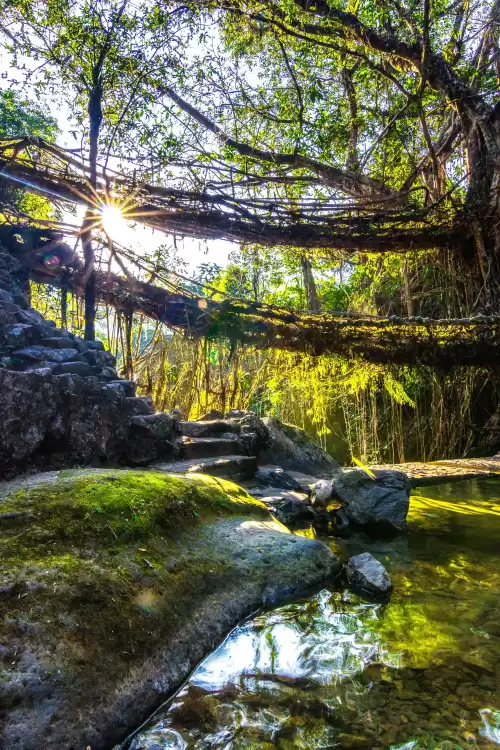
Meghalaya is famous for its living root bridges, waterfalls, caves, hills, tribal culture, clean villages, crystal clear rivers, and unique natural landscapes that attract travellers throughout the year.
+91 9910402252
admin@chalbanjare.com


The Double Decker Root Bridge Trek is Meghalaya’s most iconic adventure, taking travelers through dense rainforests, hanging bridges, waterfalls, natural pools, and traditional Khasi villages.
The Double Decker Root Bridge Trek is one of Meghalaya's most distinctive nature and cultural experiences because it combines rainforest walking, village trails, steep stone staircases, suspension bridges, natural pools, and a rare living bridge created from the roots of rubber fig trees. The trek leads to Nongriat Village, where the famous two level living root bridge stands across a stream inside a dense green valley. Unlike ordinary bridges, this structure is alive and has been shaped over generations by local Khasi communities using traditional root guiding techniques.
The experience begins much before reaching the bridge. From Tyrna Village, trekkers descend through long stairways, forest paths, and village settlements before entering the humid rainforest zone near Nongriat. The sound of streams, insects, birds, and distant waterfalls stays with visitors throughout the trail. The trek is not technically difficult, but it is physically demanding because of the long descent and tougher climb back, making pacing and preparation important for every visitor.
This trek should be understood as a complete rainforest journey rather than only a visit to a famous bridge. Travelers who move slowly, respect local village life, and allow time for the landscape often find the overall trail experience as memorable as the Double Decker Root Bridge itself.
The Double Decker Root Bridge has become Meghalaya's most famous trek because it represents something visitors rarely see elsewhere in India. The bridge is not built in the usual sense but grown patiently over many years by guiding aerial roots across a stream until they become strong enough for daily use. Its two levels make it visually striking and culturally important, while its location deep inside the rainforest gives the journey a strong sense of discovery.
Another reason for its popularity is the variety of experiences within one trek. Visitors pass through Khasi villages, cross narrow suspension bridges, walk beside clear streams, see forest-covered slopes, and reach natural pools near the bridge. For many travelers, the trek gives a deeper understanding of Meghalaya than roadside viewpoints because it requires direct movement through the landscape and interaction with the local environment.
The fame of the Double Decker Root Bridge comes from the way it connects landscape, community knowledge, and adventure. It is not just a photo location but a rare example of living architecture still protected by the people and forests around it.
The ideal duration for the Double Decker Root Bridge Trek depends on fitness level, starting time, and whether visitors want to explore only the bridge or continue further toward Rainbow Falls. A basic trek from Tyrna to Nongriat and back can be completed in a day, but it should not be rushed. The descent may take around one and a half to two hours for many visitors, while the uphill return can take longer because of the continuous stone steps and humidity.
Travelers who want a relaxed experience should consider staying overnight in Nongriat. This allows enough time to enjoy the bridge, visit nearby pools, explore the village slowly, and attempt Rainbow Falls the next morning if energy permits. A day trip works for fit travelers starting early, but families, slow walkers, photographers, and those continuing to Rainbow Falls will benefit from a two day plan.
For most travelers, the best plan is to keep either one full day with an early start or one overnight stay at Nongriat. This prevents the trek from becoming a rushed physical challenge and allows enough time to experience the bridge, forest, streams, and village atmosphere properly.
Tyrna Village is the main starting point for the Double Decker Root Bridge Trek and is usually reached by road from Shillong through Cherrapunji. The journey from Shillong takes travelers across the East Khasi Hills, passing rolling landscapes, viewpoints, small settlements, and weather sensitive mountain roads. Since the route involves hill driving and frequent curves, travel time can feel longer than the distance suggests, especially during rain, fog, or weekend traffic.
Most travelers first reach Cherrapunji or Sohra and then continue toward Tyrna by local taxi, private cab, or hired vehicle. Public transport is limited and not always convenient for trek timing, so private transport is usually the most practical choice. Starting early from Shillong is important because the road journey takes time and the trek itself should ideally begin in the morning.
Reaching Tyrna smoothly is an important part of the trek plan. Travelers should not underestimate the road journey from Shillong, because late arrival at the starting point can make the trek rushed and tiring, especially during the return climb.
Tyrna Village functions as the practical gateway to Nongriat and the Double Decker Root Bridge. The trek begins near the village area where visitors find the start of the long stone staircase descending into the valley. Basic shops, local guides, small eateries, and parking spaces may be available around the starting area, but facilities remain simple. It is better to arrange water, snacks, and walking essentials before beginning the descent.
The starting point can look manageable at first because the staircase is clearly visible and the route is commonly used by villagers and trekkers. However, visitors should remember that this is not a short nature walk. Once the descent begins, the trail continues for a long distance through steps, paths, bridges, and village sections. Anyone unsure about fitness should assess their comfort before going too far down, because returning requires climbing the same route back.
Tyrna is not just a parking or drop point but the place where visitors must make practical decisions about timing, fitness, supplies, and guide support. A well prepared start from Tyrna makes the entire trek safer and more enjoyable.
Transport planning is important because the Double Decker Root Bridge Trek takes several hours and drivers need to wait or return according to the visitor's plan. Travelers doing a day trek should clearly inform the driver about expected return timing, while those staying overnight in Nongriat should arrange pickup for the next day. Mobile network coverage can be unreliable in some sections, so communication should be settled before starting the trek.
Parking is usually available near Tyrna, but space can become limited during peak tourist days, weekends, and holiday seasons. Large vehicles may face difficulty in crowded village areas, so smaller cars or local taxis are often more convenient. Visitors should also avoid leaving valuables inside vehicles and should carry only what is needed for the trek to reduce physical load during the climb back.
Good transport and parking planning prevents stress at the beginning and end of the trek. Since the return climb can be tiring, having a confirmed vehicle plan at Tyrna helps visitors finish the experience more comfortably without delays or confusion.
The trek officially begins at Tyrna Village, where visitors start descending a long series of stone staircases leading into the deep valleys of the East Khasi Hills. This section is often underestimated because the downhill walk feels comfortable during the beginning of the journey. However, every step descended must be climbed again while returning, making it important to conserve energy from the very start. The staircase is well defined but continuously changes in gradient, with some sections being steeper than others.
As trekkers move deeper into the valley, the landscape gradually changes from village surroundings to dense subtropical rainforest. Small resting points appear along the trail, allowing visitors to pause, drink water, and recover before continuing. During the monsoon and immediately after rainfall, the stone steps remain wet and slippery due to moss and moisture. Trekking shoes with good grip provide significantly better stability than ordinary sports shoes. The descent itself offers beautiful scenery, but maintaining a steady walking rhythm is more important than rushing toward the destination.
The staircase section defines the physical nature of the entire trek. Visitors who maintain a comfortable pace, avoid unnecessary strain, and manage their energy carefully usually find both the descent and return climb much more enjoyable than those attempting to complete the trek too quickly.
After descending through the initial staircases, the trail becomes more varied as it passes through dense rainforest, traditional Khasi settlements, clear mountain streams, and several suspension bridges. These bridges are an important part of the trekking experience because they connect different sections of the valley while offering scenic views of rivers flowing below. Walking across them provides an exciting but safe experience, with gentle movement adding to the feeling of exploring a remote rainforest landscape.
The forest trails between the bridges remain shaded for much of the day because of the thick tree cover. Visitors encounter bamboo groves, moss-covered rocks, tropical vegetation, and flowing streams throughout the journey. The changing scenery keeps the trek interesting, as every section offers different natural features rather than repeating the same landscape. During humid weather, the forest remains cool compared to exposed hill slopes, although the moisture level stays high throughout the route.
The combination of suspension bridges and rainforest trails transforms the journey into much more than a simple hike. Every crossing and forest section introduces new scenery, making the route itself one of the most memorable parts of the Double Decker Root Bridge experience.
The final section of the trek approaches Nongriat Village through well-used village paths surrounded by lush rainforest. As visitors move closer to the destination, the sound of flowing water becomes stronger and the forest canopy grows denser. The bridge itself suddenly appears between the trees, creating one of the most rewarding moments of the entire trek. Unlike viewing a monument from a distance, trekkers arrive directly beside the living structure and can appreciate its remarkable construction at close range.
The Double Decker Living Root Bridge consists of two naturally grown root bridges positioned one above the other, allowing people to cross the stream safely. Nearby pools, rocks, and shaded resting areas encourage visitors to spend time enjoying the peaceful surroundings rather than immediately beginning the return journey. Many trekkers also continue beyond Nongriat toward Rainbow Falls after resting, while others simply explore the village before preparing for the uphill climb back to Tyrna.
Reaching the Double Decker Living Root Bridge is the highlight of the trek, but visitors who spend time observing the surrounding rainforest, flowing streams, and village atmosphere gain a much richer understanding of why this destination has become one of Meghalaya's most celebrated trekking experiences.
The Double Decker Root Bridge Trek is considered physically demanding because of the long staircases rather than technical climbing. There are no difficult rock climbing sections or specialized mountaineering challenges, but the continuous descent followed by a lengthy uphill return requires stamina, leg strength, and endurance. Many visitors find the climb back to Tyrna significantly harder than reaching the bridge itself because tired muscles must work against the steep gradient.
Humidity also adds to the physical challenge, especially during warmer months. Even experienced walkers may need frequent breaks to maintain energy levels. Proper hydration, comfortable pacing, and carrying only essential luggage greatly improve the trekking experience. Visitors attempting to rush the trail often become exhausted much earlier than those maintaining a steady rhythm throughout the journey.
Good preparation and realistic expectations make a significant difference during the trek. Visitors who understand the physical demands beforehand are generally able to complete the journey more comfortably while enjoying the surrounding scenery instead of focusing only on the climb.
The thousands of stone steps between Tyrna and Nongriat are the defining feature of this trek. Although the steps are generally well constructed, they vary in height, width, and condition throughout the route. Some sections are steep, while others are relatively gentle, requiring constant attention during both descent and ascent. Knee joints experience considerable stress during the downhill walk, while the uphill climb places greater demand on leg muscles and overall endurance.
Preparing before the trip with regular walking, stair climbing, or light cardio exercise can make the experience much easier. Trekking poles may help some visitors maintain balance and reduce strain on the knees during the return climb. Stretching before beginning the trek and resting periodically throughout the journey also contribute to better overall comfort and reduced fatigue.
The staircase should not discourage visitors, but it deserves proper respect. Reasonable fitness, careful pacing, and appropriate equipment allow most healthy travelers to complete the trek safely while enjoying one of Meghalaya's finest natural attractions.
The Double Decker Root Bridge Trek is best suited for travelers who enjoy active outdoor experiences and are comfortable walking for several hours on uneven terrain. Nature lovers, photographers, adventure travelers, and trekking enthusiasts usually find the journey highly rewarding because it combines physical activity with remarkable rainforest scenery and traditional Khasi heritage.
Visitors with serious knee problems, severe heart or respiratory conditions, or limited mobility should carefully evaluate whether the trek matches their physical ability. Young children may find the long staircases tiring, while senior travelers with good fitness may still complete the trek comfortably by walking slowly and taking regular breaks. Choosing an overnight stay at Nongriat instead of completing the trek in a single day can also reduce physical strain considerably.
The trek rewards preparation more than speed. Travelers who honestly assess their fitness level, plan adequate rest, and allow enough time usually complete the journey with greater comfort while fully appreciating the remarkable landscapes leading to the Double Decker Living Root Bridge.
The Double Decker Living Root Bridge is the highlight of the Nongriat trek and is regarded as one of Meghalaya's most extraordinary natural and cultural attractions. Unlike conventional bridges built from steel or concrete, this structure has been created by guiding the aerial roots of rubber fig trees across a flowing stream over several generations. The roots gradually thicken, intertwine, and become strong enough to support daily movement, allowing the bridge to remain both functional and alive. Its two-level design makes it exceptionally rare and distinguishes it from other living root bridges found across the Khasi Hills.
Visitors reaching the bridge usually spend time exploring the surrounding area instead of crossing it immediately. The stream flowing beneath the bridge, the cool rainforest environment, and the sound of running water create a peaceful atmosphere after the physically demanding trek. Small resting areas nearby allow trekkers to relax, refill water bottles where suitable, and appreciate the craftsmanship involved in maintaining the living bridge. Since the bridge continues growing naturally, visitors should avoid climbing on the roots or damaging any part of the structure.
The Double Decker Living Root Bridge is much more than a trekking destination. It represents generations of Khasi knowledge, sustainable engineering, and harmony with nature. Spending sufficient time around the bridge allows visitors to appreciate its cultural importance rather than treating it as only a photography stop.
One of the most enjoyable aspects of the Nongriat trek is the number of natural attractions encountered before reaching the main bridge. Crystal-clear pools formed by mountain streams provide refreshing resting points during warmer months, while numerous suspension bridges connect different sections of the valley. These bridges offer elevated views of flowing rivers, rocky streambeds, and dense tropical vegetation, creating some of the most memorable moments along the trail.
The natural pools near Nongriat attract visitors looking to relax after completing the descent from Tyrna. Water levels vary throughout the year, with post-monsoon months often providing clearer pools while heavy rainfall increases stream flow significantly. Visitors entering the water should always assess current conditions and avoid slippery rocks or fast-moving sections. Even for those who do not swim, these pools provide beautiful places to rest before beginning the challenging return climb.
The suspension bridges and natural pools add considerable variety to the trek by combining adventure with peaceful natural scenery. These attractions ensure that the journey remains rewarding throughout the route instead of focusing only on the final destination at the Double Decker Living Root Bridge.
The route between Tyrna and Nongriat passes through one of Meghalaya's most beautiful rainforest environments. Thick vegetation, bamboo groves, towering trees, moss-covered rocks, and flowing streams surround the trail, creating a constantly changing landscape. The forest remains humid throughout the year, supporting a rich variety of plant life that gives the valley its characteristic green appearance even outside the peak monsoon season.
Traditional Khasi villages along the trail offer occasional viewpoints overlooking the surrounding valley and forest canopy. These settlements provide insight into rural life where footpaths remain an important means of transportation. Small resting areas near village houses, cultivated gardens, and open viewpoints allow trekkers to pause while enjoying panoramic scenery before continuing toward Nongriat. The combination of natural landscapes and local communities makes the route feel authentic rather than commercialized.
The rainforest and village landscapes are equally important attractions during the trek. Together they create an immersive journey where visitors experience Meghalaya's natural beauty alongside the everyday life of the Khasi communities who continue maintaining these historic walking routes.
For trekkers seeking a longer adventure, Rainbow Falls is the most popular extension beyond the Double Decker Living Root Bridge. After reaching Nongriat, the trail continues deeper into the rainforest through additional suspension bridges, village paths, and rocky sections before arriving at one of Meghalaya's most beautiful waterfalls. This extension offers a quieter experience because fewer visitors continue beyond the main bridge, making the trail feel more peaceful and less crowded.
The route to Rainbow Falls requires additional energy because trekkers must complete the return journey to Tyrna afterward. Carrying enough drinking water, light snacks, and maintaining a comfortable walking pace become increasingly important during this section. The trail remains well used but includes uneven natural surfaces and exposed rocks, requiring careful footing throughout the journey.
Continuing to Rainbow Falls transforms the trek into a full-day rainforest adventure. Visitors with sufficient fitness and available time often consider the extension worthwhile because it combines quieter trails with one of Meghalaya's most picturesque waterfall settings.
The Rainbow Falls extension significantly increases both trekking distance and overall walking time. Visitors should not assume it is a short detour from the Double Decker Living Root Bridge. The additional trail involves continuous walking through forests, stream crossings, and natural terrain before reaching the waterfall, followed by the return to Nongriat and the demanding climb back to Tyrna.
Trekkers planning this extension should start the day early and avoid delaying the descent from Tyrna. Those staying overnight in Nongriat have greater flexibility because they can visit Rainbow Falls during the following morning without feeling rushed. Travelers attempting the entire journey in one day should honestly assess their fitness before deciding whether to continue beyond the bridge.
Understanding the additional time commitment is essential before attempting Rainbow Falls. Proper planning allows visitors to enjoy the extended trek safely while avoiding unnecessary fatigue during the return journey.
Rainbow Falls is widely admired for its exceptionally clear blue water, rocky surroundings, and peaceful rainforest location. Unlike many roadside waterfalls, reaching this destination requires genuine effort, making the experience feel more rewarding for trekkers. During sunny conditions, light reflecting through the mist occasionally creates rainbow effects that inspired the waterfall's popular name.
The pool beneath the waterfall appears remarkably clear during suitable seasons, while surrounding cliffs and dense forest create a dramatic natural setting. Visitors often spend time resting here before beginning the return journey because the location remains quieter than the Double Decker Living Root Bridge. Swimming should only be considered after assessing water depth, current, and local safety advice, as conditions may vary depending on rainfall.
Rainbow Falls provides a memorable conclusion to the extended Nongriat trek. Its peaceful setting, striking water color, and relatively uncrowded atmosphere make it one of Meghalaya's finest trekking rewards for visitors willing to continue beyond the famous living root bridge.
The Double Decker Living Root Bridge is the most photographed attraction along the trek, but capturing its full structure requires more than stopping at the first viewpoint. Since the bridge is surrounded by dense rainforest and sits above a flowing stream, different viewing positions reveal different perspectives of the living roots, the two bridge levels, and the surrounding vegetation. Walking carefully around the designated pathways near the bridge allows photographers to frame both the upper and lower sections without disturbing other visitors.
Morning is generally the best time for photography because the area is quieter and the softer natural light filters through the forest canopy. The shaded environment creates balanced lighting, while the surrounding greenery appears fresh after overnight moisture. During busy hours, patience is often necessary because the bridge is narrow and visitors continuously cross it. Waiting for quieter moments helps create cleaner compositions without overcrowded frames.
The Double Decker Living Root Bridge is best photographed as part of its natural environment rather than as an isolated structure. Including the surrounding forest, flowing stream, and layered roots creates images that better represent the unique atmosphere of Nongriat.
The trek from Tyrna to Nongriat offers countless photography opportunities beyond the famous living root bridge. Suspension bridges crossing mountain streams provide elevated viewpoints over clear water, rocky riverbeds, and dense vegetation. Forest trails constantly change in appearance as light filters through tall trees, creating different moods throughout the journey. These smaller attractions help tell the complete story of the trek instead of focusing only on the final destination.
Streams flowing beside the trail, moss-covered rocks, bamboo forests, village pathways, and tropical plants provide excellent subjects for nature photography. During post-monsoon and winter months, clearer weather improves visibility while maintaining lush greenery. Travelers should keep cameras easily accessible because many of the most scenic moments appear unexpectedly between major attractions.
The photography experience along the trek becomes richer when visitors pay attention to smaller natural details instead of only famous landmarks. Streams, bridges, forest paths, and village life combine to create a complete visual record of the journey through Meghalaya's rainforest.
Rainbow Falls rewards trekkers with one of the most beautiful natural photography locations in Meghalaya. The waterfall flows into a remarkably clear blue pool surrounded by forested cliffs and rocky terrain. Because fewer visitors continue beyond Nongriat, photographers often find quieter conditions here than at the Double Decker Living Root Bridge. Different viewpoints around the pool allow both wide landscape compositions and closer photographs of the waterfall itself.
Lighting conditions play an important role near Rainbow Falls. Clear mornings usually provide balanced illumination across the pool, while sunlight reflecting through mist may occasionally produce the rainbow effect for which the waterfall is named. Wet rocks around the pool require careful movement, and photographers should prioritize safety over reaching difficult angles. Taking time to explore designated viewpoints generally provides excellent compositions without unnecessary risk.
Rainbow Falls completes the photographic journey beyond Nongriat by combining crystal-clear water, dense rainforest, and dramatic natural scenery. Visitors who continue the additional trek often return with some of the most distinctive landscape photographs from their Meghalaya adventure.
Nongriat Village offers several homestays that allow trekkers to stay close to the Double Decker Living Root Bridge instead of completing the entire journey in a single day. These accommodations are generally operated by local families and provide simple but comfortable rooms, home-cooked meals, and an opportunity to experience daily village life. Since all supplies reach the village on foot, visitors should expect basic facilities rather than luxury amenities.
An overnight stay allows trekkers to enjoy the bridge during quieter morning and evening hours when most day visitors have already left. It also provides enough time to continue to Rainbow Falls without feeling rushed. Electricity, mobile connectivity, and modern conveniences may be limited compared to urban hotels, but this simplicity forms part of the village experience and encourages visitors to enjoy the peaceful rainforest surroundings.
Choosing a homestay in Nongriat transforms the trek from a demanding day excursion into a relaxed village experience. Travelers gain additional time to explore the rainforest while directly supporting the local community that maintains this remarkable destination.
Tyrna provides convenient accommodation for travelers who prefer to begin the trek early the following morning or rest immediately after completing the climb back from Nongriat. Staying here reduces travel stress because visitors do not need to drive to or from Shillong on the same day as the trek. Small guesthouses and homestays offer practical lodging close to the trekking starting point.
Accommodation in Tyrna is generally basic but comfortable enough for trekkers preparing for an early departure. Staying overnight also allows visitors to organize transport, parking, and trekking supplies without rushing. Since facilities are limited compared to Shillong or Cherrapunji, advance reservations are advisable during weekends and holiday periods.
Staying at Tyrna is a practical choice for visitors focusing on trekking efficiency. It allows trekkers to begin the journey well rested and complete the experience without immediately facing another long drive through the hills.
An overnight itinerary is often the most comfortable way to experience the Double Decker Root Bridge Trek, especially for travelers planning to visit Rainbow Falls or those who enjoy photography and slow exploration. Dividing the journey across two days reduces physical strain and provides greater flexibility if weather conditions change during the trek.
Many visitors spend the first night at Tyrna before trekking to Nongriat, while others stay directly in Nongriat after reaching the bridge. Both approaches have advantages depending on individual schedules and fitness levels. A slower itinerary also creates opportunities to enjoy sunrise, quieter trails, village life, and additional natural attractions without constantly watching the time.
Planning an overnight stay allows visitors to experience the Double Decker Root Bridge Trek at a comfortable pace. Instead of focusing only on reaching the destination, travelers can fully appreciate the rainforest, village life, suspension bridges, and remarkable natural surroundings that make this trek one of Meghalaya's most rewarding adventures.
The period immediately after the monsoon is widely considered one of the most rewarding times to complete the Double Decker Root Bridge Trek. During these months, the Khasi Hills remain exceptionally green, waterfalls continue flowing strongly, streams are full, and the rainforest appears fresh after months of rainfall. The vegetation surrounding the trail becomes dense, moss covers the stone staircases, and the entire valley looks vibrant, making the trek visually spectacular from beginning to end.
Although the scenery is at its best, trekkers should remember that the trail may still remain damp in many places. Stone steps, suspension bridges, and exposed rocks can be slippery because of moisture retained by the rainforest. Good trekking shoes with strong grip become especially important during this period. Visitors should also carry light rain protection because short showers can still occur even after the main monsoon season has ended.
Post-monsoon combines beautiful scenery with enjoyable trekking conditions, making it an excellent choice for visitors who want to experience the rainforest at its greenest while avoiding the heaviest seasonal rainfall.
Winter is another highly recommended season for the Double Decker Root Bridge Trek because of its pleasant daytime temperatures and relatively stable weather. The reduced humidity compared to the rainy season makes the long staircases and continuous walking more comfortable, especially during the uphill return to Tyrna. Clearer skies also improve visibility across the surrounding valleys and make the overall trekking experience more predictable.
While waterfalls and streams may carry slightly less water than during the monsoon months, the trail usually becomes easier to navigate because surfaces are drier. Winter mornings can feel cool, particularly before sunrise, but temperatures become comfortable once trekking begins. Visitors should carry a light jacket for early hours and remove extra layers as the day becomes warmer.
Winter is ideal for travelers who prioritize comfortable trekking conditions over peak waterfall flow. The combination of stable weather, pleasant temperatures, and safer trail conditions makes it one of the most reliable seasons for completing the Nongriat trek.
The weather in the East Khasi Hills changes rapidly throughout the year, and understanding seasonal conditions helps visitors plan a safer trek. During the monsoon, heavy rainfall creates spectacular waterfalls and rich greenery but also increases trail difficulty because of slippery staircases, overflowing streams, and reduced visibility. Trekking remains possible on many days, but additional caution becomes essential throughout the journey.
Spring and autumn generally provide balanced conditions with moderate temperatures and pleasant walking weather, while winter offers the greatest comfort for physically demanding climbs. Regardless of the season, visitors should check the latest local weather forecast before beginning the trek because rainfall, fog, or thunderstorms may affect both road travel and trail conditions. Packing rain protection is advisable throughout the year because weather in Meghalaya can change with little warning.
Choosing the right season depends on personal priorities. Visitors seeking dramatic landscapes often prefer the post-monsoon months, while those looking for easier trekking conditions usually enjoy winter. Understanding Meghalaya's changing weather allows trekkers to prepare appropriately and enjoy the experience safely.
Before attempting the Double Decker Root Bridge Trek, visitors should honestly assess both their physical fitness and the amount of time available. Although many healthy travelers complete the trek in a single day, the long descent followed by the demanding uphill climb requires stamina and careful pacing. Travelers with limited trekking experience should avoid rushing and instead plan frequent rest stops throughout the route.
Those with only one day should begin the trek early in the morning to maximize daylight and reduce the risk of returning late in the evening. Visitors interested in Rainbow Falls, photography, or a slower trekking pace should strongly consider staying overnight in Nongriat. Dividing the trek across two days allows more time to enjoy the surroundings while reducing physical exhaustion.
Matching the itinerary with personal fitness creates a much more enjoyable experience. Careful planning allows visitors to appreciate the rainforest, villages, suspension bridges, and living root bridge instead of focusing only on completing the trek.
Carrying the right equipment greatly improves both comfort and safety during the trek. Trekking shoes with reliable grip are the most important item because thousands of stone steps, damp rocks, and forest trails can become slippery throughout the year. Comfortable clothing that dries quickly, a lightweight rain jacket, drinking water, energy snacks, sunscreen, insect repellent, and a small first-aid kit are also useful for most visitors.
Since mobile connectivity becomes limited in parts of the valley, travelers should not depend entirely on online navigation or digital communication. Carrying cash is helpful because digital payment facilities may not always be available in remote villages. Packing only essential items keeps backpacks light and reduces unnecessary strain during the challenging uphill return from Nongriat.
Good preparation reduces unnecessary difficulties during the trek. Packing practical essentials instead of heavy luggage allows visitors to move comfortably while remaining prepared for Meghalaya's changing weather and challenging terrain.
A final checklist before leaving Tyrna helps prevent avoidable problems during the trek. Visitors should confirm weather conditions, ensure drinking water supplies are adequate, wear comfortable trekking footwear, and begin the trek with enough daylight available for the complete journey. Those planning to stay overnight should confirm accommodation bookings before beginning the descent because mobile network availability may become limited later.
Responsible trekking is equally important. Visitors should avoid littering, remain on designated trails, respect local Khasi communities, and protect the living root bridge by avoiding unnecessary climbing or damage. Trekking slowly, resting when needed, and respecting personal physical limits contribute to a much safer and more enjoyable experience than attempting to complete the route as quickly as possible.
The Double Decker Root Bridge Trek is one of Meghalaya's finest outdoor experiences when approached with proper planning and realistic expectations. Preparing well, respecting nature, and allowing enough time to enjoy the journey ensures that the trek becomes far more than simply reaching a famous bridge—it becomes a memorable exploration of Meghalaya's rainforest, culture, and remarkable natural heritage.


Get customized Meghalaya tour planning designed around rainfall patterns, road connectivity, seasonal visibility, and realistic hill travel timing. Whether you are visiting for waterfalls, cave exploration, scenic drives, village experiences, or nature-fo
⚡ Quick Response | 💰 Free consultation | 🕒 24×7 expert support