
What is Meghalaya Famous For?
Meghalaya is famous for its living root bridges, waterfalls, caves, hills, tribal culture, clean villages, crystal clear rivers, and unique natural landscapes that attract travellers throughout the year.
+91 9910402252
admin@chalbanjare.com


Cherrapunji is one of Meghalaya’s most iconic destinations, famous for spectacular waterfalls, living root bridges, limestone caves, dramatic valleys, and lush landscapes shaped by heavy rainfall.
Cherrapunji, locally known as Sohra, is one of the wettest places on Earth and sits on the southern edge of the Khasi Hills in Meghalaya. Its geography is defined by steep cliffs, deep valleys, limestone formations, and dense cloud cover that frequently engulfs the region, especially during monsoon months.
The travel atmosphere here is highly influenced by rainfall and mist, creating constantly changing landscapes where waterfalls, forests, and viewpoints appear and disappear with shifting weather conditions. This makes Cherrapunji a dynamic destination that feels different at every hour of the day.
It is one of the most rain-influenced travel regions in Northeast India.
Because of its altitude and weather patterns, Cherrapunji offers a raw and immersive nature experience that feels far removed from urban environments, making it a key highlight in any Meghalaya itinerary.
Cherrapunji’s environment changes continuously, offering a unique natural travel experience.
First-time visitors to Cherrapunji typically benefit from a one to two-day stay depending on how deeply they want to explore the region. A single day is sufficient for covering major waterfalls and viewpoints, while a two-day plan allows time for trekking and exploring caves or nearby villages.
Since Cherrapunji is often combined with Shillong and Dawki in a larger Meghalaya circuit, travel time between destinations should also be considered when planning the overall itinerary. Longer stays provide flexibility to adjust for weather conditions, which can frequently change sightseeing plans.
It is one of the most flexible short-stay destinations in Meghalaya.
A well-planned duration ensures travelers can experience both iconic viewpoints and quieter natural spots without rushing through the landscape.
Proper duration planning improves the overall Cherrapunji experience.
Sightseeing in Cherrapunji revolves around a combination of waterfalls, limestone caves, and elevated viewpoints that showcase the region’s dramatic terrain. Planning should be structured to group nearby attractions together to minimize travel time on winding hill roads.
Waterfalls are best visited during or after rainfall when water flow is strong, while caves provide a stable underground experience that is less affected by weather conditions. Viewpoints should ideally be visited during clear breaks in weather for maximum visibility.
It is one of the most naturally diverse sightseeing regions in Northeast India.
A balanced itinerary ensures travelers experience both surface landscapes and underground formations without unnecessary backtracking across the hilly terrain.
Smart planning helps maximize time in Cherrapunji’s diverse landscape.
Nohkalikai Falls is the tallest plunge waterfall in India and one of the most iconic natural landmarks in Cherrapunji. The waterfall drops from a dramatic cliff into a deep green pool, creating a powerful visual contrast that is especially striking during monsoon and post-monsoon seasons.
The viewpoint above the falls offers a panoramic perspective of the surrounding cliffs, valleys, and mist-covered landscapes. Changing weather conditions often add layers of clouds that enhance the dramatic scenery.
It is one of the most photographed waterfalls in Northeast India.
The combination of height, volume, and surrounding terrain makes Nohkalikai a central highlight of any Cherrapunji visit.
Nohkalikai represents the raw power of Cherrapunji’s natural landscape.
Seven Sisters Falls is a wide, multi-stream waterfall that cascades down the cliffs of Cherrapunji, especially visible during peak monsoon when rainfall is at its highest. The waterfall gets its name from the seven distinct streams that flow side by side, creating a broad visual curtain of water.
Dainthlen Falls, on the other hand, is known for its historical and mythological significance along with its scenic beauty. The waterfall flows over rocky terrain and is surrounded by legends that add cultural depth to the natural landscape.
It is one of the most culturally rich waterfall clusters in Meghalaya.
Together, these waterfalls highlight both the natural intensity and cultural storytelling of the region.
These waterfalls combine natural beauty with local folklore traditions.
Wei Sawdong Falls is considered one of the most beautiful yet relatively less crowded waterfalls in Cherrapunji. It features a three-tiered cascade structure that flows into emerald-colored pools, creating a visually striking natural formation.
Reaching the waterfall requires a short trek through forested paths and steep steps, which adds a sense of adventure to the visit. The effort is rewarded with a serene and less commercialized environment compared to major tourist spots.
It is one of the most scenic hidden waterfalls in Meghalaya.
The combination of accessibility challenge and visual beauty makes Wei Sawdong a favorite among photography enthusiasts and nature lovers.
Wei Sawdong offers a peaceful alternative to more crowded waterfall sites.
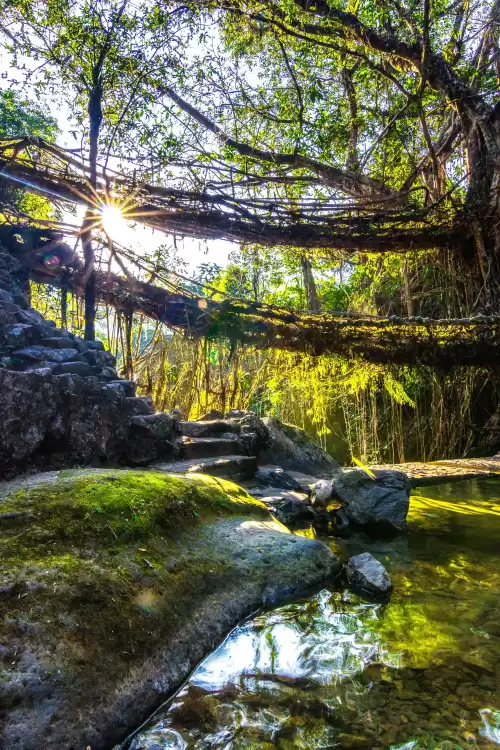
The Double Decker Living Root Bridge in Nongriat is one of the most iconic trekking experiences in Meghalaya, located deep within the lush forests below Cherrapunji. Reaching the bridge requires a steep descent of thousands of stone steps through dense greenery, small villages, and natural streams, making the journey physically demanding but extremely rewarding.
The bridge itself is a naturally formed structure created by guiding the roots of rubber fig trees across rivers over many years. The lower and upper bridges together form a unique two-level structure that blends perfectly with the surrounding rainforest environment.
It is one of the most famous eco-trekking experiences in Northeast India.
The return journey is equally challenging due to the steep ascent, so proper fitness and pacing are important for travelers attempting this trek.
Nongriat offers one of the most immersive natural trekking experiences in Meghalaya.
The Riwai Living Root Bridge is a more accessible version of Meghalaya’s famous root bridge systems, located near Mawlynnong village. Unlike the challenging trek to Nongriat, this bridge can be reached with a short and easy walk, making it suitable for families and casual travelers.
The bridge is formed naturally by guiding tree roots over streams, demonstrating the traditional ecological knowledge of the Khasi community. Its compact size and easy access make it one of the most visitor-friendly root bridge experiences in the region.
It is one of the most accessible natural attractions in Meghalaya.
The surrounding area is calm and scenic, offering a peaceful introduction to the concept of living root architecture without the need for strenuous trekking.
Riwai provides a simple and beautiful introduction to root bridge culture.
Living root bridges in Meghalaya represent a unique form of traditional bioengineering developed by the Khasi and Jaintia communities over generations. Instead of using artificial materials, locals guide the aerial roots of rubber fig trees to grow across rivers and gradually form strong natural bridges.
This process takes decades to mature and requires continuous care, making each bridge a living structure that evolves over time. These bridges are not only functional but also deeply embedded in local cultural and ecological practices.
It is one of the most unique examples of sustainable engineering in the world.
The system reflects a strong connection between human communities and natural ecosystems, showcasing how traditional knowledge can create long-lasting infrastructure without harming the environment.
Living root bridges reflect Meghalaya’s deep ecological wisdom and cultural heritage.
Mawsmai Cave is one of the most accessible and visitor-friendly limestone caves in Cherrapunji, offering a structured exploration experience through illuminated passages and naturally formed rock chambers. The cave is relatively short compared to other cave systems in the region, making it suitable for first-time visitors and families.
Inside, travelers encounter narrow limestone corridors, stalactite and stalagmite formations, and naturally sculpted rock patterns that reflect thousands of years of geological activity. The lighting inside the cave helps highlight these formations while maintaining safe movement through the passages.
It is one of the most popular cave experiences in Meghalaya.
The cave’s accessibility and structured pathways make it an easy introduction to the underground landscape of the Khasi Hills without requiring technical trekking or specialized equipment.
Mawsmai Cave offers a safe and fascinating introduction to Meghalaya’s underground world.
Arwah Cave offers a more expansive and natural cave exploration experience compared to Mawsmai, with longer walking paths and less artificial lighting. The cave is known for its fossil imprints embedded in limestone walls, giving visitors a glimpse into ancient geological history.
The journey inside Arwah Cave involves navigating uneven terrain and dimly lit passages, which adds a sense of adventure while still remaining manageable for most travelers with basic fitness levels.
It is one of the most geologically significant caves in Cherrapunji.
The natural formations and fossil evidence make it a valuable destination for those interested in earth science and natural history within Meghalaya’s landscape.
Arwah Cave provides a deeper and more natural underground exploration experience.
Beyond the popular caves, the Sohra region around Cherrapunji contains several lesser-known cave systems that remain relatively untouched by mass tourism. These caves are often located in remote areas and require local guidance or trekking to access safely.
These hidden cave systems feature natural formations, narrow tunnels, and underground streams that showcase Meghalaya’s extensive limestone network. Due to their untouched nature, they offer a more raw and authentic exploration experience.
It is one of the most underrated cave exploration regions in Northeast India.
However, visiting these caves requires caution and preparation, as conditions can vary and facilities are minimal compared to developed tourist sites.
Sohra’s hidden caves offer a raw and adventurous underground experience.
Eco Park in Cherrapunji is a well-maintained viewpoint area developed to offer panoramic views of deep valleys, waterfalls, and mist-covered landscapes. The park is designed with walking paths and multiple viewing decks that allow travelers to explore different angles of the surrounding terrain.
On clear days, the visibility extends across lush green hills and layered cliffs, while during monsoon and post-monsoon seasons, drifting clouds often create a dramatic floating effect over the valleys. The structured layout makes it one of the most accessible viewpoints in the region.
It is one of the most organized scenic viewpoints in Meghalaya.
Eco Park is especially suitable for families and casual travelers who want a comfortable viewing experience without trekking or difficult terrain.
Eco Park offers a comfortable introduction to Cherrapunji’s landscapes.
Khoh Ramhah is a striking natural rock formation resembling a giant cone-shaped structure surrounded by deep valleys and forested hills. The viewpoint offers a wide-angle perspective of the surrounding terrain, making it a popular stop for photography and landscape appreciation.
The area around Khoh Ramhah is relatively quiet and less commercialized, allowing visitors to experience a more natural and open environment. The dramatic cliffs and valley formations highlight the geological uniqueness of the Cherrapunji region.
It is one of the most distinctive natural formations in Meghalaya.
The viewpoint is best visited during clear weather conditions when visibility across the valleys is at its highest.
Khoh Ramhah showcases the raw geological beauty of Cherrapunji.
Several viewpoints in Cherrapunji offer distant views of the Bangladesh plains, especially during clear weather conditions when visibility is high. These vantage points highlight the unique geographical position of Meghalaya along the international border region.
The experience of seeing vast plains stretching beyond the hills creates a striking contrast between elevated landscapes and flat lowlands. Mist and cloud movements often add dynamic visual elements to the scenery.
It is one of the most geographically unique viewpoints in Northeast India.
These viewpoints are often included in longer sightseeing routes and provide a broader understanding of Meghalaya’s borderland geography.
These viewpoints offer a rare cross-border landscape perspective.
Thangkharang Park is one of the most peaceful nature attractions near Cherrapunji, offering wide-open landscapes, cliffside viewpoints, and well-maintained walking areas. The park is located on a plateau, which provides sweeping views of deep valleys and surrounding hills that change color with shifting weather conditions.
The environment here is calm and less crowded compared to major tourist spots, making it ideal for relaxed sightseeing and slow travel. Seasonal flowers and green cover add additional beauty, especially during post-monsoon months when the landscape is at its freshest.
It is one of the most relaxing nature spots in Meghalaya.
The combination of altitude, open space, and natural scenery makes Thangkharang Park a quiet escape within the Cherrapunji region.
Thangkharang Park offers a calm contrast to Cherrapunji’s waterfalls and caves.
Mawkdok Dympep Valley Viewpoint is a dramatic roadside stop located on the way to Cherrapunji from Shillong. It offers a deep view into a V-shaped valley surrounded by dense green hills, often covered with mist and low-hanging clouds.
The viewpoint is easily accessible and frequently visited by travelers during road trips, making it a natural break point for photography and short stops. Adventure activities like zip-lining are also available in the area for those seeking a more active experience.
It is one of the most iconic valley viewpoints in Meghalaya.
The changing weather conditions often enhance the depth and visual drama of the valley landscape.
Mawkdok offers one of the most dramatic roadside views in Cherrapunji.
The regions surrounding Cherrapunji are filled with dense forests, seasonal waterfalls, and natural river streams that become highly active during monsoon and post-monsoon seasons. These natural features are often scattered across village roads and hiking paths, creating unexpected scenic moments during travel.
Many of these waterfalls are not heavily commercialized, offering a more raw and untouched experience of Meghalaya’s natural ecosystem. Forested trails also provide opportunities for short walks and nature observation.
It is one of the most naturally diverse regions in Northeast India.
The combination of forests, rivers, and seasonal water flows makes Cherrapunji’s surroundings constantly changing and visually rich throughout the year.
Cherrapunji’s natural surroundings offer continuous scenic surprises during travel.
The trek to Nongriat from Cherrapunji is one of the most physically demanding but rewarding experiences in Meghalaya. The trail descends through thousands of stone steps cutting across dense rainforest, small hamlets, and natural streams that reflect the untouched ecosystem of the Khasi Hills.
The journey begins near Tyrna village and continues steeply downhill, which means the return ascent is equally challenging. Along the way, travelers pass through shaded forest paths, suspension bridges, and quiet rural settlements that offer glimpses of local life in remote conditions.
It is one of the most iconic trekking routes in Northeast India.
Proper pacing, hydration, and physical preparation are important as the trek can be tiring, especially for first-time visitors unfamiliar with steep mountain terrain.
The Nongriat trek is a full immersion into Meghalaya’s natural and cultural landscape.
Rainbow Falls lies deeper inside the Nongriat region and is often explored as an extension of the Double Decker Living Root Bridge trek. Reaching the falls requires additional trekking through forest paths, river crossings, and uneven terrain.
The waterfall is known for its secluded location and natural pool surroundings, which become especially beautiful when sunlight interacts with mist, sometimes creating rainbow effects during the right conditions.
It is one of the most rewarding hidden trekking destinations in Meghalaya.
Because of its remote location, it is recommended only for fit and experienced trekkers who are comfortable with longer walking distances and rugged terrain.
Rainbow Falls offers a secluded and highly rewarding trekking experience.
Beyond major trekking routes, Cherrapunji is surrounded by smaller village trails that pass through rainforest landscapes, terraced fields, and natural streams. These trails are less strenuous and offer a more relaxed way to experience the region’s ecological richness.
Walking through these paths allows travelers to observe daily rural life, traditional Khasi homes, and sustainable land-use practices that have been maintained for generations. The combination of nature and culture creates a peaceful trekking environment.
It is one of the most immersive soft trekking experiences in Meghalaya.
These trails are ideal for travelers who want nature exploration without the intensity of long-distance trekking routes.
Village trails offer a gentle and authentic Cherrapunji experience.
Cherrapunji is deeply rooted in Khasi traditions, and visiting the region offers travelers a chance to experience village hospitality shaped by centuries of community living. Local homes and small settlements around Sohra reflect a simple lifestyle closely connected to nature and seasonal rhythms.
Interactions with local communities often reveal traditional practices, oral stories, and cultural values that emphasize respect for land, forests, and water sources. Hospitality in these villages is warm but understated, focusing on authenticity rather than commercial tourism.
It is one of the most culturally grounded travel experiences in Meghalaya.
The slow pace of life in these villages allows travelers to observe daily routines and understand how deeply nature is integrated into Khasi identity.
Cherrapunji’s villages reflect a lifestyle shaped by nature and tradition.
Local Khasi cuisine in Cherrapunji is simple, earthy, and deeply connected to locally available ingredients such as rice, pork, bamboo shoots, and seasonal vegetables. Meals are typically prepared with minimal spices, allowing natural flavors to stand out.
Traditional dishes are commonly served in small eateries, homestays, and village kitchens, offering an authentic taste of everyday life in the Khasi Hills. The food experience is less about variety and more about freshness and cultural authenticity.
It is one of the most authentic regional food experiences in Northeast India.
Travelers often find that meals in Cherrapunji are closely tied to local farming practices and seasonal availability, making each experience slightly different depending on the time of visit.
Khasi food reflects the natural simplicity of Cherrapunji’s lifestyle.
Village markets in and around Cherrapunji offer a glimpse into local trade and handmade craftsmanship. These markets are usually small but culturally rich, featuring items such as woven baskets, traditional clothing, and organic produce sourced from nearby villages.
Shopping in these markets is less commercial and more community-driven, where interactions with local sellers provide insight into daily life and traditional skills passed down through generations.
It is one of the most genuine rural market experiences in Meghalaya.
These markets also reflect sustainable practices, with many products made using natural materials sourced from the surrounding forests and farmlands.
Local markets add cultural depth to the Cherrapunji travel experience.
A one-day itinerary in Cherrapunji is typically designed for travelers coming from Shillong who want to experience the major highlights in a limited timeframe. The journey usually begins early in the morning to make the most of daylight hours, as the drive itself takes time through winding hill roads.
In a single day, travelers generally focus on key attractions such as major waterfalls, viewpoints, and a short cave visit, arranged in a logical route to minimize backtracking. The experience is fast-paced but still offers a strong introduction to the region’s dramatic landscape.
It is one of the most commonly planned short trips in Meghalaya.
While a one-day plan covers major highlights, it requires efficient time management and may not allow deep exploration of trekking routes or remote villages.
A one-day trip provides a compact overview of Cherrapunji’s beauty.
A two-day itinerary allows travelers to experience Cherrapunji at a much deeper level, especially if the Double Decker Living Root Bridge trek at Nongriat is included. The first day is usually dedicated to waterfalls, caves, and viewpoints across Sohra, while the second day focuses on trekking experiences.
This structure provides enough time to balance sightseeing with physical activities, ensuring that the demanding trek does not feel rushed. Overnight stays in Cherrapunji or nearby villages help reduce travel fatigue and improve flexibility.
It is one of the most balanced ways to explore the region.
This itinerary is ideal for travelers who want both scenic viewpoints and immersive trekking experiences in a single visit.
A two-day plan allows a deeper and more relaxed Cherrapunji experience.
The most popular Meghalaya travel circuit combines Shillong, Cherrapunji, and Dawki into a single route that offers a complete overview of the state’s diverse landscapes. Shillong acts as the base, Cherrapunji provides waterfall and cave experiences, while Dawki introduces river landscapes and border-region scenery.
This combination allows travelers to experience hills, valleys, waterfalls, caves, and rivers within a single itinerary, making it ideal for first-time visitors. Travel routes are usually planned in a circular format to minimize repetition and optimize time.
It is one of the most recommended travel circuits in Northeast India.
Proper sequencing of destinations ensures smoother travel flow and reduces long unnecessary backtracking across hilly terrain.
This circuit offers the most complete Meghalaya travel experience.
Planning a Cherrapunji trip becomes much more effective when the itinerary is aligned with both season and personal travel interests. The region behaves very differently across monsoon, post-monsoon, and winter months, and each season highlights a different aspect of its landscape.
Travelers interested in waterfalls and dramatic rain-fed scenery often prefer monsoon or post-monsoon periods, while those focused on trekking, caves, and clear viewpoints usually find winter conditions more suitable. Matching activities with seasonal conditions ensures a more comfortable and rewarding experience.
It is one of the most season-sensitive destinations in Meghalaya.
Interest-based planning also matters, as some travelers prioritize waterfalls and viewpoints, while others focus more on trekking or cultural experiences in nearby villages.
Choosing the right season enhances the overall Cherrapunji experience.
A well-balanced Cherrapunji itinerary should combine waterfalls, caves, and trekking experiences in a logical sequence to avoid fatigue and unnecessary travel delays. Grouping nearby attractions together helps reduce time spent on winding roads and allows more time at each destination.
Waterfalls are best visited during favorable weather conditions, while caves provide stable underground experiences regardless of rain. Trekking routes like Nongriat require more time and physical effort, so they should be planned as dedicated segments rather than combined with multiple long drives.
It is one of the most diverse natural travel regions in Northeast India.
A balanced itinerary ensures travelers experience both surface landscapes and deeper natural formations without rushing through the journey.
Balanced planning helps maximize both comfort and exploration quality in Cherrapunji.
Before visiting Cherrapunji, travelers should prepare for rapidly changing weather conditions, as the region can shift between heavy rain, mist, and clear skies within a short time. Carrying rain protection and layered clothing is essential for comfort throughout the trip.
It is also important to plan transport and accommodation in advance, especially during peak travel seasons when demand increases significantly. Roads can be affected by rainfall, so flexible scheduling is highly recommended.
It is one of the most important preparation stages for Meghalaya travel.
Basic essentials such as cash, medicines, and proper footwear should always be included due to limited facilities in some remote areas.
Good preparation ensures a safe and enjoyable Cherrapunji journey.


Get customized Meghalaya tour planning designed around rainfall patterns, road connectivity, seasonal visibility, and realistic hill travel timing. Whether you are visiting for waterfalls, cave exploration, scenic drives, village experiences, or nature-fo
⚡ Quick Response | 💰 Free consultation | 🕒 24×7 expert support