
What is Meghalaya Famous For?
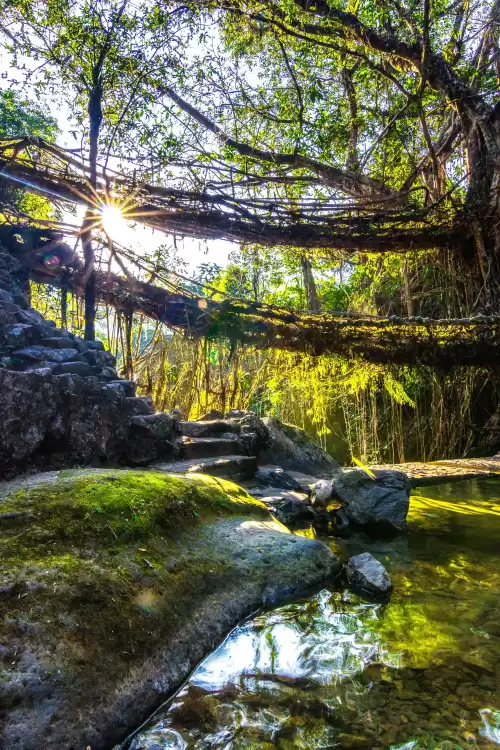
Meghalaya is famous for its living root bridges, waterfalls, caves, hills, tribal culture, clean villages, crystal clear rivers, and unique natural landscapes that attract travellers throughout the year.
+91 9910402252
admin@chalbanjare.com


Monsoon is the most spectacular season to experience Meghalaya’s waterfalls, as rivers overflow, valleys fill with mist, and hundreds of seasonal cascades come alive across the Khasi, Jaintia, and Garo Hills.
Nohkalikai Falls reaches its most spectacular form during the monsoon when continuous rainfall across the Khasi Hills feeds enormous volumes of water into the dramatic plunge waterfall. Dropping from one of India's highest vertical cliffs, the waterfall becomes significantly wider and more forceful compared to the dry season. The roaring sound of water can often be heard even before reaching the main viewpoint, creating an unforgettable first impression for visitors. During periods of heavy rainfall, the surrounding cliffs appear alive with numerous temporary streams flowing alongside the main waterfall, further enhancing the dramatic landscape.
Unlike winter, when the plunge pool below becomes more visible because of clearer weather, the monsoon emphasizes the sheer power of the falling water. Thick clouds frequently drift across the valley, occasionally revealing the complete waterfall before covering it again within minutes. This constantly changing atmosphere makes every visit unique and encourages travelers to remain patient at the viewpoint rather than leaving immediately if visibility is temporarily reduced.
Experiencing Nohkalikai Falls during the monsoon showcases Meghalaya's extraordinary rainfall at its most dramatic. The immense volume of water, towering cliffs, and constantly changing weather combine to create one of India's most unforgettable waterfall experiences.
The monsoon transforms the entire valley surrounding Nohkalikai Falls into a landscape dominated by drifting mist, saturated forests, and overflowing cliffs. Instead of focusing only on the main waterfall, visitors quickly notice countless seasonal streams cascading down the surrounding rock faces after prolonged rainfall. Dense clouds move continuously through the valley, producing dramatic scenes where sections of the landscape appear and disappear throughout the day.
The combination of moisture, fresh vegetation, and moving clouds creates a unique atmosphere rarely experienced outside Meghalaya. The forests surrounding the gorge become intensely green, while the constant mist softens distant landscapes and adds depth to photographs. Travelers should expect rapidly changing weather and prepare accordingly with waterproof clothing, suitable footwear, and enough time to wait for clearer views when cloud cover becomes dense.
The surrounding landscape becomes just as impressive as Nohkalikai Falls itself during the rainy season. Travelers who appreciate dramatic mountain scenery will find the mist-filled valley every bit as memorable as the waterfall.
The main viewing platform overlooking Nohkalikai Falls remains the safest and most practical location during the rainy season. From here, visitors can observe both the towering waterfall and the surrounding cliffs without undertaking difficult hikes through slippery terrain. Since clouds frequently move across the valley, arriving early in the day and allowing sufficient waiting time significantly improves the chances of witnessing clear panoramic views.
Nearby viewpoints around Cherrapunji also provide different perspectives of the surrounding valleys during the monsoon, allowing travelers to appreciate the broader landscape shaped by heavy rainfall. Visitors should always respect safety barriers because wet surfaces and reduced visibility increase risks near cliff edges. Using designated viewing platforms ensures a safe and enjoyable experience even during periods of intense rainfall.
Choosing the right viewpoint and allowing flexibility for changing weather greatly enhances the monsoon experience at Nohkalikai Falls. Patience often rewards visitors with spectacular moments when the clouds briefly reveal the entire waterfall and surrounding valley.
Seven Sisters Falls becomes one of Meghalaya's most spectacular waterfalls during the monsoon when continuous rainfall feeds all of its parallel streams simultaneously. Instead of a single waterfall, visitors witness multiple white cascades descending side by side across towering limestone cliffs before disappearing into the deep valley below. The synchronized flow creates an impressive curtain of water stretching across the mountainside, making this one of the most distinctive waterfall landscapes in India.
During periods of particularly heavy rainfall, additional temporary streams often appear between the main cascades, increasing the overall scale of the waterfall. The surrounding cliffs remain covered with fresh green vegetation while clouds drift through the valley, constantly changing the appearance of the landscape. Since water flow depends directly on rainfall, the monsoon consistently offers the most dramatic viewing conditions.
Seven Sisters Falls fully demonstrates the power of Meghalaya's monsoon by transforming an already impressive cliff into a spectacular wall of flowing water that is best experienced during the rainy season.
The viewpoint overlooking Seven Sisters Falls also provides expansive views across one of Cherrapunji's deepest valleys. During peak rainfall, clouds move continuously through the gorge while waterfalls emerge and disappear behind drifting mist. Although visibility may occasionally reduce, patient visitors are often rewarded with dramatic openings that reveal the entire valley illuminated by changing sunlight.
The surrounding forests become intensely green after prolonged rainfall, creating a striking contrast against the white waterfalls and dark limestone cliffs. Every weather change produces a different landscape, allowing photographers to capture unique compositions throughout their visit. Travelers should remain flexible and avoid leaving immediately if clouds temporarily cover the waterfall.
The panoramic valley surrounding Seven Sisters Falls is an essential part of the experience. The constantly changing weather creates dramatic scenery that highlights why Cherrapunji is famous for its remarkable monsoon landscapes.
Unlike waterfalls that maintain similar flow throughout the year, Seven Sisters Falls is strongly seasonal and reaches its most impressive form during the rainy months. Continuous rainfall transforms the cliffs into one of Meghalaya's grandest natural displays, attracting visitors specifically hoping to witness the waterfall at maximum volume. The scale of the landscape becomes particularly impressive when viewed against the surrounding valleys and forests.
Visitors planning a monsoon trip should understand that changing weather is part of the overall experience. Heavy mist, occasional rainfall, and shifting cloud cover create an atmosphere that is impossible to experience during drier seasons. With appropriate clothing, realistic expectations, and enough time at the viewpoint, travelers can enjoy one of Meghalaya's finest seasonal natural attractions.
Seven Sisters Falls represents one of Meghalaya's greatest seasonal spectacles. Experiencing the waterfall during the rainy season reveals the extraordinary scale of the region's monsoon landscape while providing one of the state's most memorable sightseeing experiences.
Wei Sawdong Falls is one of Meghalaya's most distinctive waterfalls because of its three beautifully formed rock terraces and naturally stepped cascade. During the monsoon, rainfall significantly increases the water volume flowing across each tier, transforming the waterfall into a powerful series of white cascades surrounded by dense rainforest. Although the famous turquoise pools remain visible during lighter rainfall, prolonged heavy rain can temporarily reduce water clarity because increased flow carries natural sediment into the pools. Even then, the waterfall remains one of Cherrapunji's most visually impressive natural attractions.
Unlike roadside waterfalls, reaching Wei Sawdong requires descending a series of steep staircases and forest paths. The trail itself becomes part of the experience as travelers pass through lush vegetation, moss-covered rocks, bamboo groves, and rainforest surroundings before reaching the viewing areas. Since the waterfall is located inside a deep forested valley, humidity remains high throughout the year, while the sound of flowing water becomes increasingly powerful during the rainy season.
Wei Sawdong Falls combines beautiful geology with dense rainforest, making it one of Meghalaya's most rewarding waterfall experiences. During the monsoon, the increased water flow adds tremendous energy to an already spectacular natural setting.
The walking trail leading to Wei Sawdong Falls becomes especially attractive during the rainy season when continuous rainfall transforms the surrounding forest into a vibrant green landscape. Ferns, mosses, bamboo, orchids, and tropical vegetation flourish under the humid conditions, creating an immersive rainforest experience long before visitors reach the waterfall itself. Small seasonal streams frequently cross the trail, while water droplets hanging from leaves add to the rich natural atmosphere.
Because the trail passes through dense vegetation, filtered natural light creates beautiful contrasts between shaded forest sections and brighter openings along the route. Photographers often spend considerable time documenting the rainforest itself rather than focusing only on the waterfall. Travelers should move carefully because exposed rocks, staircases, and soil become slippery after rainfall, particularly during periods of continuous monsoon showers.
The rainforest surrounding Wei Sawdong forms an essential part of the experience. Walking slowly through this lush environment allows visitors to appreciate Meghalaya's remarkable biodiversity alongside one of its most famous waterfalls.
Although Wei Sawdong Falls is at its most dramatic during the monsoon, travelers should carefully consider daily weather conditions before planning the visit. Heavy continuous rainfall can make staircases, rocky surfaces, and forest trails considerably more slippery than usual. Local authorities or tourism operators may occasionally restrict access if weather conditions create safety concerns, making it important to remain flexible while traveling during the rainy season.
Choosing days with lighter rainfall often provides the best balance between experiencing a powerful waterfall and maintaining safer trekking conditions. Morning visits are generally preferable because weather can become more unpredictable later in the day. Visitors should avoid rushing on the descent and allow enough time to return comfortably before evening, particularly if combining Wei Sawdong with other Cherrapunji attractions.
Careful planning ensures that visitors can safely enjoy Wei Sawdong Falls during the monsoon while experiencing one of Meghalaya's most beautiful rainforest waterfalls under favorable weather conditions.
Krang Suri Falls is one of the most visually striking waterfalls in the Jaintia Hills because of its bright blue pool, broad waterfall, and surrounding forest. During the monsoon, the surrounding landscape becomes intensely green as rainfall nourishes every part of the valley. Although the increased water volume can temporarily reduce the crystal-clear appearance of the pool after prolonged heavy rainfall, the waterfall itself becomes considerably more powerful and impressive.
The walking path leading to Krang Suri remains relatively well developed compared to several remote waterfalls in Meghalaya, allowing visitors to enjoy multiple viewpoints overlooking the cascade. During lighter rainfall, the combination of fresh vegetation, flowing water, and mist creates a beautiful natural atmosphere that appeals to photographers as well as general visitors. Travelers should still remain cautious because steps and viewing platforms may become wet during rainy weather.
Krang Suri demonstrates how Meghalaya's waterfalls evolve during the rainy season. While water clarity naturally changes, the surrounding rainforest and powerful cascade create an unforgettable monsoon landscape.
Located in the West Jaintia Hills, Krang Suri Falls remains one of the region's signature natural attractions because of its impressive waterfall, limestone surroundings, and peaceful forest setting. The drive to the waterfall passes through scenic countryside, small villages, and rolling hills that introduce travelers to a quieter side of Meghalaya beyond the popular Khasi Hills tourist circuit.
Upon reaching the entrance, visitors descend a maintained pathway through forested surroundings until the waterfall gradually comes into view. Different viewing platforms provide opportunities to appreciate the waterfall from above as well as closer to the pool whenever conditions are considered safe. Spending additional time at the site allows travelers to experience changing light, cloud movement, and the peaceful sounds of the surrounding forest.
Krang Suri combines easy accessibility with remarkable scenery, making it one of the finest waterfall destinations in the Jaintia Hills for travelers exploring Meghalaya during or immediately after the rainy season.
One of the greatest advantages of visiting Krang Suri after seasonal rainfall is the extraordinary greenery that surrounds the waterfall. Hillsides become covered with fresh vegetation, forests appear deeper in color, and small seasonal streams often emerge across the landscape. The contrast between white flowing water and bright green forest creates beautiful natural scenery throughout the valley.
Travelers visiting immediately after periods of heavy rainfall often experience comfortable temperatures, fresh mountain air, and quieter surroundings compared to peak holiday seasons. Although occasional showers may still occur, carrying waterproof clothing and remaining flexible allows visitors to enjoy the scenery without difficulty. Photographers especially appreciate the rich colors produced by freshly washed vegetation under soft cloud-filtered light.
The lush greenery surrounding Krang Suri completes the overall experience by highlighting why Meghalaya is celebrated for its remarkable monsoon landscapes. Together, the waterfall and rainforest create one of the state's most memorable natural destinations.
Dainthlen Falls becomes one of the most impressive waterfalls in Cherrapunji during the monsoon when continuous rainfall across the Khasi Hills sends enormous volumes of water rushing across the wide rock plateau before plunging into a deep gorge. Unlike narrow plunge waterfalls, Dainthlen spreads across broad rock formations, allowing visitors to appreciate the immense scale of the flowing river before it disappears over the cliff edge. During heavy rainfall, the roar of the water echoes across the valley, creating an unforgettable natural experience.
The surrounding rock formations add another layer of interest because centuries of flowing water have shaped the landscape into smooth channels, cracks, and natural patterns that become especially noticeable when large amounts of water move across them. Visitors should always remain within designated viewing areas because wet rocks become extremely slippery during the rainy season. Strong currents near the edge make it unsafe to approach the river beyond permitted zones regardless of water level.
Dainthlen Falls is best appreciated for the sheer power of the river during the rainy season. The combination of broad rock formations, massive water flow, and surrounding valleys creates one of Cherrapunji's most dramatic monsoon landscapes.
The viewpoints overlooking Dainthlen Falls provide wide panoramic views of the waterfall, surrounding cliffs, and the deep valley beyond. During the monsoon, drifting clouds frequently move across the landscape, occasionally revealing dramatic views before covering sections of the valley once again. This constantly changing atmosphere makes every visit unique and encourages photographers to remain patient rather than leaving immediately if visibility becomes limited.
Morning generally provides more stable weather, although cloud movement remains common throughout the day. The viewing platforms allow visitors to observe the waterfall safely while appreciating the impressive scale of the surrounding plateau. Because visibility changes rapidly, spending additional time at the viewpoint often results in several completely different photographic opportunities within the same visit.
The surrounding viewpoints are an essential part of the Dainthlen experience because they reveal both the waterfall and the vast landscape shaped by Meghalaya's remarkable rainfall.
Dainthlen Falls remains one of Cherrapunji's most visited waterfalls because it combines geological interest, dramatic scenery, and easy accessibility. During the rainy season, the waterfall becomes particularly impressive as the increased river volume transforms the entire plateau into a powerful display of flowing water. Visitors often include Dainthlen together with nearby attractions such as Nohkalikai Falls, Seven Sisters Falls, Wei Sawdong Falls, and Mawsmai Cave as part of a full-day sightseeing circuit.
Since weather conditions influence visibility throughout Cherrapunji, travelers should maintain flexible schedules and avoid rushing between attractions. Spending sufficient time at each location provides a much richer experience while reducing travel fatigue. Comfortable footwear, waterproof clothing, and realistic expectations about changing weather help ensure an enjoyable visit throughout the monsoon season.
Dainthlen Falls perfectly represents the dramatic landscapes that make Cherrapunji famous. During the rainy season, it becomes one of Meghalaya's most powerful and memorable natural attractions.
Kynrem Falls is among the tallest waterfalls in Meghalaya and reaches its most spectacular form during the monsoon when continuous rainfall feeds enormous volumes of water across its impressive three-tier structure. Located inside Thangkharang Park near Cherrapunji, the waterfall descends through multiple levels before disappearing into the deep valley below. During heavy rainfall, the three sections merge into an enormous white cascade that dominates the surrounding cliffs and forests.
The surrounding hills become exceptionally green during the rainy season, creating a striking contrast against the powerful waterfall. Unlike the drier months when individual tiers may appear more separated, monsoon conditions highlight the waterfall as one continuous display of flowing water. Visitors should expect occasional mist and changing visibility because clouds frequently move through the valley.
Visiting Kynrem Falls during the rainy season allows travelers to witness one of Meghalaya's highest waterfalls in its most dramatic form, surrounded by lush forests and expansive valley landscapes.
The viewpoints within Thangkharang Park provide broad panoramic views overlooking Kynrem Falls, surrounding cliffs, forests, and distant plains toward Bangladesh on clear days. During the monsoon, drifting clouds frequently create dramatic layers across the valley while sunlight occasionally breaks through, illuminating different sections of the landscape. These changing conditions make the viewpoint attractive for photographers as well as general visitors.
Rather than focusing only on the waterfall, visitors should spend time appreciating the broader landscape visible from the park. The combination of cliffs, forests, deep valleys, and distant horizons provides multiple compositions that change continuously throughout the day. Staying longer often rewards photographers with better visibility as clouds gradually shift across the valley.
The panoramic viewpoints transform Kynrem Falls into more than a waterfall visit by revealing the broader landscape of southern Meghalaya, where forests, cliffs, and valleys combine into one remarkable natural panorama.
Kynrem Falls is particularly distinctive because of its three clearly defined levels that descend one after another through the steep mountainside. During periods of sustained rainfall, each tier carries substantial water, creating a continuous cascade visible from the surrounding viewpoints. The waterfall demonstrates the tremendous effect of Meghalaya's monsoon climate, with rainfall dramatically increasing both water volume and visual impact.
Visitors planning a Cherrapunji itinerary often combine Kynrem Falls with Seven Sisters Falls, Nohkalikai Falls, Dainthlen Falls, and nearby viewpoints, creating a rewarding full-day waterfall circuit. Since weather conditions influence visibility across the region, travelers should remain flexible and prioritize safety throughout the journey. Proper footwear, waterproof clothing, and careful movement on wet pathways help ensure a comfortable visit during the rainy season.
Kynrem Falls showcases the remarkable scale of Meghalaya's monsoon landscape. Experiencing all three tiers in full flow provides one of the most memorable waterfall views anywhere in the state.
Phe Phe Falls is one of Meghalaya's most impressive yet comparatively lesser-visited waterfalls, located in the West Jaintia Hills. Unlike the popular waterfalls around Cherrapunji that attract large numbers of visitors throughout the year, Phe Phe Falls offers a quieter atmosphere where travelers can appreciate the natural landscape without significant crowds. The waterfall is known for its impressive twin cascades that plunge into a deep forested valley, creating one of the tallest and most dramatic waterfall scenes in the state.
The journey to Phe Phe Falls itself becomes part of the adventure. Travelers drive through peaceful villages, rolling countryside, and forested roads before reaching the viewpoint area. The surrounding hills remain largely untouched by commercial tourism, allowing visitors to experience a more authentic side of Meghalaya. During the monsoon and immediately afterward, the waterfall reaches its highest volume while the surrounding forests become intensely green, making the landscape particularly rewarding for photographers and nature enthusiasts.
Phe Phe Falls is ideal for travelers who enjoy discovering destinations beyond the standard Meghalaya itinerary. The combination of remote scenery, dramatic waterfalls, and quiet surroundings creates one of the state's most memorable offbeat experiences.
One of the unique characteristics of Meghalaya during the monsoon is the appearance of countless seasonal waterfalls across forests, valleys, and limestone cliffs. Many of these waterfalls have no official names or tourist facilities, yet they create spectacular scenery throughout the Khasi Hills, Jaintia Hills, and Garo Hills. Travelers driving through rural Meghalaya frequently encounter temporary cascades flowing directly beside roads or emerging from dense forests after continuous rainfall.
Unlike permanent waterfalls, these seasonal cascades exist only during periods of substantial rainfall, making them a special feature of monsoon travel. Forest trails, village roads, and mountain highways reveal numerous hidden waterfalls that are rarely included in guidebooks. Visitors should appreciate these natural attractions from safe viewpoints because many are located on steep slopes or beside fast-flowing streams where wet surfaces become slippery during the rainy season.
Exploring Meghalaya during the rainy season means discovering countless unexpected waterfalls that appear naturally across the landscape. These hidden cascades often become some of the most memorable moments of the journey despite never appearing on traditional sightseeing itineraries.
Beyond Meghalaya's famous waterfalls, numerous lesser-known cascades remain scattered across remote villages, forest reserves, and countryside roads. These waterfalls generally receive fewer visitors because they require additional driving, local guidance, or short forest walks. Travelers willing to explore these quieter destinations often experience peaceful natural surroundings where the sounds of flowing water, forests, and birds replace the crowds commonly found at major attractions.
Many of these hidden waterfalls are best explored with local guides who know current trail conditions and can recommend safe viewpoints during different seasons. Since facilities such as restaurants, parking areas, and shops may be limited, visitors should prepare in advance with sufficient water, snacks, and appropriate footwear. Responsible tourism is particularly important in these locations because many remain environmentally sensitive and closely connected to nearby communities.
Lesser-known waterfalls reveal a quieter and more authentic side of Meghalaya. Travelers who venture beyond popular routes often discover remarkable landscapes while enjoying a slower and more immersive nature experience.
Monsoon creates some of the most atmospheric photography conditions across Meghalaya because clouds, drifting mist, and continuous rainfall transform ordinary viewpoints into dramatic natural landscapes. Waterfalls such as Nohkalikai, Seven Sisters, Kynrem, Dainthlen, Wei Sawdong, and Krang Suri frequently appear and disappear behind moving clouds, allowing photographers to capture constantly changing compositions throughout the day. Rather than waiting only for perfectly clear weather, many photographers intentionally embrace mist because it adds depth, softness, and a sense of scale to the surrounding cliffs.
Photography during the monsoon requires patience because visibility changes within minutes. Heavy cloud cover may suddenly open to reveal a complete waterfall before closing again just as quickly. Waterproof camera protection, microfiber cloths, spare batteries, and weather-resistant bags become essential because moisture remains present throughout the shooting session.
Photographing waterfalls during cloudy weather allows visitors to experience Meghalaya's distinctive monsoon atmosphere rather than simply documenting the landscape. The constantly changing conditions often produce the most memorable images of the journey.
During the rainy season, the valleys surrounding Meghalaya's major waterfalls become just as photogenic as the waterfalls themselves. Continuous rainfall transforms every hillside into a vibrant green landscape where forests, cliffs, grasslands, and seasonal streams combine to create dramatic panoramic views. Locations such as Nohkalikai Falls, Seven Sisters Falls, Kynrem Falls, and Dainthlen Falls overlook deep valleys that appear particularly striking when fresh vegetation contrasts with white cascading water.
Photographers should spend time observing the wider landscape instead of focusing only on the waterfall. Including forests, cliffs, clouds, and distant hills within the composition creates images that better represent the scale of Meghalaya's monsoon scenery. Weather changes frequently, allowing sunlight to occasionally illuminate sections of the valley while surrounding areas remain covered by cloud.
The surrounding valleys complete the visual experience of Meghalaya's waterfalls. Including the broader landscape within photographs helps capture the remarkable scale and beauty of the state's monsoon environment.
The hours immediately after heavy rainfall often produce some of Meghalaya's most dramatic photography opportunities. Freshly washed vegetation appears brighter, waterfalls remain powerful, and clouds begin lifting from valleys to reveal cliffs, forests, and distant hills. These rapidly changing conditions create dynamic landscapes where sunlight and mist interact across the mountains, producing scenes that may last only a few minutes before changing again.
Travelers should remain flexible throughout the day because weather conditions rarely remain constant during the monsoon. Rather than following a rigid sightseeing schedule, photographers benefit from spending additional time at important viewpoints whenever cloud movement creates exceptional visibility. Waterproof footwear and careful movement remain important because pathways often stay wet even after rainfall ends.
Some of Meghalaya's finest monsoon photographs are captured immediately after rainfall, when waterfalls remain powerful and the landscape gradually emerges from drifting clouds. Remaining patient during changing weather often produces unforgettable results.
Traveling across Meghalaya during the monsoon is an unforgettable experience because waterfalls, forests, rivers, and valleys reach their most spectacular condition. However, the same rainfall that creates these remarkable landscapes also makes travel more challenging. Walking trails leading to waterfalls, caves, viewpoints, and living root bridges frequently become slippery due to continuous moisture, mud, moss, and flowing water across natural stone surfaces. Popular destinations such as Wei Sawdong Falls, the Double Decker Living Root Bridge, Rainbow Falls, Krang Suri Falls, and several forest trails require extra caution during this season.
Weather conditions can also change extremely quickly throughout the day. Bright sunshine may suddenly give way to dense clouds, heavy rain, or thick mist within a short period. Visibility at viewpoints including Nohkalikai Falls, Seven Sisters Falls, Shillong Peak, and Laitlum Canyon often changes several times during a visit. Rather than expecting consistently clear weather, travelers should understand that these changing conditions are part of the monsoon experience. Good planning, suitable clothing, and realistic expectations allow visitors to enjoy Meghalaya safely without unnecessary stress.
Understanding Meghalaya's monsoon conditions before traveling helps visitors prepare properly for the season. Moving carefully, respecting local safety advice, and adapting to changing weather allow travelers to experience the state's extraordinary landscapes with greater confidence and comfort.
Heavy rainfall is a normal part of travel across Meghalaya during the monsoon, particularly around Cherrapunji, Mawsynram, Dawki, and the Khasi Hills. Continuous rain can reduce driving speeds, increase travel times between destinations, and occasionally affect access to certain attractions. While the major highways connecting Shillong with Cherrapunji, Dawki, Mawlynnong, and Jowai generally remain operational, temporary delays because of fog, road maintenance, or localized weather conditions should always be considered while planning an itinerary.
Visitors should avoid tightly packed schedules during the rainy season. Instead of attempting to visit numerous attractions in one day, allowing additional travel time creates a more enjoyable experience while reducing unnecessary pressure. Carrying snacks, drinking water, waterproof bags, power banks, umbrellas, and extra clothing also helps travelers remain comfortable during unexpected delays. Booking accommodation with flexible arrival times is another practical step when traveling during periods of continuous rainfall.
Preparing for occasional delays helps travelers enjoy Meghalaya's monsoon landscapes without frustration. A relaxed schedule allows visitors to appreciate the waterfalls, forests, and valleys while adapting naturally to the changing mountain weather.
The most successful monsoon itineraries in Meghalaya are those that remain flexible rather than following rigid schedules. Since rainfall and visibility can change throughout the day, travelers should prioritize major outdoor attractions whenever weather conditions improve while keeping indoor or easily accessible attractions available as alternatives during periods of heavy rain. Caves such as Mawsmai Cave and Arwah Cave, local markets, cultural villages, and comfortable cafés can provide excellent backup options when visibility temporarily reduces at waterfalls and viewpoints.
Travelers driving themselves should avoid unnecessary night driving because mountain roads become more challenging after dark, especially during heavy rain or dense fog. Beginning journeys early each morning allows maximum daylight for sightseeing while providing additional time if road conditions require slower driving. Keeping buffer time between destinations ensures that unexpected weather changes do not significantly disrupt the overall travel experience.
Flexible planning is one of the most valuable strategies for monsoon travel in Meghalaya. Allowing the weather to guide daily sightseeing often results in a more enjoyable journey while reducing unnecessary stress and improving overall safety.
Meghalaya offers waterfalls suitable for different travel styles, fitness levels, and seasonal conditions. Visitors looking for easily accessible viewpoints generally choose Nohkalikai Falls, Seven Sisters Falls, Dainthlen Falls, and Kynrem Falls because they can be enjoyed with relatively short walks from parking areas. Travelers interested in moderate trekking experiences often visit Wei Sawdong Falls or Krang Suri Falls, where forest trails and staircases lead to more immersive natural settings. Those seeking quieter destinations may continue toward Phe Phe Falls or explore lesser-known waterfalls scattered across the Jaintia Hills.
Season also plays a major role in choosing the right waterfall. Monsoon offers maximum water volume and dramatic scenery, while post-monsoon combines active waterfalls with improved accessibility. Winter provides clearer weather and comfortable sightseeing, although several seasonal waterfalls become smaller compared to the rainy season. Selecting waterfalls according to both accessibility and seasonal conditions creates a more satisfying travel experience while reducing unnecessary physical effort.
Choosing waterfalls thoughtfully according to season, accessibility, and personal travel style helps visitors experience Meghalaya more comfortably while appreciating the remarkable diversity of the state's natural landscapes.
A complete Meghalaya waterfall circuit is best planned over several days rather than attempting to visit every attraction within a short holiday. Travelers usually begin from Shillong before continuing to Cherrapunji, where Nohkalikai Falls, Seven Sisters Falls, Dainthlen Falls, Kynrem Falls, Wei Sawdong Falls, and nearby viewpoints can be explored over one or two days. Those with additional time can continue toward the Jaintia Hills to visit Krang Suri Falls, Tyrshi Falls, Phe Phe Falls, and several lesser-known waterfalls scattered across the countryside.
Planning overnight stays near Cherrapunji or Jowai reduces travel fatigue while allowing photographers to visit waterfalls during early morning or late afternoon when lighting is often more attractive. Rather than measuring the trip by the number of waterfalls visited, travelers benefit more from spending adequate time appreciating the changing weather, forests, and surrounding valleys that make Meghalaya's waterfalls unique during the rainy season.
A carefully planned waterfall circuit transforms Meghalaya into one of India's finest monsoon road trips. Allowing enough time at each destination ensures a richer and more memorable experience than rushing between attractions.
Preparing thoroughly before visiting Meghalaya's waterfalls during the rainy season improves both safety and comfort. Essential items include waterproof trekking shoes with good grip, lightweight rain jackets, umbrellas, waterproof backpacks, quick-drying clothing, reusable water bottles, energy snacks, power banks, first-aid supplies, microfiber cloths for camera equipment, and additional clothing for changing weather. Visitors planning longer walks should also carry trekking poles if required for extra stability on wet trails.
Responsible travel practices remain equally important throughout the journey. Travelers should remain on designated pathways, avoid climbing rocks near waterfalls, respect local instructions, dispose of waste responsibly, and avoid disturbing wildlife or vegetation. Many waterfall locations lie within ecologically sensitive environments where careful visitor behavior helps preserve Meghalaya's remarkable natural heritage for future generations.
Good preparation allows visitors to fully enjoy Meghalaya's extraordinary waterfalls while remaining safe throughout the rainy season. With suitable equipment, flexible planning, and responsible travel practices, exploring the state's monsoon landscapes becomes one of Northeast India's most rewarding travel experiences.


Get customized Meghalaya tour planning designed around rainfall patterns, road connectivity, seasonal visibility, and realistic hill travel timing. Whether you are visiting for waterfalls, cave exploration, scenic drives, village experiences, or nature-fo
⚡ Quick Response | 💰 Free consultation | 🕒 24×7 expert support