
What is Meghalaya Famous For?
Meghalaya is famous for its living root bridges, waterfalls, caves, hills, tribal culture, clean villages, crystal clear rivers, and unique natural landscapes that attract travellers throughout the year.
+91 9910402252
admin@chalbanjare.com


Meghalaya offers thrilling adventures, breathtaking landscapes, waterfalls, caves, rivers, forests, and unique outdoor experiences that make it one of India’s top destinations for nature and adventure enthusiasts.
Nohkalikai Falls near Cherrapunji is Meghalaya's tallest plunge waterfall, dropping dramatically from a high plateau into a deep turquoise pool surrounded by steep cliffs. The waterfall is best viewed from a dedicated viewpoint located a short walk from the parking area. During the monsoon, the volume of water increases significantly, creating an impressive spectacle, while winter months offer clearer skies and better visibility of the surrounding canyon. Early morning visits usually provide the clearest views before clouds begin covering the valley later in the day.
Seven Sisters Falls, also known as Nohsngithiang Falls, consists of multiple parallel streams flowing down a wide limestone cliff during the rainy season. Unlike Nohkalikai, this waterfall depends heavily on seasonal rainfall, making monsoon and post-monsoon the ideal time to witness all seven streams flowing together. Visitors should be prepared for mist, slippery pathways, and changing visibility as weather conditions shift rapidly across the plateau.
Elephant Falls, located only a few kilometers from Shillong city, offers an entirely different experience. The waterfall is divided into three separate cascades connected by stairways and viewing platforms. Dense vegetation, shaded walking paths, and relatively easy accessibility make it one of Meghalaya's most visited waterfalls. The lower sections require descending several flights of steps, so visitors should wear footwear with good grip, especially after rainfall.
Although these waterfalls are among Meghalaya's most photographed attractions, each offers a distinct landscape and visitor experience. Nohkalikai emphasizes dramatic height, Seven Sisters showcases seasonal width, and Elephant Falls provides close-up access through forest surroundings. Planning sufficient time at each location allows visitors to appreciate changing light conditions, shifting clouds, and the unique geological features that make Meghalaya one of India's richest waterfall destinations.
Wei Sawdong Falls has become one of Meghalaya's most admired waterfalls because of its remarkable multi-tiered turquoise pools. Located near Cherrapunji, reaching the waterfall requires descending a steep trail consisting of stairs, rocky sections, and uneven terrain. While the trek is relatively short, it demands careful footing, particularly after rainfall. Visitors are rewarded with crystal-clear water flowing over layered rock formations that create natural terraces rarely found elsewhere in the region.
Krang Suri Waterfall in the Jaintia Hills presents a completely different landscape. Here, vibrant blue water flows into a broad natural pool surrounded by lush forests and limestone cliffs. Access is comparatively easier through a maintained staircase leading to the viewing area. During suitable weather conditions, designated swimming zones may be open, although safety instructions should always be followed because water depth and current can change depending on rainfall upstream.
Both waterfalls demonstrate Meghalaya's unique limestone geology that filters water naturally, producing exceptionally clear pools during the dry and post-monsoon seasons. Their increasing popularity means arriving early in the morning helps avoid crowds while also offering softer natural lighting for photography.
Wei Sawdong and Krang Suri reward visitors willing to travel beyond Meghalaya's better-known tourist circuit. Rather than focusing only on height, these waterfalls are appreciated for their unique water color, layered rock formations, and tranquil surroundings. Spending extra time near the viewing areas allows visitors to experience the peaceful atmosphere that often disappears during busy afternoon hours.
Beyond the popular tourist routes, Jaintia Hills contains numerous lesser-known waterfalls scattered across forested valleys, limestone plateaus, and remote villages. Many of these waterfalls remain unnamed on standard tourist maps and are primarily known by nearby local communities. Reaching them often involves driving through rural roads followed by short hikes across village paths, forest trails, or agricultural land with permission from local residents.
Unlike developed tourist waterfalls, these hidden locations rarely have fencing, viewing platforms, ticket counters, or commercial facilities. Their appeal lies in untouched surroundings where visitors can experience Meghalaya's natural landscape without large crowds. Seasonal rainfall plays a significant role in determining accessibility, and certain waterfalls may become inaccessible during heavy monsoon because of overflowing streams and slippery trails.
Hiring local guides in villages around Jowai and surrounding Jaintia settlements greatly improves both navigation and safety. Guides also provide valuable knowledge about seasonal trail conditions, water levels, and areas that should be avoided after intense rainfall.
Exploring Jaintia Hills beyond the established tourist circuit reveals another side of Meghalaya where waterfalls flow through quiet forests with very little commercial development. These hidden locations reward patient travelers who appreciate slow exploration, scenic drives, and authentic interaction with local communities while respecting the fragile natural environment that keeps these places relatively untouched.
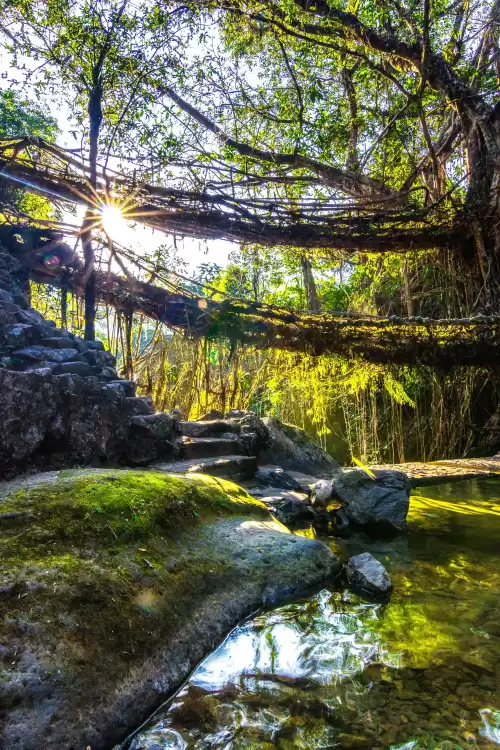
The Double Decker Living Root Bridge at Nongriat is one of Meghalaya's most remarkable natural engineering achievements. Located deep within the Khasi Hills, reaching the bridge requires descending more than three thousand concrete and stone steps from Tyrna village. The journey passes through dense rainforest, hanging suspension bridges, flowing streams, bamboo groves, and traditional Khasi settlements. Although the descent feels manageable, visitors should remember that the return involves a long uphill climb that demands good physical fitness and sufficient hydration.
The bridge itself has been formed over generations by carefully guiding the aerial roots of rubber fig trees across streams until they naturally strengthen into a living structure capable of supporting people. Unlike modern bridges built with concrete and steel, these continue growing stronger over time as the tree remains alive. The humid rainforest environment provides ideal conditions for the roots to thrive, making the bridge both an ecological wonder and an important part of Khasi heritage.
Many travelers choose to spend a night in Nongriat instead of attempting the trek as a rushed day trip. Staying overnight allows visitors to experience quieter trails during early morning hours, visit nearby Rainbow Falls, and avoid climbing back during the hottest part of the day. Small guesthouses operated by local families provide simple accommodation and meals, creating opportunities to experience village life while supporting community-based tourism.
The journey to Nongriat is much more than simply reaching a famous bridge. Every section of the trail showcases Meghalaya's rainforest ecosystem, traditional Khasi villages, and the remarkable relationship between local communities and nature. Travelers who pace themselves, allow adequate time, and stay overnight often find the overall trekking experience even more memorable than the destination itself.
The Riwai Living Root Bridge offers an excellent opportunity for visitors who want to experience Meghalaya's famous living root bridges without undertaking the demanding Nongriat trek. Located close to Mawlynnong village, the bridge can be reached through a relatively easy forest pathway that is suitable for most travelers, including families and senior visitors with reasonable mobility.
The short walk passes through bamboo groves, betel nut plantations, and shaded forest before reaching the naturally formed bridge crossing a gentle stream. Although smaller than the Double Decker Bridge, Riwai clearly demonstrates the same traditional Khasi technique of guiding tree roots over decades until they become stable enough to function as pedestrian bridges. Informational boards and local guides often explain the process, helping visitors appreciate the patience and environmental knowledge required to create these living structures.
Many visitors combine the bridge with Mawlynnong village, balancing cultural exploration with a short nature walk. Because the trail is relatively accessible, it attracts larger numbers of visitors during weekends and holidays, making morning visits more peaceful.
Riwai demonstrates that Meghalaya's living root bridges are not limited to challenging expeditions. The site offers an accessible introduction to this remarkable tradition while preserving the peaceful atmosphere of the surrounding forest, making it an excellent choice for travelers seeking both culture and nature within a shorter itinerary.
The Umngot River near Dawki is one of Meghalaya's most distinctive river experiences because of its clear water, stony riverbed, and calm valley setting near the India Bangladesh border. Boating here is usually done in small country boats operated by local boatmen, and the ride gives visitors a close view of the transparent water, surrounding hills, river stones, and suspension bridge area. The water looks clearest during the dry season when rainfall is low and the river carries less silt.
The boating experience depends strongly on season and weather. During monsoon, the river may lose its famous glass like clarity because of rainwater flow from nearby hills. In winter and early spring, visibility is usually better, making the boat appear almost floating above the riverbed from certain angles. Visitors should also expect crowds during weekends and holiday periods, especially around the main Dawki boating point.
Boating on the Umngot River is best planned with realistic expectations. The famous transparent water is seasonal, not guaranteed every day, and depends on rainfall, current, and river conditions. When visited at the right time, the river offers one of Meghalaya's most peaceful and visually memorable nature experiences.
Shnongpdeng is located upstream from Dawki and has become a preferred place for travelers who want more than a short boat ride. The village sits beside the Umngot River and offers a more relaxed riverside setting with adventure activities, camping areas, suspension bridge views, and clearer access to the water. Compared to the busier Dawki boating area, Shnongpdeng often feels more activity focused and better suited for travelers who want to spend several hours by the river.
Adventure activities at Shnongpdeng may include kayaking, snorkeling, cliff jumping, ziplining, swimming zones, and boat rides, depending on water level and local operators. These activities should be chosen carefully because river conditions can change with weather. Travelers should not enter the water casually without local guidance, especially after rainfall or when currents are stronger. For families, peaceful boating and riverside sitting may be better than high activity options.
Shnongpdeng is ideal for visitors who want to experience the Umngot River in a slower and more adventurous way. It works well as a half day or overnight stop, especially for young travelers, groups, and nature lovers. Good planning is important because the best experience depends on safe water conditions and responsible activity operators.
Camping near the Umngot River gives travelers a chance to experience Dawki and Shnongpdeng beyond daytime sightseeing. The riverside landscape becomes quieter in the evening after most day visitors leave, and the sound of flowing water, open sky, surrounding hills, and village atmosphere create a peaceful setting. Camps are usually simple and nature focused, so visitors should expect basic facilities rather than luxury comfort.
Most camps near Shnongpdeng provide tents, bedding, basic meals, shared washrooms, and access to river activities during the day. The experience is enjoyable for travelers who are comfortable with outdoor conditions, limited privacy, and simple arrangements. Winter nights can feel cold near the river, while monsoon camping may be restricted or less comfortable because of rain, slippery ground, and changing water levels.
Camping beside the Umngot River is best for travelers who value atmosphere more than facilities. It adds depth to the Dawki experience by allowing visitors to enjoy the river during early morning and evening hours. With the right season and realistic expectations, it becomes one of Meghalaya's most peaceful nature stays.
Mawsmai Cave near Cherrapunji is one of the most accessible cave experiences in Meghalaya and is often preferred by first time visitors. The cave has narrow limestone passages, naturally formed chambers, and sections where visitors need to bend or move carefully through tight spaces. It is not a very long cave, but it gives a clear introduction to Meghalaya's limestone formations without requiring technical caving skills.
Arwah Cave offers a quieter and slightly more natural experience compared to Mawsmai. The approach itself is scenic, with forest pathways and valley views before entering the cave area. Inside, visitors can observe limestone formations, fossils in certain sections, damp rock surfaces, and darker passages. Both caves can be slippery during wet weather, so shoes with grip are important. People uncomfortable in enclosed spaces should enter cautiously.
Mawsmai and Arwah caves are practical choices for travelers who want to understand Meghalaya's cave landscape without entering difficult expedition routes. They are manageable for most visitors, but still require caution because the surfaces are damp, narrow, and uneven. Together, they add geological depth to a Cherrapunji itinerary.
Liat Prah Cave in the Jaintia Hills is part of one of India's most significant cave systems and is known for its long limestone passages. Unlike Mawsmai Cave, this is not a casual tourist cave meant for quick sightseeing. It is associated with serious caving exploration and requires proper guidance, equipment, and local knowledge. Travelers should understand that visiting such cave systems is very different from walking through developed cave attractions.
The Jaintia Hills region contains extensive underground networks shaped by limestone, underground streams, and long geological processes. Access to Liat Prah and similar caves may depend on permissions, experienced guides, weather conditions, and safety arrangements. During the monsoon, underground water movement can increase risk, making casual exploration unsafe. This cave is better suited for experienced adventure travelers or guided specialist groups.
Liat Prah Cave represents Meghalaya's deeper and more adventurous cave identity. It should be approached with respect, preparation, and safety awareness rather than as a regular tourist stop. For travelers interested in geology and exploration, it highlights why Meghalaya is considered one of India's most important cave regions.
Siju Cave in the Garo Hills offers a different cave experience from the better known caves around Cherrapunji and Jaintia Hills. Located in western Meghalaya, it is often called one of the important limestone cave systems of the Garo region. The cave is known for dark passages, limestone formations, and its connection with the surrounding forest and river landscape, making it attractive for travelers exploring beyond the common Shillong Cherrapunji route.
Reaching Siju requires more travel time because Garo Hills is farther from Meghalaya's main tourist circuit. Road journeys can be long, and visitors should plan accommodation and transport carefully. The cave environment can be dark, damp, and uneven, so proper lighting, local guidance, and cautious movement are necessary. It is better suited for travelers who enjoy offbeat nature and do not mind longer road travel.
Siju Cave is valuable for travelers who want to explore Meghalaya beyond its most visited areas. It adds depth to a Garo Hills itinerary and shows how widespread the state's cave landscapes are. With patient planning and proper guidance, it offers a quieter and more adventurous cave experience than the popular tourist caves near Cherrapunji.
Camping beside the Umngot River at Shnongpdeng is one of Meghalaya's most popular outdoor experiences because it allows visitors to stay close to one of the clearest rivers in India. Unlike a short daytime visit to Dawki, spending a night at Shnongpdeng gives travelers the opportunity to experience the river during sunrise, sunset, and under a clear night sky. The calm surroundings, flowing water, and forest-covered hills create a peaceful environment that attracts nature lovers, photographers, and adventure travelers throughout the tourist season.
Most camps are located a short distance from the riverbank and are managed by local operators. Accommodation generally consists of tents with mattresses, blankets, common washrooms, and simple dining arrangements. Luxury facilities should not be expected, as the experience is designed around nature rather than resort-style comfort. Visitors should carry warm clothing during winter because temperatures drop noticeably after sunset, while lightweight rain protection is useful throughout the year due to Meghalaya's unpredictable weather.
Camping at Shnongpdeng is best enjoyed by travelers who appreciate nature more than luxury. The experience is less about modern facilities and more about waking up beside a crystal-clear river, listening to flowing water, and spending time in one of Meghalaya's most peaceful natural settings.
The regions around Dawki and Cherrapunji offer several camping options that allow visitors to experience Meghalaya's forests, valleys, waterfalls, and open landscapes more closely than standard hotel stays. Camps are available near rivers, forest clearings, hill slopes, and rural villages, providing different experiences depending on the destination. While Dawki camps focus on riverside scenery, Cherrapunji camps often overlook valleys, cliffs, and lush green landscapes shaped by heavy rainfall.
Camping near Cherrapunji also allows visitors to start sightseeing early before larger tourist groups arrive. Travelers staying in tents or eco-camps can easily plan visits to nearby waterfalls, viewpoints, caves, and trekking routes during the morning. Since weather changes quickly in this region, tents should always be booked through reliable operators who maintain safe camping locations away from unstable slopes or waterlogged ground during rainy periods.
Choosing between Dawki and Cherrapunji depends on the experience visitors want. Dawki is ideal for travelers who enjoy rivers and water activities, while Cherrapunji suits those interested in waterfalls, caves, viewpoints, and rainforest landscapes. Both provide memorable overnight nature experiences when planned during favorable weather.
Several lesser-known camping destinations across Meghalaya allow travelers to stay amidst forests, rolling hills, and traditional village landscapes away from busy tourist centers. These camps usually emphasize slow travel, nature walks, birdwatching, and relaxation instead of adventure sports. Travelers looking for quiet surroundings often prefer these locations because they provide opportunities to enjoy Meghalaya's natural environment without large crowds.
Forest camps generally operate with minimal environmental impact by using eco-friendly practices and encouraging responsible tourism. Visitors should understand that mobile connectivity may be limited in remote areas, electricity may be available only during certain hours, and facilities remain intentionally simple. These limitations are part of the experience and allow travelers to disconnect from busy urban routines while spending time in peaceful natural surroundings.
Forest camping across Meghalaya is ideal for travelers seeking peaceful landscapes rather than packed itineraries. Spending a night surrounded by forests and hills provides a deeper appreciation of Meghalaya's natural beauty and allows visitors to experience the state beyond its famous sightseeing locations.
Shillong Peak is the highest viewpoint around Shillong and offers one of the widest panoramic views of the city, surrounding hills, and distant valleys. Located at a higher elevation than the city itself, the viewpoint provides excellent visibility on clear days, while changing clouds and mist create different scenery throughout the day. Since the viewpoint lies inside a controlled area, visitors may be required to complete simple entry formalities before entering.
Laitlum Canyon presents a completely different landscape with dramatic cliffs, deep valleys, and rolling green hills stretching far into the distance. Unlike Shillong Peak, Laitlum is appreciated for its open natural scenery rather than city views. Early morning visits generally offer the clearest visibility before clouds begin moving into the valley. Visitors should remain within designated viewing areas because the cliff edges become slippery after rainfall and strong winds may occur during changing weather.
Shillong Peak and Laitlum Canyon complement each other beautifully. One showcases Meghalaya's capital from above, while the other reveals the state's vast natural landscape. Visiting both provides a balanced viewpoint experience combining urban scenery with untouched mountain valleys.
Eco Park near Cherrapunji overlooks deep valleys, waterfalls, and the plains extending toward Bangladesh during clear weather. The landscaped park includes walking paths and viewing areas that allow visitors to enjoy the scenery without undertaking difficult treks. During monsoon, clouds frequently drift through the valley, creating constantly changing views that make every visit slightly different.
Mawkdok Dympep Valley Viewpoint lies along the Shillong Cherrapunji highway and is one of the most popular roadside viewpoints in Meghalaya. Travelers often stop here while driving between destinations because it offers expansive valley scenery with minimal walking. The viewpoint also serves as a base for activities like ziplining operated by local providers, although weather conditions determine daily operations.
These viewpoints are excellent stops during a Cherrapunji road trip because they require little effort while offering expansive scenery. Together they provide different perspectives of Meghalaya's valleys, cliffs, and plateau landscapes without requiring long hikes.
While Shillong and Cherrapunji receive most visitors, Jaintia Hills and Garo Hills also contain numerous scenic viewpoints overlooking forests, rivers, limestone valleys, and rural landscapes. Many of these viewpoints remain less crowded because they are located away from Meghalaya's main tourist circuit. Travelers exploring these regions often discover roadside viewpoints, village overlooks, and elevated hilltops offering peaceful scenery throughout the journey.
Viewpoints across these regions emphasize natural landscapes rather than developed tourist infrastructure. Facilities may be limited, but the quieter atmosphere allows visitors to appreciate Meghalaya's countryside without heavy crowds. Weather continues to play an important role, as mist, rain, and low clouds can completely change visibility within a short time.
Exploring viewpoints beyond Meghalaya's famous tourist circuit rewards travelers with peaceful scenery and a stronger connection to the state's natural landscapes. Jaintia and Garo Hills demonstrate that some of Meghalaya's finest views are often found away from the busiest destinations, making them worthwhile additions for visitors with extra travel time.
Mawphlang Sacred Forest, located around 25 kilometers from Shillong, is one of Meghalaya's most culturally and ecologically significant natural areas. Unlike ordinary forests, this ancient sacred grove has been protected for generations by Khasi communities through traditional beliefs and customs. Because the forest has remained largely untouched by commercial activity, visitors can experience a dense ecosystem filled with native trees, moss-covered rocks, medicinal plants, orchids, ferns, and numerous small forest species that thrive in the cool, humid environment.
Walking inside the forest is possible only with local guides, who explain the cultural importance of the sacred grove along with its unique biodiversity. The trails are relatively easy but remain uneven in several places because of exposed roots, natural rocks, and damp ground. Visitors are expected to respect local traditions, which include not removing stones, plants, or any natural object from the forest. These customs have helped preserve the ecosystem for centuries and continue to be followed today.
Mawphlang Sacred Forest is more than a sightseeing destination. It combines Meghalaya's natural biodiversity with centuries of Khasi cultural heritage, making it one of the best places to understand how traditional conservation practices have successfully protected forests long before modern environmental laws were introduced.
Nokrek National Park and Biosphere Reserve is located in the Garo Hills and represents one of Meghalaya's richest wildlife and forest ecosystems. The reserve protects dense subtropical forests, rolling hills, rivers, and diverse plant life while providing habitat for numerous mammals, birds, reptiles, butterflies, and rare species native to northeastern India. Because of its ecological importance, Nokrek has been recognized internationally as a Biosphere Reserve, highlighting its role in biodiversity conservation.
Unlike urban parks, Nokrek is intended for responsible nature tourism rather than casual sightseeing. Visitors generally explore designated forest routes with local guides who understand wildlife movement and trail conditions. The park contains hilly terrain and natural forest paths, making comfortable walking shoes, drinking water, and suitable outdoor clothing essential. Wildlife sightings are never guaranteed because animals remain free in their natural habitat, but the forest itself provides an excellent experience for nature enthusiasts and birdwatchers.
Nokrek offers a quieter side of Meghalaya that focuses on biodiversity instead of famous tourist landmarks. Visitors who appreciate forests, wildlife, and peaceful natural surroundings often find the reserve to be one of the state's most rewarding destinations for slow and responsible travel.
Balpakram National Park lies in the southern part of the Garo Hills and is known for its dramatic cliffs, deep gorges, forested plateaus, and unusual rock formations. The landscape differs noticeably from the waterfalls and limestone valleys of eastern Meghalaya, offering visitors a completely different perspective of the state's natural geography. Several viewpoints overlook vast forested valleys, making the park attractive for landscape photography and nature observation.
The park is also important for wildlife conservation and supports various mammals, birds, and forest ecosystems. Road access involves long drives through the Garo Hills, so travelers should allocate adequate travel time rather than attempting rushed visits. Since facilities remain limited compared to popular destinations, carrying water, snacks, and essential travel supplies is recommended before entering the park. Hiring local guides helps visitors understand the area's ecology, geology, and cultural significance.
Balpakram National Park is best suited for travelers looking beyond Meghalaya's mainstream attractions. Its remote setting, striking landscapes, and ecological importance make it an outstanding destination for visitors interested in wilderness rather than crowded sightseeing locations.
Mawlynnong has earned international recognition for its community-led cleanliness and environmentally conscious lifestyle. Located in the East Khasi Hills, the village offers visitors an opportunity to observe how local residents maintain public spaces through collective participation. Clean pathways, bamboo dustbins, flowering gardens, and well-maintained surroundings reflect daily village practices rather than arrangements created specifically for tourism. Walking through the village provides insight into rural Khasi life while allowing visitors to appreciate the peaceful atmosphere away from busy towns.
Besides its cleanliness, Mawlynnong is also known for traditional Khasi homes, nearby bamboo skywalks, local churches, and access to the Riwai Living Root Bridge. Most visitors spend a few hours exploring the village on foot, interacting respectfully with local residents and purchasing handmade products from small community-run shops. Responsible tourism is encouraged so that the village retains its natural character despite increasing visitor numbers.
Mawlynnong demonstrates how community participation and environmental awareness can preserve a village's natural beauty. Visitors who take time to walk slowly through the settlement often gain a better appreciation of Khasi rural life than those who simply stop for photographs.
Kongthong is one of Meghalaya's most distinctive villages because of its traditional whistling communication system, where individuals are identified by unique melodic tunes instead of spoken names. This practice has been passed through generations and remains an important part of local Khasi culture. Visiting Kongthong allows travelers to experience a cultural tradition rarely found elsewhere while enjoying the surrounding hills, forests, and peaceful countryside.
The journey to Kongthong itself passes through scenic mountain roads and rural landscapes. Once in the village, visitors can interact with local residents through guided experiences that explain the history and significance of the whistling tradition. Respectful behavior is important because Kongthong is a living community rather than an open-air museum. Travelers should avoid interrupting daily village life and instead participate through organized local tourism initiatives whenever possible.
Kongthong offers a rare opportunity to experience a living cultural tradition rather than a historical monument. Combined with its natural surroundings and welcoming rural atmosphere, the village provides one of Meghalaya's most memorable cultural experiences for responsible travelers.
Across Meghalaya, Khasi villages continue preserving traditions that influence everyday life, architecture, agriculture, festivals, food, and community relationships. Travelers exploring villages beyond the major tourist circuit often observe traditional wooden homes, village markets, local farming practices, and cultural customs that have remained important for generations. These experiences provide valuable insight into Meghalaya beyond its waterfalls and viewpoints.
Community tourism has become increasingly important in several Khasi villages, allowing visitors to stay in homestays, taste regional cuisine, join guided village walks, and learn about local history directly from residents. Such experiences benefit both visitors and local communities by encouraging sustainable tourism while preserving traditional knowledge. Respect for local customs, photography etiquette, and village rules helps maintain positive relationships between residents and travelers.
Exploring Khasi communities adds cultural depth to any Meghalaya itinerary. Instead of focusing only on famous attractions, spending time in local villages allows travelers to understand the traditions, hospitality, and sustainable lifestyle that continue shaping Meghalaya's identity today.
Shnongpdeng, located a few kilometers upstream from Dawki, is Meghalaya's leading destination for river-based adventure activities. The calm stretches of the Umngot River allow visitors to participate in kayaking, snorkeling, boating, swimming, and cliff jumping under suitable weather conditions. Unlike many adventure destinations where activities are spread across different locations, Shnongpdeng offers several experiences within the same riverside area, making it convenient for travelers who want to spend an entire day outdoors.
The availability of activities depends on water level, river current, and seasonal weather. During the winter and post-monsoon months, the river generally remains clearer and calmer, creating better conditions for kayaking and snorkeling. In contrast, heavy monsoon rainfall may increase the river flow, reduce visibility, and temporarily suspend certain adventure activities. Visitors should always follow the instructions of trained local operators, use proper safety equipment, and avoid entering the river without supervision.
Adventure activities at Shnongpdeng combine excitement with Meghalaya's natural beauty. Visitors who prioritize safety and choose suitable weather conditions can enjoy one of the state's most memorable outdoor experiences while appreciating the remarkable clarity of the Umngot River.
Meghalaya offers numerous trekking opportunities, with the Cherrapunji and Nongriat region being among the most popular. These routes pass through dense rainforests, stone staircases, suspension bridges, mountain streams, waterfalls, and traditional Khasi villages. The famous trek to the Double Decker Living Root Bridge is the best known, but several shorter trails around Cherrapunji also provide rewarding experiences without requiring a full day of hiking.
Trekking conditions vary according to the season. During the monsoon, forests become lush and waterfalls reach their peak flow, but trails also become slippery and physically demanding. Winter offers more comfortable temperatures and better trail conditions, although waterfalls may carry less water than during the rainy season. Visitors should wear trekking shoes with good grip, carry drinking water, and maintain a comfortable pace because many routes involve long staircases and steep climbs.
Trekking through Cherrapunji and Nongriat allows visitors to experience Meghalaya beyond roadside viewpoints. The combination of forests, waterfalls, living root bridges, and traditional villages creates an adventure that highlights both the state's natural beauty and its cultural heritage.
Besides river sports and trekking, Meghalaya offers several outdoor adventure experiences including ziplining, rock climbing, rappelling, mountain biking, and nature-based recreational activities. Ziplining is available at selected tourist destinations such as Mawkdok Dympep Valley and Shnongpdeng, where visitors can enjoy elevated views of valleys, forests, and rivers while crossing designated adventure lines operated by trained professionals.
Outdoor adventure activities are generally managed by local tourism operators who provide the necessary equipment and safety briefings. Weather plays an important role, and operations may be delayed or suspended during heavy rain, strong winds, or thunderstorms. Travelers should wear comfortable outdoor clothing, avoid carrying loose items during activities, and choose operators who maintain proper safety standards and certified equipment.
Adventure tourism in Meghalaya continues to grow while maintaining strong connections with the state's natural environment. Whether visitors prefer high-energy activities or moderate outdoor experiences, careful planning and responsible participation help ensure a safe and enjoyable journey across Meghalaya's forests, rivers, and valleys.
Planning a Meghalaya trip becomes easier when visitors match destinations with their own travel style instead of trying to include every attraction. Travelers interested in relaxed sightseeing can focus on Shillong, Elephant Falls, Mawlynnong, Dawki boating, and major viewpoints. Those looking for moderate adventure may include Nongriat trekking, Krang Suri Waterfall, Mawphlang Sacred Forest, and riverside camping. Experienced adventure travelers can extend their itinerary to remote caves, longer rainforest treks, Garo Hills, and offbeat waterfalls.
Families with children or senior citizens should choose destinations with easier road access and shorter walking distances, while physically active travelers can comfortably include trekking routes involving thousands of steps. Weather also influences activity selection, as some experiences become more enjoyable during winter while others are at their best during the monsoon.
A well-balanced Meghalaya itinerary focuses on quality experiences rather than covering every destination. Selecting activities that match individual interests, available time, and physical comfort creates a more enjoyable journey while reducing unnecessary road travel.
A practical Meghalaya itinerary usually begins in Shillong before continuing towards Cherrapunji, Dawki, Mawlynnong, and Jaintia Hills. Shillong serves as an excellent base for nearby viewpoints and waterfalls, while Cherrapunji provides access to waterfalls, caves, and living root bridge treks. Dawki and Shnongpdeng add river activities, and Mawlynnong introduces visitors to Meghalaya's village culture. Travelers with additional days can extend the journey towards Garo Hills for wildlife and remote landscapes.
Because mountain roads are winding and average travel speeds remain relatively low, visitors should avoid planning too many destinations in a single day. Starting early each morning helps maximize sightseeing while reducing travel during evening hours. Keeping one flexible day is also useful because rain, fog, or road conditions occasionally affect travel plans in Meghalaya.
Organizing the itinerary according to geography instead of popularity helps reduce travel fatigue. Covering nearby destinations together allows visitors to spend more time exploring Meghalaya's landscapes and less time sitting inside vehicles.
Preparation plays an important role in making a Meghalaya trip comfortable. Weather can change quickly, especially around Cherrapunji, Dawki, and the Khasi Hills, so travelers should pack clothing suitable for both sunshine and rainfall. Comfortable walking shoes are essential because many attractions involve staircases, forest paths, and uneven natural terrain. Mobile connectivity may become limited in remote areas, making offline navigation and advance planning useful.
Visitors should also respect Meghalaya's natural environment and local communities by avoiding littering, following designated trails, and supporting responsible tourism. Carrying reusable water bottles, basic medicines, power banks, and rain protection helps reduce travel difficulties. Adventure activities should always be undertaken through trained operators using appropriate safety equipment.
With thoughtful planning and responsible travel practices, Meghalaya offers a rewarding combination of waterfalls, forests, caves, rivers, villages, and adventure experiences. Preparing for changing weather, allowing adequate travel time, and respecting local communities ensures that visitors enjoy the state's remarkable natural and cultural heritage in a safe and meaningful way.

Get customized Meghalaya tour planning designed around rainfall patterns, road connectivity, seasonal visibility, and realistic hill travel timing. Whether you are visiting for waterfalls, cave exploration, scenic drives, village experiences, or nature-fo
⚡ Quick Response | 💰 Free consultation | 🕒 24×7 expert support