
What is Meghalaya Famous For?
Meghalaya is famous for its living root bridges, waterfalls, caves, hills, tribal culture, clean villages, crystal clear rivers, and unique natural landscapes that attract travellers throughout the year.
+91 9910402252
admin@chalbanjare.com


Meghalaya offers some of Northeast India’s most scenic road trips, featuring waterfalls, canyons, living root bridges, crystal-clear rivers, caves, forests, and charming hill villages.
The Shillong to Cherrapunji road trip is one of the most popular drives in Meghalaya because it moves through rolling Khasi Hills, mist-covered slopes, pine stretches, open valleys, and constantly changing mountain scenery. The route is fully motorable and usually comfortable for private cars and tourist taxis, but the experience feels very different from a plain highway drive because the road has curves, elevation changes, and weather conditions that shift quickly. On clear days, the landscape opens into wide valley views, while during cloudy weather the same road becomes atmospheric with drifting mist and soft mountain light.
Travelers should start early from Shillong to enjoy the road without rushing. Morning drives are especially rewarding because clouds often move slowly across the hills, creating scenic views throughout the journey. Since the region receives heavy rainfall, road surfaces may remain damp in many sections, especially around monsoon and post-monsoon months. Drivers should maintain steady speed, avoid sudden overtaking on curves, and keep enough time for natural delays caused by fog, rain, or photo stops.
This road trip is best enjoyed as a slow scenic journey rather than a quick transfer. The beauty of the Shillong to Cherrapunji route lies in its changing weather, open valleys, and peaceful hill atmosphere that introduce visitors to Meghalaya's landscape before they even reach the main attractions.
The Shillong to Cherrapunji route is valuable because several major attractions can be visited without moving far away from the main road. Mawkdok Dympep Valley Viewpoint is one of the most popular stops, offering dramatic views of a deep green valley surrounded by steep hills. Depending on weather, the viewpoint may be covered in clouds one moment and completely visible the next, so travelers should allow some waiting time instead of leaving immediately if visibility is poor.
Further along the route and around Cherrapunji, visitors can include waterfalls, caves, valley viewpoints, and forested areas such as Nohkalikai Falls, Seven Sisters Falls, Eco Park, Mawsmai Cave, Arwah Cave, and Dainthlen Falls. Some attractions are easy viewpoint stops, while others require walking on damp paths or steps. Proper footwear, rain protection, and a flexible plan are important because Cherrapunji weather can affect visibility and movement throughout the day.
Stops along the Shillong to Cherrapunji route make the journey more rewarding because travelers can experience viewpoints, waterfalls, and caves within one scenic circuit. The best approach is to choose fewer attractions and spend enough time at each location rather than rushing through every stop.
The Shillong to Cherrapunji road trip is iconic because it captures the classic image of Meghalaya as a land of clouds, cliffs, waterfalls, and green hills. For many visitors, this drive becomes their first real experience of the state's dramatic terrain. The route offers a balance of comfortable road access and strong natural scenery, making it suitable for families, couples, photographers, and first-time travelers who want a memorable but manageable hill drive.
The journey also works well as part of a larger itinerary because Cherrapunji connects onward to Tyrna, Nongriat, Dawki, and several rainforest attractions. Travelers who stay overnight in Cherrapunji can explore the region more comfortably instead of returning to Shillong the same day. This is especially useful for those planning the Nongriat trek, waterfall photography, cave visits, or sunrise and misty valley experiences.
This road journey gives travelers a strong introduction to Meghalaya's natural character. With careful timing, safe driving, and enough stops, the Shillong to Cherrapunji route becomes one of the most memorable parts of a Meghalaya trip.
The Shillong to Dawki road trip takes visitors through winding roads, hill slopes, small settlements, forest patches, and open countryside before reaching the famous Umngot River. Although Dawki is known mainly for boating, the drive itself is an important part of the experience because the route passes through some of Meghalaya's most scenic rural landscapes. The road is motorable for tourist vehicles, but travelers should expect curves, changing elevation, and slower driving speeds compared to flat highways.
Starting early from Shillong is strongly recommended because the journey can take longer during weekends, holiday periods, or rainy weather. Fog, wet road surfaces, and local traffic can slow movement in the hills, so a realistic schedule is important. The drive becomes especially enjoyable when travelers avoid rushing and allow time for small viewpoint stops, tea breaks, and countryside photography along the way.
The Shillong to Dawki drive should be planned as a scenic hill journey rather than a simple transfer. A steady pace, early start, and flexible timing help travelers enjoy both the road and the Umngot River experience comfortably.
The road from Shillong to Dawki offers beautiful countryside views that include forested hills, open valleys, terraced slopes, traditional Khasi settlements, and stretches of quiet rural scenery. During post-monsoon months, the landscape becomes especially green, while winter provides clearer visibility and comfortable driving weather. Many sections of the route offer wide views of the hills, making the journey enjoyable for photographers and slow travelers.
Unlike a route dominated by major monuments, the beauty here lies in gradual changes across the landscape. Small village markets, roadside viewpoints, farmlands, and forest edges make the drive feel connected to everyday Meghalaya. Travelers should stop only at safe roadside spaces and avoid blocking narrow roads for photographs. Keeping the itinerary flexible allows time for unexpected scenic pauses without delaying the main boating plan at Dawki.
The countryside between Shillong and Dawki adds depth to the journey by showing Meghalaya beyond its famous tourist spots. These quiet valley views and village landscapes make the road trip more rewarding when experienced slowly.
The highlight of the Shillong to Dawki road trip is reaching the Umngot River, known for its crystal-clear water during the dry season. The boating area near Dawki is usually the main stop, where visitors can take local boat rides and view the rocky riverbed through the transparent water. During winter, the river often appears exceptionally clear, creating the famous floating boat effect that attracts photographers and travelers from across India.
Travelers should understand that water clarity depends on season and recent rainfall. During monsoon or after heavy rain, the river may look less transparent because of increased flow and sediment. Dawki can also become crowded during weekends and holidays, so reaching earlier in the day improves parking, boating access, and photography conditions. Visitors with more time can continue to Shnongpdeng for kayaking, riverside camping, and quieter river landscapes.
Reaching the Umngot River completes the Shillong to Dawki road trip with one of Meghalaya's most iconic natural experiences. With the right season, early timing, and realistic expectations, Dawki becomes a rewarding destination for boating, photography, and peaceful riverside exploration.
The road trip from Shillong to Mawlynnong takes travelers through some of the most peaceful rural landscapes in the East Khasi Hills. Unlike the busier Cherrapunji highway, this journey passes small Khasi villages, cultivated fields, forest patches, bamboo groves, and gently rolling hills that showcase the quieter side of Meghalaya. The roads remain scenic throughout the drive, with changing elevations revealing new valley views and countryside panoramas around almost every bend. The gradual transition from the city surroundings of Shillong to the traditional rural environment of Mawlynnong makes the journey enjoyable even before reaching the destination.
The drive is suitable for private cars, motorcycles, and tourist taxis, although hill driving experience remains useful because the route contains numerous bends and occasional narrow stretches through village areas. During winter, the skies are usually clearer and visibility across the hills is excellent, while post-monsoon months cover the landscape with lush greenery. Travelers should avoid rushing because many roadside viewpoints and peaceful village scenes deserve short photography stops along the way.
The journey to Mawlynnong offers a slower and more relaxed road trip compared to Meghalaya's more popular tourist highways. Travelers who appreciate rural scenery and traditional village landscapes will find the drive itself to be an important part of the overall experience.
After reaching Mawlynnong, two of the area's most popular attractions are the Bamboo Skywalk and the nearby Riwai Living Root Bridge. The Bamboo Skywalk provides elevated views across forests, nearby villages, and even distant plains toward Bangladesh during clear weather. Constructed using bamboo by local communities, the structure offers a unique photography point while demonstrating traditional building techniques that blend naturally with the surrounding environment.
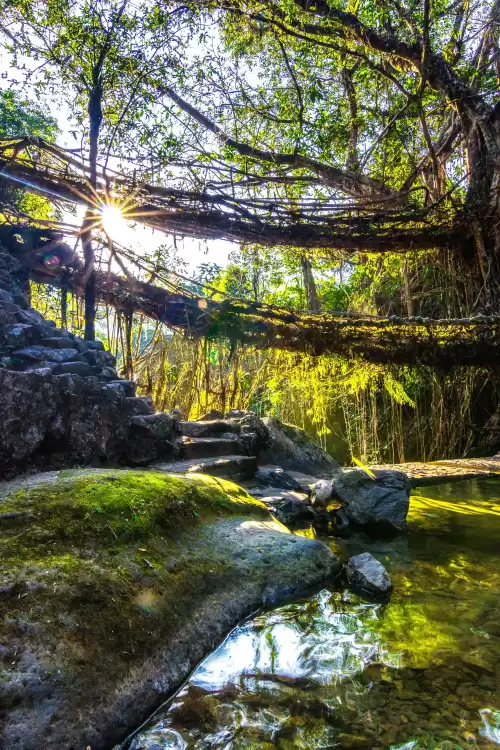
A short drive or walk from Mawlynnong leads to the Riwai Living Root Bridge, which can be reached through a pleasant forest trail. Unlike the more demanding Double Decker Living Root Bridge trek at Nongriat, this bridge is accessible to visitors of almost every age group. The combination of forest scenery, flowing streams, and naturally intertwined roots creates an enjoyable experience for both photographers and nature lovers without requiring a strenuous trek.
These attractions complement each other perfectly by combining panoramic viewpoints with Meghalaya's famous living root bridge tradition. Visiting both locations provides a balanced experience of culture, engineering, and natural beauty within a short distance.
One of the greatest attractions of the Shillong to Mawlynnong road trip is the peaceful countryside that surrounds the route. Rather than focusing only on famous tourist destinations, this drive introduces visitors to traditional Khasi settlements, small agricultural fields, bamboo fences, village churches, forest edges, and quiet mountain roads where daily rural life continues much as it has for generations. These landscapes offer photographers and slow travelers an authentic glimpse into Meghalaya's countryside.
Travelers who spend time walking through Mawlynnong and neighboring villages often discover small gardens, flower-lined paths, stone walkways, and local markets that add character to the journey. Responsible tourism is especially important because these villages remain active communities rather than open-air museums. Visitors should seek permission before photographing local residents and help preserve the peaceful atmosphere by respecting village customs and cleanliness.
The countryside surrounding Mawlynnong demonstrates that some of Meghalaya's most memorable experiences come from quiet villages rather than famous landmarks. Exploring these peaceful landscapes slowly allows travelers to appreciate the cultural and natural richness of the Khasi Hills.
The drive from Cherrapunji to Dawki is regarded as one of Meghalaya's most scenic connecting routes because it links two of the state's most famous destinations through forests, valleys, cliffs, and remote countryside. Leaving Cherrapunji, the road gradually descends from high plateau landscapes into rolling hills while revealing spectacular valley views along the way. Travelers experience changing elevations, winding roads, and frequent shifts in weather that continuously transform the surrounding scenery.
During the post-monsoon season, the entire route becomes exceptionally green as waterfalls continue flowing across cliffs and forests remain fresh after months of rainfall. Winter provides improved visibility, allowing travelers to appreciate the distant Khasi Hills and surrounding valleys more clearly. Drivers should maintain steady speeds because several sections include sharp bends and occasional fog, particularly during early mornings and rainy periods.
The Cherrapunji to Dawki drive combines mountain scenery with peaceful countryside, creating one of Meghalaya's finest road journeys. Travelers who enjoy slow scenic driving will find the route just as rewarding as the destinations themselves.
Unlike more heavily visited tourist routes, the road between Cherrapunji and Dawki contains numerous lesser-known viewpoints where travelers can pause to enjoy expansive views across forests, valleys, and traditional Khasi settlements. Small villages appear throughout the drive, providing glimpses of rural life surrounded by cultivated fields, bamboo groves, and rolling hills. These quieter sections encourage travelers to experience Meghalaya beyond its famous waterfalls and viewpoints.
Many roadside viewpoints are informal stops rather than developed tourist facilities, so visitors should park only where it is safe and avoid obstructing local traffic. Photography enthusiasts will appreciate the changing landscape created by drifting clouds, shifting sunlight, and distant mountain ridges that appear differently throughout the day. Carrying drinking water and light refreshments makes the journey more comfortable because facilities become less frequent between major towns.
These quiet viewpoints and villages add character to the Cherrapunji to Dawki road trip. Instead of focusing solely on reaching the destination, travelers who pause along the way experience a richer and more authentic side of Meghalaya.
The Cherrapunji to Dawki road links waterfalls, forests, valleys, rivers, and traditional villages into a single scenic drive that showcases the remarkable diversity of Meghalaya's landscapes. The journey is particularly attractive because it combines the dramatic plateau scenery of Cherrapunji with the peaceful river environment of Dawki without requiring travelers to return to Shillong first. This makes the route highly efficient for visitors planning multi-day itineraries across southern Meghalaya.
Many travelers continue onward to Shnongpdeng after reaching Dawki, combining boating, kayaking, riverside camping, and photography with the day's road journey. Spending one night near the Umngot River also reduces travel fatigue while allowing visitors to enjoy sunrise beside the river the following morning. With thoughtful planning, this connecting route becomes much more than a transfer between destinations—it becomes one of the highlights of the Meghalaya itinerary itself.
This connecting road trip demonstrates Meghalaya's extraordinary variety within a relatively short distance. From cliffs and waterfalls to rivers and villages, the journey offers a complete experience of the state's natural beauty while making travel between major attractions both practical and unforgettable.
The Shillong to Jowai road trip introduces travelers to a different side of Meghalaya compared to the popular routes toward Cherrapunji and Dawki. The journey gradually leaves the busy surroundings of Shillong and enters the scenic landscapes of the Jaintia Hills, where rolling plateaus, forest-covered hills, open grasslands, and quiet villages dominate the scenery. The highway remains one of the state's better-maintained routes, making it suitable for self-drive vehicles, motorcycles, and tourist taxis. Although the drive is comfortable, travelers should still expect winding hill sections, changing elevations, and occasional fog depending on the season.
The changing landscape makes this route especially enjoyable because the terrain continuously shifts between forest stretches, agricultural fields, rocky outcrops, and panoramic hill views. Unlike destinations that focus on a single attraction, the Shillong to Jowai journey is appreciated for its peaceful countryside and relatively lighter tourist traffic. Travelers who enjoy relaxed road trips will find this route less crowded while still offering beautiful natural scenery throughout the drive.
The Shillong to Jowai drive highlights Meghalaya's quieter landscapes where forests, hills, and villages become the primary attraction. Travelers who appreciate peaceful countryside journeys often consider this one of the state's most enjoyable scenic drives.
One of the major attractions along the Shillong to Jowai route is Thadlaskein Lake, a peaceful freshwater lake surrounded by gentle hills and greenery. The lake provides a relaxing stop where travelers can take a break from driving while enjoying calm water, landscaped surroundings, and open views across the countryside. Unlike more crowded tourist locations, Thadlaskein offers a slower atmosphere that suits families, photographers, and visitors looking for a quiet nature experience.
The surrounding area also contains viewpoints overlooking the Jaintia Hills where travelers can appreciate broad landscapes stretching toward distant forests and villages. Morning and late afternoon generally provide the best natural light for photography, while winter offers the clearest visibility across the surrounding hills. Spending enough time at the lake rather than making only a brief stop allows visitors to appreciate its peaceful environment fully.
Thadlaskein Lake adds a calm and refreshing pause to the Shillong to Jowai road trip. Its quiet setting provides a pleasant contrast to the winding hill roads while offering beautiful natural scenery for visitors of all ages.
The Shillong to Jowai route also serves as the gateway to several of Meghalaya's impressive waterfalls and natural attractions located across the Jaintia Hills. Travelers planning a longer itinerary often continue beyond Jowai to visit Krang Suri Waterfall, Tyrshi Falls, Phe Phe Falls, and other scenic destinations that showcase the region's rivers, forests, and limestone landscapes. These attractions are spread across different parts of the district, making Jowai an excellent base for further exploration.
Many of these waterfalls require short walks from parking areas, while others involve village roads or forest trails before reaching the viewing points. Carrying suitable footwear becomes important because pathways can remain damp even outside the rainy season. Instead of trying to visit every attraction within a single day, travelers generally enjoy the experience more by selecting a few destinations and spending enough time appreciating each location.
The Shillong to Jowai road trip becomes even more rewarding when combined with the surrounding waterfalls and natural attractions. Together they create a diverse journey showcasing lakes, forests, rivers, and some of Meghalaya's most scenic countryside.
The Jowai Waterfall Circuit is one of Meghalaya's most rewarding road trips for travelers interested in waterfalls, peaceful countryside, and scenic rural driving. Krang Suri Waterfall is the best-known attraction on this circuit because of its brilliant turquoise pool, broad white cascade, and surrounding forest. A maintained walking path leads from the parking area to the viewing zone, where visitors can appreciate the waterfall from different angles before descending closer to the water when conditions permit.
Tyrshi Falls provides a completely different landscape. Instead of a single dramatic plunge, the waterfall spreads gracefully across stepped rock formations surrounded by green agricultural fields. During the post-monsoon season the waterfall becomes especially attractive as water flows strongly across the terraces. Together, Krang Suri and Tyrshi Falls offer contrasting photographic opportunities that highlight the diversity of the Jaintia Hills.
These two waterfalls form the highlight of the Jowai circuit while showcasing different geological landscapes. Visiting both destinations provides a balanced experience of Meghalaya's rivers, forests, and waterfall scenery.
Phe Phe Falls is among Meghalaya's most impressive yet relatively less crowded waterfalls. Reaching the waterfall involves traveling through peaceful countryside before continuing along village paths and designated viewpoints overlooking the deep valley. The twin cascades plunge dramatically into a forested gorge, creating one of the most spectacular natural scenes in the Jaintia Hills. The surrounding landscape remains largely untouched, allowing photographers and nature lovers to enjoy a quieter atmosphere than at many popular tourist destinations.
Because of its location, visitors should allocate additional travel time and avoid attempting to combine too many attractions within the same day. Early departures from Jowai allow more flexibility for photography while avoiding the need to rush before sunset. The surrounding hills and valleys also provide beautiful viewpoints that complement the waterfall itself.
Phe Phe Falls rewards travelers willing to explore beyond Meghalaya's busiest attractions. Its remote setting, dramatic cliffs, and peaceful environment make it one of the most memorable stops on the Jowai waterfall circuit.
The roads connecting the waterfalls of West Jaintia Hills are as enjoyable as the attractions themselves. The route passes quiet villages, rolling farmland, limestone landscapes, forest patches, and open valleys that reveal a slower side of Meghalaya rarely experienced on the state's more popular tourist circuits. The countryside remains particularly attractive during post-monsoon months when agricultural fields and forests become exceptionally green.
Unlike highways designed purely for transportation, these roads encourage relaxed exploration with occasional stops at village viewpoints and rural landscapes. Travelers should maintain moderate speeds because local traffic, livestock, and narrow village roads are common throughout the region. Planning enough time between attractions allows visitors to appreciate both the journey and the destinations without unnecessary rushing.
The scenic drives across West Jaintia Hills complete the waterfall circuit by connecting beautiful natural attractions with authentic rural landscapes. Together they create one of Meghalaya's finest road trips for travelers seeking waterfalls, countryside, and peaceful exploration.
The Shillong to Nongriat and Cherrapunji circuit begins with a scenic drive from Shillong to Cherrapunji before continuing further to Tyrna Village, which serves as the official starting point for the Double Decker Living Root Bridge trek. The drive itself passes through rolling Khasi Hills, mist-covered valleys, pine forests, waterfalls, and dramatic viewpoints, making it one of Meghalaya's most rewarding road journeys even before the trekking section begins. Travelers should begin early in the morning because the circuit combines both road travel and a physically demanding trek.
Tyrna has basic parking facilities, local shops, homestays, and small restaurants where trekkers prepare before descending thousands of stone steps toward Nongriat Village. Since the return journey requires climbing the same staircase, visitors should carry only essential luggage while leaving unnecessary bags safely in their vehicle or accommodation. Comfortable trekking shoes, sufficient drinking water, energy snacks, and rain protection remain important throughout the trek because weather conditions can change quickly in the Khasi Hills.
The drive to Tyrna is an essential part of the Nongriat experience because it gradually introduces travelers to Meghalaya's forests, valleys, and mountain scenery before the famous rainforest trek begins.
This circuit is one of Meghalaya's most complete travel experiences because it combines multiple natural attractions within a single itinerary. After exploring the Double Decker Living Root Bridge at Nongriat, travelers returning toward Cherrapunji can visit major attractions such as Nohkalikai Falls, Seven Sisters Falls, Dainthlen Falls, Wei Sawdong Falls, Mawsmai Cave, Arwah Cave, and Eco Park depending on available time. Each attraction offers a different landscape, allowing visitors to experience waterfalls, limestone caves, forests, and panoramic viewpoints during the same journey.
Since each destination requires different amounts of walking and sightseeing time, visitors should avoid attempting every attraction within one day. Spending at least one night in Cherrapunji allows a much more relaxed experience while providing flexibility if weather temporarily reduces visibility. This approach also improves photography opportunities during sunrise and sunset while reducing unnecessary travel fatigue.
This circuit showcases the remarkable diversity of Meghalaya by combining rainforest trekking, waterfalls, caves, and panoramic landscapes into one memorable journey that appeals to both adventure travelers and nature enthusiasts.
A complete Cherrapunji adventure circuit works best over two or three days, allowing travelers to experience the region without rushing. The first day can include the drive from Shillong, major viewpoints, waterfalls, and cave visits before staying overnight in Cherrapunji. The second day is ideal for the Nongriat trek beginning from Tyrna, while those with additional time can continue beyond the Double Decker Living Root Bridge toward Rainbow Falls. This slower approach allows visitors to fully appreciate the landscapes while managing the physical demands of the trek.
Travelers should also consider seasonal weather while planning the circuit. During winter, visibility generally improves, making viewpoints and photography more rewarding. Post-monsoon offers lush forests and active waterfalls, although trails may remain damp. Regardless of season, carrying waterproof clothing, extra drinking water, and sufficient time within the itinerary creates a safer and more enjoyable experience across the Cherrapunji region.
Planning the circuit over multiple days transforms the experience from a rushed sightseeing trip into a rewarding exploration of Meghalaya's waterfalls, forests, caves, and famous living root bridges.
The Tura and Garo Hills road trip offers a completely different experience from the Khasi and Jaintia Hills by introducing travelers to western Meghalaya's forested mountains, broad valleys, and quieter countryside. Tura serves as the main gateway to the Garo Hills and is surrounded by dense forests, rolling hills, rivers, and traditional Garo villages. The drive itself remains scenic throughout the region, passing through landscapes that receive far fewer visitors than Meghalaya's eastern tourist circuit.
Tura Peak is one of the region's best-known viewpoints and offers panoramic views across forests, hills, and distant valleys. Depending on weather conditions, visitors may experience clear mountain landscapes or dramatic cloud formations drifting through the forests. Early morning and late afternoon generally provide the most attractive lighting for photography while maintaining comfortable temperatures for short walks around the viewpoint.
The Tura road trip showcases Meghalaya's western landscapes where forests, mountains, and peaceful countryside dominate the journey. Travelers seeking quieter destinations will appreciate the relaxed atmosphere of the Garo Hills.
Two of Meghalaya's most important protected areas are located within the Garo Hills. Nokrek National Park and Biosphere Reserve preserves dense subtropical forests, rich biodiversity, native wildlife, and numerous bird species, making it an attractive destination for nature enthusiasts and wildlife photographers. Guided exploration provides opportunities to experience the park responsibly while learning about its ecological importance.
Further south, Balpakram National Park presents an entirely different landscape of dramatic cliffs, deep gorges, forests, and grasslands. Its remote location means facilities remain limited, but the reward is an untouched wilderness where panoramic viewpoints overlook remarkable geological formations. Travelers planning both parks should allocate sufficient time because distances within the Garo Hills are greater than many first-time visitors expect.
Visiting both national parks provides an excellent introduction to the ecological diversity of western Meghalaya while highlighting landscapes very different from the waterfalls and caves found in the Khasi Hills.
Beyond its national parks, the Garo Hills contain numerous waterfalls, limestone caves, forest trails, rivers, and peaceful villages connected by scenic countryside roads. Siju Cave is among the region's best-known natural attractions, offering fascinating limestone formations and underground passages that reflect the geological diversity of western Meghalaya. Nearby waterfalls and forest streams further enhance the journey while providing opportunities for photography and short nature walks.
The countryside itself becomes one of the highlights because many roads pass through remote settlements surrounded by forests and cultivated land. Unlike Meghalaya's more famous tourist circuits, traffic remains relatively light, allowing travelers to appreciate the landscape at a relaxed pace. Since facilities become less frequent outside Tura, visitors should prepare well before beginning longer countryside drives.
The offbeat countryside of the Garo Hills rewards travelers seeking quieter landscapes, forests, caves, and waterfalls away from Meghalaya's busiest tourist destinations. With thoughtful planning, the region offers one of the state's most distinctive and memorable road trip experiences.
Winter is widely considered the most comfortable season for road trips across Meghalaya because of its stable weather, pleasant daytime temperatures, lower humidity, and generally clear visibility. The famous routes connecting Shillong, Cherrapunji, Dawki, Mawlynnong, Jowai, and the Garo Hills become particularly enjoyable during this period as mountain views remain open for longer durations and rainfall rarely interrupts travel plans. Rivers such as the Umngot become exceptionally clear, while viewpoints across the Khasi Hills provide expansive panoramas that are often hidden by clouds during wetter months.
The comfortable climate also allows travelers to spend more time outside their vehicles exploring waterfalls, caves, viewpoints, villages, and trekking routes without experiencing excessive heat or continuous rainfall. Morning drives usually begin under cool conditions with gradually improving visibility, making winter especially attractive for photographers and travelers covering long distances. Since this is Meghalaya's busiest tourist season, accommodation and vehicle bookings should be completed well in advance, particularly around Christmas, New Year, and other holiday periods.
For first-time visitors planning a self-drive or chauffeur-driven Meghalaya itinerary, winter offers the most balanced combination of weather, accessibility, comfortable driving, and excellent sightseeing opportunities throughout the state.
The months immediately following the monsoon transform Meghalaya into one of India's most vibrant road trip destinations. Forests become intensely green, waterfalls continue flowing strongly, rivers remain full, and valleys appear covered with fresh vegetation after months of rainfall. Travelers driving between Shillong, Cherrapunji, Dawki, Jowai, and Mawlynnong experience constantly changing landscapes where nearly every hillside displays rich shades of green. This season is particularly rewarding for travelers who value natural scenery over consistently clear weather.
Although occasional showers may still occur, road travel generally becomes more comfortable compared to the peak monsoon period. Visitors should still expect damp roads, drifting mist, and occasional cloud cover that temporarily reduces visibility across mountain viewpoints. Carrying rain jackets, waterproof bags, and flexible travel schedules allows travelers to adapt easily while continuing to enjoy the remarkable scenery that defines Meghalaya after the rainy season.
Traveling after the monsoon offers one of Meghalaya's most visually rewarding experiences. The combination of forests, waterfalls, valleys, and fresh mountain air creates unforgettable road journeys across every major region of the state.
Road conditions across Meghalaya vary according to season, making advance planning important for longer itineraries. Winter generally provides the most stable driving environment with dry roads, comfortable temperatures, and better visibility across mountain routes. During the monsoon, however, heavy rainfall can reduce visibility, create slippery road surfaces, and occasionally affect travel times because of water accumulation, fog, or localized maintenance work. Travelers should always remain updated on local road conditions before beginning long drives.
Regardless of season, Meghalaya's mountain roads require careful driving because of numerous bends, changing elevations, and occasional livestock or local traffic near villages. Driving during daylight remains the safest option, especially for visitors unfamiliar with the region. Maintaining moderate speeds, taking regular breaks, and avoiding rushed itineraries improve both safety and enjoyment while exploring the state's scenic highways.
| Season | Driving Conditions | Visibility | Road Trip Experience |
|---|---|---|---|
| Winter | Dry and comfortable | Excellent | Ideal for long scenic drives |
| Post Monsoon | Generally good with occasional wet roads | Good | Lush green landscapes and active waterfalls |
| Monsoon | Wet with changing conditions | Variable | Beautiful scenery but slower travel |
| Spring | Comfortable | Good | Pleasant sightseeing and photography |
Understanding Meghalaya's seasonal road conditions allows travelers to plan realistic itineraries while maximizing safety and sightseeing opportunities. Every season offers unique scenery, but adjusting expectations according to weather creates a much more enjoyable road trip.
Meghalaya offers a variety of road trips suited to different travel interests. Travelers looking for waterfalls and dramatic landscapes usually prefer the Shillong to Cherrapunji route, while those seeking crystal-clear rivers and boating experiences often choose Shillong to Dawki. Visitors interested in peaceful villages and cultural experiences enjoy the Mawlynnong route, whereas photographers and nature lovers frequently extend their itinerary to include Jowai, West Jaintia Hills, and the Garo Hills. Selecting the right route depends on whether your priority is adventure, sightseeing, photography, trekking, wildlife, or relaxed countryside exploration.
Instead of attempting every destination within one short holiday, travelers generally benefit from choosing a smaller number of routes and allowing sufficient time at each location. Meghalaya's mountain roads encourage slow travel, and many of the state's finest experiences occur during unplanned stops at viewpoints, villages, waterfalls, and forest stretches along the way.
Matching road trips with individual travel preferences creates a more rewarding Meghalaya experience. A thoughtfully planned itinerary consistently provides better memories than trying to visit every attraction within limited time.
A well-balanced Meghalaya road trip usually begins in Shillong before expanding into different regions of the state. Travelers often continue toward Cherrapunji for waterfalls, caves, and viewpoints before driving onward to Tyrna for the Nongriat trek or continuing toward Dawki and Shnongpdeng for the Umngot River. Those with additional days frequently include Mawlynnong, Jowai, Krang Suri Waterfall, and West Jaintia Hills before exploring the remote landscapes of the Garo Hills. Grouping nearby destinations together minimizes unnecessary driving while maximizing sightseeing time.
Keeping overnight stays close to major attractions significantly reduces travel fatigue. Spending nights in Cherrapunji, Dawki, Jowai, or Tura instead of returning to Shillong every evening allows visitors to experience sunrise, sunset, and quieter morning conditions at many destinations. Flexible planning also helps accommodate Meghalaya's rapidly changing weather.
A carefully organized driving itinerary allows visitors to experience Meghalaya's rivers, waterfalls, forests, villages, caves, and mountain landscapes comfortably while reducing unnecessary backtracking across the state.
Preparing properly before beginning a Meghalaya road trip improves both safety and comfort throughout the journey. Essential items include a valid driving licence, vehicle documents, sufficient fuel planning for remote regions, offline navigation, reusable water bottles, rain protection, warm clothing, comfortable footwear, first-aid supplies, flashlight, power bank, mobile chargers, and basic vehicle emergency equipment. Photographers should also carry waterproof camera protection because weather conditions can change quickly.
Responsible driving practices remain equally important. Travelers should avoid driving after dark on unfamiliar mountain roads, respect speed limits through villages, keep the environment clean during roadside stops, and follow local advice regarding weather or road conditions. Supporting local businesses along the route also contributes positively to Meghalaya's community-based tourism while creating a more meaningful travel experience.
Good preparation transforms a Meghalaya road trip into a safe, comfortable, and memorable journey. With realistic planning, responsible driving, and enough time to enjoy the scenery, visitors can experience the state's remarkable diversity while creating one of Northeast India's finest self-drive or chauffeur-driven travel adventures.

Get customized Meghalaya tour planning designed around rainfall patterns, road connectivity, seasonal visibility, and realistic hill travel timing. Whether you are visiting for waterfalls, cave exploration, scenic drives, village experiences, or nature-fo
⚡ Quick Response | 💰 Free consultation | 🕒 24×7 expert support