What is Meghalaya Famous For?
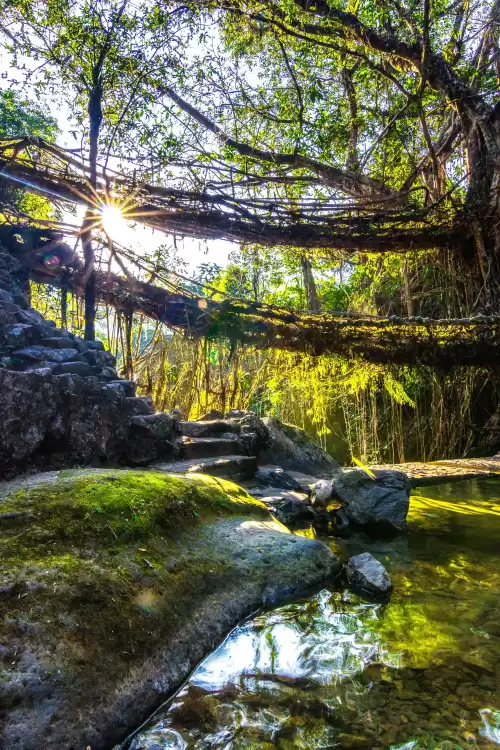
Meghalaya is famous for its living root bridges, waterfalls, caves, hills, tribal culture, clean villages, crystal clear rivers, and unique natural landscapes that attract travellers throughout the year.
+91 9910402252
admin@chalbanjare.com


Jowai and West Jaintia Hills offer some of Meghalaya’s most beautiful offbeat experiences, featuring turquoise waterfalls, scenic lakes, river canyons, caves, viewpoints, and authentic Jaintia cultural landscapes.
Krang Suri Waterfall in West Jaintia Hills is one of the most visually striking waterfalls in Meghalaya, known for its turquoise-blue natural pool formed at the base of a multi-tiered cascade. The water clarity and color shift with sunlight, creating different shades of blue and green throughout the day.
The surrounding forested hills and carefully maintained pathways make it accessible while still preserving a natural atmosphere. Visitors can walk down to viewing points and designated safe zones near the pool to experience the waterfall up close.
It is one of the most scenic waterfall destinations in Meghalaya.
The pool remains the highlight of the entire experience.
Krang Suri offers a calm yet visually powerful waterfall experience.
Tyrshi Falls, located near Jowai, is a seasonal waterfall that becomes especially vibrant during monsoon when water flows strongly over layered rock formations. The surrounding landscapes include terraced fields, rolling hills, and rural settlements.
Unlike heavily commercial waterfalls, Tyrshi offers a more open and natural viewing experience where visitors can observe cascading water blending with countryside scenery. The location feels peaceful and less crowded.
It is one of the most natural waterfall settings in Jaintia Hills.
The waterfall blends seamlessly with rural landscapes.
Tyrshi Falls reflects the raw beauty of West Jaintia Hills.
Phe Phe Falls is located in a remote part of West Jaintia Hills and is known for its multi-layered cascade structure flowing through a deep canyon-like landscape. The journey to the waterfall involves walking through forest paths and rural terrain.
The waterfall is surrounded by cliffs, greenery, and natural rock formations that create a dramatic and immersive environment. Its relatively hidden location makes it less crowded and more peaceful.
It is one of the most underrated waterfalls in Meghalaya.
The canyon setting enhances its natural appeal.
Phe Phe offers a raw and untouched waterfall experience.
Thadlaskein Lake near Jowai is a calm freshwater lake surrounded by open landscapes and local cultural heritage, making it one of the most peaceful nature spots in West Jaintia Hills. The lake is associated with historical significance in local tradition and community life.
The surroundings are quiet and less commercialized, offering space for relaxation, short walks, and picnic-style visits. The still water surface reflects the sky and nearby greenery during calm weather conditions.
It is one of the most serene lakes in Meghalaya.
The lake blends history with natural calmness.
Thadlaskein Lake offers a quiet and reflective experience.
Around Jowai, several elevated viewpoints provide scenic perspectives of lakes, valleys, and surrounding hills. These viewpoints offer a broader understanding of the region’s terrain, especially during sunrise and sunset when lighting conditions enhance visibility.
The combination of water bodies and rolling landscapes creates layered scenery ideal for photography and slow observation. Many viewpoints remain less crowded, allowing uninterrupted views of nature.
It is one of the most peaceful visual experiences in West Jaintia Hills.
The landscapes change with light and season.
Jowai viewpoints highlight the region’s natural balance of water and hills.
West Jaintia Hills is home to multiple freshwater attractions including lakes, streams, and seasonal water bodies that flow through rural and forested landscapes. These water systems are deeply connected to local ecology and village life.
Many of these freshwater spots remain offbeat and less explored, offering quiet natural settings away from mainstream tourist routes. They often appear more vibrant during monsoon when water levels increase.
It is one of the most water-rich regions in Meghalaya.
Freshwater systems shape the entire landscape.
Water defines the natural identity of West Jaintia Hills.
West Jaintia Hills offers several elevated viewpoints where the rolling terrain, layered valleys, and distant village settlements come together in wide panoramic frames. These viewpoints are often located along hill roads and natural ridges, providing uninterrupted views of the region’s geography.
The landscape changes dramatically with light and weather conditions, especially during monsoon when clouds move across valleys and create shifting visual depth. These spots are ideal for slow observation and landscape photography.
It is one of the most scenic hill regions in Meghalaya.
The views highlight the scale of Jaintia Hills.
These viewpoints reveal the full depth of West Jaintia terrain.
The areas surrounding Krang Suri and Tyrshi Falls include several hilltop locations that offer elevated perspectives of waterfalls, forests, and surrounding valleys. These points are often reached through short drives or small walking trails.
From these elevations, visitors can observe the transition between water systems and green landscapes, especially striking during monsoon when waterfalls are in full flow. The combination of hills and water creates a layered natural view.
It is one of the most visually dynamic zones in Jaintia Hills.
The viewpoints connect waterfalls with landscapes.
These viewpoints enhance waterfall exploration experiences.
Sunrise and sunset viewpoints across West Jaintia Hills offer soft lighting over valleys, hills, and rural settlements. These locations are often less commercialized, providing calm environments for uninterrupted observation of changing skies.
During sunrise, mist often settles across valleys, while sunsets bring warm tones over the landscape. The gradual shift in light creates ideal conditions for photography and peaceful viewing.
It is one of the most peaceful visual experiences in Meghalaya.
The region offers naturally balanced lighting conditions.
Sunrise and sunset views define the calm beauty of Jaintia Hills.
The Myntdu River is one of the most important river systems in Jowai, flowing through West Jaintia Hills and shaping the surrounding valley landscape. The river passes through rural settlements, agricultural fields, and forested stretches, creating a continuous natural corridor.
Along its banks, visitors can observe daily village life, fishing activities, and seasonal changes in water flow. During monsoon, the river becomes more dynamic, while in dry months it appears calmer and more reflective.
It is one of the most significant rivers in the region.
The river supports both ecology and local livelihoods.
Myntdu River defines the landscape of Jowai.
Shnongrim Canyon is a dramatic natural formation in West Jaintia Hills characterized by deep valleys, steep rock faces, and layered geological structures. The canyon offers a raw and less-explored environment compared to mainstream tourist locations.
The terrain is rugged, with natural formations shaped by long-term erosion and water flow. The visual depth of the canyon becomes more striking during cloudy or monsoon conditions when mist moves through the valley.
It is one of the most rugged landscapes in Meghalaya.
The canyon reflects deep geological history.
Shnongrim Canyon offers a powerful natural landscape experience.
West Jaintia Hills is filled with peaceful river valleys where small streams, seasonal rivers, and green landscapes come together in quiet harmony. These valleys are often surrounded by rural villages and untouched natural surroundings.
The river systems here change with seasons, becoming more active during monsoon and calmer during dry months. These areas are ideal for slow travel and nature observation away from crowded tourist circuits.
It is one of the most tranquil regions in Meghalaya.
The valleys remain largely untouched and natural.
River valleys define the calm rhythm of West Jaintia Hills.
West Jaintia Hills is defined by a continuous mix of forest patches, rolling hills, and open countryside landscapes that shift gradually from village zones to deeper natural terrain. The region remains less commercialized, allowing nature to feel more intact and uninterrupted.
Travelers moving through this region often experience long scenic drives where hills rise and fall in layers, interspersed with agricultural fields and small rural settlements. The atmosphere remains calm and grounded in local life.
It is one of the most naturally balanced regions in Meghalaya.
The landscape feels open, green, and continuously flowing.
The region reflects Meghalaya’s simple natural beauty.
Hidden valleys across West Jaintia Hills are shaped by seasonal streams that flow strongly during monsoon and reduce in intensity during dry months. These valleys are often surrounded by dense vegetation and remain largely unexplored by mainstream tourism.
The combination of water flow and green surroundings creates constantly changing scenery, especially after rainfall when small cascades form naturally across slopes and rocks.
It is one of the most dynamic natural systems in the region.
The valleys change character with every season.
These valleys showcase Meghalaya’s seasonal natural rhythm.
Beyond Jowai town, West Jaintia Hills opens into a wide range of offbeat natural attractions including lesser-known viewpoints, forest clearings, and rural landscapes that remain untouched by major tourism circuits. These areas provide a more immersive connection with the environment.
The terrain gradually transitions from semi-urban spaces to deep natural zones where silence, greenery, and open skies dominate the experience. These offbeat locations are ideal for slow travel exploration.
It is one of the most unexplored travel zones in Meghalaya.
The region rewards travelers seeking quiet nature.
Offbeat Jaintia Hills offers pure and quiet natural experiences.
Liat Prah Cave in the Jaintia Hills is part of one of the longest cave systems in India, featuring vast limestone networks that extend deep underground. The cave is known for its scale, complexity, and partially unexplored passages that continue to intrigue speleologists and adventure travelers.
Inside, the structure alternates between wide chambers and narrow tunnels shaped by long-term water erosion. Certain sections require careful movement and local guidance due to uneven terrain and low visibility conditions.
It is one of the most significant cave systems in Meghalaya.
The cave reflects deep underground geological formations.
Liat Prah showcases Meghalaya’s vast subterranean world.
Krem Um Ladaw is a lesser-known cave in West Jaintia Hills that offers a raw and minimally developed exploration experience. The cave features narrow limestone passages, uneven surfaces, and naturally formed chambers shaped over long geological periods.
The environment inside is quiet and untouched, making it suitable for travelers seeking offbeat cave exploration rather than commercial tourist routes. Basic caution is required due to slippery surfaces and limited lighting.
It is one of the more adventurous caves in the region.
The cave remains largely unexplored by mainstream tourism.
Krem Um Ladaw offers a raw underground experience.
Krem Syndai and surrounding cave systems in West Jaintia Hills form part of a broader underground network characterized by limestone formations, water-carved passages, and hidden chambers. These caves are often less commercialized and require local knowledge for exploration.
The cave environment varies depending on seasonal water levels, which can affect accessibility and internal routes. This makes each exploration slightly different depending on conditions.
It is one of the most intriguing cave zones in Meghalaya.
The underground system remains partially mapped.
These caves highlight Meghalaya’s hidden underground complexity.
Krang Suri Waterfall is one of the most photogenic locations in West Jaintia Hills, known for its striking turquoise water pool and multi-tier cascade. The color of the water changes with sunlight, creating vibrant tones that range from deep blue to bright aqua.
Photographers often focus on both wide landscape shots and close-up compositions of flowing water against rocky surfaces. The surrounding greenery enhances contrast, especially during monsoon and post-monsoon seasons.
It is one of the most iconic photography spots in Meghalaya.
The waterfall creates naturally dramatic compositions.
Krang Suri offers rich natural color contrast for photography.
Thadlaskein Lake near Jowai provides calm and reflective water surfaces that are ideal for sunrise and sunset photography. The lake mirrors the sky and surrounding greenery, creating soft and balanced compositions.
During early morning, mist often rises over the lake, while evening light creates warm reflections across the water. The open surroundings allow for wide-angle landscape shots without visual obstruction.
It is one of the most peaceful photography locations in Jaintia Hills.
The lake offers consistent natural reflections.
Thadlaskein Lake is ideal for soft and balanced nature photography.
West Jaintia Hills offers numerous panoramic landscapes where hills, valleys, waterfalls, and rural settlements come together in layered compositions. These locations are spread across road routes and elevated viewpoints.
The changing light throughout the day enhances depth and mood, especially during monsoon when clouds move across valleys. These conditions create dynamic and ever-changing photography opportunities.
It is one of the most visually diverse regions in Meghalaya.
The landscapes offer wide storytelling potential.
Jaintia Hills delivers constantly evolving natural frames for photography.
The Nartiang Monoliths in West Jaintia Hills are among the largest collections of ancient stone structures in Meghalaya, representing historical, cultural, and ceremonial significance of the Jaintia kingdom. These towering stones are arranged in groups that reflect traditional practices and community heritage.
The site offers a quiet, open environment where visitors can walk among the monoliths and observe their scale and arrangement. The surrounding village adds context to the historical importance of the location.
It is one of the most important heritage sites in Meghalaya.
The monoliths reflect ancient Jaintia civilization.
Nartiang preserves the historical identity of Jaintia Hills.
Traditional villages across West Jaintia Hills offer insight into local lifestyles shaped by agriculture, community living, and cultural traditions. These settlements maintain a close connection with nature and seasonal cycles.
Local markets in the region reflect daily life, where fresh produce, handmade goods, and traditional items are exchanged. The atmosphere remains simple and community-focused rather than commercial.
It is one of the most authentic cultural experiences in Meghalaya.
The lifestyle remains rooted in tradition.
Villages reflect the everyday cultural rhythm of Jaintia Hills.
West Jaintia Hills is known for its regional festivals and cultural traditions that reflect the identity of the Jaintia community. These festivals are closely connected to agriculture, seasons, and ancestral customs.
Celebrations often include traditional music, dance, and community gatherings that bring villages together. The events are deeply rooted in cultural heritage rather than tourism, maintaining their authenticity.
It is one of the most culturally vibrant regions in Meghalaya.
Festivals reflect strong community bonds.
Jaintia festivals preserve centuries-old cultural identity.
The road journey from Shillong to Jowai is one of the most scenic drives in Meghalaya, passing through rolling hills, mist-covered valleys, and rural landscapes that gradually transition from urban outskirts to deep countryside. The route is smooth in most sections but continuously visual due to changing elevation and terrain.
Along the way, travelers experience multiple viewpoints, roadside villages, and natural scenery that shifts with weather conditions. Monsoon adds a dramatic layer of clouds and greenery, while clear seasons offer long-distance visibility across valleys.
It is one of the most scenic road routes in Northeast India.
The drive connects two major cultural regions of Meghalaya.
The journey itself is as beautiful as the destination.
The Krang Suri and Phe Phe Falls circuit is one of the most rewarding travel routes in West Jaintia Hills, combining two of the region’s most scenic waterfalls in a single journey. The route passes through rural roads, forest patches, and small settlements.
Krang Suri offers turquoise pools and well-managed access, while Phe Phe provides a more rugged and canyon-like experience. Together, they represent two different styles of waterfall exploration in Meghalaya.
It is one of the most balanced waterfall circuits in the region.
The route blends accessibility with adventure.
This circuit showcases contrasting waterfall experiences.
Beyond major attractions, West Jaintia Hills offers countryside routes that pass through quiet villages, agricultural fields, and forest edges. These routes provide a slower and more immersive travel experience away from main tourist circuits.
The landscape changes gradually along these drives, with hills, streams, and open valleys appearing intermittently. The simplicity of rural life adds depth to the journey.
It is one of the most peaceful driving experiences in Meghalaya.
The routes emphasize slow and mindful travel.
West Jaintia countryside drives reveal Meghalaya’s quieter side.
West Jaintia Hills offers a balanced mix of waterfalls, lakes, viewpoints, caves, and cultural sites, making it important to plan based on the type of experience you want. Nature-focused travelers often prioritize Krang Suri, Phe Phe Falls, and river valleys, while cultural explorers may focus on Nartiang Monoliths and traditional villages.
Adventure seekers can include cave systems and canyon regions, while relaxed travelers can explore lakes, viewpoints, and countryside drives around Jowai. Each attraction provides a different layer of Meghalaya’s natural and cultural identity.
It is one of the most diverse travel regions in Meghalaya.
The region supports all types of travel styles.
West Jaintia Hills suits both relaxed and adventure travel styles.
A well-planned itinerary for Jowai and West Jaintia Hills typically includes Krang Suri, Tyrshi Falls, Phe Phe Falls, Thadlaskein Lake, and nearby cave systems, along with cultural stops like Nartiang Monoliths. The combination allows travelers to experience both natural and historical attractions.
Travel distances between attractions are moderate, making it suitable for 2–4 day trips depending on depth of exploration. Road conditions vary, so planning buffer time is recommended for a smooth experience.
It is one of the most complete circuits in Meghalaya.
The itinerary blends waterfalls, caves, and heritage.
A structured plan ensures full exploration of West Jaintia Hills.
Before traveling to West Jaintia Hills, visitors should prepare for rural terrain, changing weather, and moderate travel distances between attractions. Comfortable footwear, weather protection, and basic travel supplies are essential for safety and convenience.
Since some attractions are located in remote areas, carrying cash, navigation support, and basic medical supplies is recommended. Weather conditions can shift quickly, especially during monsoon, affecting visibility and road conditions.
It is one of the most important preparation steps for Jaintia travel.
Good preparation ensures a smooth and safe journey.
Proper planning enhances the West Jaintia travel experience.

Get customized Meghalaya tour planning designed around rainfall patterns, road connectivity, seasonal visibility, and realistic hill travel timing. Whether you are visiting for waterfalls, cave exploration, scenic drives, village experiences, or nature-fo
⚡ Quick Response | 💰 Free consultation | 🕒 24×7 expert support