What is Meghalaya Famous For?
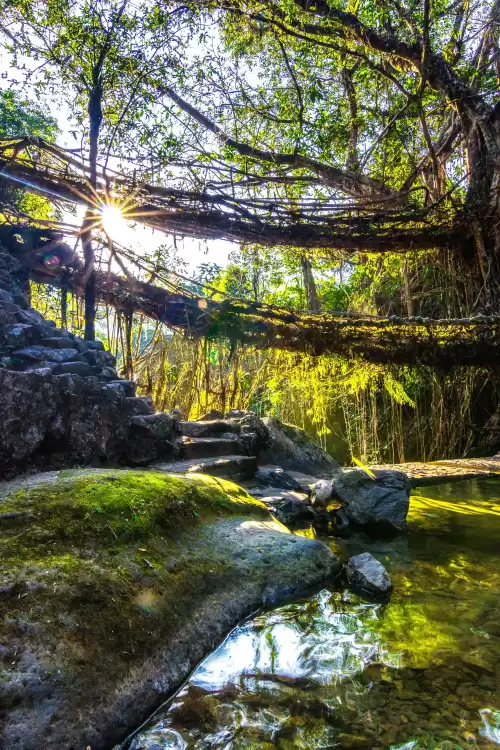
Meghalaya is famous for its living root bridges, waterfalls, caves, hills, tribal culture, clean villages, crystal clear rivers, and unique natural landscapes that attract travellers throughout the year.
+91 9910402252
admin@chalbanjare.com


The Garo Hills and Tura region offer pristine forests, waterfalls, caves, wildlife reserves, scenic viewpoints, and some of Meghalaya’s most untouched offbeat travel experiences.
Tura Peak is one of the most important viewpoints in the Garo Hills, offering wide panoramic views of rolling green landscapes, deep valleys, and distant hill ranges. The elevation provides a natural observation point where the entire terrain unfolds in layered formations, especially striking during clear weather conditions.
The atmosphere at the peak is calm and refreshing, with cool winds and shifting clouds often moving across the hills. Sunrise and sunset views are particularly notable, as changing light enhances the depth and texture of the surrounding forested landscape.
It is one of the most iconic viewpoints in western Meghalaya.
The peak captures the true scale of Garo Hills geography.
Tura Peak offers one of the widest natural viewpoints in Meghalaya.
Pelga Falls near Tura is a scenic waterfall set amidst forested surroundings and gently sloping terrain, making it one of the more accessible natural attractions in the region. The waterfall flows through layered rock formations, creating a pleasant and peaceful environment.
The area around Pelga Falls includes walking paths, natural pools, and greenery that becomes especially vibrant during the monsoon season. It is a popular stop for travelers exploring Tura and nearby countryside routes.
It is one of the most visited waterfalls in Garo Hills.
The site blends accessibility with natural beauty.
Pelga Falls offers a calm and refreshing nature escape near Tura.
Tura’s local markets and cultural landmarks reflect the everyday life of the Garo community, where traditional practices, trade, and social interactions come together in a lively environment. Markets offer local produce, handmade goods, and cultural artifacts.
The town also features cultural sites that highlight the heritage of the Garo people, including traditions linked to agriculture, festivals, and community living. The atmosphere remains authentic and closely tied to regional identity.
It is one of the most culturally active towns in Meghalaya.
The town preserves strong indigenous traditions.
Tura reflects the cultural heartbeat of the Garo Hills.
Rongbang Dare Waterfall is a hidden natural attraction in the Garo Hills, surrounded by dense forest cover and rugged terrain. The waterfall flows through rocky formations, creating a layered cascade that becomes more powerful during monsoon seasons.
The journey to the waterfall involves passing through forest paths and rural stretches, making it a more offbeat and immersive experience. The natural setting remains largely untouched, offering a quiet atmosphere away from crowded tourist spots.
It is one of the most secluded waterfalls in Garo Hills.
The location remains raw and naturally preserved.
Rongbang Dare offers a raw wilderness waterfall experience.
Pelga Falls is not only a popular attraction near Tura but also a scenic waterfall surrounded by greenery, rocky formations, and calm natural pools. Its accessibility makes it suitable for casual visitors as well as nature enthusiasts.
The surrounding landscape enhances the waterfall’s appeal, especially during monsoon when water flow increases and vegetation becomes lush. The site is often included in short nature circuits around Tura.
It is one of the most convenient waterfalls in Garo Hills.
The area combines ease of access with scenic beauty.
Pelga Falls offers a balanced mix of relaxation and scenery.
Ganol Falls becomes particularly powerful during the monsoon season when rainfall increases water volume and transforms the waterfall into a strong cascading flow. The surrounding forest and hills amplify the dramatic scenery.
The site is less commercialized, making it suitable for travelers seeking natural and less crowded environments. The sound of rushing water and misty surroundings create a dynamic monsoon atmosphere.
It is one of the most seasonal waterfalls in the region.
The waterfall reflects monsoon intensity in Garo Hills.
Ganol Falls showcases the power of monsoon in Meghalaya.
Nokrek National Park is one of the most important protected wildlife zones in Meghalaya and a UNESCO Biosphere Reserve located in the Garo Hills. The park is known for its rich biodiversity, dense rainforest cover, and ecological importance in the region.
The forest ecosystem supports rare plant species, endemic wildlife, and a balanced natural habitat that remains largely undisturbed. The terrain is hilly and covered with thick vegetation, making it a true rainforest experience.
It is one of the most significant biodiversity zones in Northeast India.
The forest remains highly protected and ecologically sensitive.
Nokrek represents Meghalaya’s most vital ecological region.
Balpakram National Park is often called the “land of spirits” and is one of the most dramatic wildlife regions in Meghalaya. It features deep gorges, cliffs, dense forests, and wide valleys that support diverse flora and fauna.
The park is known for its raw wilderness experience, where visitors can observe natural landscapes largely untouched by human activity. It is also culturally significant due to local beliefs associated with the land.
It is one of the most dramatic national parks in Meghalaya.
The park blends nature with cultural heritage.
Balpakram offers a powerful wilderness experience in Garo Hills.
The forests of Garo Hills provide excellent birdwatching opportunities due to their rich biodiversity and undisturbed natural habitats. The region supports a variety of bird species that thrive in dense forest and valley ecosystems.
Early morning hours are ideal for birdwatching as activity levels are higher and natural light conditions improve visibility. The combination of forest, river, and hill ecosystems creates a suitable environment for avian diversity.
It is one of the best birding regions in Meghalaya.
The ecosystem supports rich avian diversity.
Garo forests offer rewarding birdwatching experiences.
The Nokrek Biosphere Reserve in Garo Hills is one of the most ecologically rich natural zones in Meghalaya, known for its dense rainforest cover and long, undisturbed forest trails. The reserve is part of a protected ecosystem that supports rare flora, fauna, and endemic plant species.
Walking through the forest trails reveals layered vegetation, misty surroundings, and a humid climate typical of deep rainforest environments. The terrain is hilly and continuously green due to high rainfall levels throughout the year.
It is one of the most important ecological reserves in Northeast India.
The forest remains highly protected and naturally intact.
Nokrek represents one of Meghalaya’s purest forest environments.
Balpakram National Park is famous for its dramatic landscapes consisting of deep gorges, cliffs, valleys, and dense forests that create a visually powerful natural environment. The park is often described as one of the most striking wilderness areas in Meghalaya.
The terrain is rugged and remote, with limited human presence, allowing the natural ecosystem to remain largely undisturbed. The cultural significance of the area adds another layer of importance to its natural beauty.
It is one of the most dramatic natural parks in Meghalaya.
The landscape combines wilderness with cultural depth.
Balpakram offers a rare combination of nature and mythology.
The Garo Hills region is characterized by a continuous flow of rivers, valleys, and rolling hill landscapes that create a dynamic natural environment. These geographical features shape the lifestyle, agriculture, and settlement patterns of local communities.
The rivers vary in intensity depending on the season, while valleys and hills remain consistently green due to high rainfall. The combination creates a balanced ecosystem that defines the identity of western Meghalaya.
It is one of the most naturally diverse regions in Meghalaya.
The terrain reflects continuous geological evolution.
Garo Hills offers a continuously evolving natural landscape.
Siju Cave in the South Garo Hills is one of the most extensive and scientifically significant limestone cave systems in Meghalaya. Known for its long underground passages and naturally carved chambers, the cave forms part of a larger karst network shaped over thousands of years by underground water flow.
Inside the cave, visitors encounter a shifting environment of narrow corridors, damp rock surfaces, and vast echoing halls where sound travels differently due to the cave’s depth and structure. Some sections are influenced by underground streams, which add both complexity and natural movement to the exploration experience.
It is one of the most important cave systems in Northeast India.
The cave reflects Meghalaya’s hidden geological depth beneath the forest surface.
Siju Cave offers a deep underground ecosystem experience shaped by water and time.
Tetengkol Balwakol Cave is a lesser-known and more rugged cave system in the Garo Hills that attracts adventure-focused explorers. Unlike developed caves, this site remains largely untouched, with natural limestone formations and irregular passage structures.
The interior conditions vary significantly, with narrow entry points, uneven rock floors, and minimal visibility in deeper sections. This makes exploration more challenging and suitable for experienced visitors who are comfortable with raw cave environments.
It is one of the most adventurous cave sites in Meghalaya.
The cave remains largely unexplored and naturally preserved.
Tetengkol Balwakol provides a raw and challenging cave experience.
Beyond the well-documented caves, the Garo Hills region contains numerous hidden cave systems that remain partially mapped or completely unexplored. These caves are often located deep within forested zones, hillsides, and remote rural areas.
Many of these underground systems are interconnected through limestone formations and underground water channels, forming a vast subterranean network beneath the Garo landscape. Exploration often requires local guidance due to difficult terrain and limited accessibility.
It is one of the most unexplored cave networks in Meghalaya.
The underground systems remain largely untouched by tourism.
Garo Hills hides some of Meghalaya’s most mysterious underground landscapes.
Tura Peak is one of the most prominent viewpoints in the Garo Hills, offering wide panoramic views of layered hills, forested valleys, and distant landscapes that stretch across western Meghalaya. The elevated position provides a complete visual overview of the surrounding terrain.
Sunrise at Tura Peak often brings soft golden light over mist-covered valleys, while sunset creates deeper shadows and contrasting layers across the hills. The changing light conditions make the viewpoint highly dynamic throughout the day.
It is one of the most iconic viewpoints in Garo Hills.
The peak offers a complete visual understanding of the region’s geography.
Tura Peak offers one of the widest natural viewpoints in Meghalaya.
The Nokrek Hills region offers multiple scenic viewpoints that overlook dense forests, rolling terrain, and protected ecological zones within the biosphere reserve. These viewpoints are typically surrounded by untouched rainforest environments.
Due to the high rainfall in the region, mist and cloud formations frequently move across the landscape, creating constantly changing visibility conditions. This makes every visit visually unique and dependent on weather patterns.
It is one of the most ecologically rich viewpoints in Meghalaya.
The area remains part of a protected biosphere ecosystem.
Nokrek viewpoints highlight Meghalaya’s untouched ecological beauty.
Across Garo Hills, several natural ridges and elevated road points offer panoramic views of valleys carved by rivers and shaped by continuous rainfall. These landscapes extend across vast green stretches that define western Meghalaya’s geography.
The valleys appear differently depending on weather, with monsoon bringing dense greenery and winter offering clearer long-distance visibility. The combination of hills, rivers, and forests creates layered visual depth.
It is one of the most scenic natural regions in Meghalaya.
The valleys reflect continuous natural transformation.
Garo valleys offer a continuously evolving landscape experience.
Tura Peak is one of the most visually powerful photography locations in the Garo Hills, offering sweeping compositions of layered hills, dense forests, and distant valleys. The elevation allows photographers to capture wide-angle scenes where terrain depth becomes clearly visible.
Lighting conditions play a major role here, especially during early morning when mist settles across valleys and soft light spreads across the landscape. Sunset adds contrast and warmth, highlighting ridge lines and forest textures in a dramatic way.
It is one of the most iconic landscape photography spots in Meghalaya.
The peak delivers high-altitude panoramic framing opportunities.
Tura Peak offers layered visual storytelling opportunities.
Garo Hills provides diverse natural photography subjects, including waterfalls, dense forests, and river landscapes that change significantly with season and rainfall intensity. Waterfalls appear more powerful during monsoon, while forests remain lush throughout the year.
River landscapes offer long exposure opportunities, especially in calmer sections where water flow is steady. Forest areas provide texture-rich frames with layered greenery, shadows, and natural patterns that shift with light.
It is one of the most dynamic photography environments in Northeast India.
The region supports both macro and wide landscape photography.
Garo Hills offers constantly changing natural photography conditions.
Wildlife photography in Garo Hills benefits from the region’s dense forests and protected ecosystems, especially within areas like Nokrek and Balpakram. Early mornings are ideal for capturing movement and bird activity in natural habitats.
Mist-covered hills add atmospheric depth to landscape shots, especially during monsoon and post-monsoon seasons. The shifting fog creates layered compositions where foreground and background blend naturally.
It is one of the most atmospheric regions in Meghalaya for photography.
The environment supports both wildlife and landscape imagery.
Garo Hills delivers cinematic natural photography experiences.
Siju Village in the South Garo Hills is a quiet rural settlement known for its proximity to some of the most extensive cave systems in the region. The village environment is simple, surrounded by forests, hills, and river valleys that remain largely untouched by mainstream tourism.
The nearby Siju Cave system adds a strong geological dimension to the area, while the surrounding landscape offers a slow and immersive travel experience. Daily life here is closely connected to nature, agriculture, and seasonal rhythms.
It is one of the most offbeat villages in Garo Hills.
The area blends rural life with natural exploration.
Siju offers a calm and nature-connected village experience.
Rongbang and surrounding areas near Tura represent some of the quieter countryside landscapes in the Garo Hills, where rolling terrain, small streams, and agricultural fields create a peaceful rural environment. These areas remain less explored compared to major tourist spots.
The journey through these landscapes offers slow travel experiences with open views of hills and valleys. The simplicity of rural life is visible in small settlements and farming activity along the route.
It is one of the most peaceful offbeat zones near Tura.
The landscape reflects untouched rural Meghalaya.
Rongbang offers a slow and peaceful countryside escape.
Beyond the main routes of Tura, several remote villages in the Garo Hills remain largely untouched by tourism. These settlements are often surrounded by dense forests, rivers, and hills, offering an authentic glimpse into traditional Garo life.
Life in these villages is closely tied to nature, with agriculture and community practices forming the foundation of daily routines. The environment is quiet, with minimal commercial influence, making it ideal for immersive rural exploration.
It is one of the most unexplored cultural zones in Meghalaya.
The villages preserve traditional Garo lifestyles.
These villages offer deep cultural immersion in Garo Hills.
Garo Hills is deeply rooted in indigenous traditions where village life, seasonal cycles, and community practices shape everyday culture. Local communities maintain strong cultural identities through rituals, agricultural customs, and collective social systems that have been passed down for generations.
Festivals in Garo regions are closely connected to agriculture and nature, reflecting gratitude for harvests and seasonal changes. These celebrations bring together music, dance, and community participation in a way that remains authentic and locally driven rather than tourism-oriented.
It is one of the most culturally vibrant regions in Meghalaya.
The traditions remain active and community-centered.
Garo culture remains closely tied to land and seasonal life.
Local markets in Garo Hills act as cultural hubs where trade, daily life, and traditional craftsmanship come together. These markets offer fresh produce, handmade goods, and items that reflect the identity of the Garo community.
Handicrafts include bamboo products, woven materials, and locally made tools that are both functional and culturally meaningful. The market environment is simple, community-based, and reflects rural economic systems.
It is one of the most authentic cultural experiences in western Meghalaya.
Markets reflect everyday indigenous life.
Garo markets preserve living cultural traditions.
Traditional food in Garo Hills reflects the region’s agricultural lifestyle, with dishes prepared from locally grown produce, rice-based meals, and seasonal ingredients. Cooking practices are closely tied to community customs and natural availability.
Community life is centered around cooperation, shared responsibilities, and close relationships with the natural environment. Daily routines often reflect seasonal cycles and agricultural work patterns.
It is one of the most authentic lifestyle regions in Meghalaya.
Food and culture remain deeply interconnected.
Garo Hills offers a deeply rooted cultural and culinary experience.
Garo Hills offers a layered travel experience where nature, wildlife, and culture exist in close balance. Planning a visit depends on whether the focus is forest exploration, waterfall circuits, cultural immersion, or wildlife discovery in protected ecosystems like Nokrek and Balpakram.
Tura serves as the main access point for most attractions, while surrounding regions provide deeper exploration into caves, hills, rivers, and villages. Each zone contributes a different perspective of western Meghalaya’s identity.
It is one of the most diverse travel regions in Meghalaya.
The region supports both soft and adventurous travel styles.
Garo Hills allows flexible and experience-driven travel planning.
An offbeat itinerary through Garo Hills goes beyond standard Meghalaya circuits and includes remote forests, lesser-known waterfalls, deep cave systems, and rural village landscapes. This approach focuses on slower travel and deeper immersion into local life.
Routes often include Tura, Nokrek, Balpakram, and surrounding countryside areas, offering long scenic drives through untouched terrain. The experience is less commercial and more nature-oriented compared to central Meghalaya.
It is one of the most immersive travel circuits in Northeast India.
The journey emphasizes depth over speed.
Garo Hills rewards travelers seeking untouched experiences.
Before traveling to Garo Hills, preparation is essential due to long distances, variable weather, and remote terrain conditions. Travelers should be ready for limited infrastructure in deeper regions and plan accordingly for transport and accommodation.
Basic essentials include rain protection, sturdy footwear, navigation support, and sufficient supplies, especially when visiting wildlife parks or offbeat villages. Weather can change quickly, particularly during monsoon seasons.
It is one of the most important steps for safe travel in western Meghalaya.
Preparation ensures smoother and safer exploration.
Proper planning ensures a safe and rewarding Garo Hills journey.

Get customized Meghalaya tour planning designed around rainfall patterns, road connectivity, seasonal visibility, and realistic hill travel timing. Whether you are visiting for waterfalls, cave exploration, scenic drives, village experiences, or nature-fo
⚡ Quick Response | 💰 Free consultation | 🕒 24×7 expert support