
What is Meghalaya Famous For?
Meghalaya is famous for its living root bridges, waterfalls, caves, hills, tribal culture, clean villages, crystal clear rivers, and unique natural landscapes that attract travellers throughout the year.
+91 9910402252
admin@chalbanjare.com


Meghalaya offers some of India’s most scenic nature walks and village trails, passing through rainforests, living root bridges, rivers, waterfalls, sacred forests, and traditional Khasi, Jaintia, and Garo villages.
Village trails in the Khasi Hills offer one of the most peaceful ways to experience Meghalaya beyond its famous waterfalls and viewpoints. These walking routes pass through traditional settlements, stone pathways, kitchen gardens, bamboo fences, small farms, churches, and forest edges where everyday village life continues at a slow rhythm. Unlike fixed tourist attractions, the experience depends on walking patiently through lived-in landscapes where homes, fields, forests, and community spaces remain closely connected.
The countryside scenery changes throughout the walk, with rolling hills, open meadows, pine patches, betel nut plantations, and distant valley views appearing along different sections. Morning is usually the best time for village walks because the weather is cooler, daily activity begins early, and visibility across the hills is often clearer. Visitors should walk respectfully, avoid entering private courtyards, and ask permission before photographing residents or traditional homes.
Walking through Khasi villages gives travelers a closer understanding of Meghalaya's rural character. The experience is not about rushing from one landmark to another but about observing landscapes, traditions, and local life with patience and respect.
Laitkynsew and the nearby settlements around the Cherrapunji region are excellent for travelers who want village walks mixed with forest scenery and valley views. The area is known for traditional walking routes that connect small Khasi villages, forest sections, plantations, and natural viewpoints. These trails are quieter than the main tourist stops in Cherrapunji and offer a more grounded experience of how local communities move through the hills and valleys.
Walking around Laitkynsew often includes shaded forest paths, narrow village lanes, small bridges, and countryside sections where the terrain rises and falls gently. Some routes may also connect toward living root bridge areas or older footpaths used by villagers. Trail conditions can change after rainfall, so visitors should avoid slippery shortcuts and follow local guidance if they are unfamiliar with the route.
Laitkynsew is ideal for travelers who want to experience the quieter side of the Khasi Hills. Its trails combine village culture, forest scenery, and practical walking routes that feel more authentic than crowded sightseeing points.
Many of the most rewarding walking experiences in the Khasi Hills are found on simple village paths surrounded by rolling hills and open countryside. These routes may not always appear as formal trekking trails, but they offer beautiful views of grasslands, farm patches, scattered homes, pine clusters, and distant valleys. The peaceful atmosphere makes them suitable for travelers who prefer gentle walks instead of demanding treks.
Because these paths pass through active village areas, visitors should treat them as community spaces rather than tourist-only routes. Some trails may cross farmland, water sources, or local access paths used by residents. Walking with awareness, keeping noise low, avoiding litter, and greeting people politely helps maintain a respectful experience. During post-monsoon months, the hills appear especially green, while winter brings clearer skies and comfortable walking weather.
Peaceful village paths across the Khasi Hills show Meghalaya at its slowest and most natural pace. These walks are best for travelers who want quiet scenery, local context, and a gentle connection with the countryside.
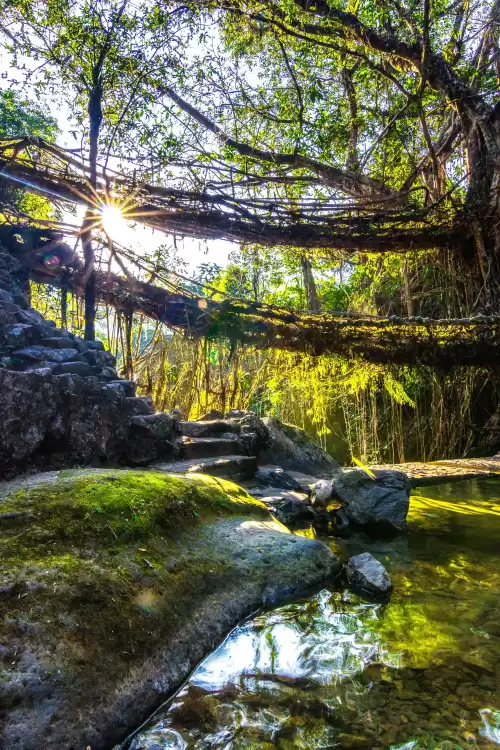
The walk to the Double Decker Living Root Bridge is one of Meghalaya's most famous nature experiences and begins from Tyrna village near Cherrapunji. The trail descends through thousands of stone steps, forest sections, small settlements, and stream crossings before reaching Nongriat village. Although commonly called a trek, the route is also a powerful nature walk because it moves slowly through rainforest landscapes where sound, shade, humidity, and flowing water define the experience.
The downhill section can feel manageable at first, but the return climb is physically demanding and should be planned carefully. Visitors should start early, carry enough drinking water, and avoid heavy backpacks. Along the way, the trail provides glimpses of village life, mountain streams, suspension bridges, and dense vegetation. The living root bridge itself is a remarkable example of traditional Khasi knowledge, where rubber tree roots have been guided over generations to form a functional natural bridge.
The walk to the Double Decker Living Root Bridge is not just about reaching a famous landmark. It is a complete journey through rainforest paths, village landscapes, and traditional living architecture that represents Meghalaya's deep connection with nature.
Rainbow Falls is reached by continuing beyond Nongriat village through deeper rainforest trails. This extension is more demanding than the walk to the Double Decker Living Root Bridge because it adds extra distance, uneven forest paths, rocky sections, and more stream crossings. However, it is also one of the most rewarding nature walks in Meghalaya for travelers who have enough stamina and time.
The trail to Rainbow Falls passes through thick greenery, quiet forest stretches, small bridges, and natural water channels before opening to one of the most scenic waterfalls in the region. The pool below the falls is known for its striking blue tone during suitable weather, while the surrounding cliffs and forest create a peaceful setting. Visitors should not begin this extension too late in the day, especially if returning to Tyrna the same evening.
The Rainbow Falls trail is best suited for active travelers who want a deeper rainforest experience. With proper timing and realistic fitness planning, it becomes one of the most memorable walking routes around Nongriat.
The Nongriat route is memorable because the attractions are spread throughout the walk, not limited to the final destination. Natural pools, clear streams, small waterfalls, and suspension bridges appear along different sections, giving travelers frequent reasons to pause and enjoy the surroundings. These features make the route feel immersive and varied, especially for visitors who enjoy photography, nature observation, and slow walking.
The suspension bridges are practical village connections as well as scenic points, so visitors should cross them carefully and avoid overcrowding. Natural pools can look inviting, but water depth, current, and slippery rocks should always be assessed before entering. During monsoon and post-monsoon months, streams are fuller and the rainforest is greener, while winter usually offers more comfortable walking conditions and clearer paths.
The natural pools and suspension bridges make the Nongriat walk feel like a complete rainforest journey. Travelers who slow down and appreciate these smaller stops often enjoy the route as much as the main living root bridge itself.
Mawphlang Sacred Forest is one of Meghalaya's most remarkable nature walking destinations because it combines biodiversity, indigenous heritage, and centuries-old conservation practices. Located around 25 kilometers from Shillong, the forest has been protected by Khasi communities for generations under traditional beliefs that prohibit removing even the smallest natural object from within its boundaries. This long-standing cultural protection has allowed ancient trees, medicinal plants, rare fungi, orchids, mosses, and dense vegetation to thrive in an ecosystem that remains largely undisturbed.
Nature walks inside the Sacred Forest are conducted with local guides who explain the cultural significance of the forest alongside its ecological importance. Well-used walking paths wind beneath towering trees, across natural rock formations, and through thick woodland where sunlight filters gently through the dense canopy. The cool temperatures, rich biodiversity, and quiet atmosphere make the experience very different from Meghalaya's open waterfalls and viewpoints. Instead of dramatic scenery, the attraction lies in observing intricate forest ecosystems that have survived through traditional conservation rather than modern protection methods.
Mawphlang Sacred Forest is much more than a scenic woodland. It offers visitors an opportunity to understand how indigenous conservation practices have protected one of Meghalaya's oldest natural landscapes for centuries.
Nokrek National Park, located in the Garo Hills, forms part of the Nokrek Biosphere Reserve and protects one of Meghalaya's richest forest ecosystems. Nature walks here introduce visitors to evergreen forests, bamboo groves, mountain slopes, streams, and diverse wildlife habitats that remain relatively untouched compared with more frequently visited destinations. The park is internationally recognized for its biodiversity and is home to numerous bird species, butterflies, orchids, medicinal plants, and several mammals that inhabit the dense forest environment.
Walking through Nokrek is very different from casual sightseeing because trails often pass through remote woodland where the emphasis is on observing the natural environment rather than reaching a single viewpoint. Forest guides help identify native plants, wildlife signs, and ecological features while ensuring visitors remain on appropriate routes. The experience rewards patient walkers who appreciate quiet surroundings, changing forest scenery, and opportunities to encounter Meghalaya's remarkable biodiversity without disturbing its fragile ecosystems.
Nokrek National Park offers one of Meghalaya's finest forest walking experiences for travelers interested in biodiversity, conservation, and peaceful natural environments away from crowded tourist routes.
Beyond the well-known protected forests, Meghalaya contains numerous woodland trails that connect villages, agricultural landscapes, waterfalls, and valleys. These paths pass through pine forests, mixed evergreen woodland, bamboo groves, and moss-covered hillsides that remain quiet throughout most of the year. Walking these routes allows travelers to appreciate the state's varied forest landscapes without necessarily undertaking long or difficult treks.
Many woodland paths are traditional village access routes that continue to be used by local communities, making them both practical and scenic. During post-monsoon months the vegetation becomes especially lush, while winter offers clearer skies and comfortable walking temperatures. Visitors should remain aware that weather conditions may change rapidly, especially near Cherrapunji and the Khasi Hills, where mist and rain can reduce visibility even during otherwise pleasant days.
Meghalaya's woodland paths reward travelers seeking peaceful nature experiences beyond famous attractions. Slow walks through these forests reveal the quiet landscapes that define much of the state's rural environment.
Mawlynnong is internationally known for its exceptionally clean environment, but one of its greatest attractions is simply walking through the village itself. Narrow stone lanes bordered by flowering plants, bamboo fencing, carefully maintained gardens, and traditional Khasi homes create a relaxed atmosphere that encourages slow exploration rather than hurried sightseeing. Every section of the village reflects strong community participation in cleanliness and environmental care, making even ordinary streets enjoyable to explore on foot.
The village layout allows visitors to wander comfortably between homes, churches, resting areas, viewpoints, and small cafés while observing daily life. Seasonal flowers, fruit trees, and ornamental plants add changing colors throughout the year, especially after the monsoon. Visitors should remember that Mawlynnong is an active residential village, so respectful behavior, quiet conversation, and avoiding unnecessary disturbance remain important throughout the walk.
Walking through Mawlynnong is about experiencing an exceptionally well-maintained rural community where natural beauty, local responsibility, and traditional village life come together in a relaxed setting.
The Bamboo Skywalk stands near the edge of Mawlynnong and is connected by pleasant countryside paths that pass through open fields, gardens, and patches of woodland before reaching elevated viewpoints overlooking the Bangladesh plains. The walk itself is gentle and suitable for most visitors, allowing travelers to enjoy changing scenery while moving away from the busiest sections of the village.
Along the route, visitors encounter cultivated farmland, scattered trees, quiet village surroundings, and panoramic landscapes that stretch beyond Meghalaya's southern border. The Bamboo Skywalk offers a unique elevated perspective across the countryside, particularly during clear weather when visibility extends far into the plains below. Early morning and late afternoon provide softer lighting for photography while avoiding the stronger midday sun.
The countryside walk to the Bamboo Skywalk combines gentle walking with expansive landscapes, making it one of the most enjoyable short nature experiences around Mawlynnong.
Located only a short distance from Mawlynnong, Riwai Village offers another rewarding countryside walking experience where quiet rural landscapes, traditional homes, cultivated fields, and forest edges create a peaceful environment. The village is also known for the nearby Riwai Living Root Bridge, allowing visitors to combine a gentle countryside walk with one of Meghalaya's remarkable examples of natural bridge engineering.
The walking routes around Riwai pass through small farms, shaded pathways, streams, and lightly forested sections that highlight everyday village life. Unlike heavily developed tourist areas, these rural paths remain practical access routes for local residents, giving visitors an authentic impression of how communities interact with the surrounding landscape. Spending time exploring both Mawlynnong and Riwai together provides a more complete understanding of countryside life in the Khasi Hills.
Riwai Village offers a quieter extension to the Mawlynnong experience. Its countryside paths, traditional landscapes, and Living Root Bridge create a rewarding walk that highlights the rural beauty of southern Meghalaya.
The Umngot River at Dawki offers one of Meghalaya's most peaceful walking experiences, where riverside paths, rocky banks, and open landscapes allow visitors to appreciate the famous crystal-clear water at a relaxed pace. While many travelers immediately head for boating, walking beside the river reveals equally rewarding views of the transparent water, surrounding Khasi Hills, and gently flowing river that has made Dawki one of the state's most photographed destinations. The constantly changing reflections of the hills and sky create different scenery throughout the day, making every section of the riverside enjoyable.
During winter, when water clarity reaches its best, the river appears almost transparent, allowing visitors to see the rocky riverbed beneath boats. Morning walks are particularly peaceful because the crowds are smaller, the air is cooler, and the sunlight gradually illuminates the river without creating harsh reflections. Several riverside paths allow visitors to move slowly between boating points, small resting areas, fishing spots, and natural viewpoints while enjoying the quiet atmosphere created by the flowing water and surrounding hills.
Walking beside the Umngot River allows visitors to appreciate Dawki beyond its boating experience. The combination of transparent water, peaceful surroundings, and mountain scenery creates one of Meghalaya's most relaxing nature walks.
Located a short distance upstream from Dawki, Shnongpdeng offers quieter riverside walking trails where travelers can enjoy the Umngot River away from the busiest tourist areas. The village has become well known for adventure activities such as kayaking and snorkeling, yet its riverside paths remain equally rewarding for visitors seeking peaceful nature walks. Gentle trails follow the riverbank through open grasslands, riverside camps, shaded tree sections, and rocky viewpoints overlooking the calm water.
Walking through Shnongpdeng allows visitors to observe changing river landscapes throughout the day. Early mornings often bring calm conditions with mist rising gently from the river, while evenings provide warm light reflecting across the surrounding hills. The riverside atmosphere remains relaxed because camping areas, local cafés, and adventure camps are spread along the banks rather than concentrated in one location. Visitors should remain aware of uneven rocks near the water and avoid walking into deeper river sections without local guidance.
Shnongpdeng combines peaceful riverside landscapes with gentle walking trails that allow visitors to appreciate the Umngot River without rushing between activities. The slower atmosphere makes it ideal for travelers interested in quiet nature experiences.
Beyond Dawki and Shnongpdeng, the Jaintia Hills contain numerous rivers, streams, and countryside walking routes where visitors can experience quieter riverside landscapes. These walks often pass through farming communities, forest patches, limestone valleys, and small rural settlements where rivers continue supporting agriculture and daily village life. Unlike well-known tourist destinations, many of these routes remain largely unchanged by commercial tourism, allowing visitors to experience Meghalaya's natural environment in a more authentic setting.
Seasonal changes strongly influence riverside scenery throughout the Jaintia Hills. Post-monsoon months bring lush vegetation, flowing rivers, and vibrant countryside, while winter offers comfortable temperatures and clearer walking conditions. Local village roads and traditional footpaths frequently follow streams before connecting with farmland and forest sections, creating rewarding half-day walking opportunities for travelers who enjoy exploring beyond the main sightseeing circuit.
The riverside landscapes of the Jaintia Hills provide rewarding walking experiences for travelers who enjoy peaceful countryside, flowing rivers, and authentic village environments away from Meghalaya's busiest attractions.
Jowai serves as the cultural center of the Jaintia Hills and provides an excellent starting point for exploring the surrounding traditional villages. These communities preserve distinctive Jaintia customs, agricultural practices, and rural lifestyles that differ from those found in the Khasi and Garo Hills. Walking through villages around Jowai introduces visitors to traditional homes, churches, cultivated farmland, village gathering spaces, and peaceful countryside where daily life continues at an unhurried pace.
Many village roads are quiet enough to explore comfortably on foot, allowing travelers to observe farming activities, seasonal crops, local markets, and everyday community interactions. Unlike destinations focused solely on sightseeing, the villages around Jowai encourage slow exploration where visitors appreciate local culture through observation and respectful interaction rather than scheduled attractions. Early mornings are especially rewarding as village life becomes active with farming and household activities.
Exploring villages around Jowai allows travelers to understand the everyday rhythm of the Jaintia Hills while enjoying peaceful landscapes that remain largely untouched by large-scale tourism.
The countryside surrounding Jowai is characterized by gently rolling hills, cultivated fields, seasonal crops, forest edges, rivers, and scattered settlements connected by quiet rural roads and walking paths. These farming communities demonstrate the close relationship between local people and the natural environment, where agriculture continues to shape daily life across much of the Jaintia Hills. Walking through these landscapes provides opportunities to appreciate changing scenery without following demanding trekking routes.
Visitors often encounter open fields, grazing livestock, traditional farming practices, and panoramic views stretching across the surrounding countryside. Seasonal changes influence the appearance of these landscapes, with post-monsoon months producing vibrant greenery and winter bringing clearer skies ideal for longer walks. Because these are active agricultural communities, visitors should remain on established paths and avoid entering cultivated fields without permission.
Walking through the farming communities of the Jaintia Hills allows visitors to experience Meghalaya's rural landscapes in a peaceful and authentic way while appreciating the close connection between local livelihoods and nature.
West Jaintia Hills combine cultural heritage with attractive rural scenery, offering travelers opportunities to explore traditional villages, local markets, waterfalls, rivers, and countryside landscapes within the same journey. Village walks frequently reveal community halls, churches, schools, stone pathways, bamboo fencing, and homes surrounded by gardens that illustrate the character of everyday life in the region. Unlike heavily visited destinations, these villages retain a relaxed atmosphere where visitors can appreciate both local traditions and natural surroundings.
Many travelers combine village exploration with nearby attractions such as Krang Suri Waterfall, Tyrshi Falls, Thadlaskein Lake, and riverside viewpoints, creating rewarding day itineraries across the Jaintia Hills. Spending additional time walking through rural communities rather than simply driving between attractions provides a much deeper understanding of the region's culture, landscapes, and traditional way of life.
The villages of West Jaintia Hills provide visitors with meaningful cultural experiences alongside beautiful rural landscapes. Exploring these communities on foot offers a deeper appreciation of one of Meghalaya's quieter yet culturally rich regions.
The walk to Wei Sawdong Falls is one of the most rewarding short nature trails in Cherrapunji because it combines forest scenery, rocky pathways, and one of Meghalaya's most beautiful multi-tier waterfalls. Unlike roadside viewpoints where visitors simply stop for photographs, reaching Wei Sawdong requires descending a natural trail through dense vegetation before arriving at the waterfall. The journey itself becomes an important part of the experience, allowing travelers to appreciate the surrounding rainforest, fresh mountain air, and constantly changing landscape.
The route includes steep sections, stone steps, exposed tree roots, and natural rock surfaces that can become slippery after rainfall. Visitors should move carefully, particularly during the monsoon and immediately afterward when moss-covered rocks remain wet throughout the day. Good trekking shoes with proper grip are highly recommended because the final descent involves uneven terrain. Once at the waterfall, visitors are rewarded with spectacular views of the turquoise pools and beautifully layered limestone cascades that have made Wei Sawdong one of Cherrapunji's most photographed natural attractions.
The trail to Wei Sawdong Falls combines moderate walking with outstanding natural scenery. Travelers who take their time during the descent enjoy one of Meghalaya's finest rainforest walks before reaching the spectacular waterfall.
Eco Park offers one of Cherrapunji's easiest and most enjoyable nature walking experiences, making it suitable for visitors who prefer relaxed walks rather than challenging treks. Well-maintained pathways wind through landscaped gardens before leading toward open viewpoints overlooking deep valleys, waterfalls, and the Bangladesh plains during clear weather. The gradual walking routes allow visitors to enjoy changing panoramic scenery without significant physical effort.
Beyond the developed sections of Eco Park, additional walking paths pass through grassy slopes, viewpoints, and quiet natural areas where visitors can spend time observing the surrounding landscape. During the post-monsoon season, the vegetation becomes exceptionally green, while winter offers clearer skies that improve long-distance visibility across the valleys. Families, photographers, and casual walkers often choose Eco Park because it provides beautiful scenery together with convenient access and comfortable walking conditions.
Eco Park provides one of the most accessible nature walks in Cherrapunji, allowing visitors to enjoy expansive landscapes without demanding trekking while still experiencing the beauty of Meghalaya's dramatic plateau scenery.
Sohra, the local name for Cherrapunji, contains numerous rainforest walking routes beyond its famous tourist attractions. These trails pass through dense forests, moss-covered rocks, bamboo groves, small streams, and quiet countryside where the region's exceptional rainfall has created one of India's richest natural environments. Many of these paths have been used by local communities for generations and continue connecting villages, farmland, waterfalls, and forest areas throughout the plateau.
Walking through the rainforests around Sohra allows visitors to experience constantly changing scenery shaped by clouds, mist, sunlight, and rainfall. The weather often transforms the atmosphere within minutes, creating unique photographic opportunities while emphasizing the region's remarkable climate. Travelers should always carry rain protection regardless of the season because sudden showers remain common throughout much of the year. Slow exploration rewards visitors with birdlife, native vegetation, natural streams, and peaceful forest landscapes rarely appreciated during short sightseeing stops.
The rainforest walks around Sohra reveal a quieter side of Cherrapunji where forests, streams, and traditional paths create rewarding experiences beyond the region's famous waterfalls and viewpoints.
Kongthong, often known for its remarkable whistling tradition, also offers peaceful countryside walking routes that remain largely unknown to mainstream tourists. The village is surrounded by rolling hills, forest patches, cultivated farmland, bamboo groves, and traditional footpaths connecting scattered settlements across the landscape. Walking these trails provides visitors with opportunities to appreciate both the natural beauty of the Khasi Hills and the quiet rhythm of everyday rural life.
The routes around Kongthong are generally gentle but include occasional uphill and downhill sections typical of Meghalaya's hill terrain. Travelers frequently encounter streams, village farms, traditional homes, and scenic viewpoints overlooking surrounding valleys. Since many of these paths remain active village access routes, visitors should walk respectfully, greet local residents politely, and avoid disturbing agricultural activities or entering private property without permission.
Kongthong's countryside trails allow travelers to combine natural scenery with authentic village experiences, creating one of Meghalaya's most rewarding offbeat walking destinations.
The Garo Hills offer some of Meghalaya's least explored walking landscapes, where dense forests, rivers, agricultural land, bamboo groves, and remote villages create peaceful routes far removed from the state's busiest tourist destinations. Walking here emphasizes immersion in nature rather than reaching famous landmarks. Quiet roads and woodland paths allow visitors to appreciate the biodiversity and rural landscapes that define western Meghalaya.
Many walking routes near Tura, Nokrek National Park, and surrounding villages pass through areas where wildlife habitats remain well preserved. Visitors may observe native birds, butterflies, forest vegetation, and changing mountain scenery while exploring these quieter regions. Because facilities remain limited in more remote locations, travelers should prepare adequately with drinking water, basic supplies, and local guidance whenever exploring unfamiliar trails.
The Garo Hills reward travelers seeking peaceful landscapes where forests, villages, and mountain scenery create genuine offbeat walking experiences away from conventional sightseeing routes.
Across Meghalaya, numerous village paths remain largely overlooked because they do not appear on typical sightseeing itineraries. These quiet routes connect farming communities, forest edges, rivers, and traditional settlements while offering authentic experiences free from heavy tourist activity. Walking such paths allows visitors to appreciate everyday village life, local agriculture, and natural landscapes that continue supporting communities throughout the Khasi, Jaintia, and Garo Hills.
Unlike formal trekking routes, these village paths often evolve naturally according to the surrounding terrain and community needs. Travelers may encounter stone walkways, bamboo bridges, streams, grazing land, and small forest sections during a single walk. The emphasis remains on observation rather than speed, making these routes especially suitable for photographers, nature lovers, and travelers interested in experiencing Meghalaya beyond its famous attractions.
Meghalaya's lesser-known village paths reveal landscapes that many visitors never experience. Walking these quiet countryside routes provides meaningful encounters with both nature and local communities while avoiding crowded tourist locations.
Mawphlang Heritage Village offers one of Meghalaya's most rewarding cultural walking experiences because it combines traditional Khasi architecture, indigenous history, and natural surroundings within a peaceful rural setting. Located around 25 kilometers from Shillong, the village is closely associated with the famous Mawphlang Sacred Forest and provides visitors with an opportunity to understand how Khasi communities have lived in harmony with nature for generations. Walking through the village reveals traditional stone pathways, historic homes, community gathering spaces, monoliths, churches, and open grasslands that reflect the area's long cultural history.
The walking experience becomes particularly meaningful when accompanied by knowledgeable local guides who explain the significance of traditional Khasi governance, clan systems, sacred sites, and historical practices. Visitors also learn about the role of the Sacred Forest in preserving biodiversity through indigenous conservation beliefs that continue to influence community life today. Rather than functioning as an open-air museum, Mawphlang remains an active village where modern life exists alongside centuries-old traditions, making every walk both educational and authentic.
Walking through Mawphlang Heritage Village allows visitors to experience the cultural foundations of the Khasi Hills while appreciating how traditional knowledge continues shaping everyday life in rural Meghalaya.
Many Khasi villages across Meghalaya provide opportunities to experience local traditions simply by walking through the community at a relaxed pace. Stone-paved lanes, family homes, cultivated gardens, bamboo fences, churches, schools, village squares, and small agricultural fields together illustrate how daily life continues across the hills. Rather than focusing on staged cultural performances, these walks allow visitors to observe authentic routines such as farming, food preparation, handicrafts, and community interaction within their natural setting.
Respectful engagement is an important part of every village walk. Greeting residents politely, asking permission before photographing people, avoiding loud behavior, and remaining on public pathways help create positive interactions between visitors and local communities. Travelers who spend time talking with village guides or homestay hosts often gain valuable insight into Khasi customs, traditional festivals, food habits, and the matrilineal social system that distinguishes Khasi society from many other communities in India.
Walking through Khasi villages creates meaningful cultural experiences because visitors observe traditions where they naturally continue rather than through formal tourist presentations. The slower pace encourages genuine appreciation of rural life.
Village markets remain important gathering places throughout Meghalaya, providing excellent opportunities to experience local culture while exploring communities on foot. Weekly and daily markets across the Khasi, Jaintia, and Garo Hills bring together farmers, artisans, traders, and residents who sell fresh produce, bamboo handicrafts, traditional textiles, spices, fruits, vegetables, and locally prepared foods. Walking through these markets offers valuable insight into the region's economy, food traditions, and social life.
Beyond shopping, village markets reveal how communities interact, exchange goods, and maintain relationships across neighboring settlements. Travelers often discover regional products unavailable in larger towns while enjoying conversations with local vendors and observing everyday life unfold naturally. Exploring surrounding village streets before or after visiting the market further enriches the experience by connecting cultural interaction with peaceful rural landscapes. Carrying cash is advisable because many smaller vendors may not accept digital payments.
Village markets provide one of the most authentic cultural experiences in Meghalaya. Walking through these lively community spaces helps visitors understand local traditions while supporting small-scale rural livelihoods across the state.
Meghalaya offers walking experiences ranging from short village strolls to demanding rainforest treks, making it important to choose routes according to personal fitness, available time, and travel interests. Visitors interested in culture and rural landscapes may enjoy Mawlynnong, Kongthong, Mawphlang, or the villages around Jowai, while those seeking rainforest scenery can explore Nongriat, Cherrapunji, and the Sacred Forest. More adventurous travelers may prefer longer forest walks leading toward waterfalls, living root bridges, or remote countryside trails across the Khasi, Jaintia, and Garo Hills.
Understanding trail difficulty before starting helps create a more enjoyable experience. Easy village walks generally require only comfortable walking shoes, while routes such as Nongriat demand good physical fitness because of thousands of stone steps. Forest trails may become slippery after rainfall, making weather conditions another important factor when selecting walking routes. Travelers should always prioritize realistic planning rather than attempting difficult walks without adequate preparation.
Selecting the right walking route according to personal interests and physical ability allows visitors to enjoy Meghalaya's landscapes comfortably while appreciating both nature and local culture at a relaxed pace.
A well-balanced Meghalaya itinerary combines village walks, forest trails, riverside paths, and scenic countryside rather than focusing only on major tourist attractions. Travelers can begin around Shillong with Mawphlang Sacred Forest and nearby villages before continuing toward Cherrapunji for rainforest trails, waterfalls, and the Nongriat trek. Mawlynnong, Riwai, Dawki, and Shnongpdeng add peaceful countryside and riverside experiences, while longer journeys into the Jaintia Hills and Garo Hills introduce quieter rural landscapes and protected forests.
Rather than covering too many destinations in one day, visitors benefit from spending longer periods walking through fewer locations. This slower approach allows time for photography, conversations with local residents, rest breaks, and appreciation of changing weather and scenery. Overnight stays near trekking destinations such as Nongriat also reduce physical strain while providing opportunities to explore additional attractions like Rainbow Falls without rushing.
Planning an itinerary around walking experiences allows travelers to discover Meghalaya at a slower pace. Village paths, rainforest trails, and countryside walks together provide a richer understanding of the state's landscapes and communities than sightseeing alone.
Good preparation significantly improves every walking experience in Meghalaya. Comfortable trekking or walking shoes with reliable grip are essential because many trails include stone steps, natural rocks, forest paths, or uneven village roads. Visitors should also carry drinking water, light snacks, rain protection, sun protection, a lightweight backpack, basic first-aid supplies, and a fully charged mobile phone. Weather conditions can change rapidly, especially around Cherrapunji and the Khasi Hills, making waterproof clothing useful throughout much of the year.
Responsible travel practices are equally important. Visitors should remain on established paths, avoid littering, respect village customs, ask permission before photographing people, and avoid disturbing wildlife or damaging natural vegetation. Supporting local guides, cafés, handicraft shops, and homestays contributes positively to rural communities while helping preserve Meghalaya's remarkable walking landscapes for future visitors. Careful planning and respectful behavior ensure that every walk remains both enjoyable and sustainable.
Proper preparation allows visitors to enjoy Meghalaya's nature walks safely and comfortably. By combining suitable equipment with responsible travel practices, every trail becomes an opportunity to experience the state's remarkable forests, villages, rivers, and countryside in a meaningful way.

Get customized Meghalaya tour planning designed around rainfall patterns, road connectivity, seasonal visibility, and realistic hill travel timing. Whether you are visiting for waterfalls, cave exploration, scenic drives, village experiences, or nature-fo
⚡ Quick Response | 💰 Free consultation | 🕒 24×7 expert support